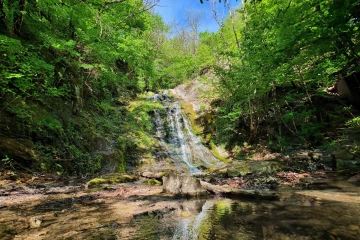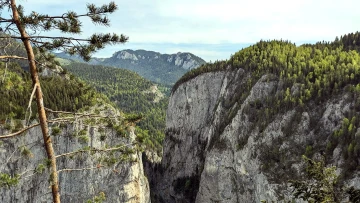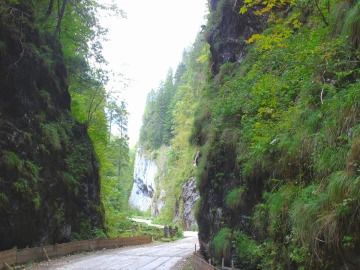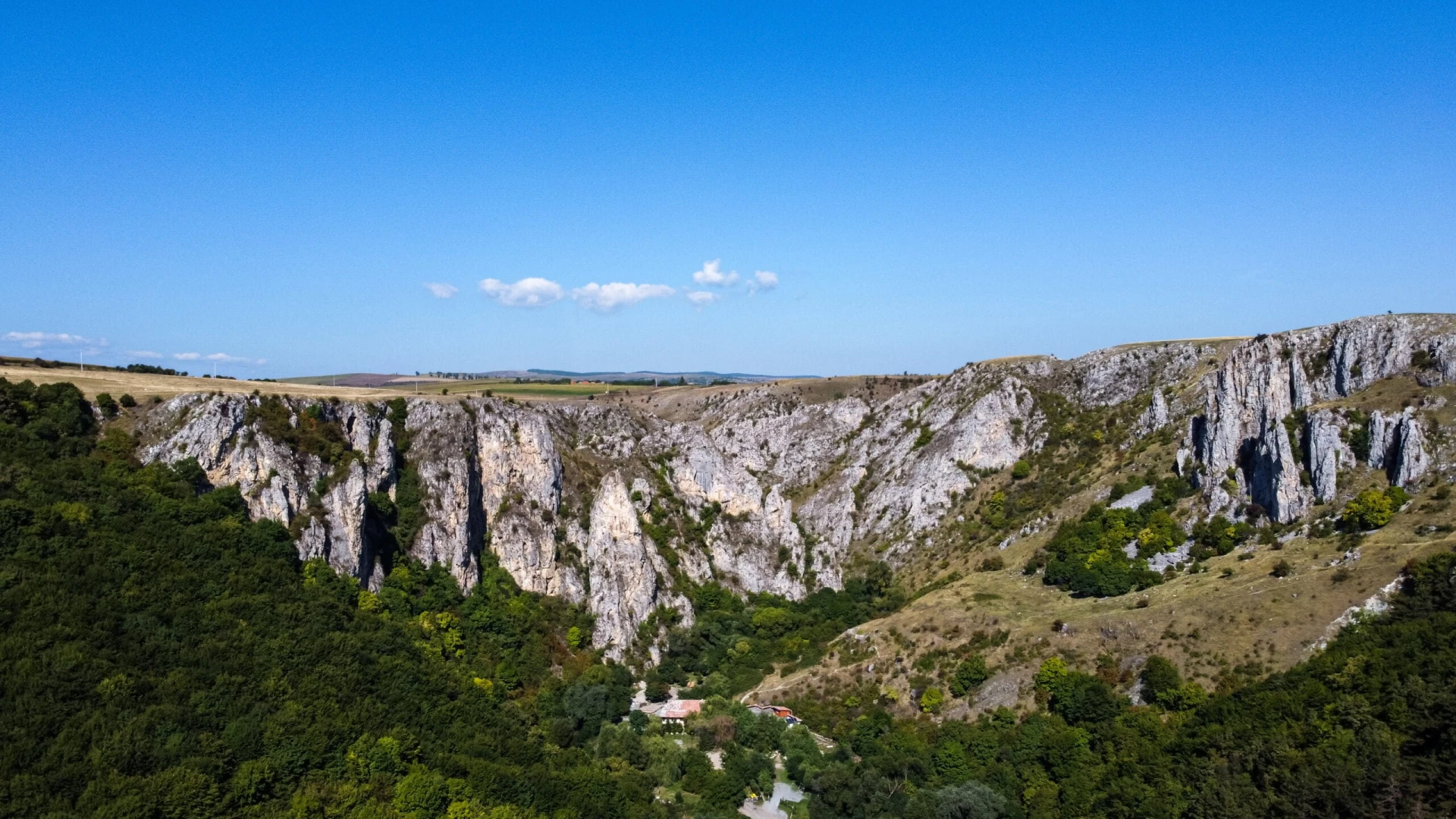
Tureni Gorges, also known as the Tur Gorges, Tureniu Gorges, or Copand Gorges, and in Hungarian as Túri-hasadék, are one of the most beautiful and captivating natural attractions in Cluj County, Romania.
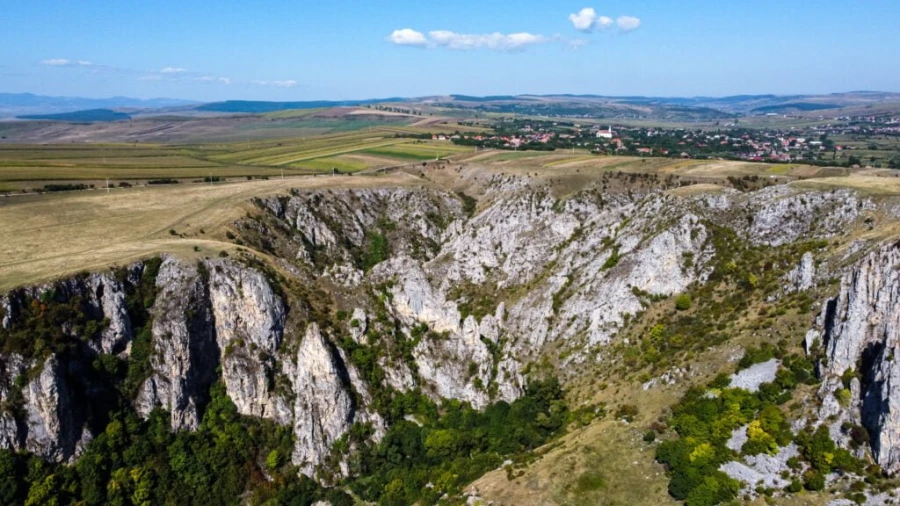
Tureni Gorges seen from above
In this article:
Located north of the town of Turda, Tureni Gorges offer an oasis of wild nature and adventure in the heart of Transylvania, making them an ideal place for nature lovers, hikers, and exploration enthusiasts.
The gorges were declared a nature reserve in 2000 and are managed by the Cluj County Council and Tureni commune (see Wikipedia).
Location and Access
They are located in Cluj County, near Tureni commune and Copăceni village, about 25 kilometers southwest of the city of Cluj-Napoca.
Access is relatively easy, whether from Cluj-Napoca or other nearby towns, thanks to the good road network.
The most common route is from Cluj-Napoca to Tureni, then following the signs to the attraction.
Access by car is mainly through Copăceni village, on an unpaved rural road almost 3 kilometers long that branches off European route E60.
Although car access is possible in some areas, much of the gorges' beauty can only be explored on foot, on scenic paths that wind between cliffs and forests above the valley, giving visitors an authentic experience in the middle of nature.
What's more, the Tureni Gorges nature reserve is one of the places worth visiting near Cluj-Napoca.
Driving Distances to Tureni Gorges
From Cluj-Napoca: 34 min (28.0 km) via DN1/E60 and the Apahida-Vâlcele Bypass/DN1N
From Alba Iulia: 1 hr 3 min (78.4 km) via the Apuseni Motorway/A10/E81
From Turda: 26 min (14.6 km) via Str. Clujului/DN1/E60
From Sălaj: 1 hr 56 min (118.6 km) via DJ109
From Bistrița: 1 hr 59 min (130.4 km) via DN1C/E576
From Târgu Mureș: 1 hr 3 min (87.8 km) via the Transylvania Motorway/A3
From Sibiu: 1 hr 43 min (156.2 km) via A1/E68/E81 and the Apuseni Motorway/A10/E81
A Land of Legend and History
A legend of Tureni Gorges says that King Matthias Corvinus used to hunt in the forests near the villages of Mărtinești and Tureni. It is said that his wife Beatrice gave Bishop Statilio a number of valuables, a true treasure, which was hidden in a secret place deep in the gorge, a place that remains undiscovered to this day.
Archaeological research has revealed the presence of prehistoric humans, traces of Dacian settlement, tools, and pottery.
During various conflicts and periods of instability, the region's inhabitants often used the valley's hiding places as a refuge, sheltering in caves or in spots protected by the cliffs to escape persecution or enemy invasion.
The area played an important role in ensuring the security and survival of local communities in the face of external threats.
Landscape and Natural Features
Tureni Gorges are nearly 1,900 meters long, with tall walls reaching heights of up to 150 meters, adorned with spectacular karst features such as waterfalls and caves.
Tureni Gorges
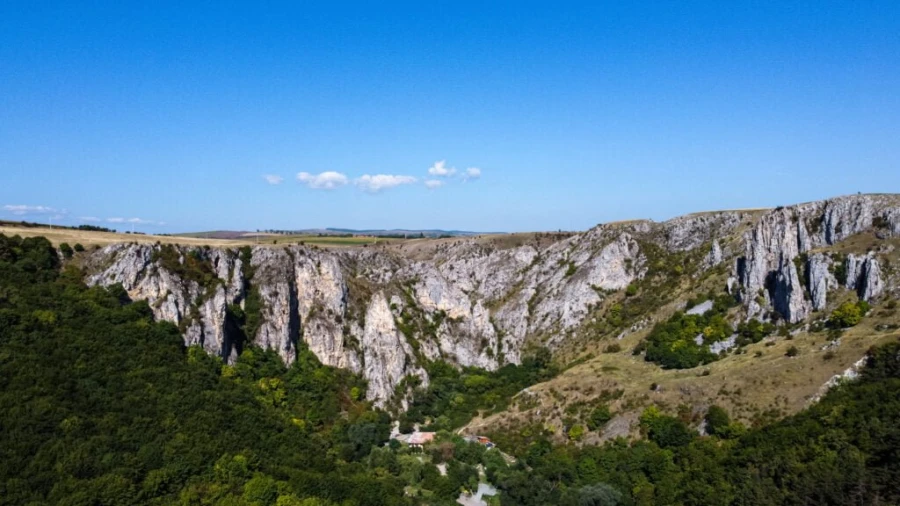
They were carved by the Valea Racilor stream, whose waters cut into the limestone layers of the Trascău Mountains. Valea Racilor, also called Pârâul Racilor, is a tributary of the Arieș River.
The nature reserve is home to 29 caves, and the best known include Peștera cu Silex (64 meters long), Peștera de sub Grohotiș (27.5 meters long), Peștera Vulturilor, and Șura Mică. Others worth mentioning are Peștera cu hora, Peștera de Săritori, Peștera Zânelor, and Peștera Feciorilor.
Peștera Somului, located about 10 m above Valea Racilor, is named after Somu, the local man who helped shelter the villagers here from invaders. The entrance is narrow, but it opens into a chamber that can hold several hundred people.
Some examples of small waterfalls: Cascada Evantai, Cascada Mare; among the deep pools, we can mention Bolboana Fetelor, Bolboana Șerpilor, and Groapa lui Petre (legend has it that it was named after a local man who used to fish here).
The main attractions for tourists include Colțul Câinilor and Stâna Crinilor. Colțul Câinilor is a remarkable rock formation in a picturesque spot in the gorges, offering spectacular panoramic views. Stâna Crinilor is a traditional sheepfold surrounded by a variety of wildflower species, including the martagon lily, which gives it its name.
Known as the Copand Gorges after the village's old noble family, they are the little sister of Turda Gorges. Not far from the latter are Borzești Gorges, while also carved into the Trascău Massif are Râmeț Gorges.
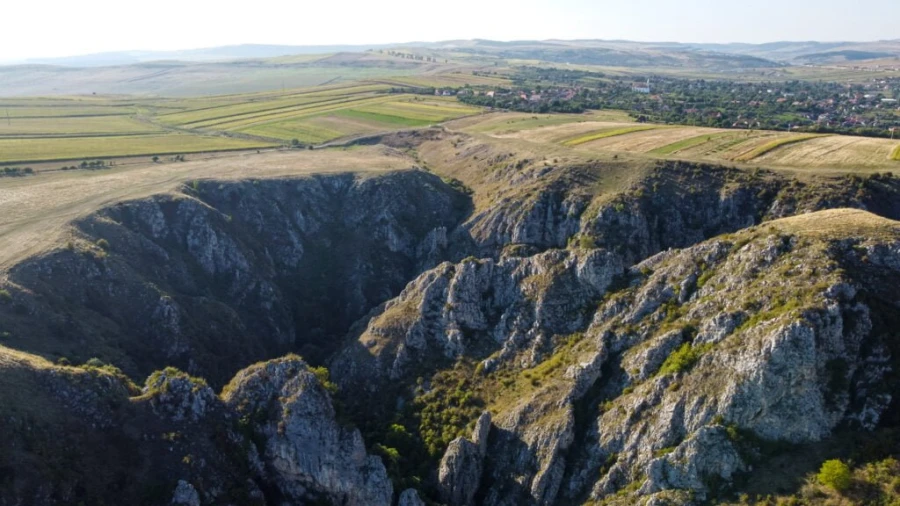
They stand out for their spectacular scenery, dominated by imposing cliffs and fascinating geological formations. This place is a true natural treasure, with huge walls rising above the river that cuts through the rocks.
Nature here is wild and surprising: visitors will discover natural arches, rocks sculpted over millennia, and a variety of wild flora and fauna.
The landscape is completed by the deep green of the forests on the slopes and the special quiet of nature, offering a memorable experience to those who choose to explore the reserve.
Hiking Trails in Tureni Gorges
Tur Gorges
Cluj-Napoca – Tureni (red stripe):
Difficulty: High
Duration: About 7-8 hours, depending on your pace and the weather.
Length: About 23 km, depending on the route you choose and your starting point in Cluj-Napoca.
Tureni – Turda Gorges – Moldovenești (red stripe):
Difficulty: Difficult
Duration: About 8-9 hours, depending on your pace and the weather.
Length: About 21 km, depending on the route you choose and your starting point.
Tureni Gorges Loop (blue dot):
Difficulty: Moderate
Duration: About 2.5 hours, depending on your pace and the weather.
Length: About 1.6 km, depending on your starting point and the route you choose.
Tureni – Tureni Gorges – Izvorul Romanilor – Vapa – Turda Gorges (blue triangle):
Difficulty: Hard
Duration: About 3-5 hours or more, 9 km, depending on your pace and the weather.
Before starting any trail, it's important to consider the participants' fitness, the necessary gear, and the weather conditions. We also recommend checking up-to-date information about the trails and safety conditions before you set out.
The trail through the gorge carved by the stream is narrow and difficult (unlike Bicaz Gorges), but to make it easier to get through the gorge, metal footholds and steel cables were installed on the left wall in 2018.
With minimal gear consisting of a harness, lanyards, and a helmet (which can be rented locally), anyone can do the route following the watercourse. You can also go through the gorge on the old path if the water level is low, since you need to cross the stream several times.
Keep in mind that without this minimal gear, the trail is not recommended for people without experience or who are not in adequate physical shape. It is difficult to get through with children shorter than 155 cm.
In addition, hiking boots or trekking shoes with grippy, slip-resistant soles are essential for handling the rough, wet terrain.
Recreational Activities
For those eager for adventure and outdoor recreation, Tureni Gorges are the ideal place. Popular activities include hiking on the marked trails that run through the gorges, exploring the caves and rock formations, and observing the local fauna and flora.
The area is also suitable for rock climbing and mountaineering, offering varied and challenging routes for extreme sports enthusiasts.
For those who want to relax and enjoy nature, a bike ride, a picnic outdoors, and quiet walks along the riverbanks are ideal activities.
Fauna and Flora
The Tureni Gorges canyon is home to a variety of plants that find their habitat in this rocky, wooded environment. These include rock flowers, mountain pinks, hawthorn, hazel, and dog rose. Species such as whitebeam, spirea, birthwort, and knapweed also add a distinct touch of color and floral diversity to the area.
Besides the plants and shrubs already mentioned, the reserve is home to other remarkable plant species: Greek whitebeam, burning bush, alfalfa, bladder campion, and “borșișor”.
The fauna of the reserve is just as rich and diverse. Representative species of the area include the yellow-bellied toad, the European fire-bellied toad, and the Transylvanian smooth newt. You can also spot various butterfly species, including the tiger moth, the scarce fritillary, and the wood white.
There is a variety of amphibians, fish, and insects that find shelter and food here. Worth mentioning are the yellow-bellied toad, the European fire-bellied toad, and the Transylvanian smooth newt, species characteristic of this wild ecosystem (more details on Wikipedia).
The biodiversity of the Tureni Gorges area is impressive and offers unique opportunities to explore and observe nature in a spectacular, wild setting.
Accommodation
There are guesthouses and cabins in nearby villages such as Tureni and Copăceni, offering a wide range of accommodation, from comfortable rooms to facilities for camping and outdoor activities.
About 1 kilometer from the reserve, Gold Fayen House Cheile Turului offers accommodation in an authentic rural atmosphere.
You can camp in Tureni Gorges, as the terrain is well suited for pitching tents, and during the tourist season the place is full of RVs.
If you want access to more facilities and entertainment options, you can choose to stay in the city of Turda, which offers a variety of hotels, guesthouses, and other types of accommodation. Giandra Resort is just a 2-minute drive from Turda Salt Mine, a convenient location for those who want to explore the local attractions.
Noira House and Casa Vinco Vici are two more guesthouses in the area, each offering comfortable amenities for a pleasant stay (see Booking.com).
Nearby Attractions
Near Tureni Gorges in Cluj County, there are several interesting attractions worth visiting:
Turda Salt Mine
Turda Salt Mine
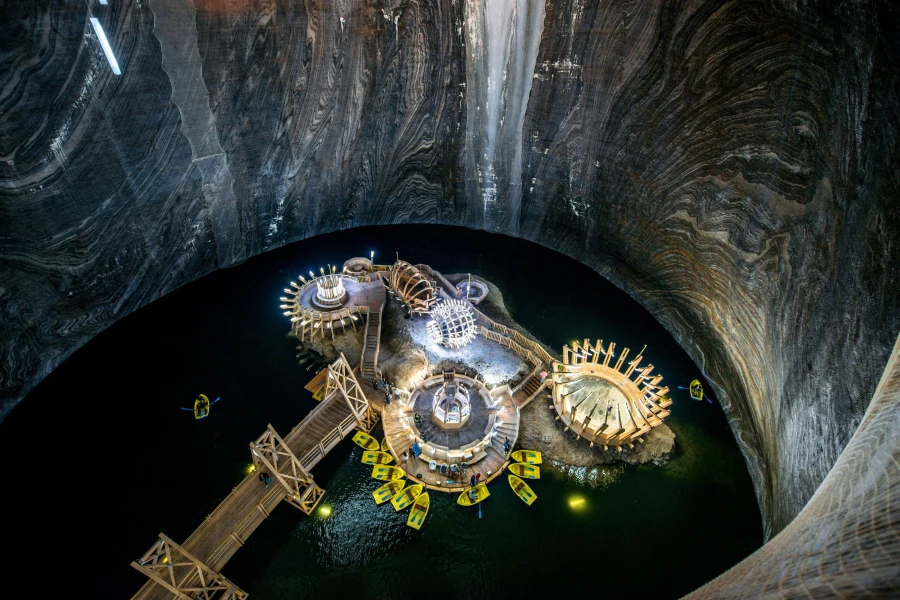
Turda Salt Mine is a world-class tourist attraction just a short distance away.
Turda Gorges
Turda Gorges landscape
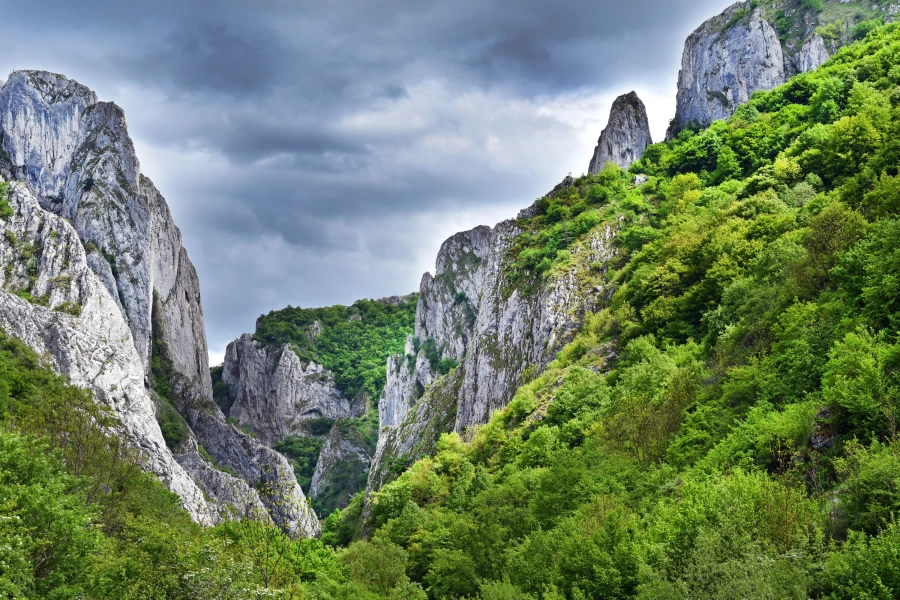
Another spectacular nature reserve, Turda Gorges, impresses passersby even from a distance.
Feleac Fortress
Feleac Fortress is a medieval fortification with a rich history, offering panoramic views over the region and the chance to explore its ruins.
Ciucaș Waterfall
Ciucaș Waterfall is about 30 minutes away from the gorge carved into the rock.
Trascău Fortress
Colțești Fortress
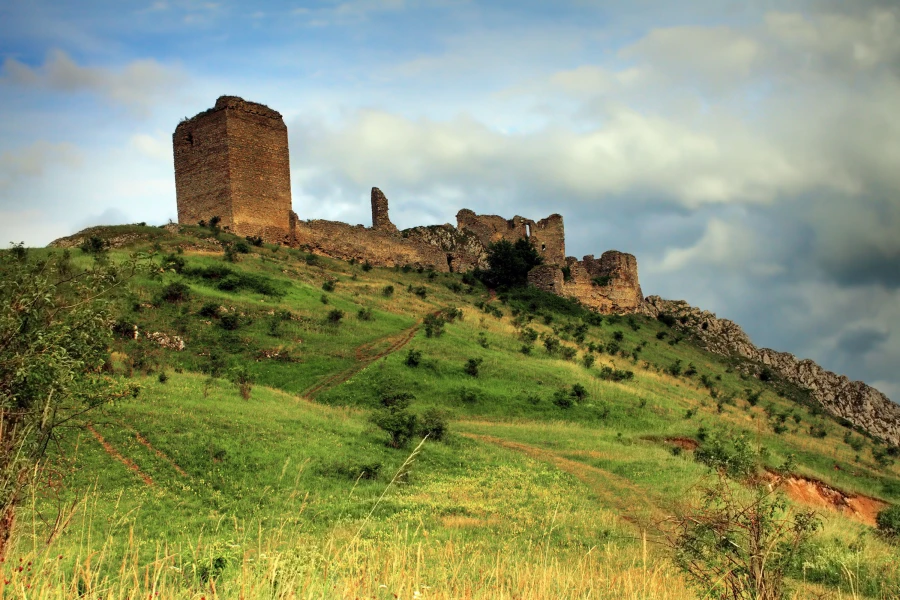
Colțești Fortress is a well-preserved medieval fortification about 40 km away.
Borzești Gorges
Borzești Gorges
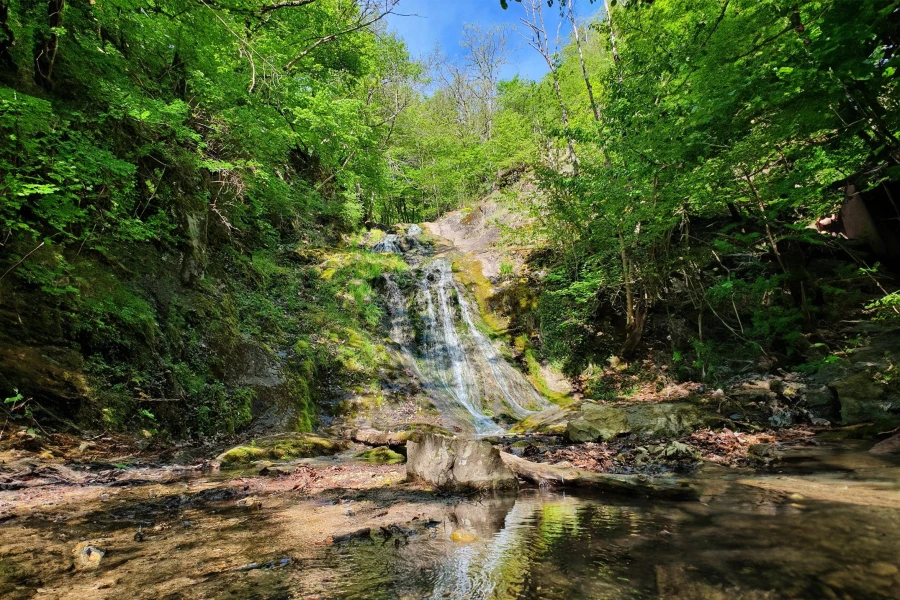
Borzești Gorges in Iara commune are about 25 km away.
The City of Cluj-Napoca
Cluj-Napoca is a major Transylvanian center with a variety of tourist attractions, including museums and historical monuments.
Râmeț Gorges
Râmeț Gorges, of rare beauty, can be visited in this part of Transylvania.
Buscat Resort – Muntele Băișorii
Buscat Resort is extremely popular with Cluj residents who love hiking or winter sports.
Weather
7-day weather forecast for Tureni commune:
Nature Conservation
It is essential that visitors follow the rules of the Tureni Gorges reserve and behave responsibly during their visits.
The rules include keeping the area clean by collecting your trash and disposing of it in designated places, not disturbing wildlife, and following the signs and markings that indicate the hiking trails.
It is important to avoid destroying or damaging natural habitats and to avoid lighting fires outside designated areas.
Following these rules contributes to the long-term conservation of the ecosystem and to preserving the wild, unspoiled character of the Copand Gorges for future generations.
The Tureni Gorges Reserve is a true natural paradise in the heart of Cluj County. From spectacular landscapes to diverse fauna and flora, from local legends to hiking and adventure trails, this area attracts visitors from all over the world.
Frequently Asked Questions
How far is it from Cluj-Napoca to Tureni Gorges?
The distance from Cluj-Napoca to Tureni Gorges is about 28 km via the Apahida-Vâlcele Bypass/DN1N and DN1/E60, and the drive takes about 45 min.