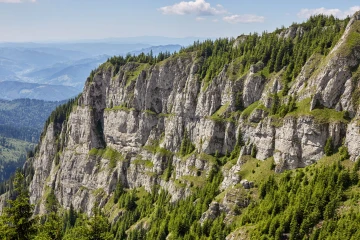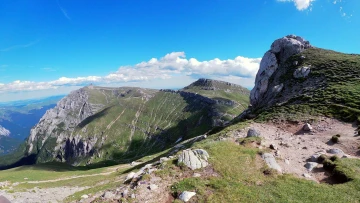
The Metaliferi Mountains, located in western Romania within the Apuseni Mountains, are known not only for their picturesque landscapes but also for their geological complexity and rich mining history. The region, part of the Carpathian chain, stands out for its specific structural and mineralogical features, which reflect a turbulent geological past.
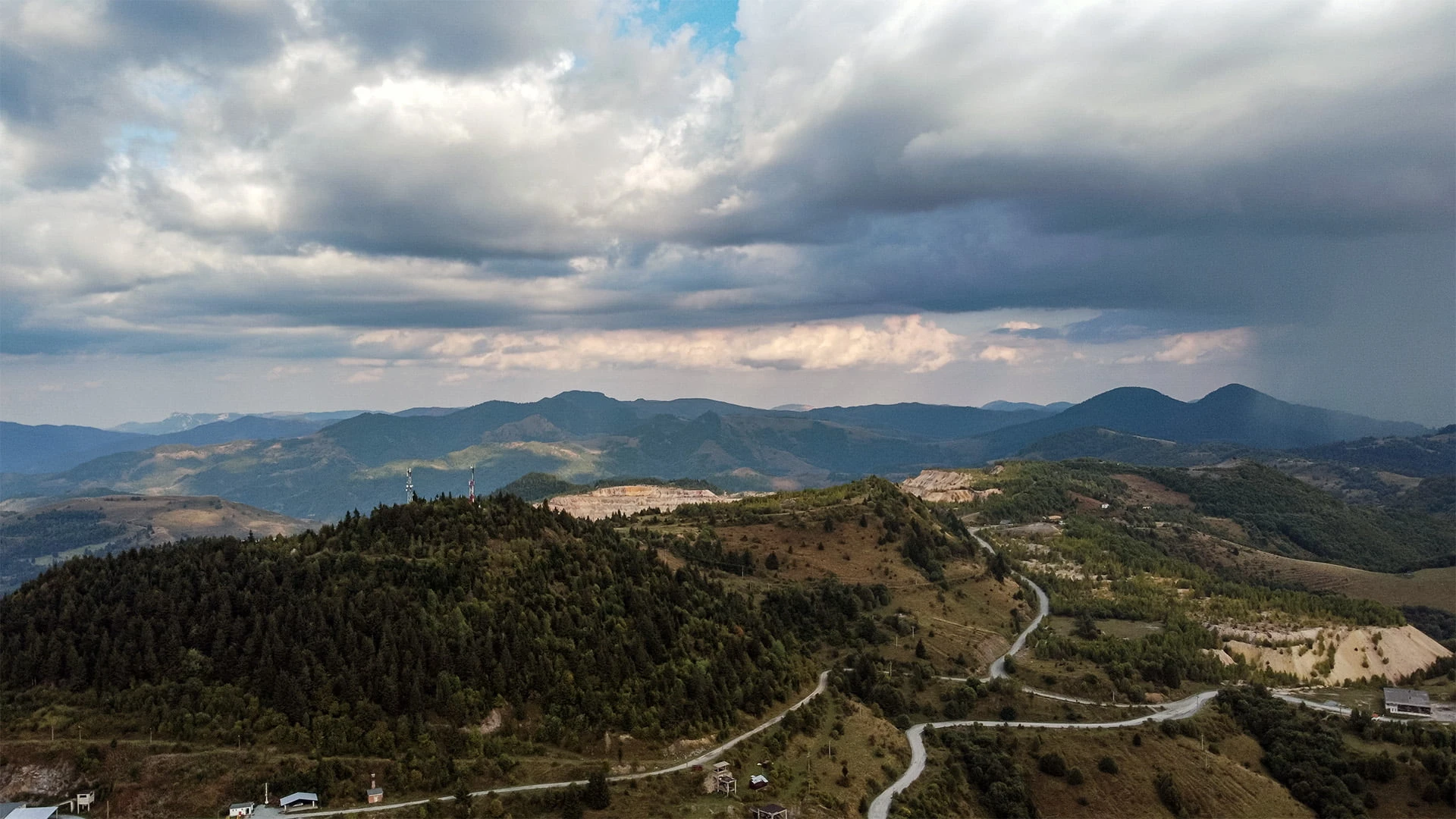
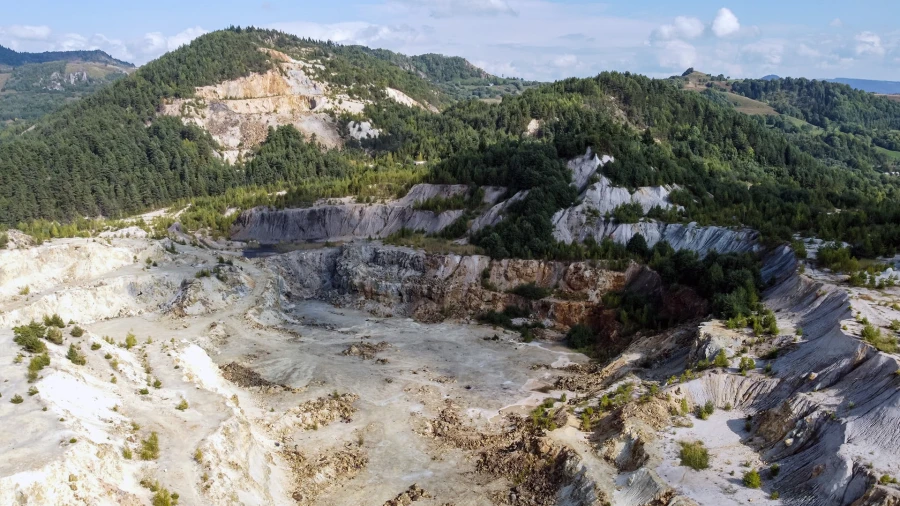
Roșia Montană landscape
In this article
General Features
The Metaliferi Mountains are part of the Apuseni Mountains group and are bounded by the Mureș River to the south and the Arieș to the north. Geologically, they are made up of a series of crystalline rocks such as granite and gneiss, as well as sedimentary and volcanic formations dating from various geological eras.
Location
Mountain group: Western Carpathians
Maximum altitude: Poienița Peak 1,437 m
The Metaliferi Mountains stretch from the west, starting at the Căpruța-Slatina de Mureș-Gurahonț Corridor, and end in the east at the Ampoi Valley, which runs from Alba Iulia to Zlatna. From here, the mountains extend northward, taking in the upper basins of the Ampoița, Galda and Stremț valleys. These valleys cross the limestone areas of the Trascău Mountains, forming spectacular gorges.
Map of the Apuseni Mountains, Romania
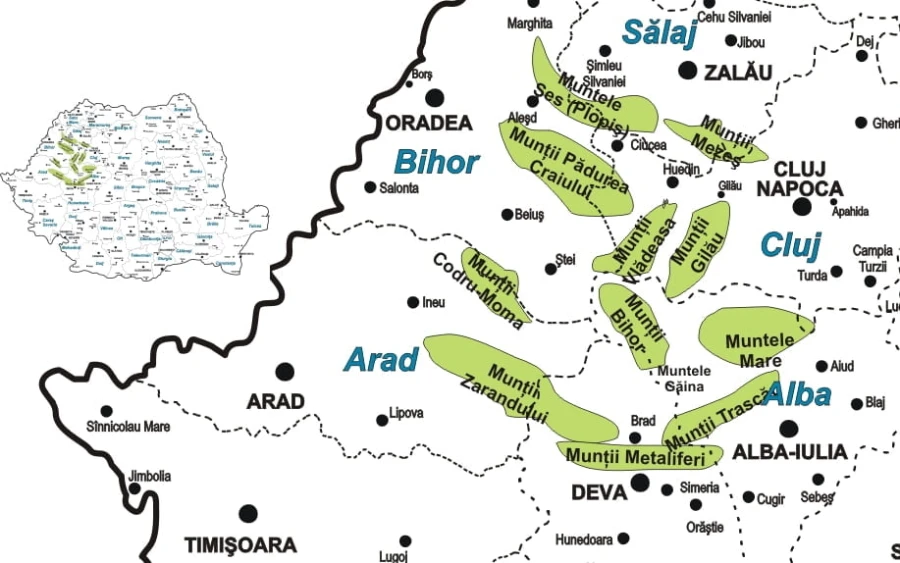
The Metaliferi Mountains connect with the Trascău Mountains along a line that starts at Zlatna, continues toward Întregalde and reaches Sălciua de Jos on the Arieș River.
To the north, the mountains' boundary reaches the Brad Depression and crosses the Buceș Pass (725 m), following the valleys of the Abrud and the Arieș. In the south, the limits are marked by the Mureș Corridor, between Căpruța and Alba Iulia.
They have become more accessible thanks to the construction of the Transapuseana road.
Tectonic Structure
This region was formed and reshaped over multiple tectonic cycles, including major events of the Hercynian and Alpine periods.
The Metaliferi Mountains have a complex structure, with multiple faults and folds resulting from interactions between the European and smaller tectonic plates. The area is also characterized by a variety of minerals, including precious and semi-precious metals, which have been mined since antiquity.
History of Research
Interest in the Metaliferi Mountains began in prehistoric times, when the first mining activities started.
Historical documents mention gold mining by the ancient Dacians, and later these practices drew the attention and rule of the Romans to the region. Modern geological studies began in the 19th century, when scholars such as Franz von Hauer and Johann Kuttnar described the geological structures and classified the rocks and minerals of the area.
Metallogeny and Mineral Resources
The region is remarkable for its metallogenic diversity, which includes gold, silver, copper and lead deposits. These resources have been exploited over the centuries, contributing to the area's economic development and continuing to attract investment in geological exploration and mining.
Economic and Ecological Impact
Intensive mining has had a significant impact on the region's landscape and ecology. Deforestation, soil erosion and river pollution are some of the environmental problems associated with mining.
However, in recent years, there has been growing awareness of the need for a more sustainable approach and for environmental protection in the exploitation of natural resources.
Tourism in the Metaliferi Mountains
The Metaliferi Mountains, part of the vast Apuseni Mountains range, offer a wide variety of tourist attractions that combine natural beauty with historical and cultural richness. Here, nature, history and adventure lovers can discover picturesque landscapes, remnants of the mining past and local communities with well-preserved traditions.
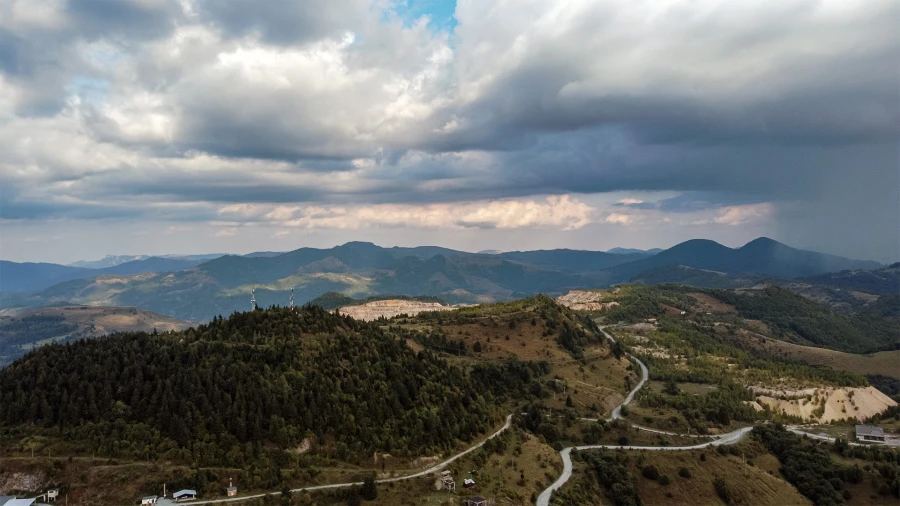
Metaliferi Mountains, Roșia Montană
Here are some of the most remarkable tourist highlights of the Metaliferi Mountains:
Natural Landscapes
The Metaliferi Mountains are renowned for their diverse landscapes, which include mountain peaks, vast coniferous and deciduous forests, and deep valleys.
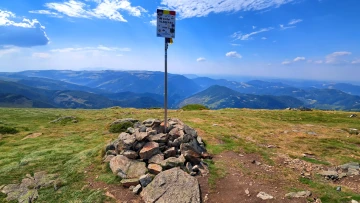
The hiking and cycling trails are well maintained and lead to viewpoints from which visitors can admire impressive panoramas of the region. Among the best-known trails are:
The Poiana Ruscă – Tarnița Trail, which offers spectacular views and the chance to see a variety of wildlife.
Piatra Grozbești Peak, accessible on a day hike, where you can see interesting geological structures.
Cultural and Historical Heritage
The Metaliferi Mountains area is rich in mining history, with a tradition dating back to the Dacians and continued by the Romans:
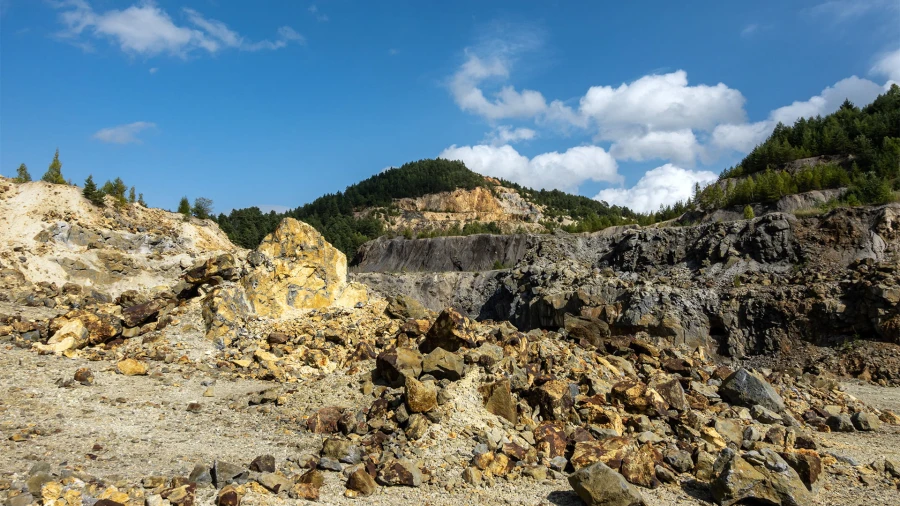
Roșia Montană, one of the oldest and most important mining sites in Romania, offers guided tours through ancient mine galleries and showcases traditional mining techniques.
The Mining Museum in Brad, where visitors can learn about the evolution of mining technologies and their impact on the region.
Mining landscape at Roșia Montană
Outdoor Activities
The region is ideal for outdoor enthusiasts, offering opportunities for:
Mountaineering and climbing, in areas such as the Mada Gorges, which offer challenges for all experience levels.
Skiing, in areas such as Arieșeni resort, which has slopes for beginners and advanced skiers, as well as ski touring routes.
Ecotourism and Conservation
The Metaliferi Mountains are known for their environmental conservation efforts, with several protected areas where rare species of plants and animals can be observed:
Detunatele Nature Reserve, famous for its unique basalt columns and lunar landscapes.
Apuseni National Park, a paradise for cavers and nature enthusiasts, with caves, potholes and spectacular karst formations.
Local Traditions
Visiting local communities offers an authentic insight into traditional life in the Metaliferi Mountains:
Local festivals, such as the Narcissus Festival or the Cheese and Țuică Festival in Rășinari, where visitors can taste local products and take part in cultural activities.
Craft workshops, where local artisans demonstrate the arts of woodworking, weaving and pottery.
Frequently Asked Questions
What are the best times to visit?
The best times to visit the Metaliferi Mountains are spring and fall, when temperatures are pleasant and the scenery is especially beautiful.
Conclusions
The Metaliferi Mountains, with their varied landscapes and rich resources, remain an area of interest for geologists and nature lovers alike. Balanced management of resource exploitation and environmental conservation will be crucial to ensuring the region's long-term sustainability. Ongoing studies and new technologies in geology and mining will continue to reveal more about this fascinating territory.