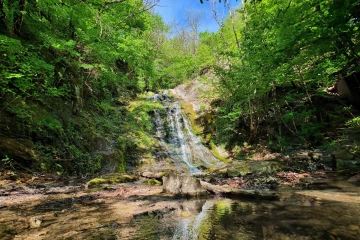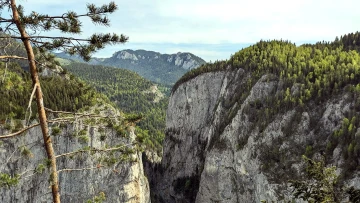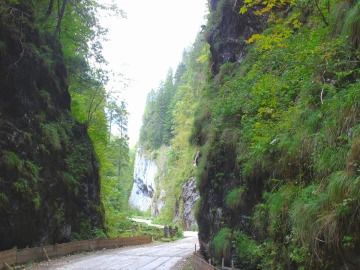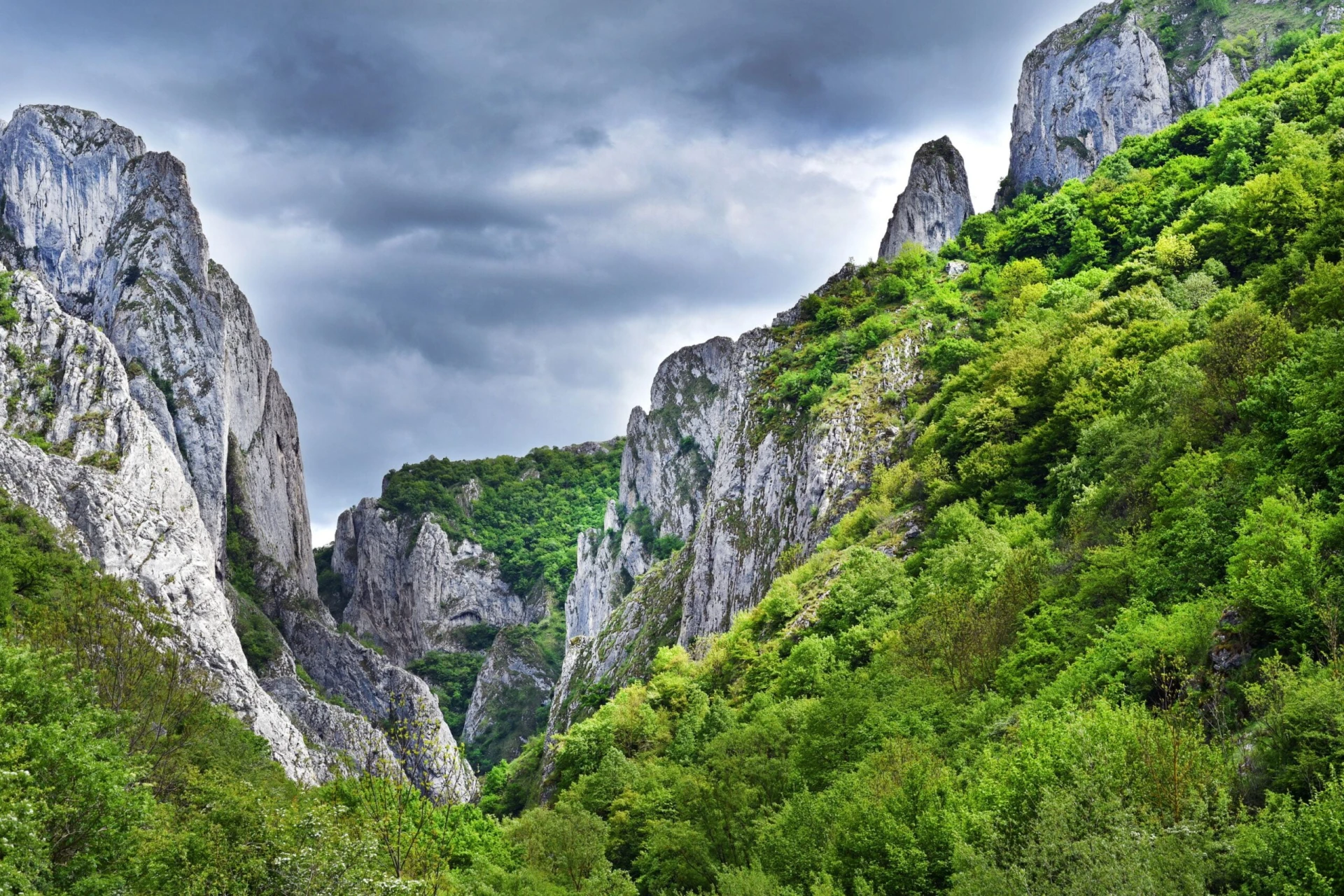
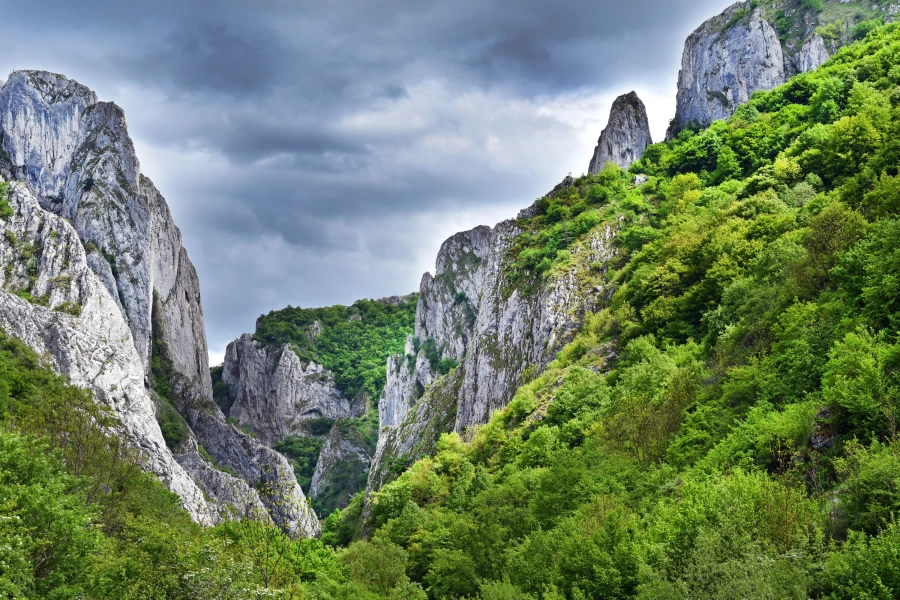
The Turda Gorges, located in the Apuseni Mountains, one of the most picturesque regions in Romania, delight visitors with stunning scenery, spectacular rock formations, and a rich history.
Turda Gorges landscape
In This Article:
Location and Access
The Turda Gorges are located in west-central Romania, in Cluj County, near the city of Cluj-Napoca, in the Trascău Mountains (part of the Apuseni Mountains). You can get there via a short drive of nearly 37 kilometers (about 40 minutes by car) from downtown Cluj-Napoca.
National road DN75 leads directly to the Turda Gorges: from Turda, it is 6 km to the gorges, in Petreștii de Jos commune, and the entrance is marked by a clearly visible sign.
To get to the Turda Gorges, you can travel by car or public transportation. From Cluj-Napoca, you can take a train or a bus to the Turda station. From there, you can walk, take a taxi, or rent a bike to reach the gorges, which are a reasonable distance away. There is also plenty of parking for visitors who prefer to come by car.
Just a short distance from a major urban center and well connected to the transportation network, the Turda Gorges are a wonderful place for those who want to experience the beauty of nature and adventure in an easily accessible setting.
Distances
If you choose to visit the Turda Gorges, here are the distances from Romania's major cities:
from Cluj-Napoca: 47 min (36.4 km) via DN1/E60/E81 and DJ103G
from Alba Iulia: 1 hr (74.9 km) via A10
from Arad: 3 hr 22 min (323.2 km) via A1
from Timișoara: 3 hr 18 min (290.5 km) via A1
from Oradea: 3 hr 13 min (197.6 km) via DN1/E60
from Deva: 1 hr 33 min (141.6 km) via A1 and A10
from Sibiu: 1 hr 36 min (152.4 km) via A1 and A10
from Târgu Mureș: 1 hr 16 min (85.1 km) via the Transylvania Motorway/A3
from Bucharest: 5 hr 59 min (427.2 km) via E81 and DN7/E81
History and Legend
The Turda Gorges have a rich history and have been inhabited since ancient times. Past inhabitants left traces of their presence, such as inscriptions and rock drawings.
There are also many local legends about this place, adding an extra touch of mystery and fascination. The legends tell of magical creatures and dark spirits that live in the depths of the gorges.
The Spectacular Crossing of the Gorges
According to statistics, the Turda Gorges are visited by more than 70,000 tourists every year, and the area has the status of a nature reserve thanks to its invaluable importance in various fields.
The gorges are 1,300 meters long, and their walls rise up to 200 meters. They were carved into the limestone by the waters of the Hășdate stream, a tributary of the Arieș River.
There are four footbridges across this valley in the Turda Gorges:
Footbridge 1 – “Podul Peșterilor” (Bridge of the Caves)
Located at the entrance to the gorges, this footbridge offers a unique view of the caves and the entire valley. It is the largest and most impressive footbridge in the Turda Gorges and is crossed by most tourists visiting the area. From here, you can admire the surrounding rock formations and see the cave entrances in the rock walls of the gorges.
Footbridge 2 – “Mijlocul Cheii” (Middle of the Gorge)
Located in the central part of the Turda Gorges, it offers a closer look at the rock formations and the waterfall in the area. It is accessible to tourists who want to explore the central part of the gorges and get closer to the rock wall.
Footbridge 3 – “Vizuina Spălată” (The Washed Den)
It is located in the upper part of the gorges and offers a panoramic view of the entire valley. It gets its name from the fact that it sits in an area where water has washed over the rock, creating interesting and unique shapes.
Footbridge 4 – “Portița Cheilor” (Gateway of the Gorges)
Located at the end of the route, it marks the exit from the gorges and the way back to the starting point. It is the last footbridge tourists cross before leaving the area, and it offers an overview of the entire journey through the gorges. (see Wikipedia.ro)
This attraction offers a unique karst landscape, featuring very high walls, rocks (Stânca Șoimilor and Stânca Tarniței), steep rock formations, natural arches, stone towers (Turnul Dracului or Turnul Gâștii), and many caves (Cetățeaua Mare and Cetățeaua Mică), all contributing to its remarkable beauty.
The main attraction of the Turda Gorges is their karst landscape. The deep canyons and rocky slopes offer a spectacular sight. The rock is sculpted into various shapes as nature reveals its whims and boundless imagination, giving visitors a unique experience of exploration.
However, the oldest gorges in Romania are considered to be the Dobruja Gorges.
A few kilometers from the Turda Gorges, you can also visit the Turda Salt Mine.
Marked Trails and Hikes
The Turda Gorges are ideal for hiking and outdoor activities. Marked trails cross the area, each offering a different perspective on the gorges.
Some of these trails guide visitors along the slopes of the gorges, others give them the chance to explore the surrounding area, while still others connect with longer hiking routes in the Trascău Mountains and the Apuseni Mountains.
Thanks to the variety of trails, tourists of all experience levels can explore the Turda Gorges. From easy walks to rock climbing, there is something for everyone.
The most popular trail for visitors to the Turda Gorges is the one along the Hășdate stream. Here are some examples of trails:
1. Turda Gorges Trail
Trail marking: red dot
Length / Duration: 7 km; 4-5 hours
Marked with a red dot, this trail is a favorite of those who want to enjoy stunning views in the Turda Gorges. Follow the trail from the Turda Gorges Chalet, or start it upstream, from Petreștii de Jos. The ridge trail will take you to the highest peaks (757 m altitude) and give you a unique perspective on the gorge.
2. Făget Trail (Cluj-Napoca)
Trail marking: red stripe
Length / Duration: 25 km; 7 hours
The trail starts in the Turda Gorges and heads to Petreștii de Jos, then continues through Deleni and Micești and reaches the Făget district of Cluj-Napoca. It is especially popular with cyclists and can be covered by bike in about 3 hours.
3. Borzești Gorges – Buru Chalet
Trail marking: red triangle
Length / Duration: 11 km; 4 hours
This short trail gives you the chance to explore the Borzești Gorges, a remarkable area very close by.
4. Tureni Gorges – Tureni commune
Trail marking: blue stripe
Length / Duration: 10 km; 3-4 hours
The markings lead you to the Tureni Gorges, also known as Cheile Turului. The trail starts in the Turda Gorges and ends in Tureni commune, where you can catch minibuses to Cluj-Napoca.
5. Turda Trail
Trail marking: red cross
Length / Duration: 8 km; 3 hours
The trail takes you from the Turda Gorges to the town of Turda, passing over Hodiniș Hill.
6. Cheia Village – Mihai Viteazu commune
Trail marking: blue cross
Length / Duration: 7 km; 2-3 hours
This trail takes you to Mihai Viteazu commune, passing through the village of Cheia. It is a common route for those who want to reach the gorges.
7. Ciucaș Waterfall
Trail marking: yellow stripe
Length / Duration: 6 km; 2-3 hours
The markings lead to Ciucaș Waterfall, where you can relax and cool off in summer.
8. Ciucaș Waterfall – Cornești Village
Trail marking: yellow triangle
Length / Duration: 9 km; 4 hours
The trail continues from Ciucaș Waterfall to the village of Cornești.
9. Piatra Secuiului – Rimetea Village
Trail marking: red stripe
Length / Duration: 15 km; 5-6 hours
This trail connects you with Piatra Secuiului and the picturesque village of Rimetea via Moldovenești and Buru. From Rimetea, the trail continues into the Apuseni Mountains. Just 5 km from Rimetea, be sure to also visit Trascău Fortress.
Activities in the Turda Gorges
Hiking and Trekking: explore the many marked trails and paths while admiring the spectacular scenery of the gorges.
Rock Climbing: experience the thrill of adventure by climbing the steep cliffs and varied landforms.
Hiking: discover the beauty of nature on scenic mountain trails, exploring the area on two wheels.
Birdwatching: admire a variety of bird species in their natural habitat while enjoying the richness of the local biodiversity.
Photography: capture unique and memorable images of the landscapes and rock formations.
Climbing: feel the adrenaline rush as you climb the steep rocks.
Paragliding: enjoy a panoramic view of the gorges and the surrounding landscape as you glide above them on a paraglider.
Nearby Attractions
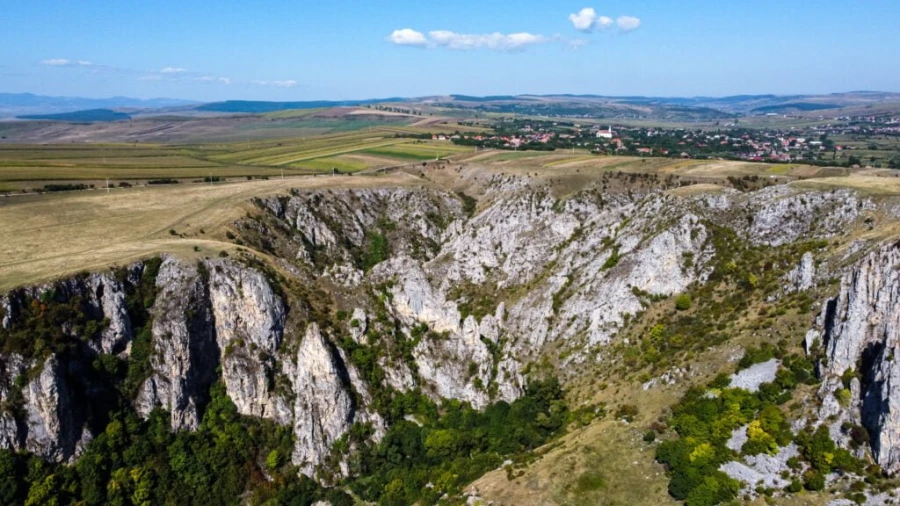
Tureni Gorges
The Tureni Gorges are located near the Turda Gorges, in Tureni commune, Cluj County. This impressive nature reserve attracts visitors with its spectacular scenery.
Ciucaș Waterfall
The lake and Ciucaș Waterfall are located near the village of Cornești, Mihai Viteazu commune, Cluj County, also in the Hășdate Valley (about 8 km from the gorges).
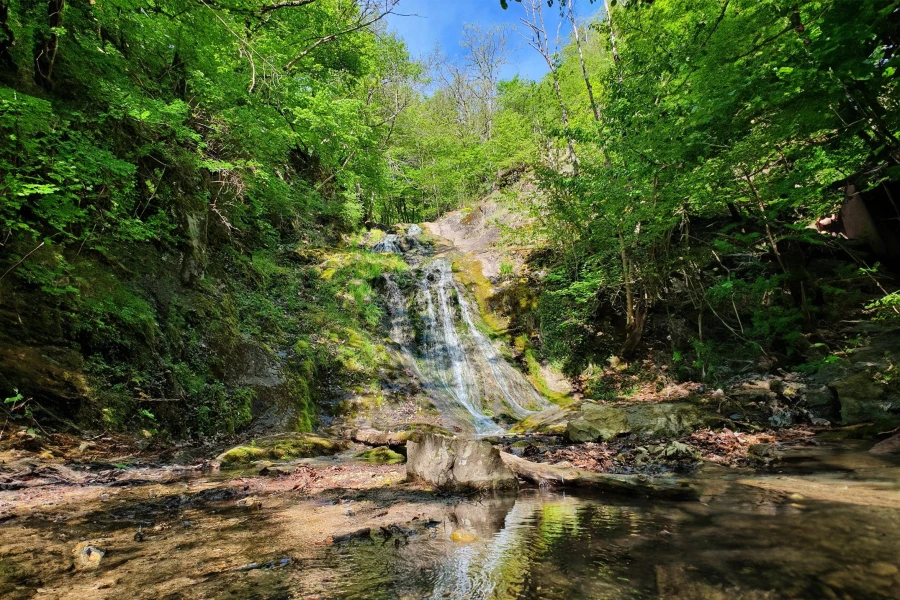
Borzești Gorges
Famous for their hard-to-reach rock formations and many waterfalls, the Borzești Gorges are about 5 km from the Turda Gorges.
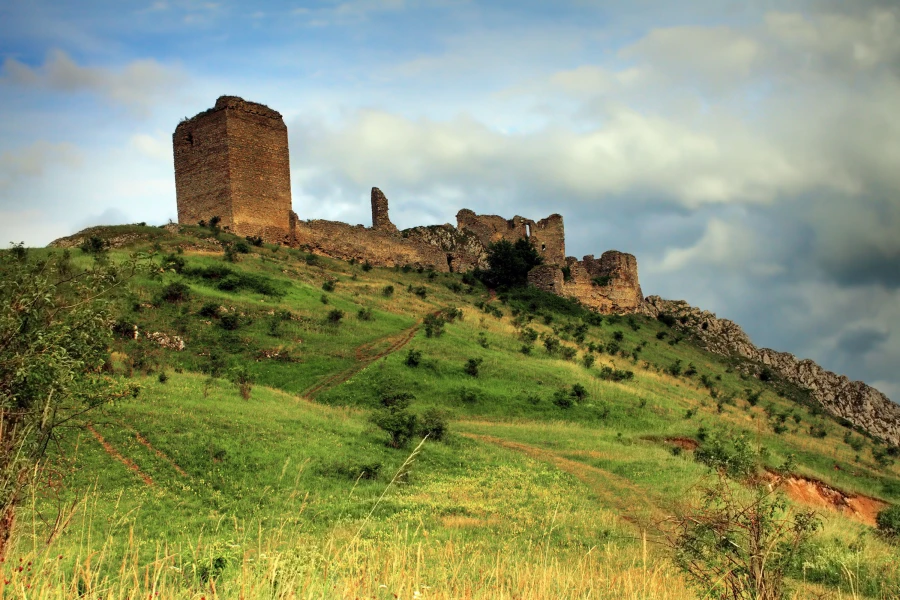
Trascău Fortress
Colțești Fortress is about 30 km from the gorges.
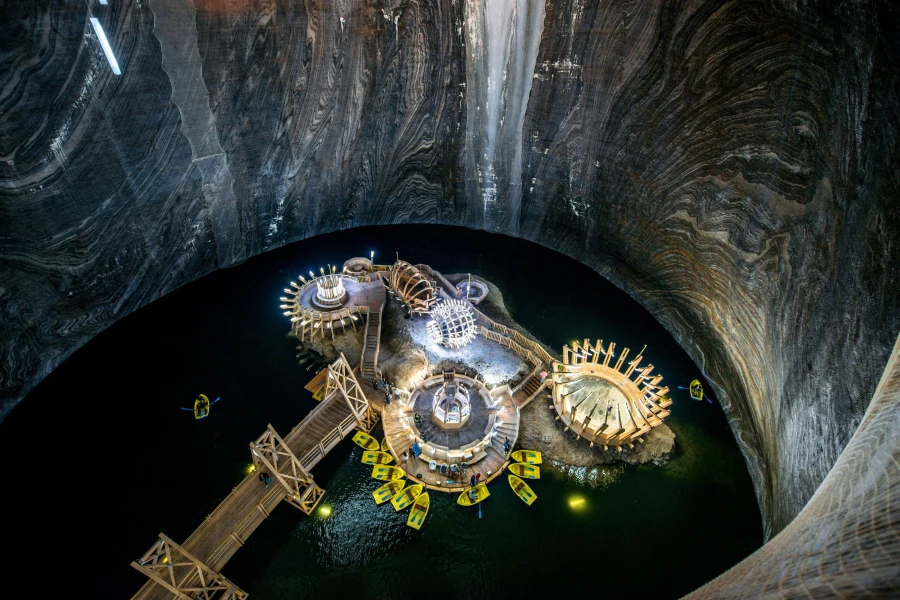
Turda Salt Mine
Turda Salt Mine is one of the oldest salt mines in the world, turned into a modern tourist attraction with underground lakes, lighting installations, and recreational activities.
Turda's Central Square
Turda's central square is the lively heart of the town, offering a variety of shops, restaurants, and terraces, along with a vibrant, pleasant atmosphere.
Cluj-Napoca
Cluj-Napoca is one of the most important cities in Transylvania, renowned for its historic architecture, interesting museums, rich cultural life, and friendly atmosphere.
Buscat Resort – Muntele Băișorii is about 40 km away.
Flora and Fauna
The Turda Gorges are home to a variety of plant and animal species. Their biodiversity makes the Turda Gorges similar to the Bicaz Gorges.
Several types of protected habitats are found here, such as grasslands with scrub, beech forests, rocky slopes with vegetation, grasslands on steep terrain, and riverside forests.
Within the Turda Gorges nature reserve, more than 1,000 plant species and more than 100 animal species have been identified that enjoy protected status, either because they are rare or because they live only in this area.
The reserve is home to an impressive variety of wildlife, such as bats, the wildcat, the fox, the rock butterfly, the spined loach, the fire-bellied toad, the weasel, the golden eagle, the rock thrush, and the stone marten.
The protected plant species that find refuge here include wild grapevine, hawkweed, the white-petaled pink, the rock tulip, yew, iris, the silver whitebeam, rock garlic, and the mountain aster.
This diversity of ecosystems makes the Turda Gorges a wonderful place for observing nature.
Accommodation
Near the Turda Gorges, there are several convenient accommodation options for tourists.
Turda Gorges Chalet is a short distance from the reserve entrance on the Cheia side, offering easy access to the area's natural beauty.
Laura Guesthouse, located in Petreștii de Jos commune, and Cheile Apusenilor Guesthouse in Săndulești commune are also close to the reserve entrance, giving tourists the opportunity to enjoy comfortable facilities and easily explore the Turda Gorges.
You can also stay 1-2 hours away from the attraction (details at cheileturzii.ro), in the neighboring villages or even in Turda.
For those looking for an authentic experience in the heart of nature, there are also two campsites.
Weather in Turda
Check the weather in Turda for the next 7 days:
Frequently Asked Questions
What are the opening hours of the Turda Gorges?
Access to the gorges is generally unrestricted, but during the tourist season it is possible between 09:00-20:00.
How far is Rimetea from the Turda Gorges?
Rimetea is about 30 km from the Turda Gorges, a 35-minute drive.
Is there a fee to visit the Turda Gorges?
During the tourist season, a fee is charged to cover the upkeep of the trails and Salvamont mountain rescue (6 RON for adults, 4 RON for children).
Conclusion
The Turda Gorges are a geological gem and a must-see destination for nature and adventure lovers. This protected area in the Arieș Valley offers amazing experiences for all visitors, whether they are passionate about geology or hiking or simply looking for beautiful scenery.
If you want to explore one of the most impressive wonders of the Apuseni Mountains, the Turda Gorges should be on your travel list! But that's not all: we also recommend the Arieș Valley, the Turda Salt Mine, the Ordâncușa Gorges, and Poarta lui Ionele Cave.