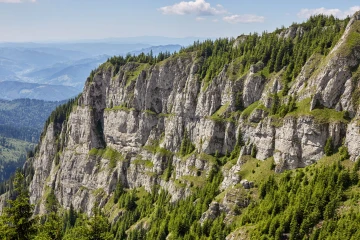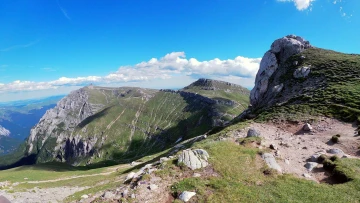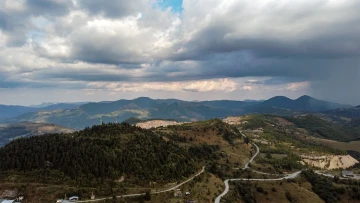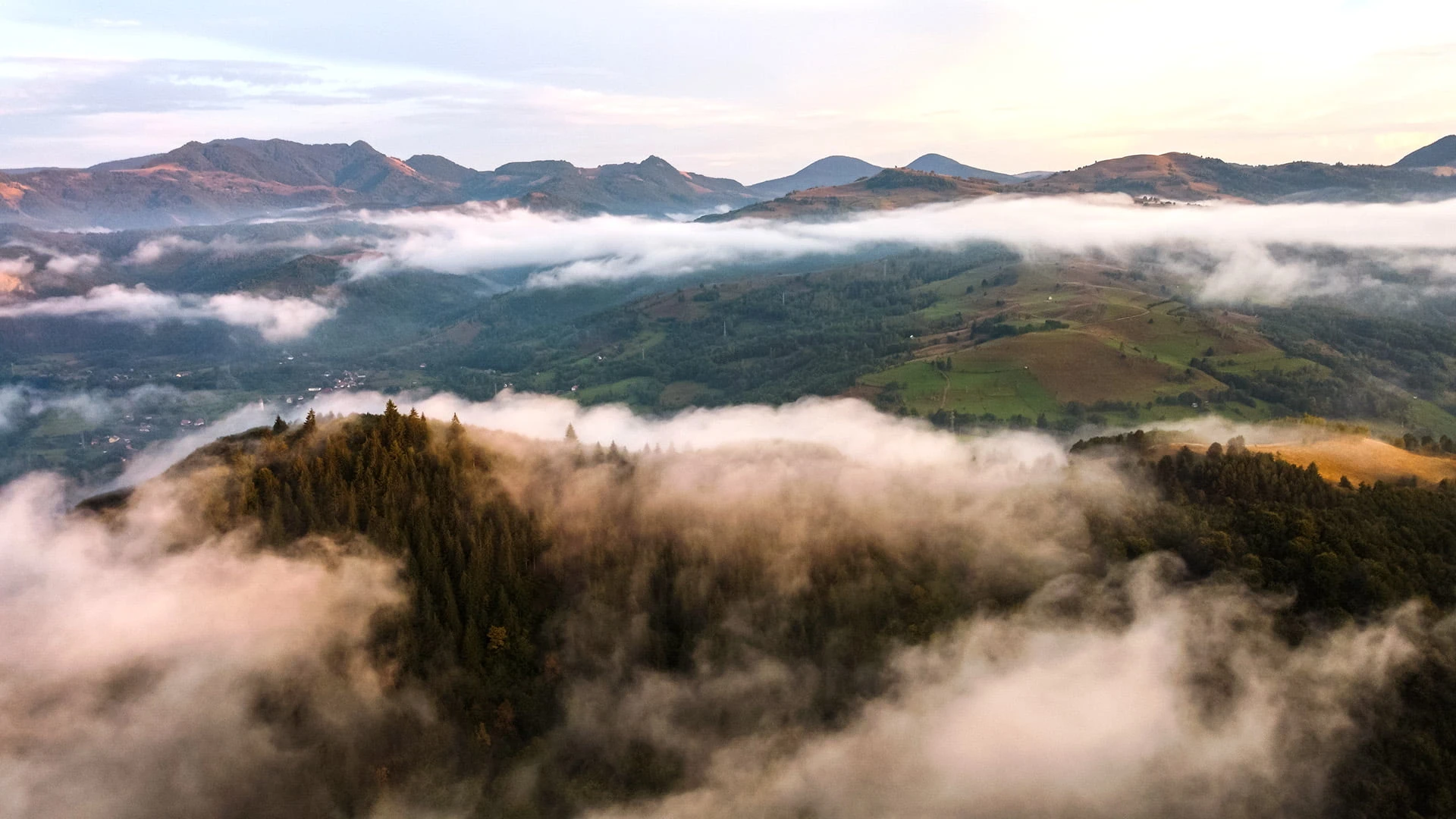
The Apuseni Mountains are one of Romania's most picturesque and diverse mountain regions, located in the west of the country and spanning Alba, Bihor, Cluj, and Hunedoara counties.
Apuseni Mountains
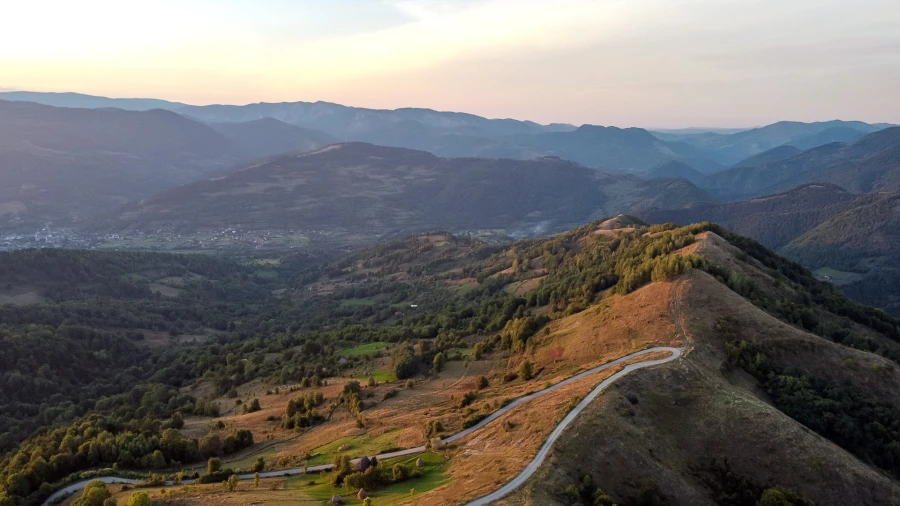
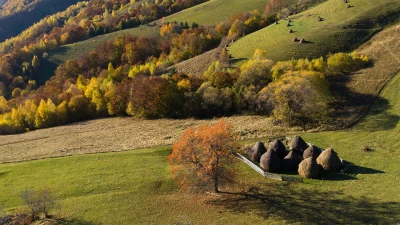
This impressive area stretches over a vast territory, offering varied landscapes that include forested peaks, karst plateaus, deep valleys, and many spectacular caves.
In this article
Geography and Climate
The Apuseni Mountains, the largest mountain range in Transylvania, lie in western Romania and are a subdivision of the Western Carpathians. They are characterized by remarkable geomorphological diversity, including high peaks, karst plateaus, gorges, caves, and deep valleys.
Location and Boundaries
They are bordered to the north by the Someș Plain, to the south by the Brad Depression, to the east by the Transylvanian Depression, and to the west by the Western Hills and the Western Plain. They are divided into several groups, each with its own geographic and scenic features.
Landforms of the Apuseni Mountains
The Apuseni Mountains have karst terrain with a large number of caves (more than 400). The relief is characterized by moderate elevations, with peaks rarely exceeding 1,800 meters. The highest summit is Cucurbăta Mare Peak (1,849 m), in the Bihor Mountains.
Transapuseana landscape
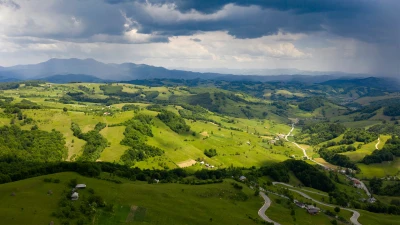
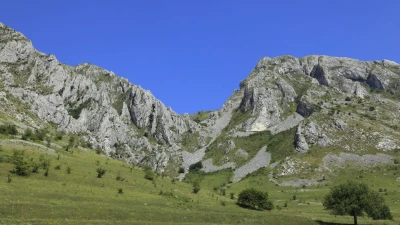
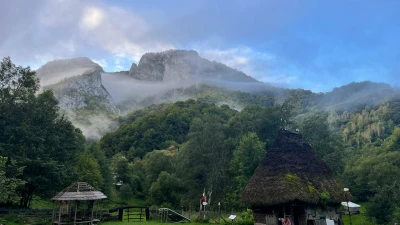
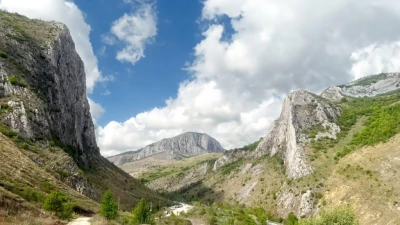
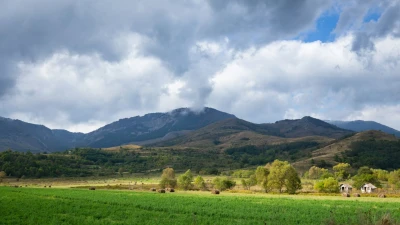
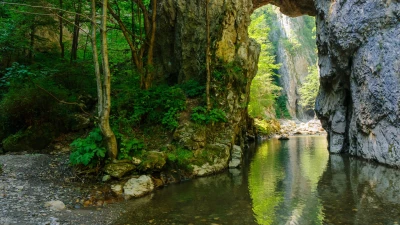
The Turda Gorges and the Râmeț Gorges are notable examples of deep, narrow canyons carved by rivers over thousands of years.
Mountain Groups of the Apuseni Mountains
The Apuseni Mountains are divided into several distinct mountain groups, each with its own features and attractions:
Bihor Massif: This group includes the highest peaks in the Apuseni Mountains, such as the Cucurbăta Mare Peak (1,849 m) and Muntele Mare Peak (1,826 m), and is known for its spectacular scenery and impressive karst areas, such as the Padiș Plateau.
Vlădeasa Mountains: With gentler peaks and picturesque scenery, these mountains include attractions such as the Bride's Veil Waterfall (Vălul Miresei) and many hiking trails.
Meseș Mountains: Located in the northwestern part of the Apuseni, this mountain group is lower and known for its forested landscapes and interesting geological formations.
Trascău Mountains: These mountains are known for their impressive gorges, such as the Turda Gorges and the Râmeț Gorges, offering excellent opportunities for climbing and hiking.
Metaliferi Mountains: Made up of volcanic rocks and limestone, this group is rich in mineral resources and famous for its mining history, with many picturesque villages and varied landscapes.
Gilău Mountains: With gentle mountain scenery and vast forests, these mountains are ideal for hiking and mountain biking.
Codru-Moma Mountains: A lesser-known mountain group, but full of natural beauty, perfect for those who want to explore areas less frequented by tourists.
Șimleu Mountains, also considered part of the Transylvanian Basin–Someș Plateau (Măgura Șimleului Peak, 597 m)
Apuseni Mountains landscape
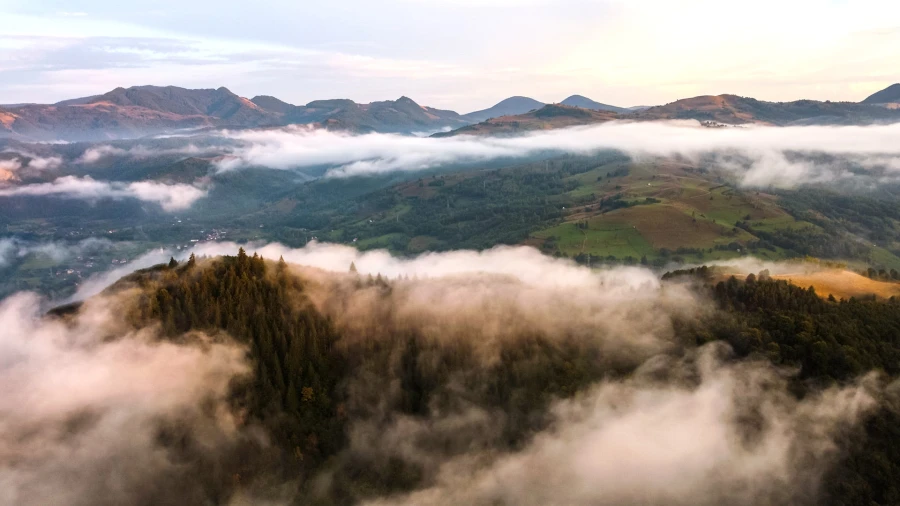
The Apuseni Mountains are a special tourist destination, offering a wide range of activities and attractions for every taste. Whether you are an adventurer looking for an adrenaline rush or a traveler eager to discover Romania's natural and cultural beauty, the Apuseni Mountains have something special for everyone.
The Highest Peaks in the Western Carpathians
The Apuseni stand out for their varied and spectacular landscapes. Although their elevations are not as high as those of the Southern or Eastern Carpathians, these mountains offer impressive views and excellent opportunities for hiking and exploration.
Here are some of the highest peaks:
Cucurbăta Mare Peak (Bihor): At 1,849 meters, Cucurbăta Mare Peak is the highest peak in the Apuseni Mountains and in the Western Carpathians. Located in the Bihor Mountains, it offers impressive panoramas over the entire region and is a major attraction for hikers.
Cucurbăta Mică Peak: Part of the same mountain massif, Bihor, it is known for its wild scenery and dense forests.
Vlădeasa Peak: At 1,836 meters, Vlădeasa Peak is the second-highest peak in the Apuseni. Located in the Vlădeasa Mountains, it is popular with tourists for its accessible trails and spectacular views.
Piatra Grăitoare Peak: At 1,658 meters, this peak offers picturesque scenery and can be reached on hiking trails that cross conifer forests and alpine meadows.
Buteasa Peak: At 1,792 meters, Buteasa Peak rises in the Gilău-Muntele Mare Mountains. It is a favorite with hikers for its beautiful, less crowded trails.
Local Climate
The climate of the Apuseni Mountains is mountainous, with continental influences. Temperatures vary significantly with elevation and season. Summers are relatively cool, with average temperatures between 15 and 20 degrees Celsius, ideal for hiking and exploring. Winters are cold, with temperatures that can drop below -10 degrees Celsius, providing excellent conditions for winter sports such as skiing and snowboarding.
Precipitation is evenly distributed throughout the year, but the heaviest amounts fall in spring and fall. Snow is present from November to March, adding to the beauty of the mountain landscape in the cold season.
Flora and Fauna
The Apuseni Mountains are home to remarkable biodiversity, with a variety of plant and animal species adapted to the region's diverse environmental conditions. The flora of the Apuseni Mountains is rich and varied, ranging from deciduous and coniferous forests (at elevations above 1,300 m) to alpine meadows and karst areas. Plant species include fir, spruce, beech, and oak, as well as various rare wildflowers, such as edelweiss and gentian.
The fauna is just as diverse, including large mammals such as the brown bear, the wolf, and the lynx, which live in dense, remote forests. The Carpathian red deer is common at higher elevations. The caves and underground rivers of the Apuseni are the perfect habitat for bat species and unique cave fauna, including the olm, a rare and spectacular amphibian.
The rivers and lakes are home to a variety of fish, including trout and barbel, which are important for local aquatic ecosystems.
History and Culture of the Apuseni Mountains
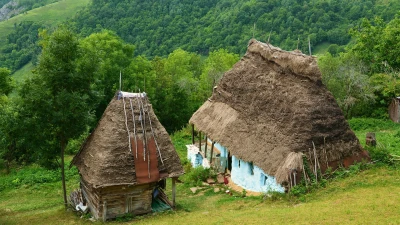
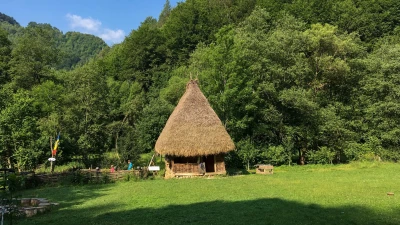
The Apuseni Mountains are a region with a rich history and a distinctive culture, reflected in local traditions and customs, architecture, and unique cultural events. Over the centuries, this area has been inhabited by communities that preserved and passed down old customs and crafts.
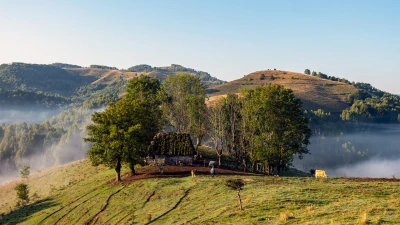
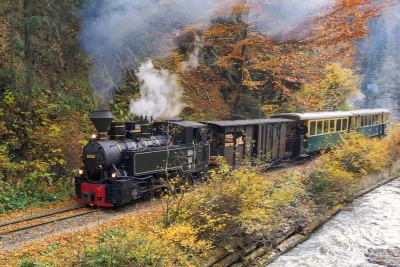
Cow barn along the Transapuseana
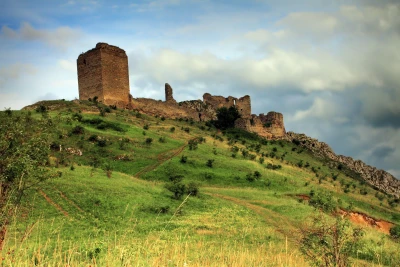
Historic Sites
Roșia Montană: Known for mining activity dating back to the Roman Empire. Here you can visit:
The Roman mine galleries.
The Mining Museum, which displays artifacts and tools used by miners over the centuries.
Ancient inscriptions that offer a glimpse into gold mining in antiquity.
Țara Moților
Albac: Famous for its traditional wooden houses and local crafts.
Festival “Maidens' Fair on Mount Găina”: One of the oldest events in Romania, where young people meet to find a partner. The festival includes:
Traditional music and dances.
Authentic folk costumes.
Local crafts and products.
Heroes and Memorial Sites
Avram Iancu Commune: Named after the national hero Avram Iancu, leader of the 1848 revolution in Transylvania. Points of interest:
The Avram Iancu Memorial House, open to the public, which offers information about his life and struggle.
Cultural Heritage
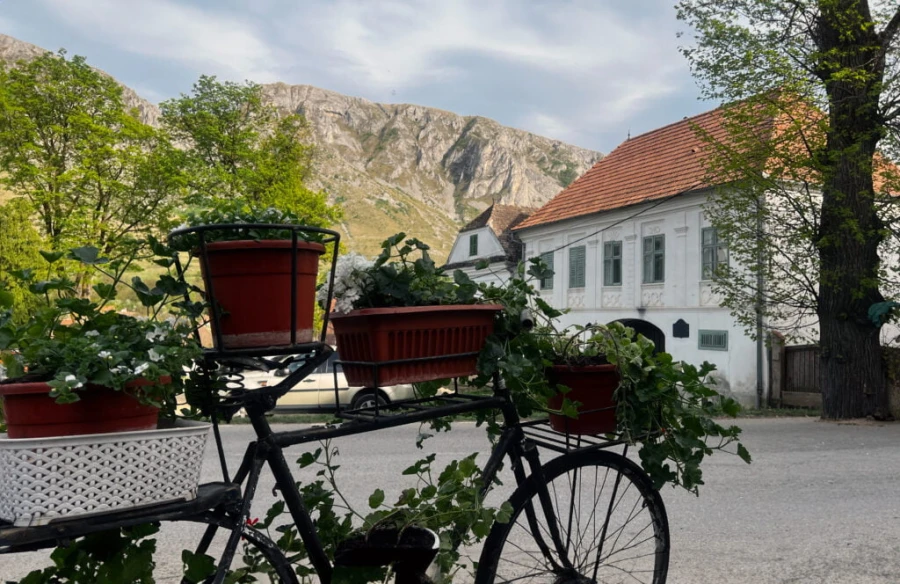
Rimetea: Known for its white houses with green windows, a legacy of the Hungarian minority. This commune received the “Europa Nostra” award for preserving its cultural heritage.
Cultural attractions:
Culinary traditions, such as cabbage dishes and smoked meat specialties.
The unique landscape and the preservation of traditional architecture.
View from a restaurant terrace in Rimetea
The Apuseni Mountains are a treasure trove of history and culture, offering visitors a glimpse into Romania's authentic traditions. From the Roman remains at Roșia Montană to the traditional festivals of Țara Moților and the well-preserved heritage of Rimetea, this mountain region reveals its beauty and stories in a spectacular natural setting.
Tourism and Recreational Activities
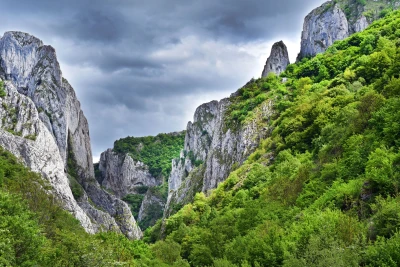
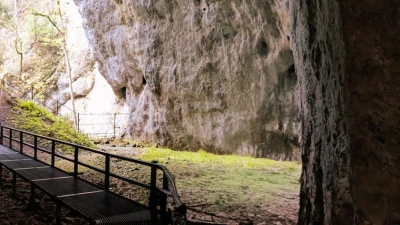
Turda Gorges landscape
Main Tourist Attractions
The Apuseni Mountains are known for their spectacular landscapes and many tourist attractions. Some of the most important are:
Padiș: A remarkable karst region, Padiș is a popular destination for hiking and caving. Here you will find Cetățile Ponorului Cave, the Bortig Pothole, and the Galbena Valley.
Turda Gorges: An impressive gorge, perfect for hiking and climbing, with limestone walls up to 200 meters high.
Râmeț Gorges: A spectacular gorge in the Trascău Mountains, ideal for hiking and caving.
Cetățile Rădesei: A complex of underground galleries and canyons, Cetățile Rădesei offer a unique experience exploring caves and rock formations.
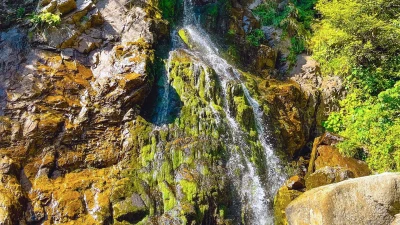
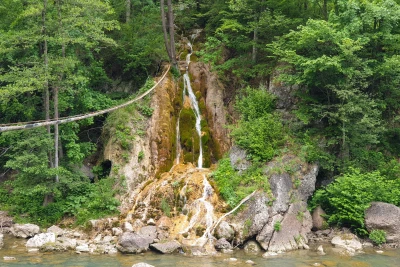
Șipote Waterfall: Located in Sălciua commune, this picturesque waterfall is made up of a series of cascades and natural pools.
Vârciorog Waterfall: With a drop of about 15 meters, it offers spectacular scenery and is an ideal spot for hiking and relaxing in nature.
Bride's Veil Waterfall: Located near the village of Răchițele, this spectacular waterfall drops more than 30 meters and is one of the most beautiful waterfalls in the area.
Poarta lui Ionele Cave: The cave impresses with its monumental entrance and spectacular stalactite and stalagmite formations.
Scărișoara Cave: The largest cave with an underground glacier in Romania, the Scărișoara Ice Cave holds a glacier more than 3,000 years old. It is an impressive place for tourists thanks to its unique ice formations and stalactites.
Wind Cave is the longest cave in Romania, stretching for more than 50 km!
Pișoaia Waterfall: uniquely beautiful, located in Vidra commune, Alba County
Hiking and Mountain Trails
The Apuseni Mountains are a paradise for hikers, offering a variety of trails for all difficulty levels:
Galbena Circuit Trail: This spectacular trail offers amazing views over the Galbena Valley and includes passages through caves and canyons.
Bihor Mountains Ridge Trail: A moderate trail with impressive panoramas over the entire region, passing over Cucurbăta Mare and Piatra Grăitoare peaks.
Bulbuci Waterfall – Groapa Ruginoasa Trail: A scenic trail that leads to Bulbuci Waterfall and continues to the impressive geological formation of Groapa Ruginoasa, known for its red canyon look.
Sports and Adventure Activities
The Apuseni Mountains offer many opportunities for sports and adventure activities:
Caving: With so many caves, the Apuseni are ideal for caving. Bears' Cave (where the skeleton of a cave bear was discovered), Wind Cave (more than 50 km long and the longest cave in Romania), and Scărișoara Cave (one of the oldest ice caves in the country, where the volume of ice inside can reach 75,000 cubic meters) are just a few of the best-known spots for this activity.
Climbing: The rocks of the Apuseni are perfect for climbing, with many routes of varying difficulty. Areas such as the Turda Gorges or the Râmeț Gorges are very popular with climbers.
Mountain biking: Mountain biking trails in the Apuseni offer thrilling adventures through dense forests and spectacular mountain scenery.
Skiing and snowboarding: Winter resorts such as Arieșeni and Buscat offer ski slopes and snowboarding facilities, making them popular destinations in the cold season.
Accommodation and Tourist Facilities
For those who want to explore the Apuseni Mountains, there are many accommodation options and tourist facilities:
Guesthouses and cabins: Offering rustic, authentic comfort, the guesthouses and cabins of the Apuseni are ideal for those who want to enjoy local hospitality. Tourist areas such as Albac, Arieșeni, and Gârda de Sus are full of such options.
Camping: For nature lovers, there are many campsites in the Apuseni that let visitors enjoy the natural scenery in all its splendor.
Hotels and villas: In nearby towns and resorts, such as Câmpeni and Beiuș, tourists can find hotels and villas with all the modern amenities needed for a comfortable stay.
Natural Resources and Economy
The Apuseni Mountains are rich in natural resources, which have played an essential role in the region's economic development. Among the most valuable are deposits of gold, silver, and other precious metals. Roșia Montană is a notable example of mining, with a history dating back to antiquity.
Logging is another important economic activity, as the dense forests provide quality timber for various uses. Agriculture, though less widespread, includes livestock farming and growing traditional crops, contributing to the local economy.
Tourism has become a major source of income, thanks to the spectacular landscapes, caves, and unique cultural traditions. Tourist activities such as hiking, caving, and winter sports attract thousands of visitors every year, boosting the local economy and promoting the conservation of natural resources.
The construction of the Transapuseana road makes tourism easier and creates new opportunities to showcase the cultural heritage of the Apuseni.
Nature Conservation and Environmental Protection
The Apuseni Mountains are an ecologically special region, and conservation and environmental protection efforts are essential for maintaining its biodiversity and natural beauty.
Numerous natural parks and protected areas have been created to conserve the region's unique flora and fauna.
Natural Parks and Protected Areas
Apuseni Natural Park: Covering a vast area, this park is dedicated to protecting karst landscapes, old-growth forests, and rare plant and animal species. It is home to spectacular geological formations, such as Scărișoara Cave and Cetățile Ponorului.
Padiș Nature Reserve: This reserve is famous for its karst plateaus, sinkholes, and caves, which provide habitats for many endemic and rare species.
Conservation Initiatives
Reforestation programs: These initiatives aim to restore forests affected by logging and to protect mountain ecosystems.
Environmental education projects: Organized by various NGOs and local institutions, these projects raise awareness of the importance of environmental protection among local communities and tourists.
Ecological Threats and Challenges
Exploitation of natural resources: Mining and intensive logging pose a threat to the delicate ecosystems of the Apuseni.
Uncontrolled tourism: The growing number of tourists can lead to habitat damage and pollution if not properly managed.
Ongoing conservation and environmental protection efforts are crucial for maintaining the ecological balance of the Apuseni Mountains. By combining legal protection, environmental education, and habitat restoration initiatives, this region can remain a natural sanctuary for future generations.
Frequently Asked Questions
What are the most important tourist attractions in the Apuseni Mountains?
The Apuseni Mountains offer many tourist attractions, the most important being Scărișoara Cave, Cetățile Ponorului, the Bride's Veil Waterfall, the Padiș Plateau, and the Turda Gorges.
What recreational activities can you enjoy in the Apuseni Mountains?
In the Apuseni Mountains you can go hiking, caving, climbing, mountain biking, skiing, and snowboarding. Camping and observing the local wildlife and plants are also popular.
What are the highest peaks in the Apuseni Mountains?
The highest peak in the Apuseni Mountains is Cucurbăta Mare Peak (1,849 m), in the Bihor Mountains. Other notable peaks include Muntele Mare Peak and Vlădeasa Peak (1,836 m).
How can I get to the Apuseni Mountains?
The Apuseni Mountains can be reached by several road and rail routes. The nearest large cities are Cluj-Napoca, Oradea, and Alba Iulia, where you can take buses or trains to the towns and villages at the foot of the mountains. To explore the area, cars and bicycles are popular means of transportation.
How many caves are there in the Apuseni Mountains?
There are more than 400 caves in the Apuseni Mountains, making it one of the most karst-rich areas in Romania. The best-known caves are Scărișoara Cave, Bears' Cave, Wind Cave, and Cetățile Ponorului, each with its own spectacular features and formations.
Conclusion
The Apuseni Mountains are a region of exceptional natural and cultural beauty, where a rich history and biodiversity blend harmoniously. The varied landscapes, from forested peaks and karst plateaus to deep valleys and spectacular caves, provide an ideal setting for recreation and adventure. The area's ecological importance is clear, with rare plant and animal species finding refuge here.
The preservation of cultural traditions and local customs, along with the protection of the historical heritage, adds invaluable worth to this region. Festivals, museums, and traditional villages offer visitors a glimpse into the authentic life of the local people.
Conservation and environmental protection efforts are essential for maintaining the ecological balance and natural beauty of these mountains. Through responsible management of natural resources and the promotion of sustainable tourism, this region can continue to thrive and attract visitors from around the world.
The quiet paths winding through old-growth forests and limestone ridges led the renowned CNN to include the Apuseni Mountains among Europe's top tourist attractions. Learn more in this article: “Apuseni Mountains among Europe's best long-distance hiking trails, according to CNN”