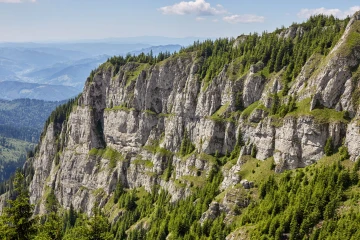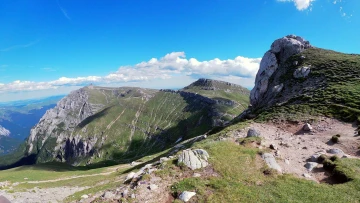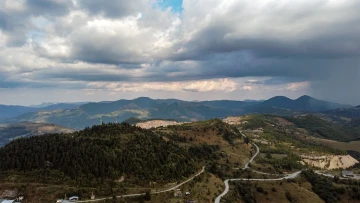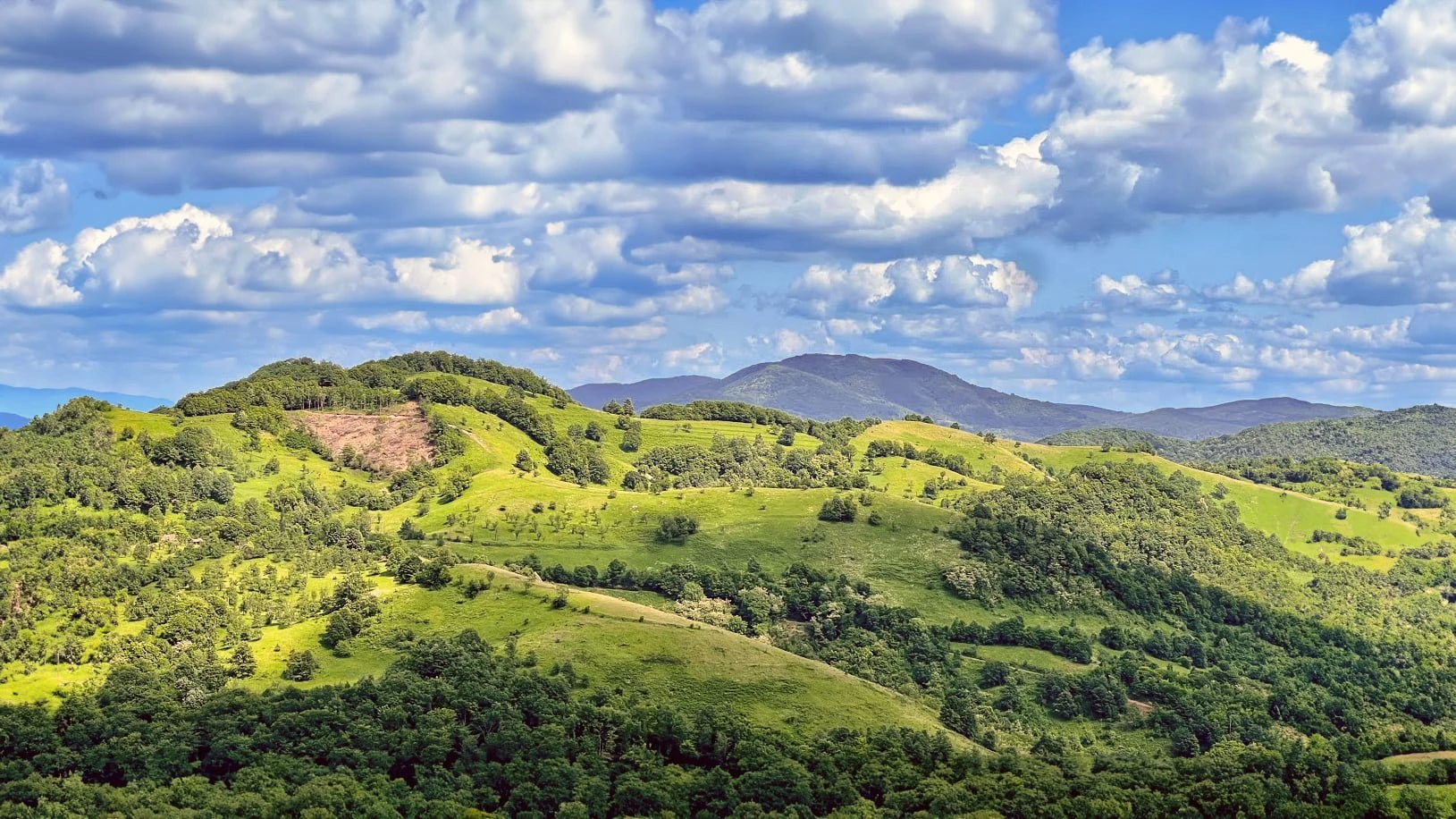
The Zarand Mountains are a picturesque mountain range in western Romania, forming the natural boundary between the Arad Plain and the Apuseni Mountains. This mountain area, less known and less explored than other mountain regions of the country, offers landscapes of rare beauty, authentic local traditions, and remarkable natural and historical riches.
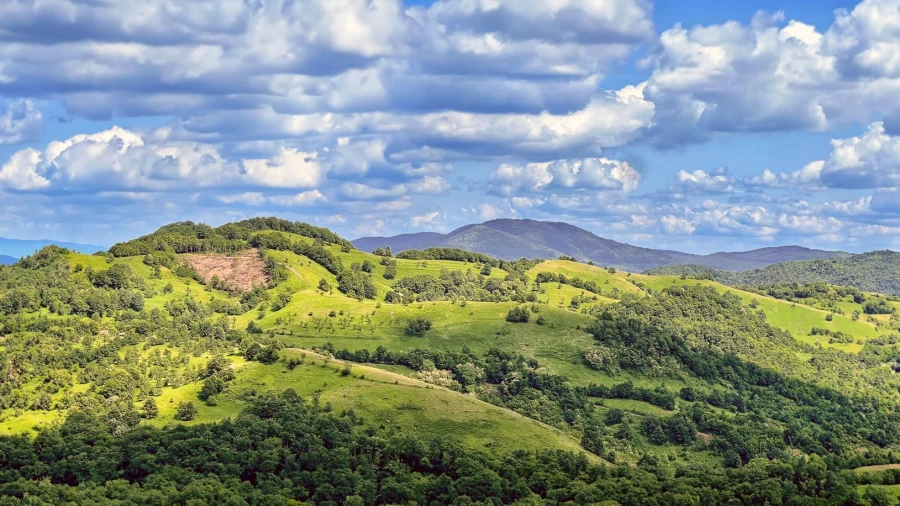
Zarand Mountains landscape
In this article
The natural setting
The natural setting of these mountains offers an impressive combination of beauty and ruggedness, reflecting the geological richness and biodiversity of the area. They are characterized by a varied landscape, from deep valleys and rocky cliffs to dense forests and vast pastures.
Location
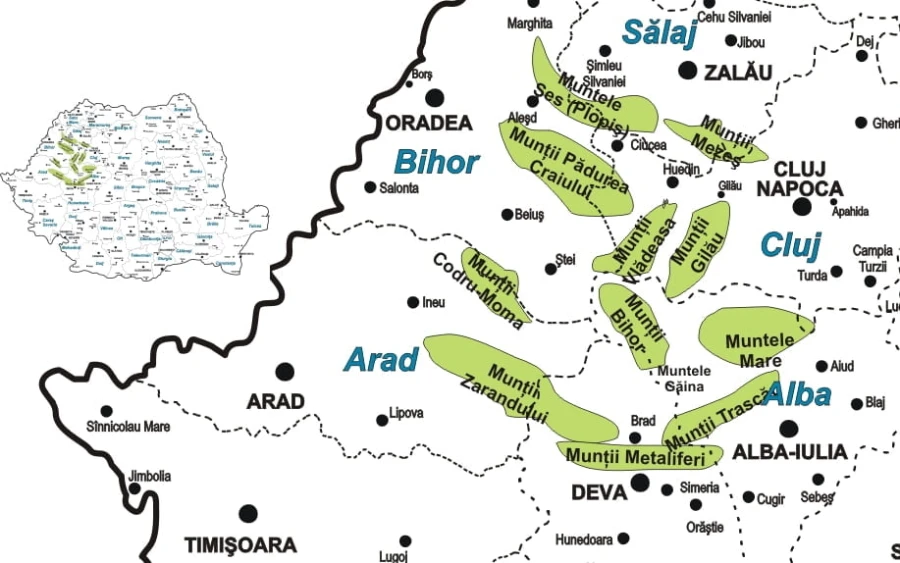
Located in western Romania, near the city of Brad, between the Crișul Alb valley to the north, the Mureș valley to the south, the Arad Plain to the west and the Metaliferi Mountains to the east, the Zarand Mountains are part of the Western Carpathians, forming an important link between the Apuseni Mountains and the Mureș corridor.
Map of the Apuseni Mountains, Romania
Mountain group: Western Carpathians
Highest peak: Drocea Peak (836 meters)
Topography
The Zarand Mountains are made up of several massifs, each with its own geological and morphological features. These include:
The Highiș and Drocea massifs, which have a predominantly crystalline structure, with steep terrain and deep valleys.
The Husu Massif, characterized by ophiolitic and sedimentary formations, which offers a more rounded landscape and wider valleys.
Măgura Ciunganilor, which stands out for its volcanic features, with gentler terrain and landforms typical of volcanic activity.
The geological differences between these massifs strongly shape the terrain, from imposing heights to gentler areas, pastures, and dense forests.
Climate
The climate of the Zarand Mountains varies with altitude and slope orientation, offering a wide range of weather conditions. Summers are generally warm and winters mild, with abundant precipitation that supports the rich vegetation and complex ecosystems.
Fauna and flora
On the southern side, forest cover is impressive, ranging between 60 and 80%, with a clear predominance of deciduous trees such as pedunculate oak, sessile oak, beech, black locust, sycamore maple, ash, and poplar. Conifers such as spruce, fir, and pine are found only sporadically and only at higher altitudes, above 600 meters.
In the southwest and west, the forests have largely been replaced by farmland, especially vineyards.
To the north, the forest structure is similar, except for the thermophilic species: deciduous trees predominate, and conifers appear in isolated spots near the watershed between the Mureș and Crișul Alb rivers. In this area, forest cover is lower, below 40%, with somewhat denser forest vegetation only in the Chisindia valley.
In the Runcu – Groși Nature Reserve, which covers more than 260 ha, you can find beech and sessile oak trees up to 200 years old, as well as a remarkable flora.
Rivers and lakes
The rivers that rise in the southern part of the Zarand Mountains have short, fast-flowing courses and empty into the Mureș River. The rivers on the northern slope, on the other hand, with longer courses and gentler gradients, are tributaries of the Crișul Alb.
These rivers sometimes overflow their banks, and the unwanted effects have been prevented by building the reservoirs at Tauț (on the Cigher) and Târnava (on the Chier).
Toward the west, in the direction of the Arad Plain, the rivers have a torrential regime and are not permanent, a phenomenon largely attributed to earlier geological periods. Forest cover is also low in this area, with the slopes dominated by famous vineyards such as Siria, Cuvin, and Miniș, or used for various crops.
Tourist attractions in the Zarand Mountains
The Zarand Mountains area is steeped in history and traditions, offering visitors a wide range of attractions, from archaeological sites and museums to natural monuments.
Museums
Brad Gold Museum
The Gold Museum in Brad, located in Hunedoara County, is a fascinating destination for lovers of history and geology and is unique in Europe. The museum opens its doors to reveal an impressive collection of gold-bearing minerals, with over 2,000 exhibits from around the world.
Brad Museum of Folk Art and Ethnography
The Museum of Folk Art and Ethnography in Brad is a window onto Romanian traditions and rural life. Here, visitors can admire folk costumes, traditional tools, and handicrafts that preserve the essence of country life.
The Moți Pantheon at Țebea
The Moți Pantheon at Țebea, located in Hunedoara County, is a historic monument and a place of national pilgrimage. Here rest heroes of the Moți struggles for justice and freedom, including Avram Iancu, the leader of the Revolution of 1848. Set in an area steeped in history and traditions, the pantheon symbolizes the resilience and unbroken spirit of the Romanian people.
Toda Crystal Museum
Petru Toda, a geology enthusiast, assembled over the decades a remarkable collection of more than 800 mineral specimens. He organized the collection himself into a museum in Crișcior, Hunedoara County, where the pieces are now on public display.
Crișan Memorial House
Crișan, whose real name was Marcu Giurgiu, also known as Gheorghe Crișan, was born in 1733 in the village of Vaca (today Crișan), Ribița commune, Hunedoara County, and was one of the leaders of the 1784 uprising of Horea, Cloșca and Crișan. His birth house was rebuilt in 1979 based on a photograph published by the historian Ioan Lupaș in 1934.
Avram Iancu House Museum
The Avram Iancu Memorial House in Baia de Criș, Hunedoara County, pays tribute to the memory of Avram Iancu, one of the most important leaders of the 1848 Revolution in Transylvania. The museum holds Avram Iancu's personal belongings, historical documents, and other artifacts that illustrate his significant contribution to Romania's history.
Monasteries and Churches
Crișan Monastery
Also known as Vaca Monastery, Crișan Monastery in the village of Crișan, Ribița commune, is an Orthodox monastery founded in the 16th century. It sits on a wooded hill about 7 km north of Brad. The monastic complex, dedicated to the “Nativity of the Mother of God” and the “Life-Giving Spring,” stands out for its architecture adapted to the terrain and has an artificial lake adorned in summer with colorful water lilies.
The Franciscan Monastery in Baia de Criș
By Țetcu Mircea Rareș – Own work, CC BY-SA 3.0 ro, https://commons.wikimedia.org/w/index.php?curid=25795098
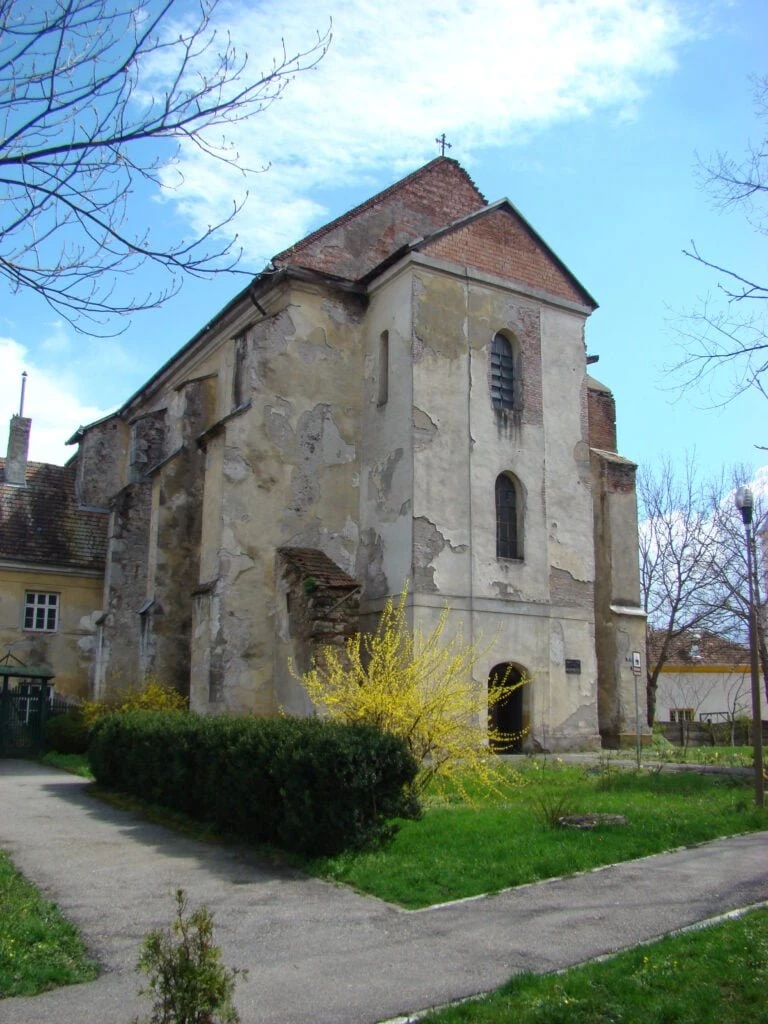
The church of the Franciscan Monastery in Baia de Criș is the largest medieval Gothic building along the Crișul Alb valley. It is located in Baia de Criș commune, about 10 km from Brad. Built at the end of the 14th century, the church has survived many challenges, including a devastating fire that significantly damaged its furnishings, frescoes, and even the structure of its walls. Nevertheless, it has managed to stand the test of time.
Other tourist attractions
Șoimoș Fortress
Șoimoș Fortress, strategically perched above the Mureș Valley near the town of Lipova, Arad County, is one of the most imposing medieval ruins in western Romania. Founded in the 13th century, the fortress played a crucial role in monitoring and defending the access routes in the area.
By Țetcu Mircea Rareș – Own work, CC BY-SA 4.0,
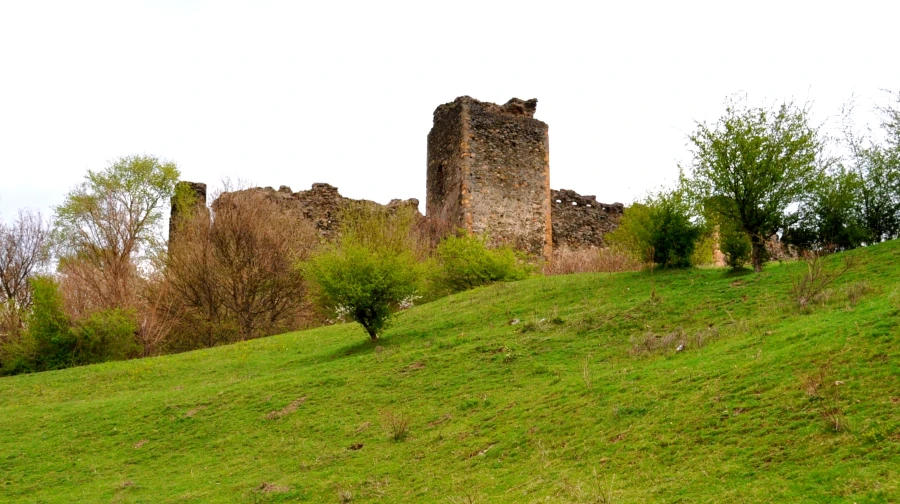
Access is relatively easy, and the path to the fortress makes for a pleasant hike among historical remains and impressive natural scenery.
The Mocănița Train at Crișcior
The Mocănița, a train more than 100 years old, covers the seven-kilometer distance between Brad and Crișcior in about 45 minutes, traveling at around 15 km/h.
Built in 1907 to carry coal to the power plant at the Barza Mine, the railway line was used for this purpose until 1998. Since 2001, it has served as a tourist attraction, running special trips before Christmas and Easter and on Brad's city days, to the delight of visitors.
You can also take a Mocănița ride in the Arieș Valley
Frequently asked questions
What activities can you do in the Zarand Mountains?
The Zarand Mountains are perfect for hiking, mountain biking, wildlife watching, and landscape photography.
Is there accommodation in the Zarand Mountains area?
Yes, in the areas near the mountains there is a variety of accommodation options, from guesthouses to mountain cabins, giving guests the chance to experience local hospitality.
Conclusion
The Zarand Mountains are an ideal destination for those looking to reconnect with nature and discover the traditions and history of a lesser-known part of Romania. With their varied landscapes, rich biodiversity, and history-filled attractions, this mountain region offers a unique and memorable experience for all visitors.