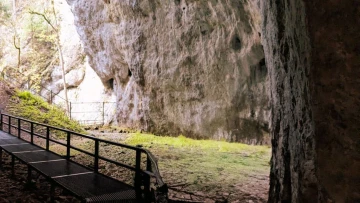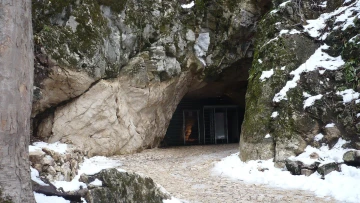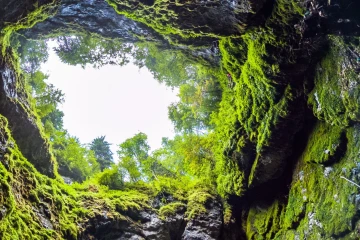
Bears' Cave is one of the most spectacular caves in Romania, renowned both for its impressive geological formations and for its significant paleontological discoveries.
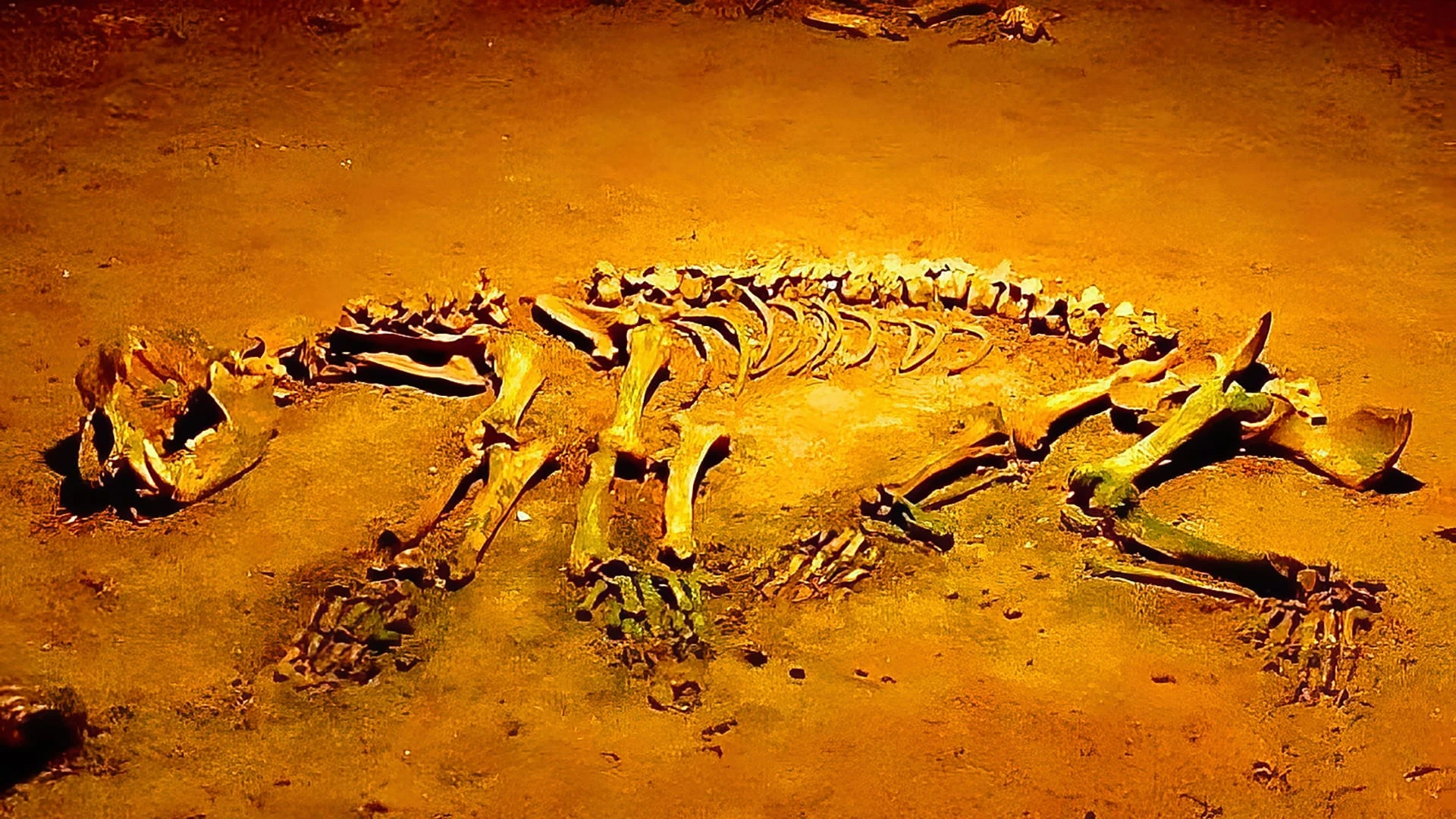
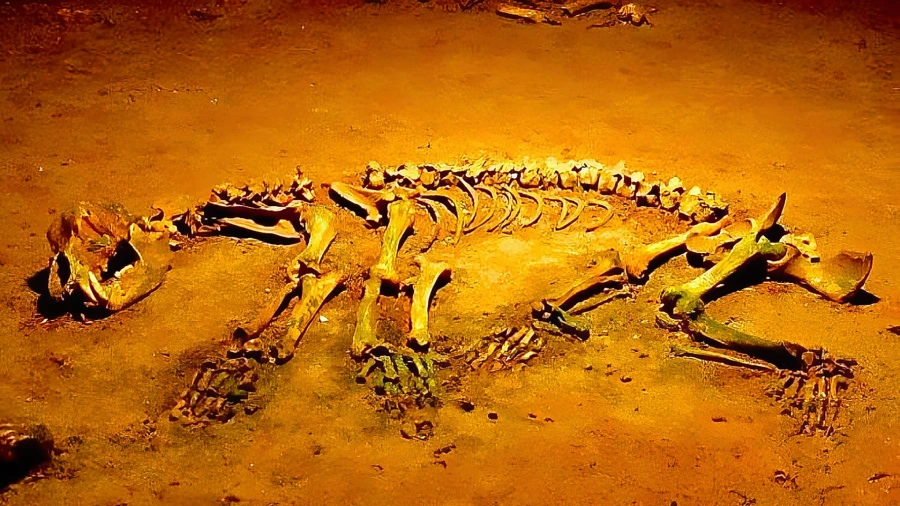
Ursus spelaeus skeleton in Bears' Cave
In this article:
It is located in the Apuseni Mountains, in the immediate vicinity of Chișcău village, in Pietroasa commune, Bihor County.
Discovered in 1975, Bears' Cave attracts thousands of tourists from all over the world every year. It lies at an altitude of 482 meters and is accessible to nature lovers as well as to history and paleontology enthusiasts.
Access and distances
Bears' Cave is reached mainly via DN76 (National Road 76), which connects Oradea and Deva, passing through important towns such as Beiuș and Ștei. From Beiuș you can also head to the Stâna de Vale resort.
In Sudrigiu, turn right onto the local road toward Chișcău. From here, it is only 2 km to the entrance of Bears' Cave.
The access road is well maintained, paved, and signposted, with tourist signs guiding visitors along the last stretches, especially after leaving DN76. Parking is available near the cave, a few meters from the main entrance.
The cave is accessible in every season, but in winter it is a good idea to check the weather and road conditions in the Apuseni Mountains area.
Road distances from several cities and approximate travel times:
from Oradea: 1 hr 31 min (88.1 km) via DN76/E79
from Cluj-Napoca: 3 hr 26 min (171.1 km) via DN1/E60
from Arad: 2 hr 46 min (158.7 km) via DJ709
from Deva: 2 hr 21 min (132.2 km) via DN76/E79
History and Discovery
Bears' Cave was discovered by accident on September 17, 1975, during limestone (marble) quarrying at a nearby quarry. A dynamite blast revealed the entrance to what would become a unique underground discovery.
At first, the quarry workers were amazed by the beauty of the geological formations, with miner Traian Curta being the first to go underground, but the cave soon became known for its paleontological importance.
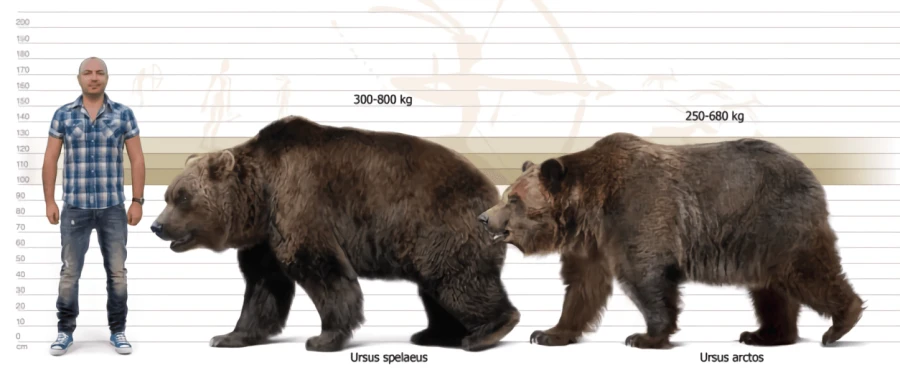
Inside, researchers found fossils of the cave bear (Ursus spelaeus), a species of impressive size, reaching 4 meters, that went extinct about 15,000 years ago.
Ursus spelaeus size; photo taken from https://www.reddit.com/
Ursus spelaeus skeleton. Source: Wikipedia. Author: Ra’ike. Skeleton on display at Devil’s Cave (Pottenstein), Germany
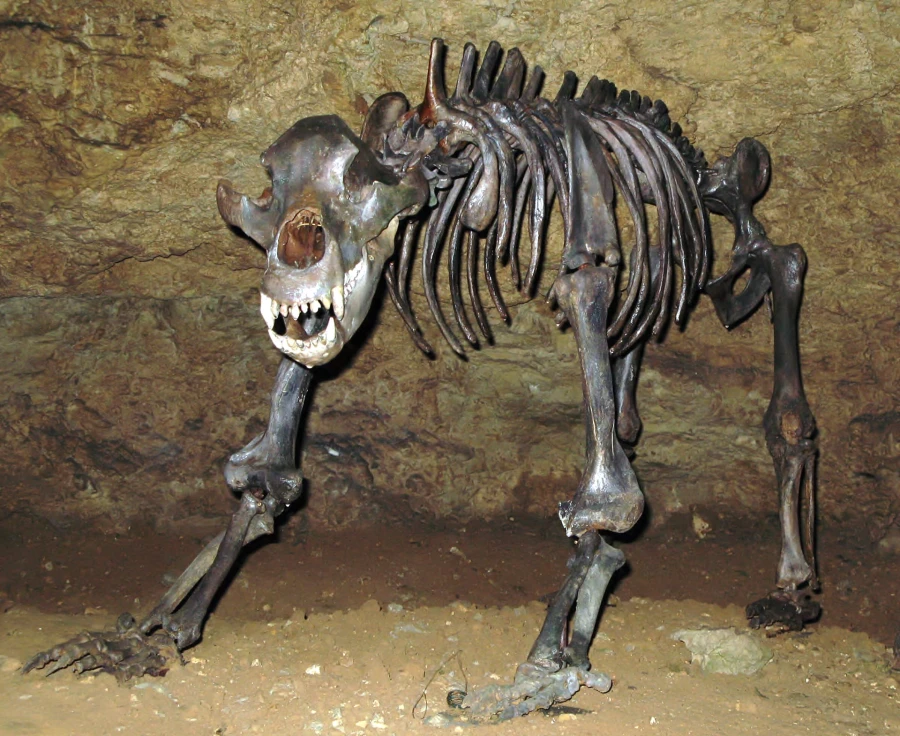
Hence the name given to the cave. It seems that old bears, like some other mammals (the elephant), withdraw to die in the same place as their ancestors. Another explanation for the large number of bear skeletons is that the cave entrance was accidentally blocked, trapping the animals inside.
The cave holds hundreds of bear skeletons, some of them almost intact, offering a glimpse into the region's distant past.
The finds also include other fossils of prehistoric animals: chamois, cave lion and cave hyena, and ibex (a wild goat with large, curved horns), which makes the cave extremely valuable for the study of Ice Age fauna. See Wikipedia
The economic interests of the quarry delayed research and the opening of the cave to the public, but 5 years after the first explorations, on July 14, 1980, it was officially inaugurated as a tourist attraction in Apuseni Natural Park.
Description of the Cave
At the cave entrance there is a pavilion with a waiting room, a ticket office, a bar, a small speleology museum, and a stand with souvenirs and local handicrafts.
With a total length of more than 1.5 km, the cave is structured on two levels.
The upper gallery measures 488 meters and is open to tourists, while the second gallery, 521 meters long, is reserved exclusively for scientific research.
Bears' Cave is divided into three main galleries:
Bears' Gallery or Bones Gallery
Bones Gallery
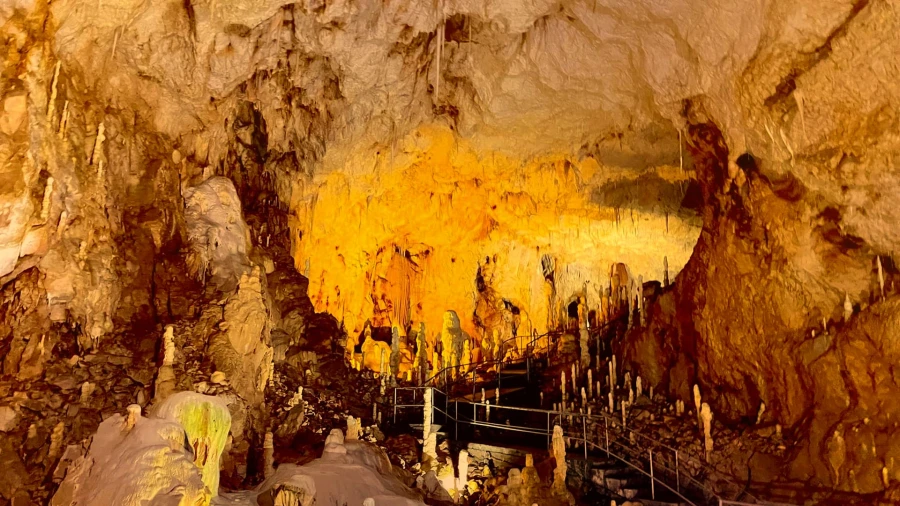
Named for the large number of cave bear bones found here, it is one of the most captivating sections of the cave, but also the narrowest.
Emil Racoviță Gallery
Dedicated to the renowned Romanian speleologist, the gallery is marked by spectacular geological formations and is the largest of the galleries open to visitors. Here you can admire stalactites and stalagmites of various shapes and sizes, some reaching impressive heights.
Candles Gallery
Candles Gallery
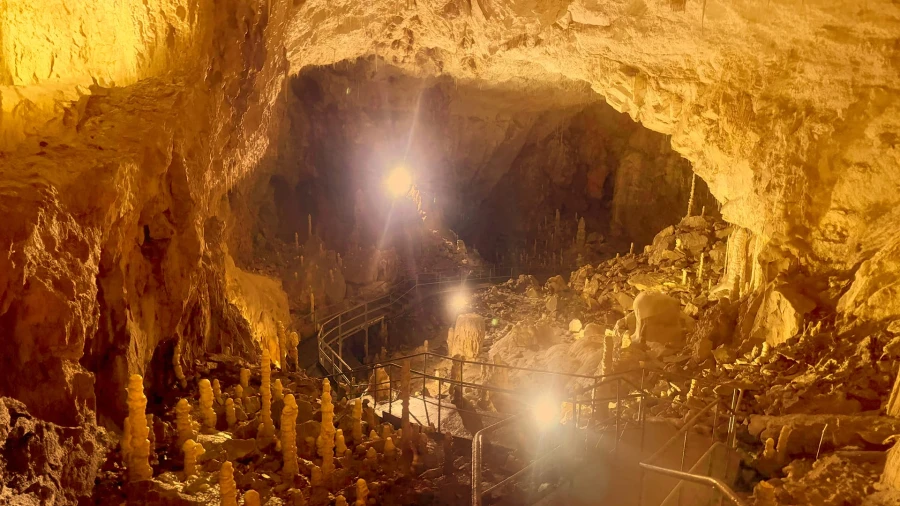
It gets its name from the slender, white, luminous stalagmites that resemble lit candles, creating an almost magical landscape.
The tourist route in the cave covers only 521 of its 1,500 meters, with the rest reserved for scientific research.
The cave's geological formations – stalactites, stalagmites, columns, and draperies – were shaped over millennia by seeping water, creating a fascinating variety of shapes and colors.
Notable among them are the so-called Enchanted Palaces, Water Lily Lake, Mastodon, Dwarfs' Cottage, Draperies of the Bears' Gallery, Portal, Pagodas, and the final hall, Council of Elders.
Stalagmites in the Candles Gallery
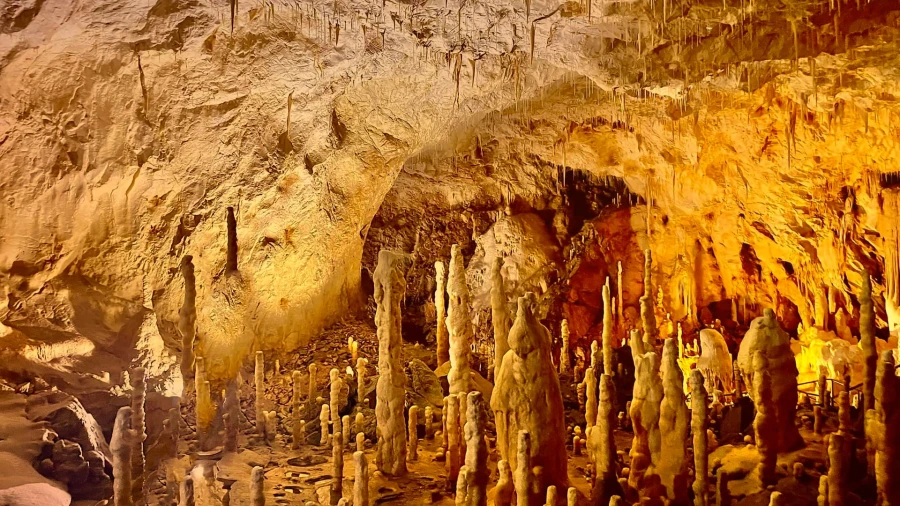
On the way out of Bears' Cave, visitors are guided along a well-designed route, different from the entrance route, which ensures a steady, organized flow of visitors. The exit is close to the main entrance.
The well-preserved fossils of Bears' Cave have allowed scientists to study the behavior and lifestyle of cave bears, which lived in this region for thousands of years.
The discovery of almost complete skeletons was a rare opportunity to better understand these extinct species. The cave remains a valuable resource for the study of prehistory and for understanding past climate and environmental changes. See Wikipedia
Bears' Cave Opening Hours
Bears' Cave is open to the public all year round, with visiting hours adapted to the season.
In general, the cave is open for visits between 9:00 and 18:00 in fall and winter, with last entry at 17:00. It is closed on Mondays.
Access is only in organized groups accompanied by a specialized guide, who provides detailed information about the history and features of the cave. The guided tour takes about 45 minutes.
The entrance fee is 40 lei for both adults and children.
Thanks to its spectacular nature and its historical and geological importance, Bears' Cave attracts thousands of Romanian and foreign tourists every year and has become an important point of interest in the Apuseni Mountains.
The cave's popularity has contributed significantly to the development of local tourism, boosting the surrounding economy through growing demand for accommodation, restaurants, and other tourist facilities.
Attractions in the Area
The Apuseni Mountains area offers a variety of natural and cultural attractions worth exploring.
The region abounds in places that combine natural beauty with a wealth of traditions. Here are some of the most important attractions:
Horia and Aurel Flutur Ethnographic Museum
The museum in Chișcău offers an insight into local life and traditions. It houses a vast collection of traditional and ethnographic objects.
Groapa Ruginoasă
Groapa Ruginoasă
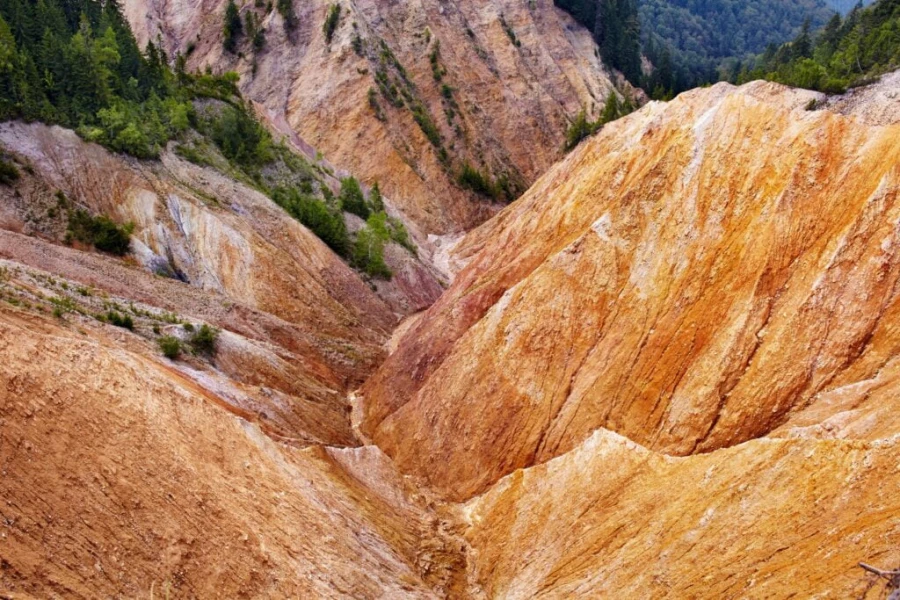
An impressive geological formation, Groapa Ruginoasă is a huge ravine, 100 meters deep, known for its reddish hues caused by soil erosion.
Prislop Peak
Another popular peak in the Apuseni Mountains, Prislop Peak is ideal for moderate hikes and offers wonderful views of the surroundings. It is a quiet place, ideal for nature lovers.
Porțile Bihorului Cave
The cave is accessible only by hiking and offers a spectacular sight thanks to its limestone formations and massive entrance. It is less well known than Bears' Cave, but definitely worth a visit.
Galbena Gorges and Valley
This spectacular hiking trail crosses the Galbena Gorges, one of the most beautiful karst valleys in the Apuseni Mountains. The gorges impress with their wild scenery and imposing rock formations.
Sighiștel Gorges
Located near Sighiștel commune, they are a beautiful place for hiking and caving, less frequented by tourists.
Other attractions in the surrounding area, in Alba County, that offer impressive experiences and panoramas include Vârciorog Waterfall (reachable by a hike of about an hour, starting from Arieșeni village) and Curcubăta Mare Peak (the highest peak in the Apuseni Mountains).
Weather
The weather in Chișcău, now and for the next 7 days:
Accommodation
The area around Bears' Cave offers a varied range of accommodation options, suited both to tourists looking for comfort and modern amenities and to those who want a more rustic experience close to nature.
Located in the heart of the Apuseni Mountains, this tourist destination attracts visitors from all corners of the country and beyond, offering them many accommodation options in the nearby villages.
In Chișcău village and the neighboring villages, guesthouses and cabins offer a comfortable and welcoming atmosphere (Popasul Urșilor, Pensiunea Mirela, Casa Larisa, Cabana Paulina). They are ideal for those who want to stay close to Bears' Cave and explore the natural attractions of the area. See Booking.com
For a more refined experience, hotels in nearby towns such as Arieșeni or Brad offer modern, comfortable options.
Curiosities and Unusual Facts
Bears' Cave is a place full of mysteries and curiosities. One of the most remarkable discoveries was the remains of more than 140 cave bears, which makes it unique in Central and Eastern Europe.
Another unusual aspect is that the cave remained untouched by human activity until 1975, making it practically a time capsule.
Its limestone formations are extremely varied and include stalactites, stalagmites, columns, and limestone draperies, some of rare beauty. The Candles Gallery, with its slender, luminous formations, is considered one of the most impressive underground attractions in Romania.
Useful information
The temperature in the cave stays constant at about +10 degrees Celsius all year round, regardless of the season (as it does in Valea Cetății Cave).
The humidity inside the cave is 97%.
Visits to the cave are possible only in groups accompanied by a guide.
Pets are strictly prohibited, regardless of their size.
Photography and filming are allowed for those who pay an additional fee.
The entrance fee is the same for adults and children.
Frequently asked questions
Where is Bears' Cave located?
Bears' Cave is located in the Apuseni Mountains, in the immediate vicinity of Chișcău village, in Pietroasa commune, Bihor County.
Why is it called Bears' Cave?
It is called Bears' Cave because researchers found numerous fossils of the cave bear (Ursus spelaeus) inside, a species that went extinct about 15,000 years ago, as well as fossils of other prehistoric animals.
Conclusions
Bears' Cave is an essential destination for lovers of nature, paleontology, and underground tourism. The geological beauty of the cave, combined with paleontological discoveries of inestimable value, makes it a must-see attraction in the Apuseni Mountains.
Bears' Cave continues to be a scientific landmark for researchers and tourists alike, helping to preserve and promote Romania's natural heritage.
Visit other famous caves in Romania too: Scărișoara Cave, Muierii Cave.