Muierii Cave, or Muierilor Cave, in Gorj County, Romania, is one of the most famous and accessible caves in the country.
Muierii Cave
In this article:
Located near the commune of Baia de Fier, the cave impresses with the complexity of its galleries and the wealth of its speleological formations.
The cave is renowned both for the natural beauty of its stalactites and stalagmites and for its archaeological and paleontological discoveries of major importance.
Over time, the cave served as a refuge for the local population, and its name comes from the legend that the women (“muieri” in Romanian) from the neighboring villages took shelter here during invasions, when the men went off to fight.
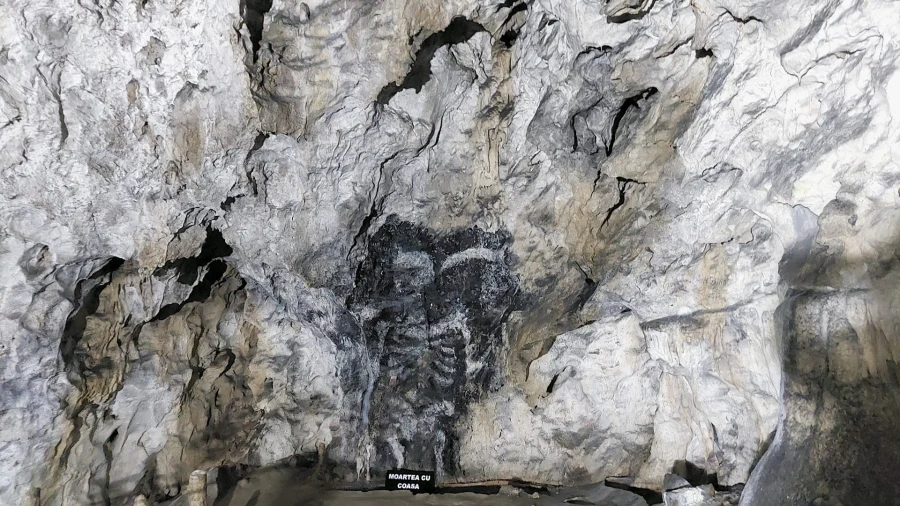
Muierii Cave – Death with the Scythe
Another legend about Muierii Cave says that in the old days, in summer, women would gather at the southern mouth of the cave to do some of their work. There, the air gusting out from inside the cave made spinning thread easier. They also went inside, where they left flax and hemp to soak in the pools of water.
The importance of the cave
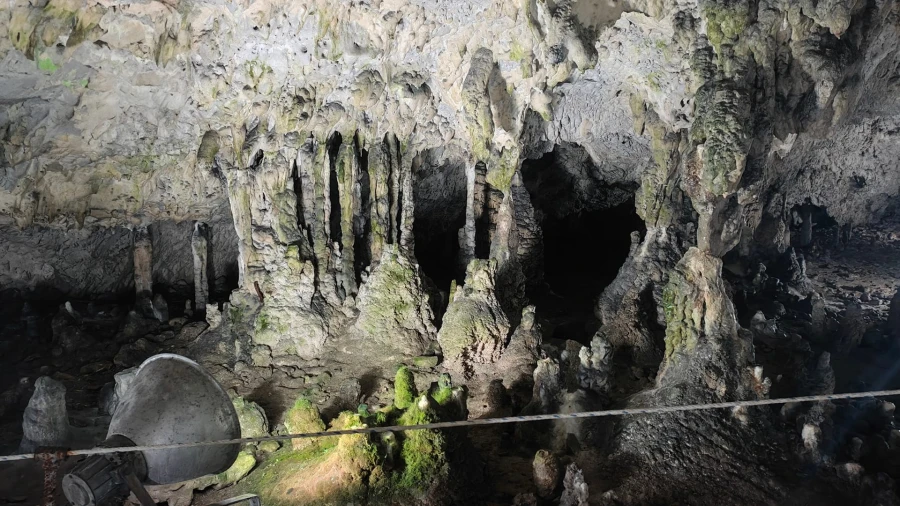
Muierilor Cave is a special place thanks to its natural and cultural diversity. From a natural standpoint, the cave offers a spectacular underground landscape, with impressive limestone formations such as draperies, columns, and cave pearls.
From a cultural and historical standpoint, the cave is especially significant because of the human and animal bones dating from the Paleolithic found here, as well as the archaeological objects that attest to a human presence since ancient times.
The cave is also an important study site for speleologists and archaeologists, contributing significantly to our understanding of the region's climate history and biodiversity.
Location and Access
Muierii Cave is located in Gorj County, in the Parâng Mountains, near the commune of Baia de Fier. It lies about 2 km from the center of the commune, near the Galbenul Gorges, and was carved by the Galbenul River into the limestone on the southern edge of the Parâng Massif.
The cave lies relatively close to the main roads, which makes it easy to reach for tourists from all over the country.
Routes and means of transportation
Several main road routes will take you to Muierii Cave.
From Târgu Jiu, the seat of Gorj County, you can reach the cave by driving about 45 kilometers, on the DN67 and then on the county road to Baia de Fier.
Other important routes include the road from Râmnicu Vâlcea, on DN67, which passes through the town of Horezu and the commune of Polovragi.
Tourists without their own transportation can use the bus or minibus services that run regularly between the larger nearby towns and Baia de Fier.
For those who prefer to travel by train, the nearest railway station is in the city of Târgu Jiu, from where you can continue your trip by bus or taxi.
Cave accessibility
Muierii Cave is open to the public year-round, with visiting hours that vary by season.
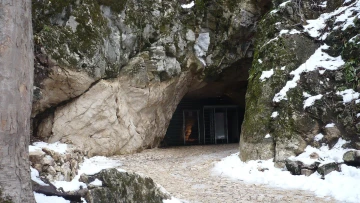
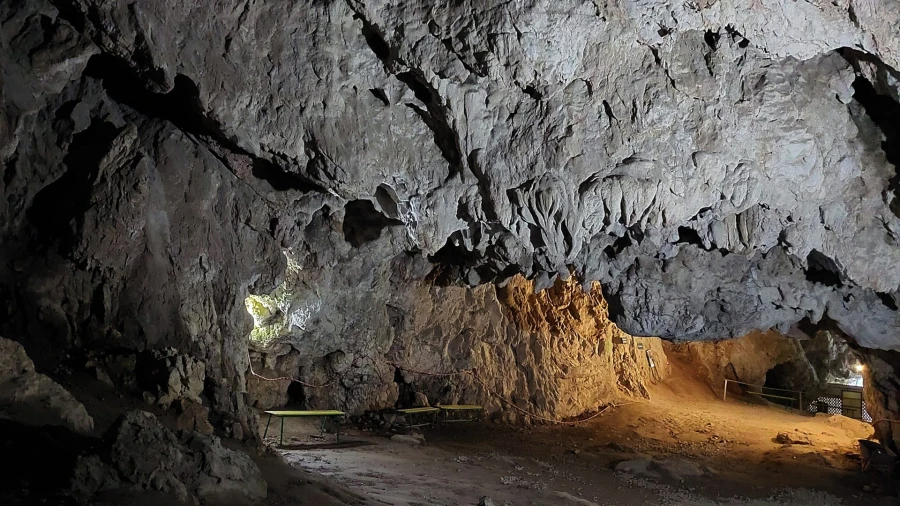
Muierii Cave Entrance
In general, the cave can be visited daily from 9:00 to 18:00 in summer (May 15 – September 15) and from 9:00 to 15:00 the rest of the year, with hourly entries and a mandatory guided tour, in order to protect the formations and educate visitors. You can find details about the opening hours here.
The admission fee is affordable, and discounts are available for school students and seniors.
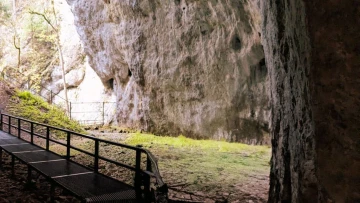
The cave is not accessible to people with reduced mobility: in places the ceiling drops below one meter, and the route crosses several bridges.
Nearby there is a parking lot for visitors. The route has its entrance and exit at different points, and the walk back to the parking lot takes 10–15 minutes along the Galbenul Gorges.
History and Discovery
Muierii Cave has been known to and used by the local people since ancient times, but its official documentation began in the 19th century.
The first written mention of the cave dates from 1870, when the archaeologist Alexandru Odobescu recorded it in an archaeological questionnaire.
A first archaeological test excavation took place in the Main Gallery in 1929, and between 1951 and 1955 the archaeologist Constantin S. Nicolăescu-Plopșor led systematic excavations in all three galleries, making a major contribution to the scientific knowledge of the cave.
The evolution of research
Over the decades, Muierii Cave has been the subject of numerous studies and explorations.
In the 1950s, teams of Romanian archaeologists and paleontologists carried out systematic excavations in the cave, uncovering fossils of prehistoric animals, human bones, and various Paleolithic artifacts, as well as traces of later occupation, from the Eneolithic to the Middle Ages.
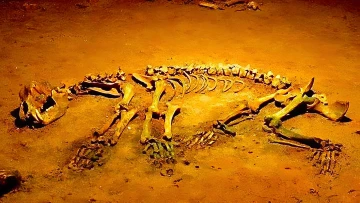
Muierii Cave – Cave Bear
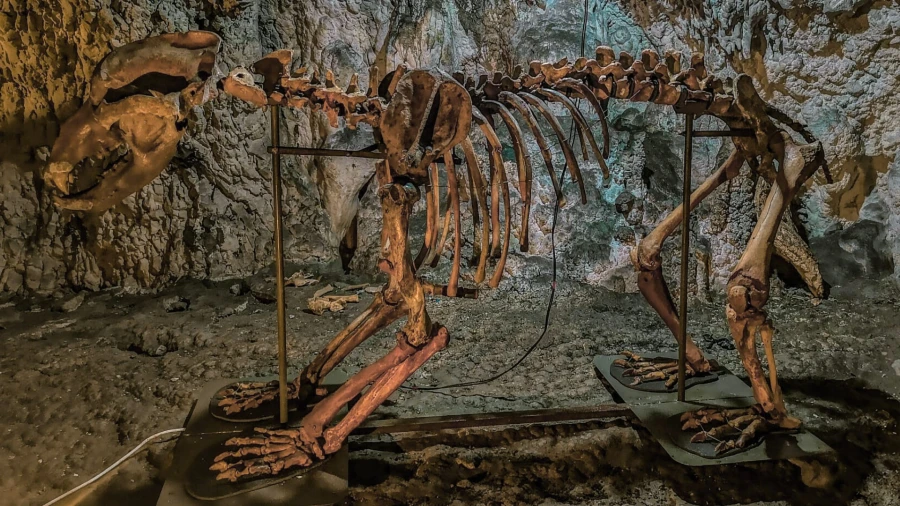
The discoveries confirmed the cave's importance as a shelter for prehistoric people and as a habitat for Pleistocene fauna.
It was the first cave in Romania to be electrified.
In recent decades, research has continued to focus on climate and biodiversity studies, using modern analytical techniques and radiometric dating.
Notable figures and events
Constantin S. Nicolăescu-Plopșor is undoubtedly one of the most notable figures associated with Muierii Cave: the human remains from the cave were discovered in 1952 during the excavations he led.
Other important figures include the anthropologists Andrei Soficaru and Erik Trinkaus, who, together with the archaeologist Adrian Doboș, directly dated the human remains and published a monograph on the site in 2010.
Notable events include the discovery of the skull of a woman who lived about 35,000 years ago, with some traits shared with Neanderthals, and of Ursus spelaeus bones (the cave bear, as in Bears' Cave), which provided valuable information about life and climate in prehistoric times.
Description of the Cave
Muierii Cave has a total length of several kilometers (estimates range from 3.5 to 8 km), with 4 levels and several galleries arranged vertically.
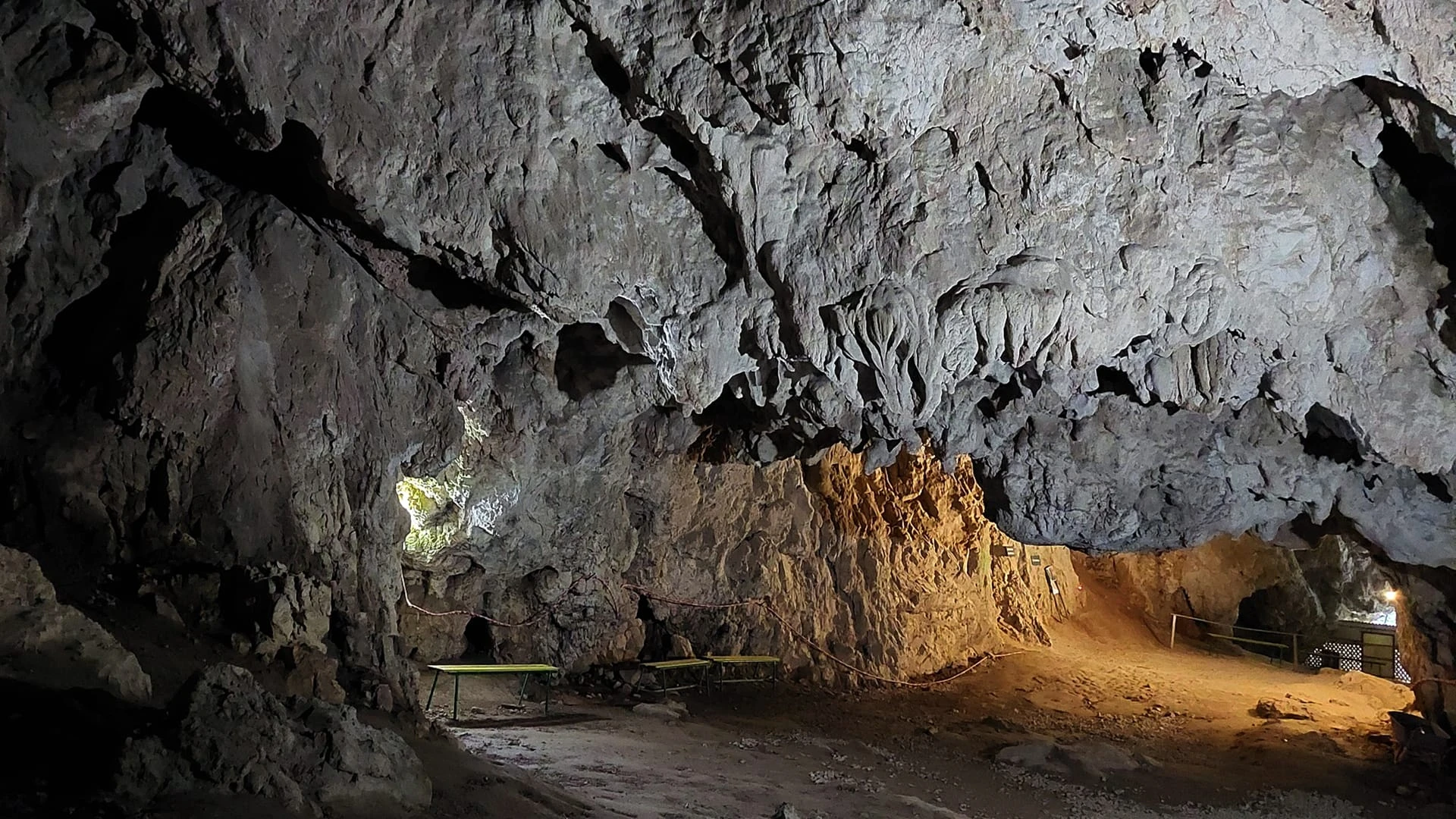
Muierii Cave
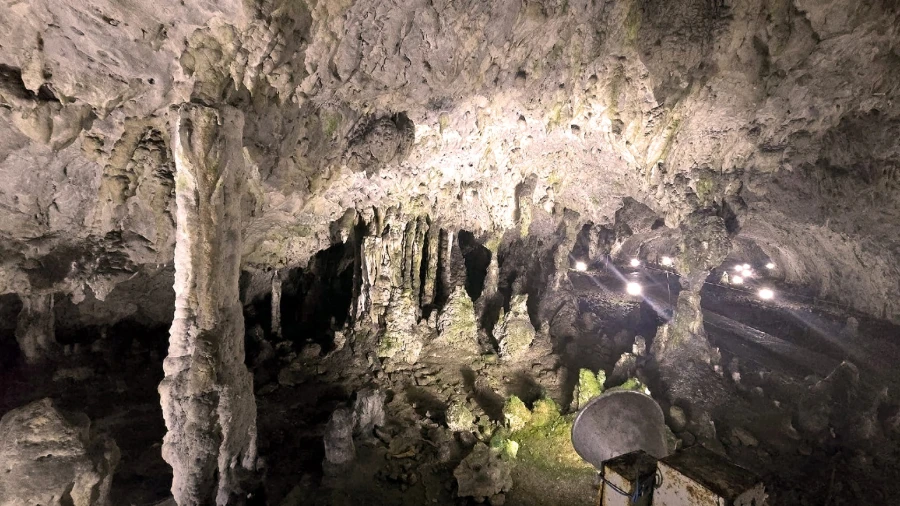
The lower level is a speleological reserve and is divided into two sectors:
The northern sector, with a length of 1,500 m.
The southern sector, with a length of 880 m.
At a height of 40 meters lies the upper level, developed for tourists along a length of about 573 meters.
From the upper level, the network of side passages extends for a length of 1,228 meters. The network is very difficult to access, but efforts are being made to improve accessibility.
The cave has four distinct levels, but only part of it, 573 meters long, is open to tourists. The galleries and halls are interconnected by passages and bridges, making it easier to explore this underground labyrinth.
Muierii Cave is a true underground treasure, full of fascinating formations and discoveries. Here is a closer look:
The Small Dome and the High Cupola:
The Small Dome has a shape similar to a Gothic cupola, created by the slow precipitation of calcite over a long time.
The High Cupola, located at a height of 17 meters, is home to a colony of bats. (See also the horseshoe bats in Polovragi Cave.) These bats feed on insects they hunt outside the cave at night.
Other Attractions:
The Altar Hall, the Altar Veil, the Pulpit, and the Great Chandelier are some of the most impressive spots in the cave.
The Bloody Rock gets its name from the trickles of iron oxide running down it.
The Woman's Veil, the Great Basins, the Petrified Waterfalls, the Stone Lace, the Gate, the Guano Hall, and the Turk's Hall are other points of interest.
The Bears' Gallery holds traces of animals such as bears, foxes, wolves, wild goats, lions, hyenas, and wild boars.
In the Mousterian Hall, prehistoric objects have been discovered.
In 1952, bone fragments were found, probably from three different individuals, and the skull fragments of a female individual were dated to about 35,000 years ago, among the oldest Homo sapiens remains in Europe.
Geological formations and speleothems
Muierii Cave is rich in spectacular speleological formations. The stalactites and stalagmites, formed by the slow deposition of calcite, come in various shapes and sizes, creating an impressive underground landscape.
Muierii Cave
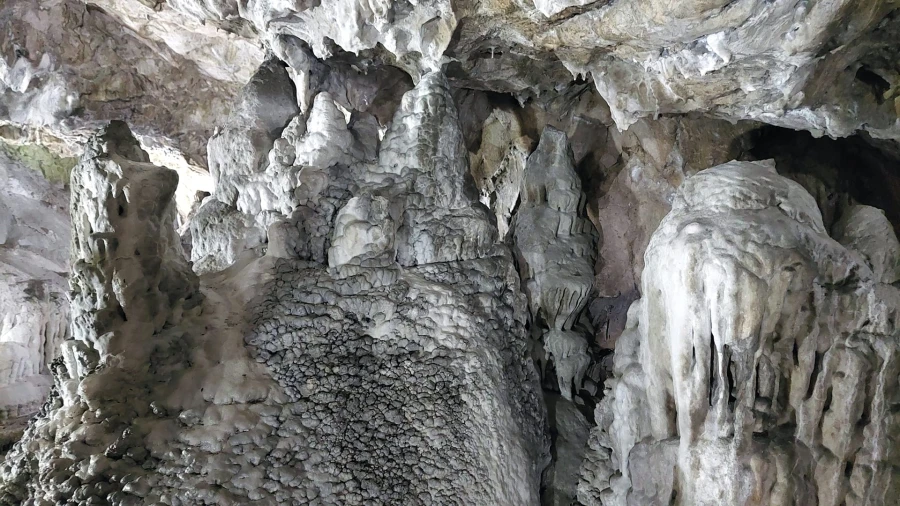
Calcite draperies, massive columns, and cave pearls are just a few of the natural wonders you can admire here. A special highlight is the Altar Hall, where the limestone formations have created structures resembling natural altars.
Temperature and climate inside the cave
The interior of Muierii Cave has a constant climate all year round, with a temperature of about 10 degrees Celsius, roughly 10 degrees higher than in Scărișoara Ice Cave, but close to the temperature in Polovragi Cave, where it is 8–9 degrees.
Relative humidity varies from season to season. The constant temperature has kept the speleological formations and fossils exceptionally well preserved, making the cave an ideal setting for scientific research and a remarkable tourist attraction.
Archaeological and Paleontological Significance
Muierii Cave is an archaeological site of great importance, thanks to significant discoveries that offer valuable insight into life in prehistoric times.
The artifacts discovered include Middle Paleolithic (Mousterian) and Upper Paleolithic (Aurignacian) stone tools and bone points, as well as traces of later occupation, from the Eneolithic to the Middle Ages. These finds indicate a human presence in the cave tens of thousands of years ago and its use as a shelter.
The discovery of human bones about 35,000 years old, among the oldest Homo sapiens remains in Europe, has made essential contributions to understanding human migration and evolution in Europe.
In addition to its archaeological importance, Muierii Cave is also a remarkable paleontological site.
Fossils and skeletons of prehistoric animals have been found in the cave, including the cave bear (Ursus spelaeus), the cave lion (Panthera leo spelaea), the cave hyena, the giant deer (Megaloceros), and other species that inhabited the region during the last ice age.
These fossils provide valuable information about Pleistocene fauna and the climatic conditions of that period.
The paleontological discoveries at Muierii Cave have helped reconstruct prehistoric ecosystems and understand the impact of climate change on biodiversity.
Biodiversity
Muierii Cave and the surrounding area are characterized by rich biodiversity, in terms of both flora and fauna.
Inside the cave, the humidity and darkness support a unique underground ecosystem, including a bat colony that guides estimate at about 2,000 individuals. Bats are also found in Poarta lui Ionele Cave.
The bats can be seen mainly in spring and autumn.
Outside, the vegetation is dominated by mixed forest species, including beech (Fagus sylvatica), sessile oak (Quercus petraea), and various shrubs and grasses that create a favorable habitat for many wild animals.
Protected species
The protected species in the Muierii Cave area include bats, which are protected at the European level under the European Union's Habitats Directive.
These species are essential for maintaining the ecological balance and for controlling insect populations.
Protecting them means safeguarding the underground roosts where they hibernate and raise their young.
In addition, the cave has been declared a natural monument, and its lower levels are a speleological reserve closed to the public.
Tourism and Education
Tourism at Muierii Cave has both positive and negative effects.
On the one hand, it attracts many visitors, contributing to the region's economic development by creating jobs and boosting local services.
On the other hand, mass tourism can damage the speleological formations, pollute the underground environment, and disrupt fragile ecosystems.
Educational programs and conservation projects
To educate the public and promote the conservation of the cave, various educational programs and conservation projects are organized.
These include guided tours that provide information about the cave's geology, biology, and history, as well as the importance of protecting it.
The cave is also in the custody of the Baia de Fier town hall, which looks after the tourist route.
Scientific research projects are also supported in order to monitor the condition of the cave and develop effective conservation strategies.
Tourist activities and tips for visitors
Tourists visiting Muierii Cave can join guided tours lasting between 35 minutes and an hour, exploring the main galleries and speleological formations.
Outside the cave, visitors can hike the marked trails of the Parâng Mountains and visit other natural and cultural attractions in the area, such as the Olteț Gorges and the local monasteries.
For a successful visit, it is recommended that you wear clothing and footwear suitable for exploring the cave, follow the guide's instructions, and keep the place clean.
Tourist Attractions Near Muierii Cave
Besides exploring the impressive karst system of Muierii Cave, visitors can discover other fascinating tourist attractions nearby.
Here are some of the most interesting places to visit in and around the commune of Baia de Fier:
1. Olteț Gorges
Located nearby, the Olteț Gorges are known for their spectacular scenery and picturesque hiking trails. They offer excellent opportunities for outdoor activities such as hiking and climbing. The steep rock formations and distinctive flora attract many nature lovers.
2. Polovragi Monastery
Just a few kilometers from Muierii Cave, Polovragi Monastery is an important place of pilgrimage, with a history dating back to the 16th century. Set in a remarkable natural setting, the monastery gives tourists the chance to discover traditional Romanian architecture and enjoy the peace and spirituality of the place.
3. Polovragi Cave
Polovragi Cave 3
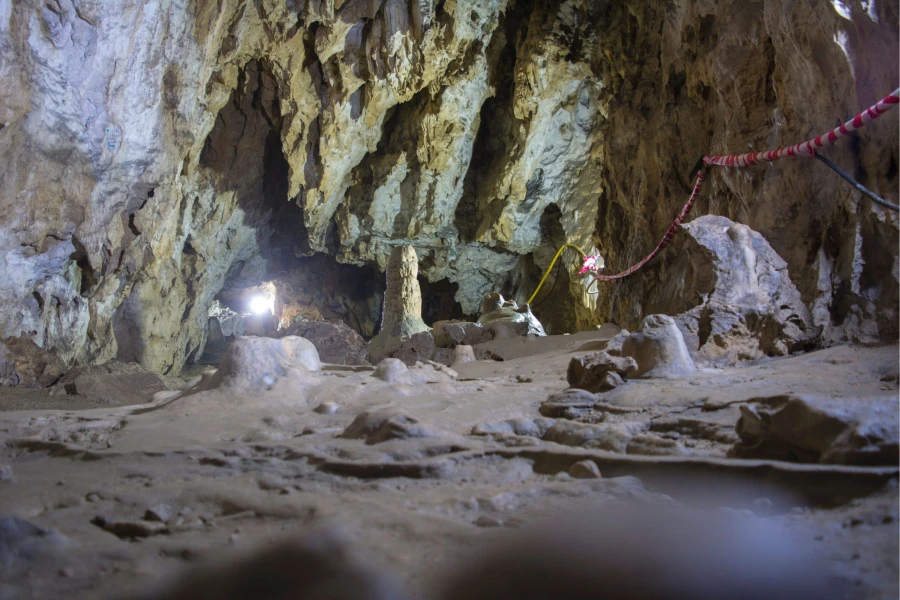
Just a few kilometers from Muierii Cave, Polovragi Cave is another fascinating destination for speleologists and tourists. It is famous for its limestone formations and for the local legends tied to Zalmoxis, the god of the Dacians. Visitors can explore its impressive galleries and learn about the geology and history of the place.
4. Museum of Popular Architecture of Gorj
Located at Curtișoara, in the town of Bumbești-Jiu, north of Târgu Jiu, the Museum of Popular Architecture of Gorj is part of the Alexandru Ștefulescu Gorj County Museum and showcases the traditions, crafts, and rural architecture of Gorj. Here, visitors can see the Cornoiu Kula, traditional houses from the 18th and 19th centuries, and household objects, which offer a glimpse into Romanian rural life.
5. Defileul Jiului National Park
West of Baia de Fier, between Bumbești-Jiu and Livezeni, Defileul Jiului National Park is a popular destination for hiking, rafting, and nature watching. The park protects a variety of habitats and plant and animal species, making it an ideal place for ecotourism and outdoor adventures.
6. Târgu Jiu and the Works of Constantin Brâncuși
The city of Târgu Jiu is famous for the works of sculptor Constantin Brâncuși, including the Endless Column, the Gate of the Kiss, and the Table of Silence. These artistic monuments are internationally recognized and offer visitors a special cultural experience.
7. Transalpina
Transalpina Road
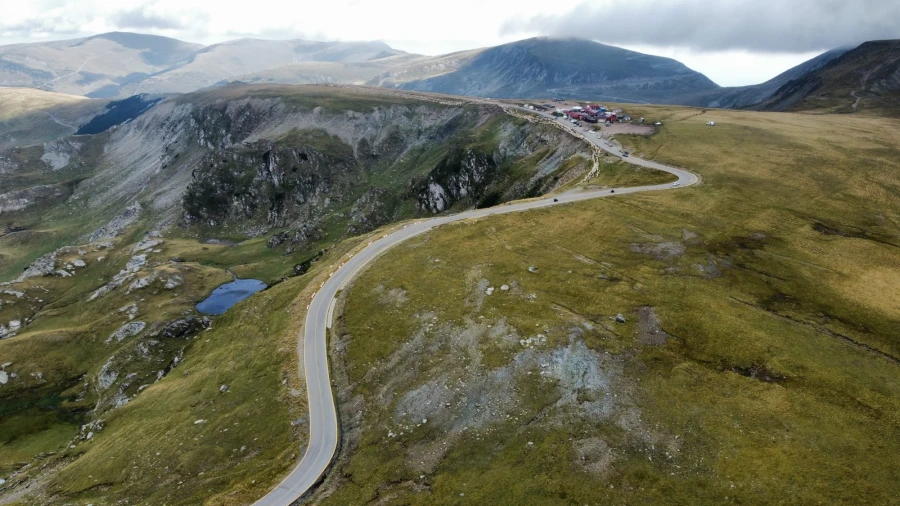
The Transalpina, also known as the King's Road, is the highest-altitude road in Romania, crossing the Parâng Mountains in the Southern Carpathians. Check out 7 reasons to visit the Transalpina.
8. Păpușa Peak
Păpușa Peak seen from the Transalpina
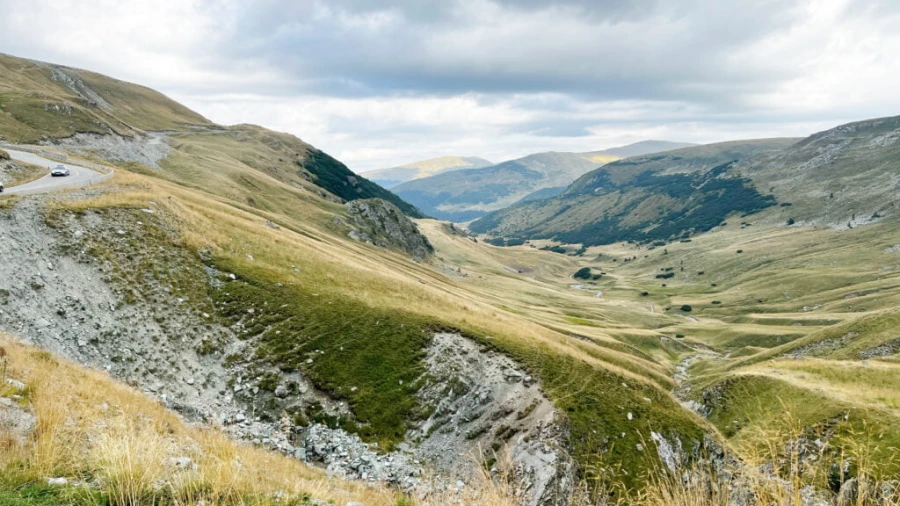
Păpușa Peak, at an altitude of 2,135 meters, lies in the Parâng Massif, part of the Southern Carpathians in Romania, near DN67C – Transalpina.
Accommodation
The Muierilor Cave area in Romania offers a variety of accommodation options for tourists. Most lodgings have modern amenities, such as air conditioning, Wi-Fi, parking, a restaurant, or a kitchen for guests' use.
Guesthouses and villas in the area offer an authentic experience and are set in the middle of nature. Many of them have panoramic views of the mountains and forests. Cabins and vacation homes are ideal for those who want to enjoy peace and privacy.
The resorts of Rânca and Transalpina Ski Resort are nearby and can be a good choice for those who love winter sports, or mountain expeditions in the summer.
Weather
Current weather and the forecast for the next 7 days in Baia de Fier, Gorj County:
Conservation and Protection
To protect Muierii Cave, various measures have been implemented, including restricting access to certain parts of the cave to prevent damage to its delicate formations.
Guided tours are mandatory, and group sizes are limited to reduce the impact on the underground environment. The tourist route is also developed and electrically lit to protect the speleological structures.
Frequently Asked Questions
Where is Muierilor Cave located?
Muierilor Cave, also known as Muierii Cave, is located in the commune of Baia de Fier, Gorj County, in southwestern Romania.
How long is Muierilor Cave?
The cave has a length of several kilometers (estimates range from 3.5 to 8 km), spread over 4 levels. A small part of it can be visited, while the lower level is a protected speleological reserve.
Where does the cave's name come from?
The cave's name dates back to ancient times. During wars, women and children found shelter inside the cave while the men fought the enemy. Muierilor Cave has several entrances and successfully served its purpose as a refuge.
Is it safe to visit Muierilor Cave?
Visiting the cave requires no special skills, but there are a few things to keep in mind. The ceiling is low along long stretches, dropping below one meter in places, so you have to bend down.
Conclusion
Muierilor Cave in Gorj County is one of the most remarkable and most visited caves in Romania. The fame of the Transalpina, the highest road in Romania, contributes to this.
It is a symbol of Romania's natural and cultural diversity, attracting tourists and researchers from around the world. Its international relevance is highlighted by the studies and research that continue to reveal new information about human evolution and climate change.
Conserving the cave is essential not only for Romania's natural heritage but also for the global scientific community.
By following the visiting rules and supporting protection efforts, every visitor can help preserve Muierii Cave as a natural monument of inestimable importance.
Include Muierilor Cave in your trip along the Transalpina!