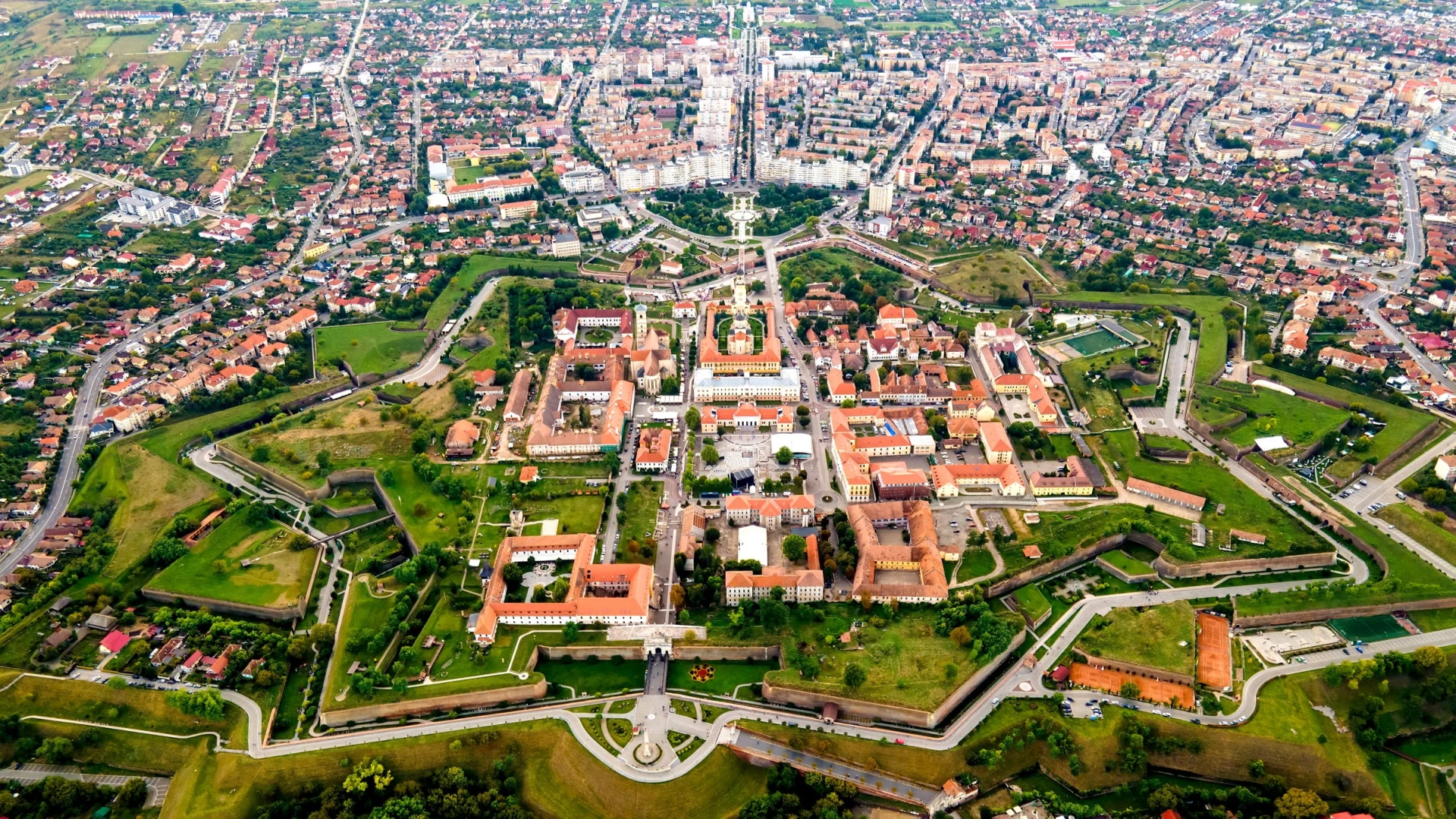
Alba Iulia Citadel, also known as Alba Carolina Citadel, is the largest citadel in Romania and the largest Vauban-style fortification in Southeast Europe.
Alba Iulia Citadel – Alba Carolina
In this article
Located in the heart of the city of Alba Iulia, the citadel is a remarkable example of architecture and a major attraction for tourists from around the world.
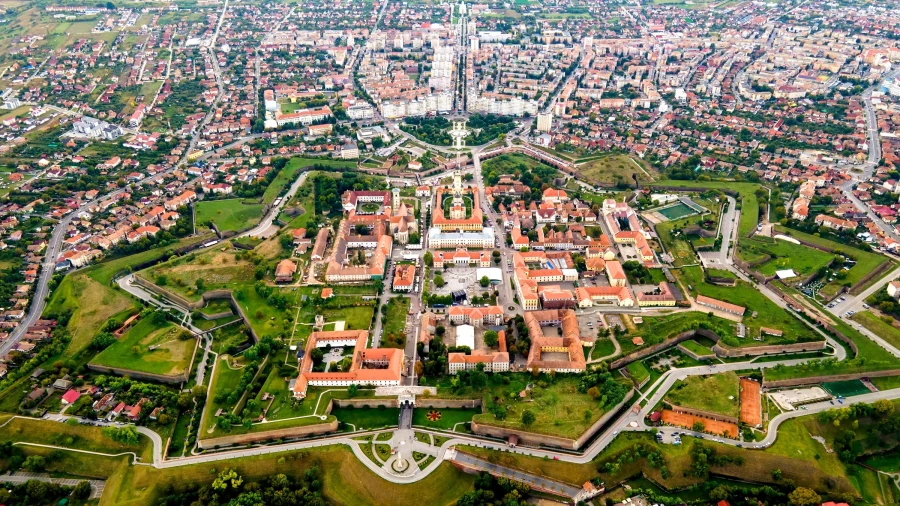
Built in the shape of a star, it comprises numerous bastions, monumental gates, and historic buildings that reflect its rich history.
The fortification in Alba Iulia is not only a site of architectural importance but also a symbol of Romanian national identity, thanks to its role in crucial events in Romania's history.
How do you get to Alba Iulia Citadel?
Getting to Alba Iulia Citadel is easy thanks to several road routes that are well connected to Romania's major cities. Here are some of them:
From Bucharest:
The main route is via the A1 highway to Pitești, continuing on DN7/E81 through Râmnicu Vâlcea and Sibiu, and then on DN1/DN7 to Alba Iulia. It is about 340 km long and takes about 5-6 hours.
From Cluj-Napoca:
You can take DN1/E81 toward Turda, then continue on the A10 toward Sebeș and from there on DN1/DN7 to Alba Iulia. The distance is about 100 km, and the travel time is around 1.5-2 hours.
From Timișoara:
The recommended route is via the A1 highway to Deva, then on DN7 through Orăștie and Sebeș, and from there on DN1/DN7 to Alba Iulia. The distance is about 270 km, and the trip takes between 3.5 and 4 hours.
From Sibiu:
Take the A1/E68 toward Alba Iulia. The distance is about 70 km, and the travel time is about 50 minutes.
For those who prefer public transportation, InterCity and Regio trains from Bucharest and Cluj-Napoca offer direct connections to Alba Iulia. In addition, long-distance buses from Romania's major cities stop in Alba Iulia.
Once you're in the city, the citadel is well signposted and can be reached on foot, by bus, or by local taxi.
Its historical and cultural significance
Alba Iulia Citadel played a crucial role in Romania's history as the place where, on December 1, 1918, the Great Union took place, unifying all the Romanian provinces into a single national state.
December 1 is celebrated every year as Romania's National Day.
Besides its historical importance, the site is also a vibrant cultural center, hosting events, festivals, and historical reenactments. The museums, exhibitions, and monuments inside the citadel offer a fascinating journey into the region's past.
History of Alba Carolina Citadel
Alba Iulia Citadel, also known as the Alba Carolina Citadel, is a masterpiece of Vauban-type military architecture, built at the beginning of the 18th century.
Located on Citadel Hill in Alba Iulia, the citadel served as a symbol of the power of the Habsburg Empire and as a strategic line of defense against the Ottoman Empire.
Before that, two important fortifications stood here:
The Roman Fort of Legio XIII Gemina
Built in AD 106, the fort served as a military base for Legio XIII Gemina, which played a crucial role in the Roman conquest of Dacia. The ruins of the fort can still be visited today, offering a fascinating insight into the ancient history of the area. See details
Bălgrad Medieval Fortress
Built in the 16th-17th centuries, the fortress served as a strategic point in the defense of Transylvania against Ottoman attacks. The fortress was eventually abandoned, but its ruins can still be seen. See details
The design of Alba Carolina Citadel in the Vauban style, characteristic of the Baroque fortifications of that period, was inspired by Field Marshal Prince Eugene of Savoy. He introduced the Vauban fortification systems from France into the Habsburg Empire.
Purpose: The citadel was part of a wider system of fortified points meant to protect the newly conquered provinces.
Planning: Work began with the topographic survey of the town and the medieval fortress in 1711. The final plan was approved by Prince Eugene of Savoy in 1714 and was later revised.
Construction: The necessary land was cleared by demolishing the old medieval town (1713-1715). The works, estimated at over one million gold guilders, were led by the Italian architect Giovanni Morando Visconti (until his death in 1717) and later by the military engineers Iosif de Quadri (1717-1727) and Konrad von Weiss (1727-1738).
Details:
The final design included 3 lines of fortifications (4 were originally planned).
An additional fortification was planned on Gallows Hill, but it was never built.
On November 4, 1715, the foundation stone was laid for the citadel at the Charles Bastion, which is dedicated to the emperor and located on the northern side.
Alba Iulia Citadel was built between 1715 and 1738 under Habsburg rule, as part of a system of fortifications meant to strengthen control over Transylvania.
The citadel was built to the plans of the Italian architect G. M. Visconti, in the style characteristic of the Baroque fortifications of that period.
Over time, the citadel underwent numerous changes and renovations, adapting to new military and technological realities as well as to the needs of the local community.
The citadel, one of the largest and best-preserved fortifications of its kind in Europe, covers 110 hectares.
It has the shape of an irregular heptagon (star shape) with seven bastions (St. Elizabeth, Charles Bastion, Eugene of Savoy Bastion, St. Stephen Bastion, St. Michael Bastion, Holy Trinity Bastion, Capistrano Bastion) and six ravelins.
The bastions are numbered starting from Gate III, toward the south, in a clockwise direction. Each bastion was named in honor of secular or religious patrons and bears its own distinctive name.
The ravelins are named after the bastions to their right, except for the ravelin on the southern side, which is called “St. Francis of Paola.”
In the past, the citadel was equipped with its own sewage system, a mill in the Capistrano Bastion, deep wells for water supply, two powder magazines, storehouses for food, fodder, and supplies, repair workshops, services, and other facilities needed to support a garrison of about 10,000 soldiers in wartime.
The citadel's role in Romania's history
Alba Iulia Citadel has witnessed decisive moments in Romania's history.
During the Revolution of 1848, the citadel was a bastion of the struggle for freedom and social justice.
It was also here, in 1600, that Michael the Brave made his triumphant entry into Alba Iulia, becoming the first ruler to briefly unite the three Romanian principalities – Wallachia, Transylvania, and Moldavia.
However, the most important event connected with the citadel remains the Great Union of 1918.
Historical events and figures connected with the citadel
Alba Iulia Citadel has been the setting for numerous historical events and has hosted many prominent figures.
Besides Michael the Brave, other important figures include Horea, Cloșca, and Crișan, the leaders of the peasant uprising of 1784, who were tried and executed in the citadel.
King Ferdinand I and Queen Marie were also crowned at Alba Iulia in 1922.
The commemorative events and historical reenactments held in the citadel help keep the memory of these significant moments alive and give visitors a deep understanding of the past.
All this offers a detailed perspective on the historical and cultural importance of Alba Iulia Citadel, highlighting its central role in Romania's history and its evolution over the centuries.
Architecture and Design
Alba Carolina Citadel is an example of Baroque military architecture.
It is built in the Vauban style, characterized by its star shape, with prominent bastions and massive walls stretching for 12 kilometers.
The star shape, typical of Baroque fortifications, offered maximum protection against enemy attacks while allowing efficient use of defensive artillery.
Distinctive design elements
Alba Iulia Citadel stands out for a series of distinctive architectural elements that reflect Baroque influences.
These include the arrow-shaped bastions with evocative names, such as St. Michael Bastion, St. Elizabeth Bastion, and Holy Trinity Bastion.
The citadel's main gate, Gate I, is an impressive example of Baroque art, decorated with elaborate sculptures and heraldic emblems.
Other notable features include the deep moats, the ravelins, and the counterguards, all designed to strengthen the citadel's defenses.
The interior of the citadel includes numerous historic buildings and monuments that add to its charm and complexity.
Restoration and conservation work
Over the years, Alba Iulia Citadel has gone through multiple phases of restoration and conservation to maintain its structural integrity and historical value.
During the communist period, many of the citadel's buildings were neglected or damaged, but restoration efforts began after 1989.
Starting in 2009, the citadel underwent an extensive restoration process, partly funded by the European Union, which included strengthening the walls, restoring the gates, and rebuilding some historic buildings.
This work allowed the citadel to reopen to the public and become an important tourist and cultural center.
Main Attractions in Alba Carolina Citadel
In Alba Iulia Citadel, you'll discover a variety of historical and cultural sights, including the monumental gates, the impressive cathedrals, and museums full of traces of the past.
Gate I, Gate II, and Gate III
Gate I, located on the eastern side of the citadel, is one of the most impressive Baroque structures in Romania. Decorated with elaborate sculptures, including mythological figures and heraldic emblems, the gate marks the beginning of a fascinating journey through the citadel's history.
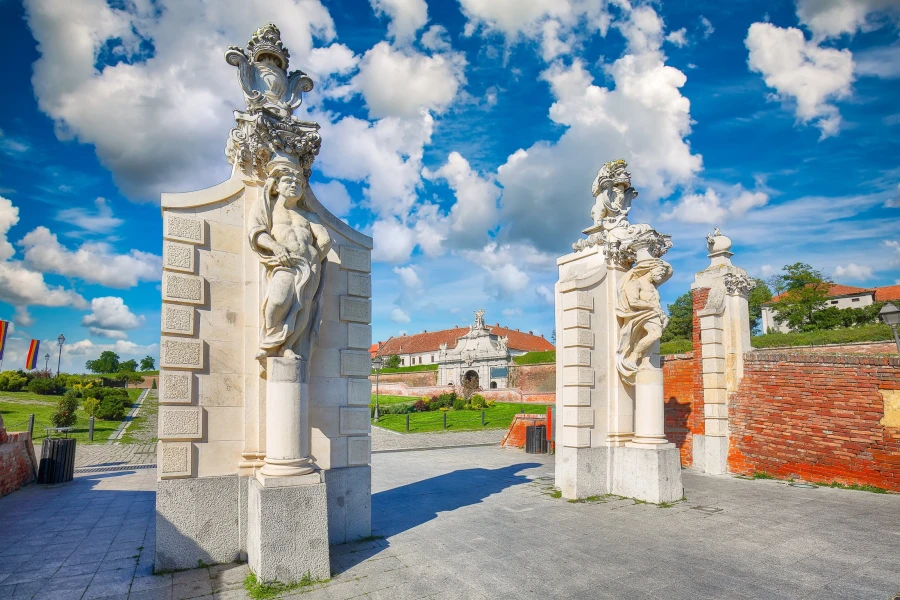
Gate II, located near St. Michael Bastion, continues the Baroque theme and serves as an important passage between the different sectors of the citadel.
Gate II, Alba Carolina Citadel
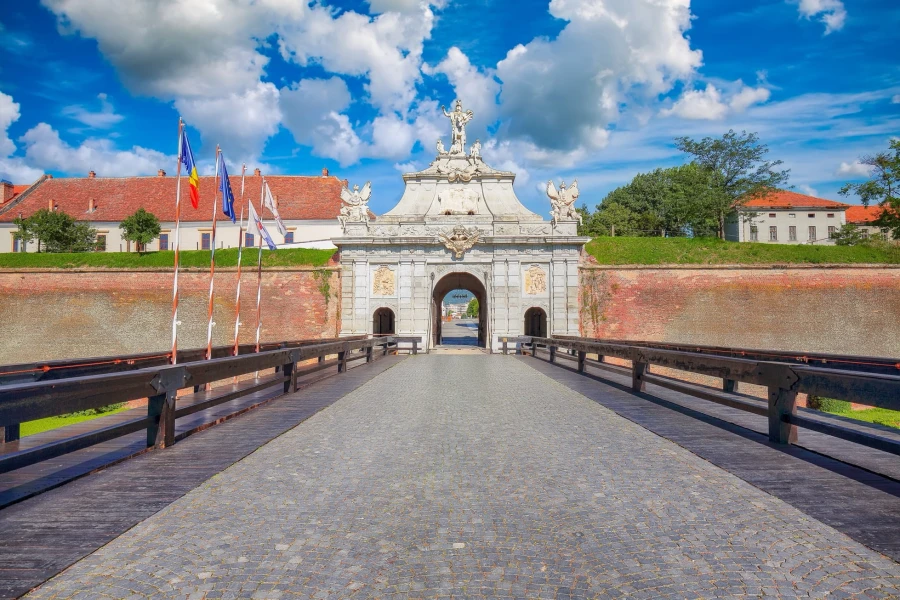
Gate III, the largest and most richly decorated of all, is crowned by the equestrian statue of Emperor Charles VI (the citadel was built during his reign). Located between the Eugene of Savoy and Capistrano bastions, it serves as the main entrance to the bastioned citadel.
Gate III, Alba Carolina Citadel
These are the best known, but there are also Gate IV, Gate V, Gate VI (all three on the western side), and Gate VII (on the northern side, rediscovered during the restoration). More details here
The Roman Catholic Cathedral and the Reunification Cathedral
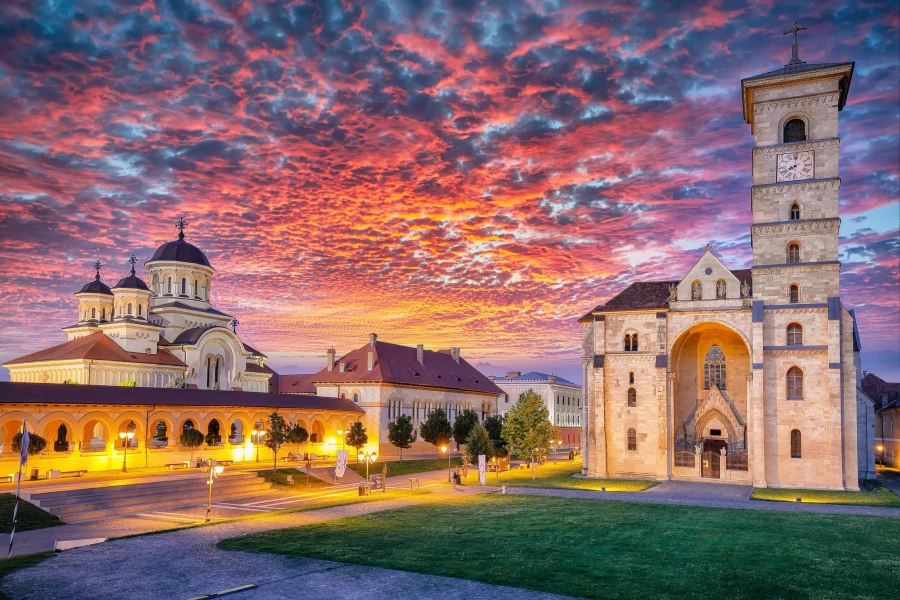
Reunification Cathedral and Roman Catholic Cathedral
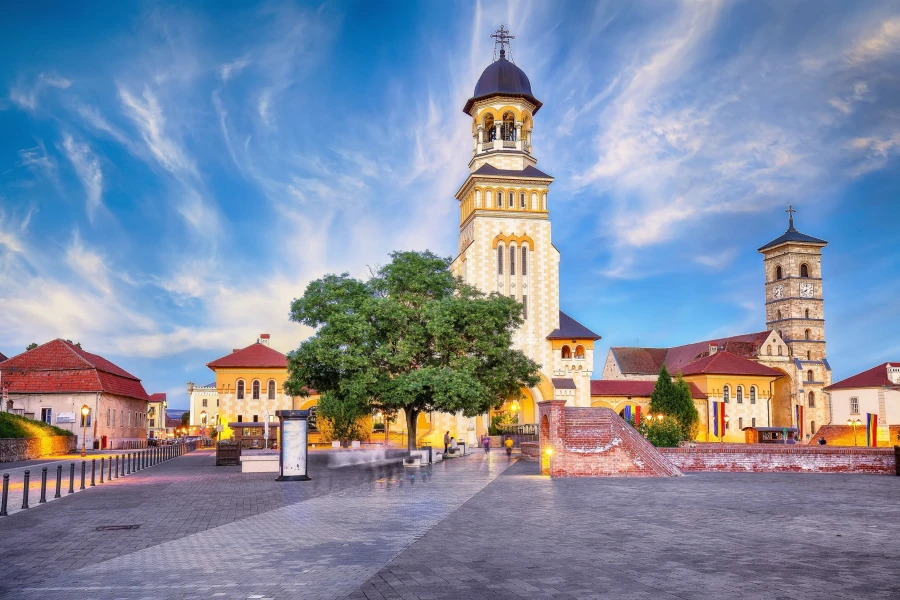
The Roman Catholic Cathedral in Alba Iulia, one of the oldest and most valuable medieval churches in Romania, dates back to the 13th century.
It combines Romanesque and Gothic architectural styles and offers visitors a place of prayer and meditation.
In contrast, the Reunification Cathedral, built between 1921 and 1922, celebrates the Great Union of 1918. With Byzantine and Neo-Romanian influences, the cathedral is where King Ferdinand and Queen Marie were crowned, symbolizing the unity of the Romanian nation.
Reunification Cathedral and Roman Catholic Cathedral, Alba Iulia
National Museum of the Union
The National Museum of the Union houses an impressive collection of artifacts and documents related to Romania's history.
The exhibits include weapons, uniforms, original documents, and personal belongings of important historical figures. The museum offers deep insight into the country's past. See details
Union Hall
Union Hall is a place of extraordinary historical significance. Here, on December 1, 1918, the delegates of the Romanians of Transylvania voted for union with Romania.
The hall has been carefully restored to reflect the atmosphere and importance of that historic moment. Visitors can see period documents and objects that illustrate this crucial event.
Batthyaneum Library
The Batthyaneum Library (the former Trinitarian monastery), founded in 1798 by Bishop Ignác Batthyány, is one of the most important libraries in Romania.
It holds a vast collection of medieval manuscripts, incunabula, and rare books. The library is housed in a former Jesuit hospital and is a particularly valuable research center for historians and bibliographers.
The Princes' Palace
The Princes' Palace of Transylvania, also known as the Voivodal Palace, is a complex of historic buildings that served as the residence of the governors of Transylvania.
The building impresses with its Renaissance and Baroque architecture and today houses a museum and hosts numerous events and exhibitions.
Equestrian statue of Michael the Brave
This famous statue stands in front of the Princes' Palace. It was created in 1968 by the sculptor Oscar Han, together with the bas-relief behind it, which depicts the ruler receiving the homage of the united Romanian lands. It is one of the most significant historical symbols of national identity and unity in the whole country. Details here
Horea, Cloșca, and Crișan Obelisk
This impressive monument is dedicated to the memory of the leaders of the peasant uprising of 1784 and stands near Gate III. The obelisk is a symbol of the struggle for justice and freedom.
The Three Fortifications Route
This themed route lets visitors explore the citadel's various layers of fortifications, from the Roman and medieval fortifications to the modern ones, including the artillery platform. It helps you understand the historical and military evolution of the citadel.
The Cell of Horea, Cloșca, and Crișan
Located inside a building on the southern side of the citadel, this cell is where the leaders of the 1784 peasant uprising were imprisoned before their execution. Visitors can see reconstructions of the conditions in which they were held and learn more about this important episode in Romania's history.
The Episcopal Palace
This palace was the residence of the Roman Catholic bishops of Alba Iulia. Built in the Baroque style, the palace has an impressive facade and interiors decorated with frescoes and period furniture. Today it hosts various exhibitions and cultural events.
Losenau Monument
It was the officers of the Habsburg army in the Alba Iulia garrison who proposed building this monument. The foundation stone was laid in 1852, in the presence of Emperor Franz Joseph. More details here
Custozza Monument
The obelisk is dedicated to the heroes of the 50th Infantry Regiment who fell in the Battle of Custozza in 1866. It stands behind Union Hall. See details.
Apor Palace
Apor Palace is the first Baroque civil building in Transylvania. Located on the northern side of Alba Carolina Citadel, it was built on structures that once belonged to a medieval house.
It was built in the second half of the 17th century and over time was home to famous residents, such as Ștefan Apor, one of the most influential and wealthiest men in Transylvania at the time.
Today it houses the rector's office of the 1 Decembrie 1918 University of Alba Iulia.
Via Transilvanica
Via Transilvanica map
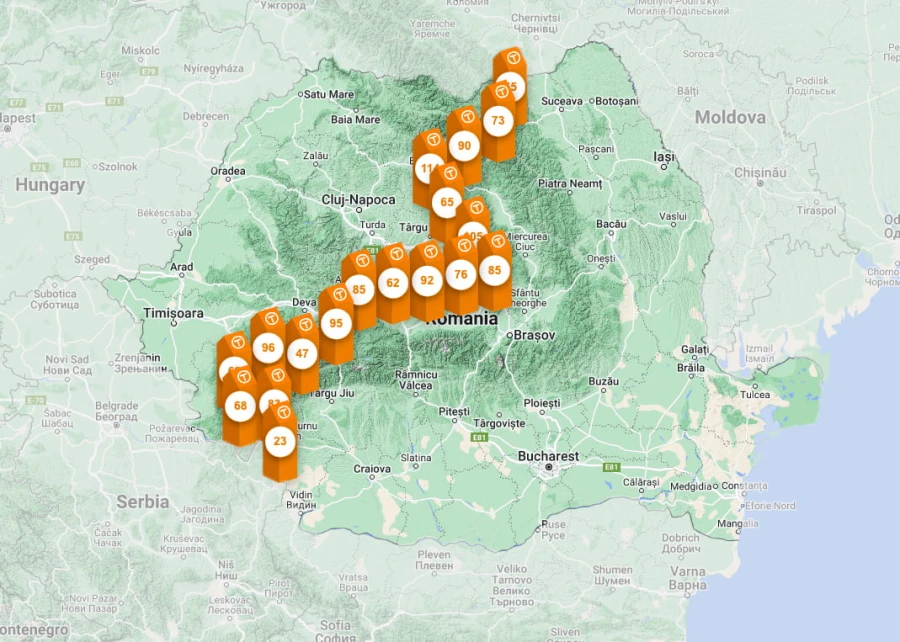
Via Transilvanica is a trail of more than 1,400 km across Romania, inaugurated in 2022 in Alba Iulia, the City of the Great Union. See details here or on the official website.
Other tourist attractions in and around Alba Iulia
Doctor Ioan Vlad Dendrological Park – Located in the city of Alba Iulia, the park is an ideal place for relaxing and taking walks. Here you can admire numerous species of plants and trees.
Mamut Hill – A wooded hill on the edge of the city, ideal for picnics, walks, and recreational activities.
Mareh Yezekiel Synagogue in Alba Iulia – Built between 1827 and 1840, it is one of the oldest and most beautiful synagogues in Romania. Listed as a historic monument, the synagogue was built in the Neo-Baroque style and is the first masonry synagogue in Transylvania. The city bears the imprint of this community (the first businesses, the Jewish cemetery).
Râpa Roșie Nature Reserve – Located a few kilometers from Alba Iulia, near Sebeș, it offers a spectacular landscape with unique geological formations. It is often compared to the Grand Canyon in the United States. See details on Wikipedia.ro
Palace of Justice – An example of monumental architecture in the city center, designed in Budapest.
The Palace of Justice was built in 1908 with two inner courtyards. It belongs to the Secession style, the German variant of Art Nouveau, characterized by harmonious forms partly inspired by classicism and a strong emphasis on functionality. Read more here
The “Capitoline Wolf” Monument – A copy of the famous Roman monument, symbolizing the Latin origin of the Romanian people, located in the city center.
Union Park – A central park offering places for relaxation and recreation. It is also home to the Union Monument, erected in 2018 as a tribute to those who contributed to the Great Union.
Corvin Castle – About 90 km from Alba Iulia, in Hunedoara, this Gothic castle is one of the best-preserved and most impressive castles in Romania.
Deva Fortress – About 80 km from Alba Iulia, this medieval fortress offers a panoramic view over the city of Deva and its surroundings.
Câlnic Fortress – 30 km from Alba Iulia, this fortified citadel is a UNESCO World Heritage Site and offers a glimpse into the medieval history of the region.
Geoagiu Băi Resort – 50 km from Alba Iulia, this spa resort is famous for its thermal waters and picturesque scenery.
Râmeț Monastery
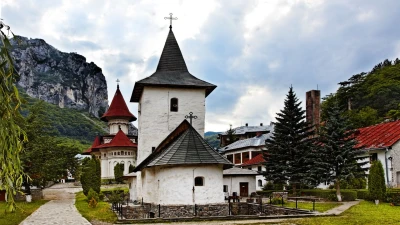
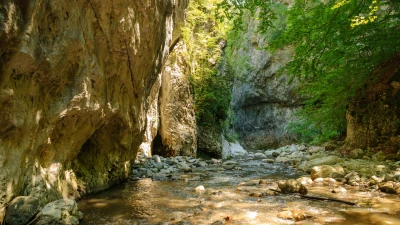
Râmeț Monastery – Located 45 km from Alba Iulia, this Orthodox monastery is one of the oldest monastic settlements in Transylvania and also offers spectacular natural scenery.
Râmeț Gorges – About 45 km from Alba Iulia, these gorges offer spectacular hiking trails and impressive natural scenery, making them a perfect place for nature lovers.
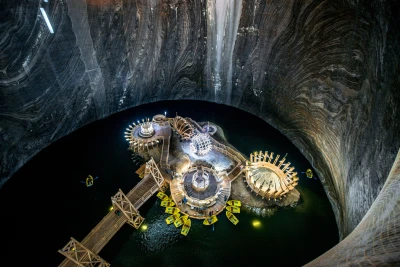
Turda Salt Mine – Located about 70 km from Alba Iulia, the salt mine is one of the most spectacular tourist attractions in Romania. See details here.
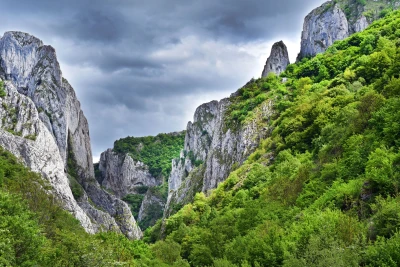
Turda Gorges Nature Reserve – About 75 km from Alba Iulia, the Turda Gorges offer hiking and climbing routes, making them an ideal place for nature lovers.
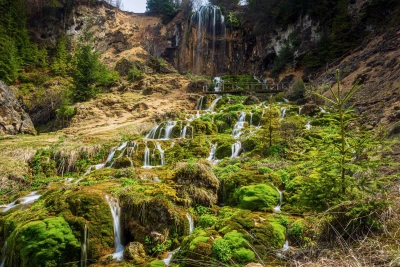
Pișoaia Waterfall and Snail Hill – About 70 km from Alba Iulia, in Vidra commune, these two natural attractions offer picturesque scenery and a special experience in the heart of nature.
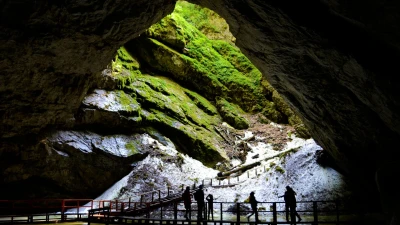
Scărișoara Cave – About 120 km from Alba Iulia, this cave holds one of the largest underground glaciers in Europe and offers visitors an unforgettable experience.
These sights offer a wide range of activities and experiences for those who want to explore more than Alba Carolina Citadel and discover the beauty and diversity of the region around Alba Iulia.
Activities for Visitors
There are many ways for visitors of all ages to explore the citadel of Alba Iulia. From guided tours to historical reenactments and interactive activities, the citadel offers a wide range of experiences.
Guided tours and themed events
Alba Iulia Citadel offers a variety of guided tours that let visitors discover the history and architecture of the complex in detail.
The guides are well trained and share captivating information about the citadel's past, from its founding to the important events that took place here.
In addition, the citadel frequently organizes themed events, such as night tours or specialized tours focused on particular historical periods, offering a fresh perspective on life in the citadel over the centuries.
Historical reenactments and shows
Among the most appealing activities for visitors are the historical reenactments and theater performances held regularly in the citadel.
These events bring to life key moments in the citadel's history, such as the changing of the guard parade or medieval battles.
The actors, dressed in period costumes, recreate authentic scenes, giving spectators an educational experience. The reenactments are often accompanied by interactive workshops where visitors can learn about everyday life in the past.
Activities for families and children
Alba Iulia Citadel is a great place for a family outing. There are many activities for children, including craft workshops, interactive games, and educational exhibitions.
The parks and green spaces inside the citadel are ideal for picnics and relaxing. In addition, there are themed trails designed especially for families, with riddles and challenges meant to make the visit more interesting and engaging for little ones.
The fortress moats can also be visited by minibus. See here for information.
Annual Events and Festivals
Every year, Alba Iulia, and the citadel in particular, hosts a series of events and festivals aimed at promoting culture.
Citadel Days
Citadel Days is one of the most important annual events in Alba Iulia. The festival lasts several days and includes parades, music, dance, and theater performances, as well as historical reenactments.
The event attracts thousands of visitors and is the perfect opportunity to explore the citadel in a festive atmosphere.
Cultural and historical festivals
Throughout the year, the citadel hosts numerous cultural and historical festivals, ranging from medieval fairs and film festivals to art and literature exhibitions. These events showcase local traditions and culture (Apulum Roman Festival, Alba Iulia Music & Film Festival, the Christmas Market).
Concerts and other artistic events
Alba Iulia Citadel is also a favorite venue for concerts and other artistic events. From classical music and jazz to theater and contemporary dance performances, the citadel offers a wide range of artistic events that attract a diverse audience. These events add to the citadel's vibrancy and appeal, turning it into a true cultural center.
See the full list of events held in Alba Iulia in 2024.
The Citadel's Importance Today
Alba Iulia Citadel plays a crucial role in local tourism as one of Romania's main tourist attractions. Every year, thousands of tourists come to explore the citadel and take part in the events held here. This influx of visitors contributes significantly to the local economy, boosting the development of the hospitality and tourism services sector.
Development and modernization projects
To maintain and enhance the citadel's appeal, local and national authorities have launched various development and modernization projects.
These include restoring and conserving historic buildings, improving infrastructure, and creating new visitor facilities. The projects aim to preserve the citadel's cultural heritage and to offer the most pleasant and educational visit possible.
According to Mayor Gabriel Pleșa, the measures to promote the city for tourism include installing a 3D sign with the city's name near Gate III. More details at ziarulunirea.ro
Educational and cultural importance
Alba Iulia Citadel is of particular educational and cultural importance. It serves as a place of learning for schoolchildren and university students, who come here on field trips and for educational projects. The citadel also hosts numerous exhibitions and cultural events that promote Romania's history and culture.
The 1 Decembrie 1918 University of Alba Iulia is also based here.
Opening hours and prices
Alba Iulia Citadel is open to visitors every day of the week.
Standard opening hours for the attractions vary, so we recommend checking them before you arrive.
Admission prices vary depending on the type of visit and the sights included.
Prices may differ for guided tours and for access to museums or special exhibitions. We recommend checking the official website or contacting the tourist information office for the latest information on prices and opening hours.
There are designated paid parking areas in and near the citadel, including for buses.
Accommodation and restaurants nearby
Near Alba Iulia Citadel, visitors can choose from various accommodation options, from hotels to comfortable guesthouses and serviced apartments.
Among the most popular options is Carolina Heritage, located near the main sights in the citadel, which offers modern rooms and top-notch amenities.
Hotel Medieval, which offers a themed atmosphere and excellent service, is another option inside the fortress. In addition, Hotel Cetate is a popular choice for a more relaxed and affordable stay.
As for places to eat and drink, visitors can choose from restaurants, pubs and cafés in and around the citadel, such as Pub 13, Czech In La Vizitiu, and Framm's.
Weather in Alba Iulia
The weather now in Alba Iulia and for the next 7 days:
Tips for Visitors
To fully enjoy your visit to Alba Iulia Citadel, keep the following recommendations in mind:
Book guided tours: They provide detailed and interesting information about the citadel's history and architecture.
Check the events calendar: Attending historical reenactments and cultural events can add a unique dimension to your visit.
Allow enough time: The citadel is vast and has many sights to see, so make sure you have at least a full day, ideally several days.
To make sure your visit is comfortable and enjoyable:
Comfortable clothing and suitable footwear: The citadel is extensive, and exploring it involves a lot of walking.
Sun protection and water: In summer, temperatures can be high, so it's important to protect yourself from the sun and stay hydrated.
Best times to visit: Spring and fall are the best seasons to visit the citadel, thanks to moderate temperatures and beautiful scenery.
We also recommend that you:
Avoid crowded areas: For a quiet visit, try to visit the citadel outside peak hours or on weekdays.
Respect the rules of the site: Make sure you follow the rules and instructions posted in the citadel to protect the heritage and avoid any incidents.
Frequently asked questions
What is Alba Carolina Citadel?
Alba Carolina Citadel is an impressive fortress located in Alba Iulia, Romania. Built in the Vauban style at the beginning of the 18th century, the citadel is one of the largest and best-preserved fortifications of its kind in Eastern Europe.
What can I visit in Alba Carolina Citadel?
Inside the citadel, visitors can explore St. Michael's Roman Catholic Cathedral, the Reunification Cathedral, Union Hall, the National Museum of the Union, the Batthyaneum Library, and much more.
Do I need an entrance ticket to visit Alba Carolina Citadel?
Entry to the citadel is free, but some attractions and museums inside charge an admission fee. Ticket prices vary, and tickets can be purchased on site or online.
Are there tour guides at Alba Carolina Citadel?
Yes, there are tour guides for both individual and group tours. They provide detailed information about the citadel's history and attractions. Audio tours are also available in several languages.
Conclusion
Alba Iulia Citadel is a remarkable place that combines fascinating history with architectural and cultural beauty. Visiting the citadel offers a unique opportunity to explore a monument of national importance and to better understand Romania's historical heritage.
With its varied attractions, educational activities, and cultural events, Alba Iulia Citadel is the ideal destination for anyone interested in history, culture, and architecture.
We encourage all readers to visit this iconic place and discover its historical and cultural charm for themselves.
If you're spending several days in Alba County, we also recommend Colțești Fortress.
If you plan to visit Romania's remarkable fortresses, don't miss Deva Fortress, Sighișoara Citadel, Rupea Fortress, Poenari Fortress, and Râșnov Fortress.