The Merry Cemetery in Săpânța commune, located in the north of Maramureș County, is a cultural landmark on Romania's tourism map.
The site stands out internationally for its unusual approach to the funeral ritual, turning the final resting place into a folk art gallery that celebrates life.
In this article:
Aerial view of the Merry Cemetery
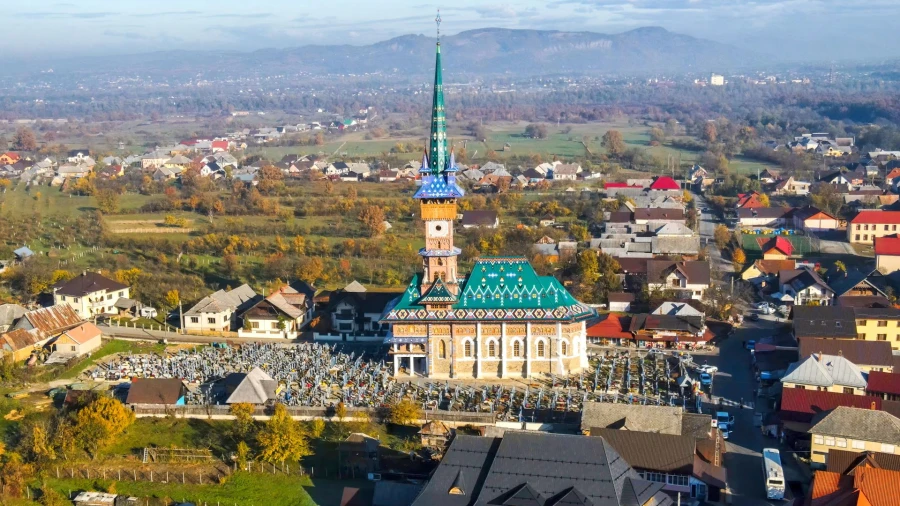
Why is the Merry Cemetery of Săpânța unique?
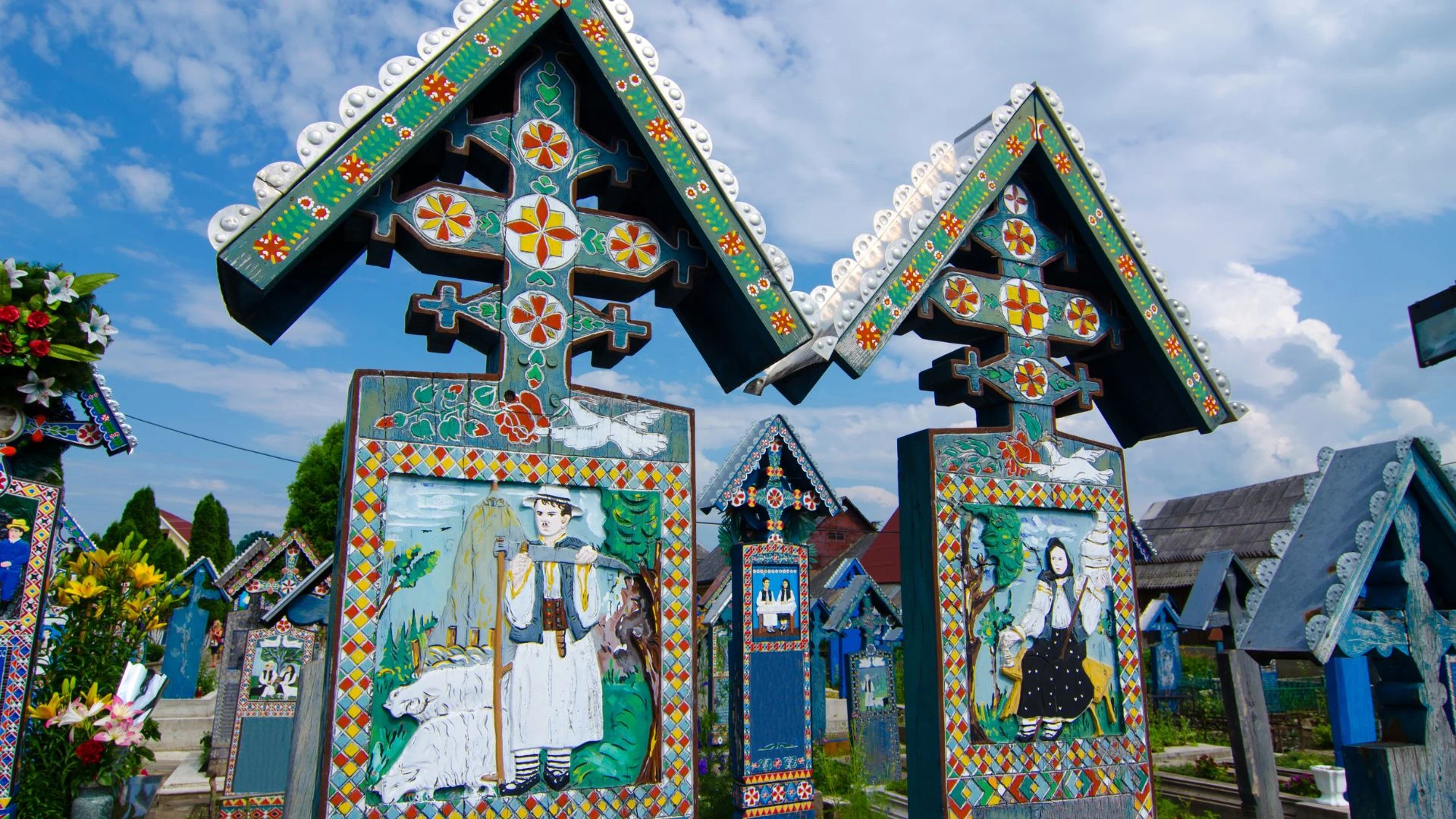
The centerpiece of the Merry Cemetery is its more than 800 hand-painted wooden crosses, made of oak and bearing unusual messages.
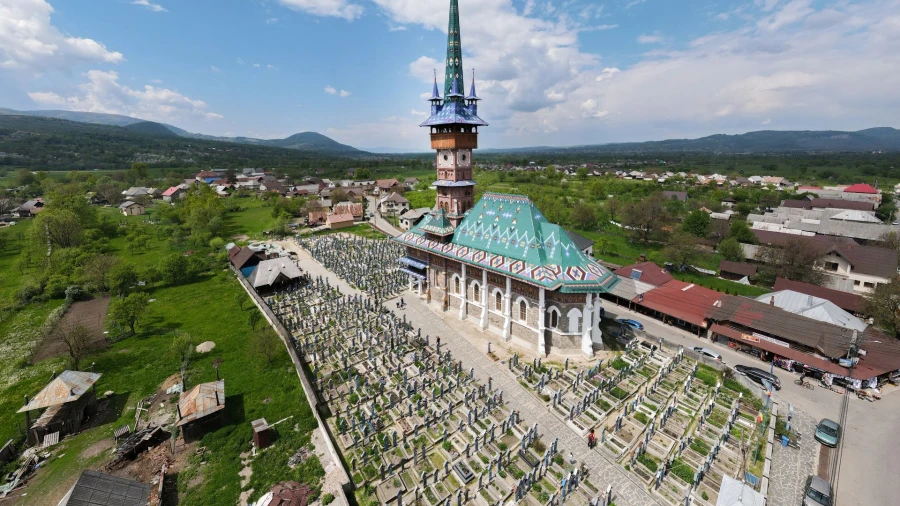
The cemetery and the church
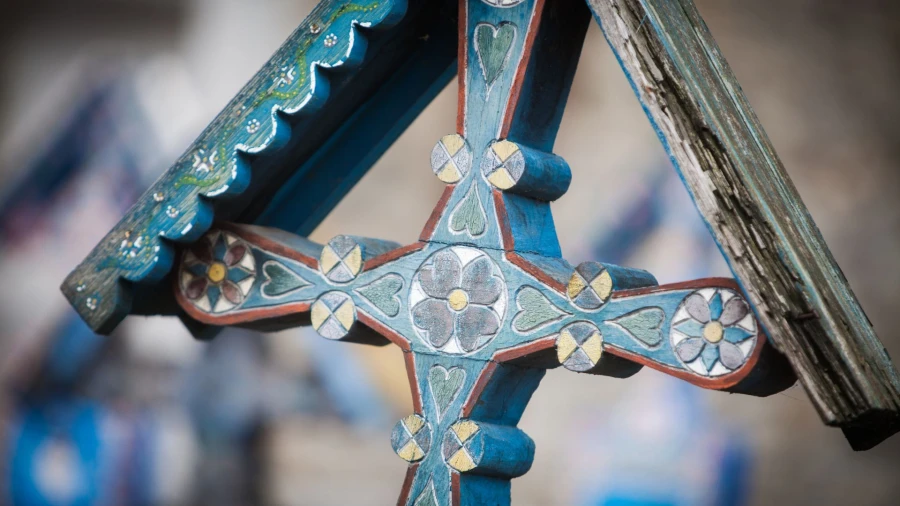
Each cross consists of a tall wooden post, with a painting at the top and the epitaph carved at the base.
Photo from the Merry Cemetery of Săpânța
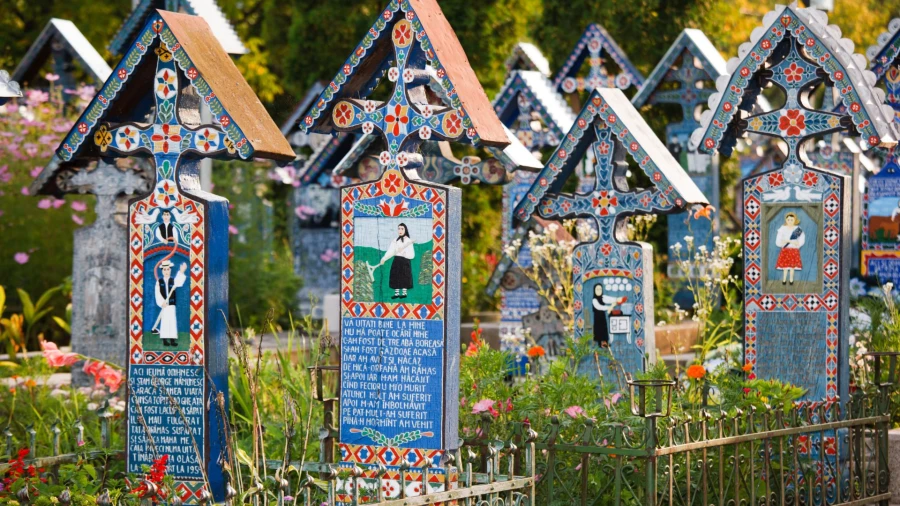
The epitaphs, crucial to the cemetery's identity, are short, often funny poems about the deceased, written in the first person.
With disarming sincerity, the texts describe the most important aspect of the deceased's life: their occupation, notable deeds, way of life or, in some cases, even the circumstances of their death.
In addition to the verses, each cross features a painted picture in blue that visually illustrates the defining moment of that person's life (e.g., a craftsman at work, a happy event or the moment of death).
A unique craft
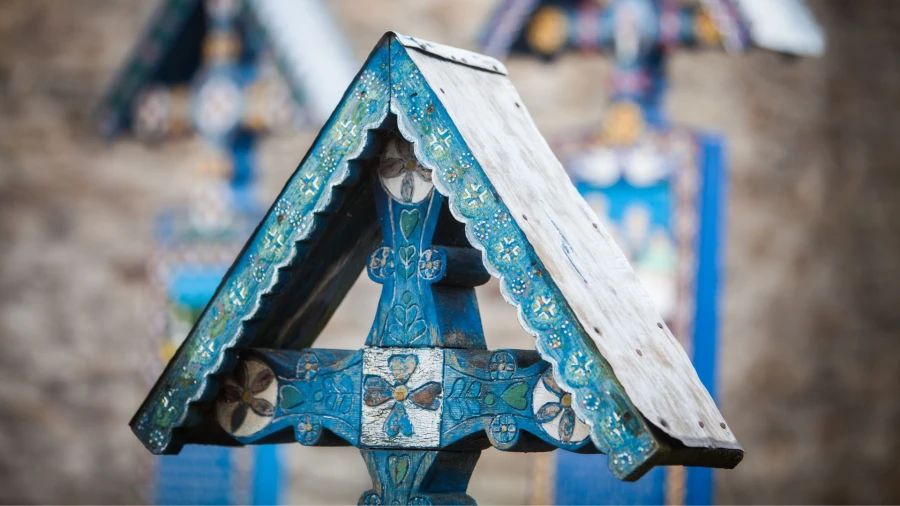
The Merry Cemetery is a testament to the local Maramureș philosophy, according to which death is not seen as a tragic end, but as a natural passage.
Representative Examples of Epitaphs
Naive art
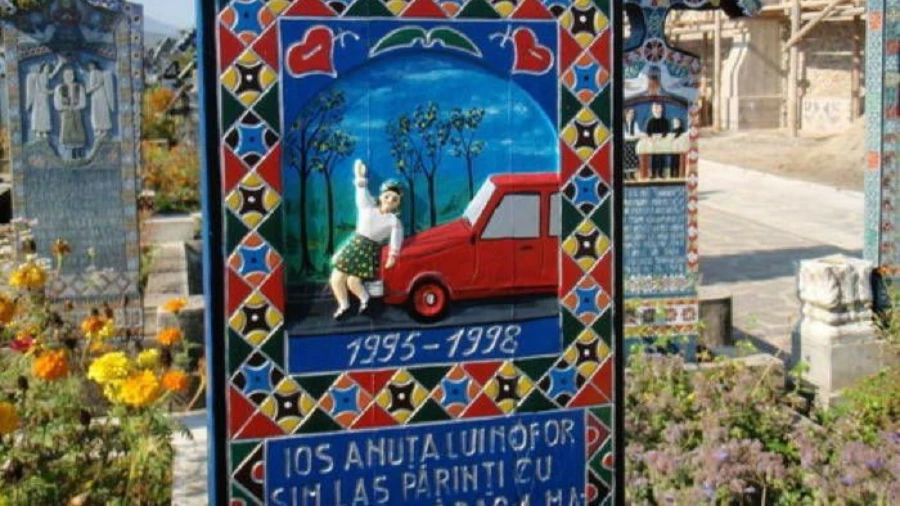
Below are a few examples of texts found on the crosses in Săpânța:
1. Ironic/Humorous Epitaph (Vice) – The one about drinking:
This type of epitaph treats everyday vices with humor, showing a complete lack of hypocrisy.
“Ever since I came into this world
I loved to drink strong liquor.
Strong drink is what I died with
And I never gave it up.
I'll ask for it up in Heaven too
And I'll drink until I drop.”
2. Ironic Epitaph (Social Criticism) – The one about the mother-in-law:
One of the most famous epitaphs, which speaks openly about family conflicts:
“Under this heavy cross
Lies my poor mother-in-law.
Had she lived three days more
I'd be lying here and she'd be reading.
You who are passing by
Try not to wake her
For if she comes back home
She'll be nagging me again.”
3. Serious/Tragic Epitaph – The one about the circumstances of death (accident):
These texts offer a somber chronicle of the causes of death, often to convey a warning:
“Here I stopped along my way
And left a thought for everyone.
My youth was cut short
By a driver who drove drunk.
You who pass by here now
Good people and old folks
Do not forget that instead of wine
The greatest torment awaits you.”
In this way, the cemetery works as an open archive, documenting the commune's micro-social history through personal testimonies and blending the tragic with the humor typical of Maramureș folklore.
Naive art – depictions
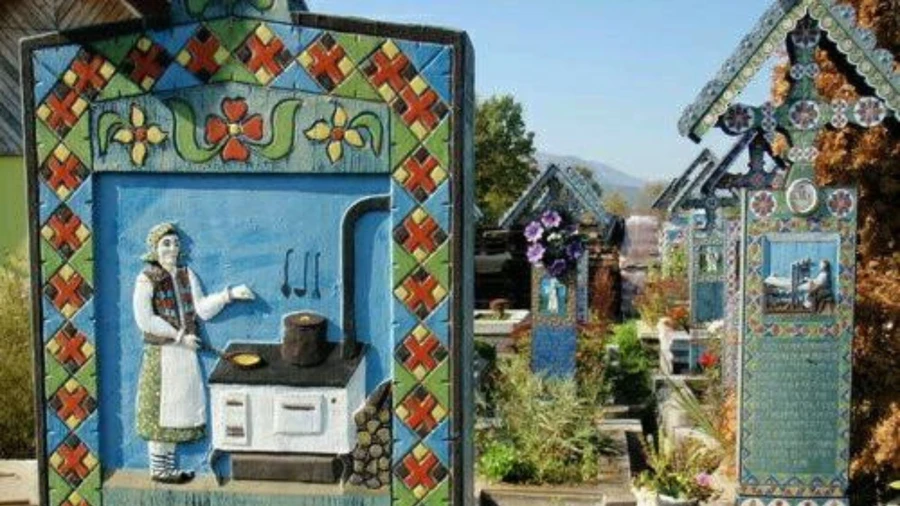
The Fathers of the Tradition and the Continuation of the Craft
Săpânța's distinctive art would not exist without the vision and dedicated work of the two local craftsmen.
Stan Ioan Pătraș at age 64
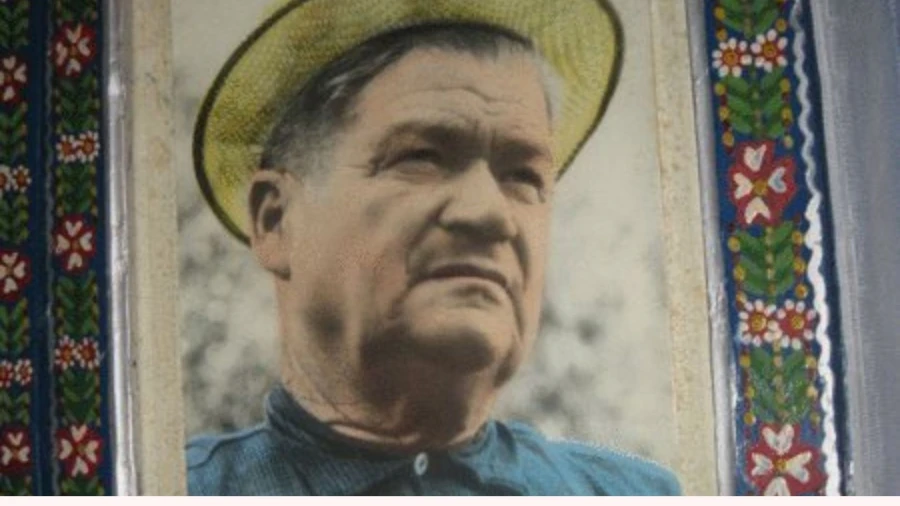
Stan Ioan Pătraș (1908 – 1977) is the founder of the Săpânța craft. The first cross carved and painted by the sculptor dates from 1935. See more on Wikipedia.ro
Over time, he developed and standardized the technique – using oak wood, establishing the format of the poetic text and introducing the distinctive color palette. In more than 40 years of work, he created most of the monuments in the cemetery.
After his death, the workshop and the craft were taken over by his apprentice, the sculptor Dumitru Pop Tincu (1955-2022), who created the new crosses, ensuring the preservation and expansion of the site.
Today, the master's daughter, Ana-Maria Stan, and her husband, Stan Ioan, carry on the craft of the colorful crosses.
The Symbolism of Colors on the Săpânța Crosses
Color plays an essential role in conveying the message of each cross. The dominant color, used for the background,
is Săpânța Blue (representing the sky, hope and eternal life).
The world-famous cemetery
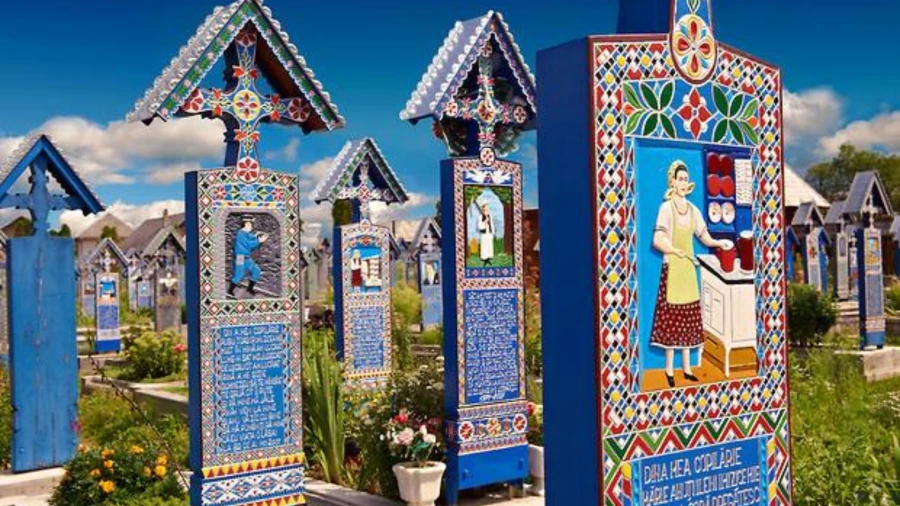
Other colors are also used:
Green: Symbolizes life, vegetation and vitality.
Yellow: Represents fertility, the sun and the harvest.
Red: Symbolizes passion, life and warmth.
Black: Used sparingly, it often indicates tragedy, violent death or grief.
How the Merry Cemetery Is Seen Internationally
The Merry Cemetery is featured in the international press and is often cited in rankings of unusual destinations.
International publications consistently describe it as “One of the most unusual cemeteries in the world” or “The merriest final resting place on the planet.”
The church
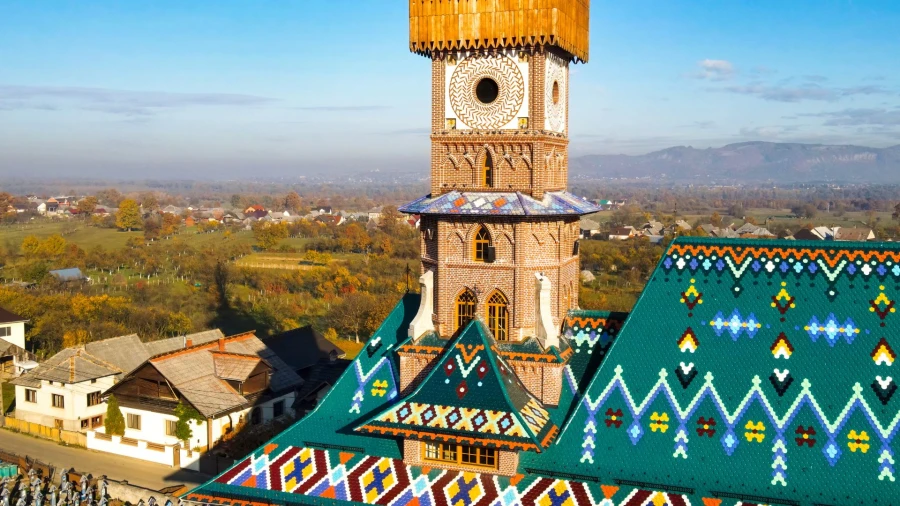
It is included in prestigious travel guides (such as Lonely Planet or Rough Guides) as a must-see destination for those exploring Eastern Europe or rural culture.
Foreign media focus on the philosophical contrast between the site's funerary function and its artistic message.
Journalists highlight the direct humor and the lack of hypocrisy in the epitaphs, which offer an authentic glimpse into everyday life in Maramureș.
The cemetery is recognized as a monument of naive folk art, with an emphasis on hand carving and painting techniques.
Cross
Reports by major media outlets (e.g., BBC, CNN, and high-circulation European and American newspapers) have cemented the Merry Cemetery's status as cultural heritage of global interest.
Planning Your Visit
The Merry Cemetery is one of the most visited attractions in Maramureș.
Address: Săpânța commune, Maramureș County, Romania. The cemetery is located on the main road through the commune, at the parish church.
Open daily: 8:00 – 20:00
Ticket Prices:
Adults 10 lei
Children (7 – 14 years) 5 lei
Children (0 – 7 years) FREE
Contact details and up-to-date information on the official website.
Tip: Take your time to explore and read the inscriptions.
Extending Your Experience in Maramureș
The Merry Cemetery of Săpânța is a strategic starting point for tourist circuits in the Maramureș region. Besides its heritage sites, the area offers a variety of facilities for leisure tourism.
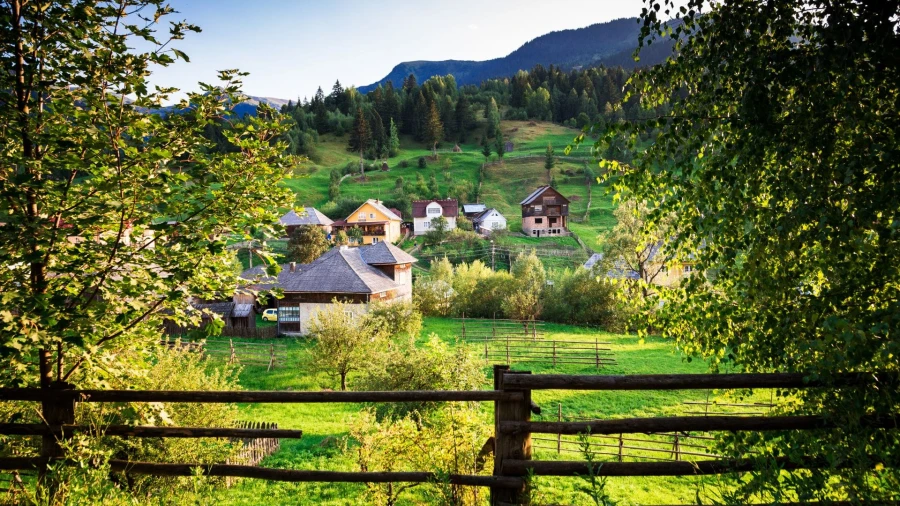
Borșa
Prislop Pass in winter
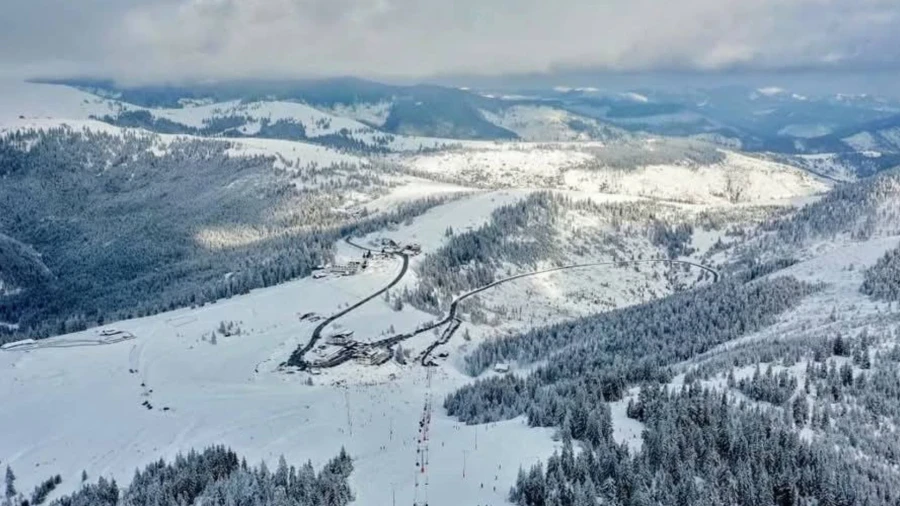
The route can be extended to the resorts of Cavnic, Șuior and Borșa, as well as to the Prislop Pass, areas known for their winter sports and hiking infrastructure.
These destinations diversify the tourist offer, drawing on both the ethnographic resources and the natural potential of the Eastern Carpathians.
Conclusions
The Merry Cemetery of Săpânța is a key landmark of cultural tourism, standing out for its anthropological and heritage value.
As an exponent of naive art, the site works like an open-air museum, documenting the history and structure of the local community.
The visual and textual approach of the funerary monuments offers a distinct perspective on the traditional mindset, making the site essential for understanding the identity of the Maramureș region.