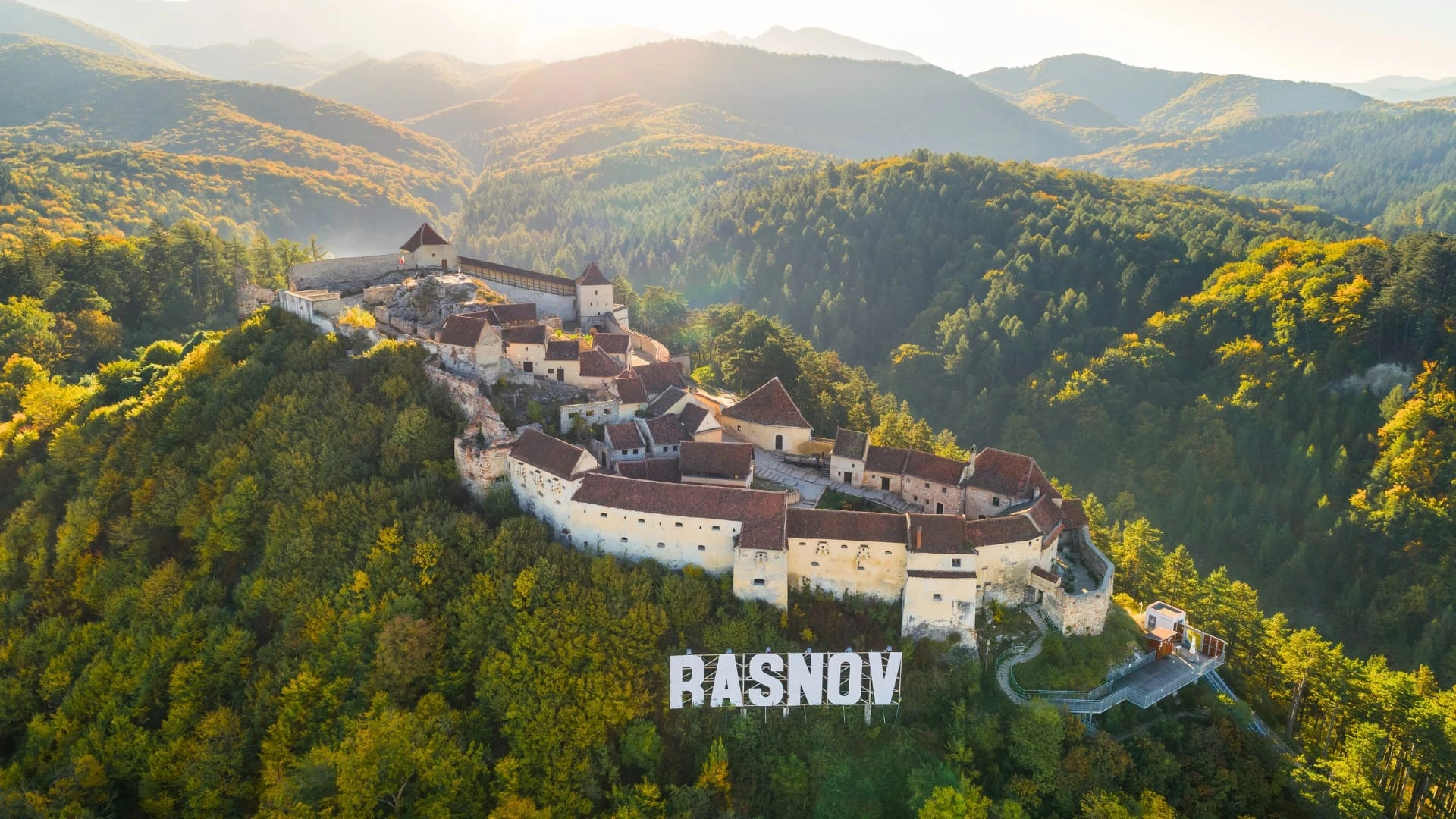
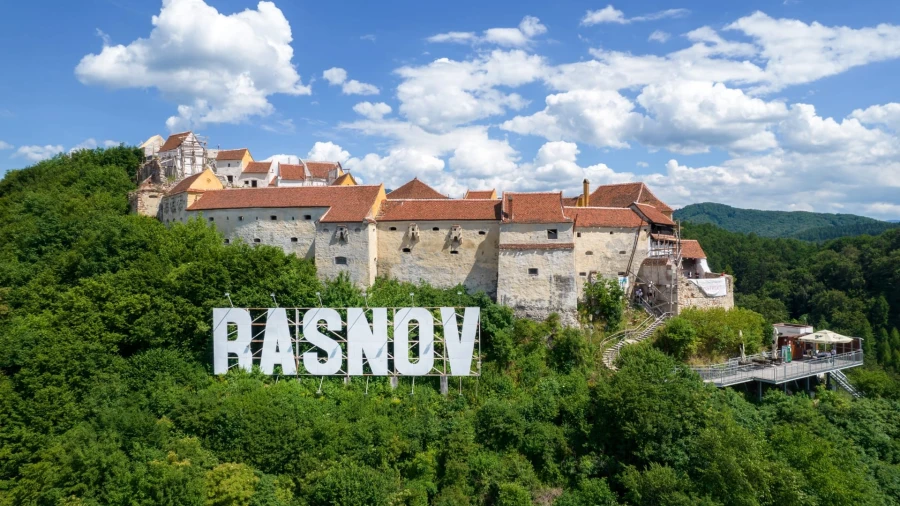
Râșnov Fortress is one of the best-preserved and most visited medieval fortresses in Romania, located in the heart of Transylvania, on a rocky hill in the south of the town of Râșnov, Brașov County.
Râșnov Fortress
In this article:
With a history spanning several hundred years and thanks to its strategic position between the Piatra Craiului and Bucegi Mountains, the fortress played an essential role in protecting the local community.
Today, Râșnov Fortress is a major tourist destination, attracting thousands of visitors every year, both from Romania and from abroad. The fortress has been listed as part of the national heritage and has kept its medieval charm, offering an authentic journey into the past.
Location and Access
The Râșnov fortification stands at the foot of the Postăvarul Massif and can be reached from several directions. Located about 15 kilometers from the city of Brașov (8 km from the Poiana Brașov resort), it is served by the following main roads:
DN1, the national road linking Brașov and Ploiești
DN73, coming from the direction of Câmpulung Muscel
from Brașov on DN1E, continuing on DJ112A
From Râșnov, the road to the fortress is signposted and well maintained.
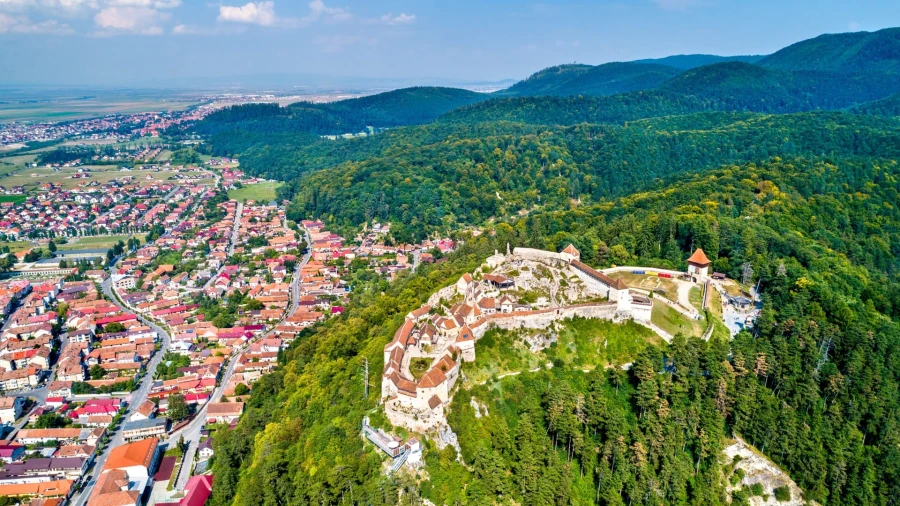
Râșnov Fortress and the town of Râșnov
Distances from several cities:
from Sinaia: 1 hr (44.3 km) via DN1/E60 and DN73A
from Bucharest: 3 hr 24 min (178.8 km) via the Bucharest – Ploiești Motorway/A3 and DN1/E60
from Sibiu: 2 hr 31 min (146.7 km) via DN1/E68 and DN73A
History and Legends
On Fortress Hill, archaeological research has revealed fortifications dating back to the Bronze Age, and a Dacian fortress was built here before the Roman conquest of Dacia.
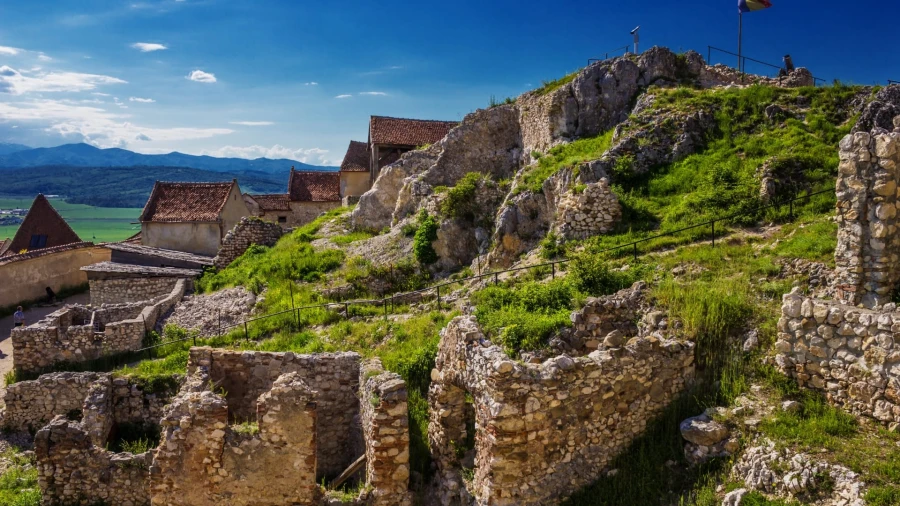
Râșnov Fortress Ruins – Architecture
The defensive system of the Dacian fortress included three ditches and ramparts facing east, the vulnerable side, and the fortress seems to have disappeared during the Dacian Wars.
The medieval fortress is believed to have been built between 1211 and 1225, while the Teutonic Knights were present in Burzenland (Țara Bârsei). After they left, the wooden fortress was rebuilt or transformed into a stone one.
Although there is no written evidence to confirm this hypothesis, historians argue that the construction techniques, the foundation and the walls suggest the existence of a fortress predating its first documentary mention.
Râșnov Fortress was built in the 14th century by the Teutonic Knights as part of a defensive system meant to protect Burzenland and the trade routes that passed through the region.
The first documentary record of the fortress dates from 1335, when it was mentioned as a refuge from a Tatar invasion. From its very beginnings, the fortress played a major defensive role, as it was designed to protect the inhabitants of the surrounding area during invasions.
The locals took refuge inside the fortress from natural disasters (fires, the earthquake of 1802) and military invasions. The first Ottoman siege took place in 1421, but the fortress held out, and the Turks withdrew, destroying the unfortified city of Brașov instead. Râșnov Fortress also withstood other Ottoman attacks in 1436 and 1441.
Built on a rocky hill overlooking the road to Bran, the fortress was hard for invaders to reach, giving the inhabitants the upper hand in its defense. Its solid fortifications (5 m walls) and its system of defensive bastions (8 in all) allowed it to withstand the Ottoman and Tatar raids of the 15th and 16th centuries.
One of the most famous stories in the fortress's history is linked to the well dug in the inner courtyard. It is said that during a prolonged siege, the inhabitants dug this well, over 140 meters deep, to have a reliable source of water.
Digging the well took about 17 years, and it became a true local legend. It not only gave the inhabitants access to water, but also increased their chances of survival during long sieges.
The development of the town of Râșnov was significantly affected by the trade route that crossed the Bran Pass. Enemy armies invaded along this route and, on entering Burzenland, came upon Râșnov, which they frequently devastated. See Wikipedia.
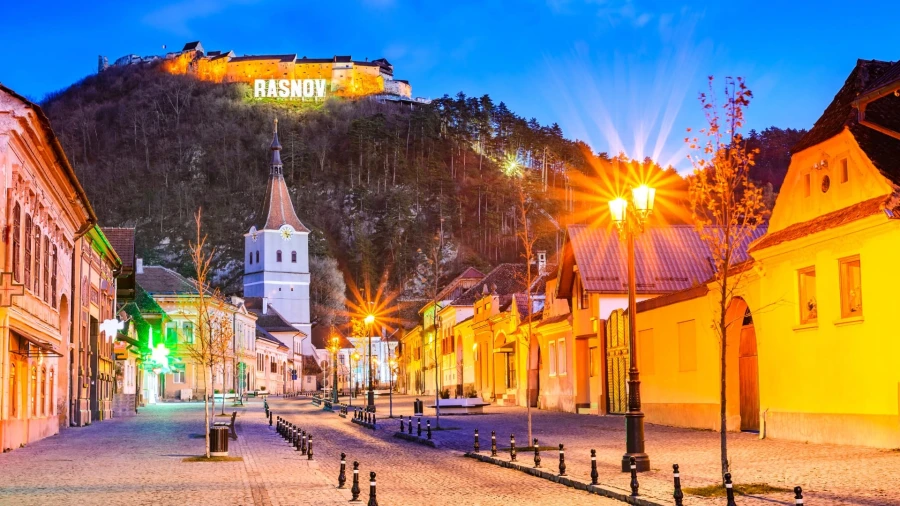
Râșnov Fortress seen from the town of Râșnov
Over time, the fortress underwent several changes and reconstructions (towers), adapting to new defensive needs (like Sighișoara Citadel). In the 17th century, the fortress was rebuilt and strengthened, becoming one of the most resilient strongholds in Transylvania.
The fortress was surrendered only once, in 1612, to the Transylvanian prince Gabriel Báthory, for about a year, after which it was bought back. See details
Although it was gradually abandoned from the 18th century onward, the fortress remained a symbol of local resistance and Transylvanian identity.
Today, Râșnov Fortress remains an iconic site (about 3,500 sq m), preserving its medieval essence and attracting visitors with its remarkable story and well-preserved architecture.
Architecture and Layout of the Fortress
Râșnov Fortress is a classic example of medieval defensive architecture, characterized by the massiveness and functionality of its elements, perfectly adapted to the natural landscape.
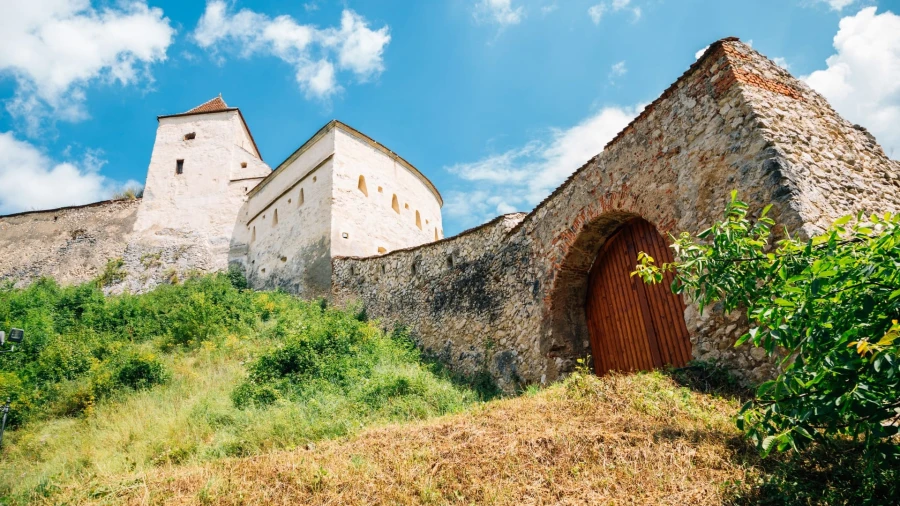
The defensive walls were originally built of river stone and brick, with an average height of 5 meters, reaching as much as 7–8 meters in some places. The walls protected the local community from numerous invasions and threats and were fitted with crenellations and loopholes.
Stone wall of Râșnov Fortress
The fortress had 8 bastions, each strategically positioned to ensure maximum visibility and to repel enemy attacks. The bastions were fortified spaces that housed cannons and light artillery.
Râșnov Fortress defense tower
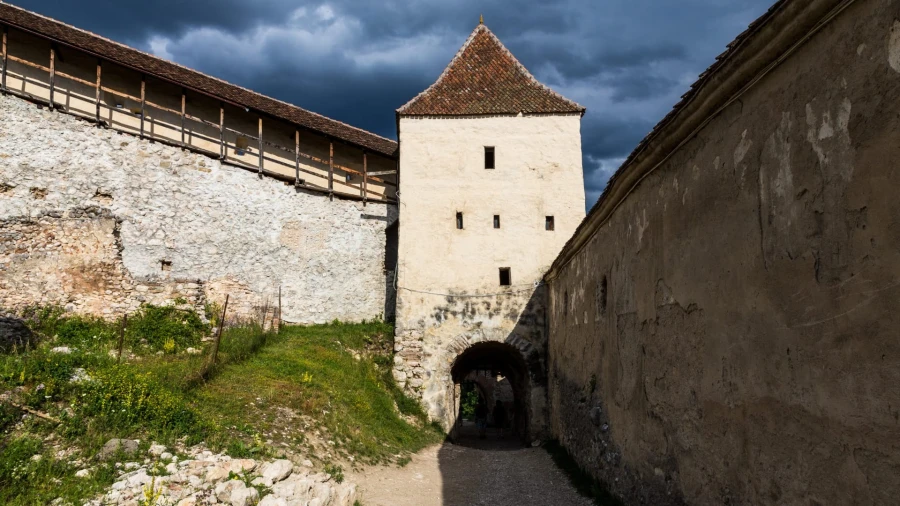
The main entrance was heavily fortified, as the only well-guarded access point, protected by massive wooden gates reinforced with metal.
In the inner courtyard there were various structures essential to life in the fortress during sieges. These included the villagers' dwellings, supply stores and food storehouses, meant to sustain the community for long periods. The fortress was organized like a small town in miniature, with everything needed for survival: workshops and spaces for animals and crops.
Inner courtyard of Râșnov Fortress
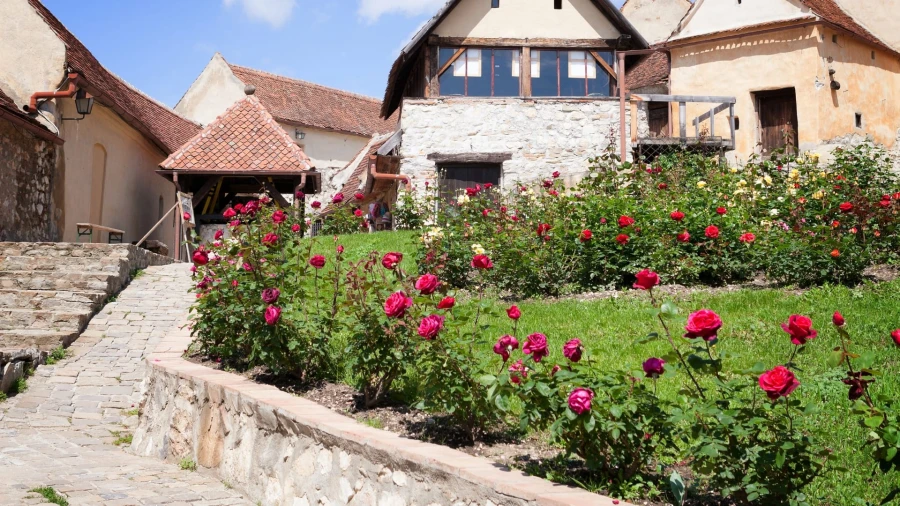
A distinctive feature of the fortress is the Râșnov Fortress Garden, a green area that in times of peace served the community for growing plants and supplying food. Today it is a place for visitors to relax, offering a spectacular panoramic view of the surroundings.
Over the centuries, the fortress underwent several architectural changes aimed at improving its defensive capacity. In recent decades, rehabilitation projects have been carried out to preserve the fortress. The interior is currently undergoing rehabilitation, as is the case at Poenari Fortress.
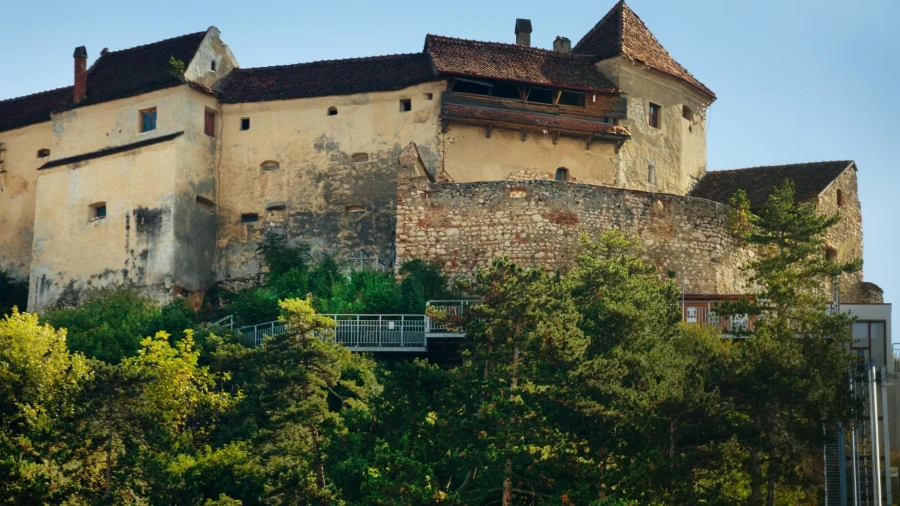
A modern feature that improves access to Râșnov Fortress is the inclined elevator, introduced to make it easier for visitors to get up to the fortress. The elevator follows a sloping route, offering a panoramic view of the town of Râșnov and the surrounding mountains.
Exterior of Râșnov Fortress
Another interesting aspect is the discovery of a historical treasure in 2001 (three lidded pewter mugs, weapons, iron tools, stone cannonballs, pottery, a gilded hairpin and 416 silver coins) in the collapsed walls of the Báthory Tower. This “heirloom” of the defense tower only came to light in 2001.
Râșnov Fortress Opening Hours
Râșnov Fortress is currently undergoing rehabilitation, but visitors can explore the fortress garden free of charge. The inclined elevator was available from October 1, 2023, to April 30, 2024, Thursday to Sunday, between 9:00 and 17:00.
Tourists visiting Râșnov Fortress
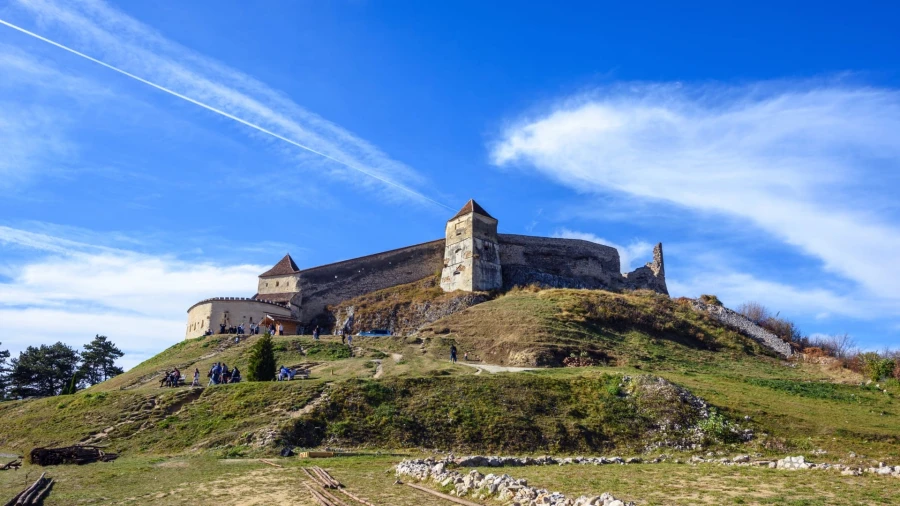
Fortress garden opening hours:
Summer: 9:00 – 19:00
Winter: 9:00 – 17:00
The round-trip fare is 25 lei per person, or 15 lei per person for schoolchildren and students. A one-way trip costs 15 lei per person, or 10 lei per person for schoolchildren and students.
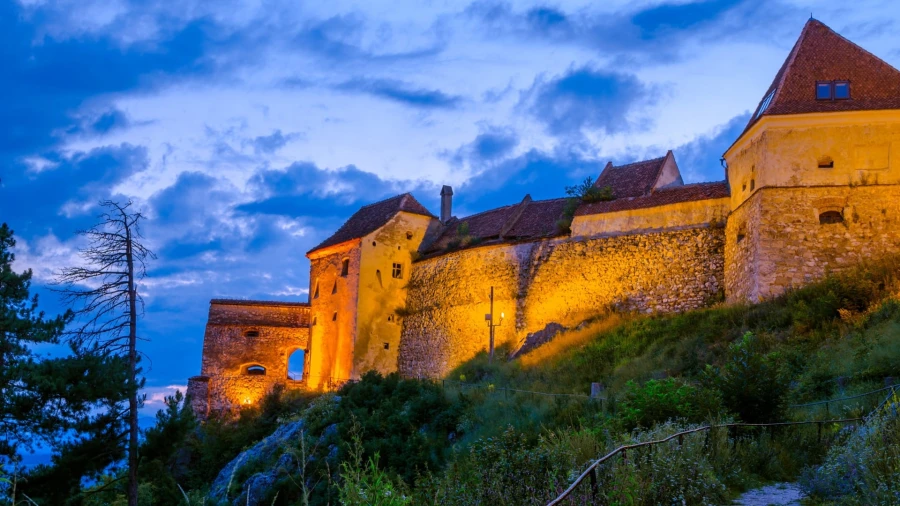
Râșnov Fortress lit up at night
Activities at Râșnov Fortress
Râșnov Fortress offers a wide range of activities all year round, whatever the season. Visitors can take part in cultural events celebrating local history and traditions, as well as medieval festivals that bring the atmosphere of bygone days to life through costumes and craft demonstrations.
For nature lovers, the fortress is a starting point for hikes in the surrounding area. Those interested in local history can opt for a guided tour of the town, such as “Râșnovul Meu” (My Râșnov).
Every summer, the fortress hosts summer schools and workshops led by notable figures, giving participants the chance to connect with the history and culture of the place. Sports competitions and various recreational activities round out the offer for visitors.
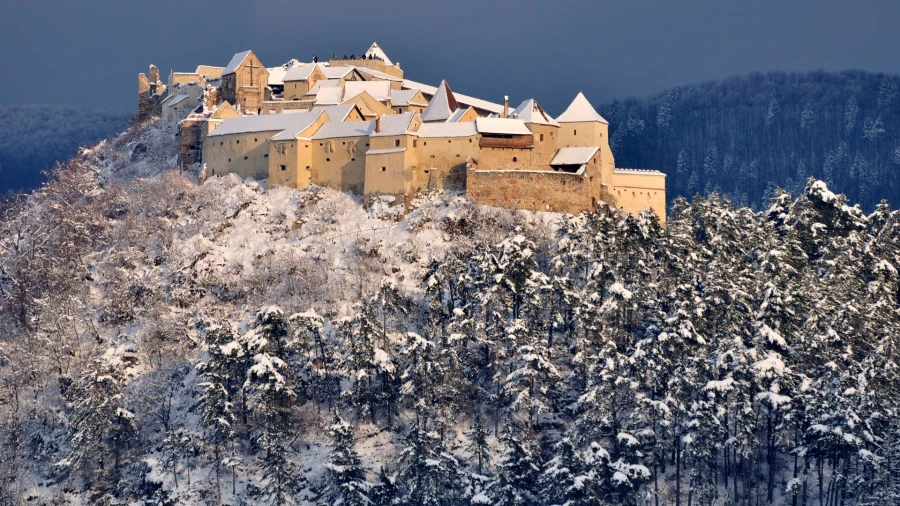
Râșnov Fortress covered in snow
During their visit, tourists can also enjoy authentic local products from small producers in the area. Whatever the season — summer, winter, fall or spring — Râșnov Fortress has activities for every taste.
Festivals and Events at Râșnov Fortress
Râșnov Fortress hosts a rich calendar of festivals and events that attract both locals and tourists from all over the country and abroad. These events offer visitors the perfect opportunity to discover the history, culture and traditions of the place in an interactive and engaging way.
Râșnov Film and History Festival (FFIR)
One of the most important events at the fortress is the Historical Film Festival, held annually since 2009. It features screenings of documentaries and historical films, as well as debates and lectures on cultural and political topics inspired by the current geopolitical context. The festival attracts personalities from various fields, offering an ideal setting for intellectual discussion and the exploration of historical themes.
Râșnov Historical Reenactment Festival
The festival is another major attraction. For several days, the fortress travels back in time, offering visitors an authentic experience of the Middle Ages. Knight fight demonstrations, archery contests, historical reenactments, theater performances and medieval music are all part of the festival's varied program. Those who visit during this time have the chance to see craftsmen at work, take part in interactive workshops and taste traditional dishes.
Sports Competitions and Local Festivals
Râșnov Fortress also hosts a series of sports competitions, including mountain biking, trail running and climbing contests. Every year, the town also hosts local festivals, such as the town days or food festivals, where visitors can discover traditional dishes, folk dances and concerts.
Accommodation
Râșnov offers a variety of accommodation options for all visitors.
Cuibul de Lemn is a popular choice, with rustic rooms and a welcoming atmosphere, ideal for nature lovers.
Radsor Hotel combines modernity with hospitality, offering services regarded as being of superior quality.
At Cetatea Craiului Guesthouse, guests can enjoy traditional Romanian dishes in a rustic setting.
Cristina & SPA Guesthouse can be a good choice for those who want to relax, thanks to its wellness facilities.
For a comfortable stay, StudioRâșnov offers modern apartments, while AristoCat Hotels Râșnov provides a mix of comfort and services suited to both families and business travelers.
Whatever your preferences, Râșnov promises an unforgettable dining and accommodation experience.
Tourist Attractions in the Area
Near Râșnov Fortress, visitors can also explore other tourist attractions:
Valea Cetății Cave
Located just a few kilometers from Râșnov Fortress, Valea Cetății Cave, hidden in the heart of the mountains, has been set up for tourist access. Concerts are also held in the cave from time to time, thanks to its natural acoustics.
Dino Parc Râșnov
Another remarkable attraction near the fortress is Dino Parc Râșnov, a family theme park that takes visitors back in time to the age of the dinosaurs.
With numerous life-size exhibits set in a dense forest, the park offers a captivating journey into the prehistoric world. The park is also an educational center and has playgrounds, adventure trails, a 9D cinema and many other recreational activities.
Poiana Brașov
Poiana Brașov is a top destination, located a short distance from Râșnov.
Known as one of the most popular ski resorts in Romania, Poiana Brașov offers activities for every season: skiing and snowboarding in winter, and hiking, cycling and leisurely walks in the warmer months.
Hiking in the Piatra Craiului and Bucegi Mountains
The Piatra Craiului and Bucegi Mountains offer a multitude of hiking trails suited to all difficulty levels.
The Piatra Craiului Mountains are known for their spectacular limestone formations and very difficult alpine routes, a challenge even for the most experienced climbers.
In contrast, the Bucegi Mountains offer accessible trails, ideal for day hikes. The trails here lead to famous natural monuments such as Babele and the Sphinx.
The City of Brașov
The fortress is just 15 km from Brașov, so you can easily reach one of the most beautiful cities in Romania.
Brașov offers many attractions, such as the Black Church, the largest Gothic church in Southeastern Europe, Mount Tâmpa and Council Square, and Rope Street, one of the narrowest streets in Europe.
Sinaia
Sinaia, located about 50 km from Râșnov in the Prahova Valley, offers visitors the opportunity to explore Romania's royal heritage through Peleș Castle and Pelișor Castle.
Bran Castle
About 10 km from Râșnov, Bran Castle is one of the most famous tourist attractions in Romania, also known as “Dracula's Castle.” If you're fascinated by this subject, don't miss Sighișoara Citadel!
Râșnoava Gorges
The Râșnoava Gorges are just a few kilometers from Râșnov Fortress. They were carved by the waters of the Râșnoava River into the local limestone, creating an impressive landscape of steep cliffs and vertical rock walls. They are also a popular spot for climbing.
Zărnești Bear Sanctuary
The Zărnești Bear Sanctuary, founded in 2005 and located about 10 km away, provides shelter for brown bears rescued from captivity that can no longer be returned to the wild.
Râșnov Olympic Base
In 2009, construction began in the Cărbunării Valley on an Olympic ski jumping base, the first center of its kind in Romania. The facility is recognized as one of the most modern in Eastern Europe.
Râșnov and Film Productions
Râșnov Fortress has been chosen as a filming location for several productions:
“Dacii” (The Dacians, 1967) – this Romanian film, directed by Savel Stiopul, is a historical drama depicting the life of the Dacians and their struggle against the Romans.
“Cei care plătesc cu viața” (Those Who Pay with Their Lives, 1972) – another Romanian film that used the fortress as a backdrop for its plot, exploring themes of drama and sacrifice.
“The Last Warrior” (2018) – this production was filmed in various locations in Romania, including Râșnov Fortress, and explores the myths and legends of the Carpathian region.
“Ghost Rider: Spirit of Vengeance” (2011) – although most of the film was shot elsewhere, some scenes were filmed in Romania, including at medieval fortresses such as Râșnov.
“Tales from the Golden Age” (2009) – this anthology of Romanian short films included scenes shot in Râșnov, highlighting stories inspired by the communist era.
These productions, among others, have helped strengthen the reputation of Râșnov Fortress (as in the case of Poenari Fortress).
Weather
Weather in Râșnov now and for the next 7 days:
Frequently Asked Questions
Where is Râșnov Fortress located?
Râșnov Fortress is located in the town of the same name, in Brașov County.
Is Râșnov Fortress open?
Râșnov Fortress is closed for restoration, but the fortress garden can be visited.
Conclusions
Râșnov Fortress is a historical and architectural gem in Romania's tourism landscape.
Râșnov Fortress seen from above
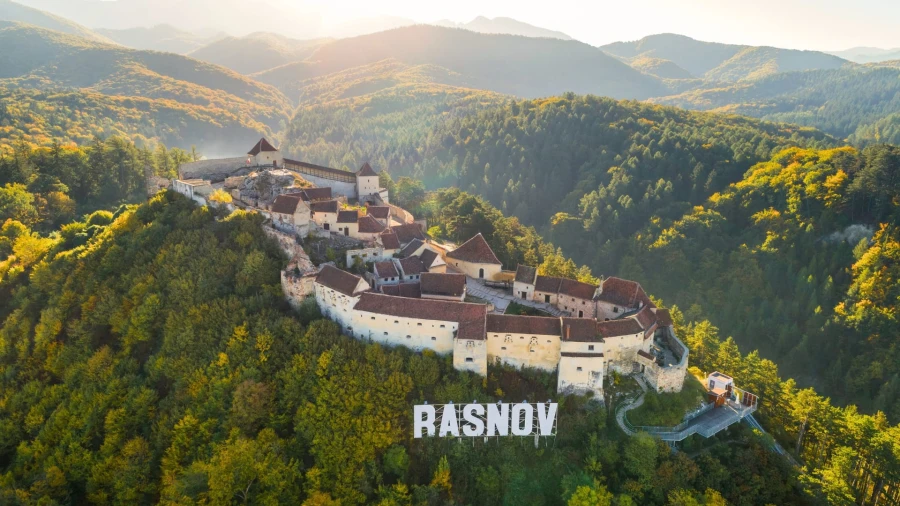
Its role in promoting cultural and historical tourism is undeniable, and its legends and stories attract thousands of visitors every year from all corners of the world. Râșnov Fortress has a profound impact on the local community, contributing to economic development and to the preservation of cultural identity.
If you're passionate about history, also visit Alba Iulia Citadel, Deva Fortress, Colțești Fortress, Rupea Fortress, Poenari Fortress and Sighișoara Citadel.
For winter sports enthusiasts, near Râșnov you'll find Sinaia, Poiana Brașov, Azuga, Bușteni and Predeal