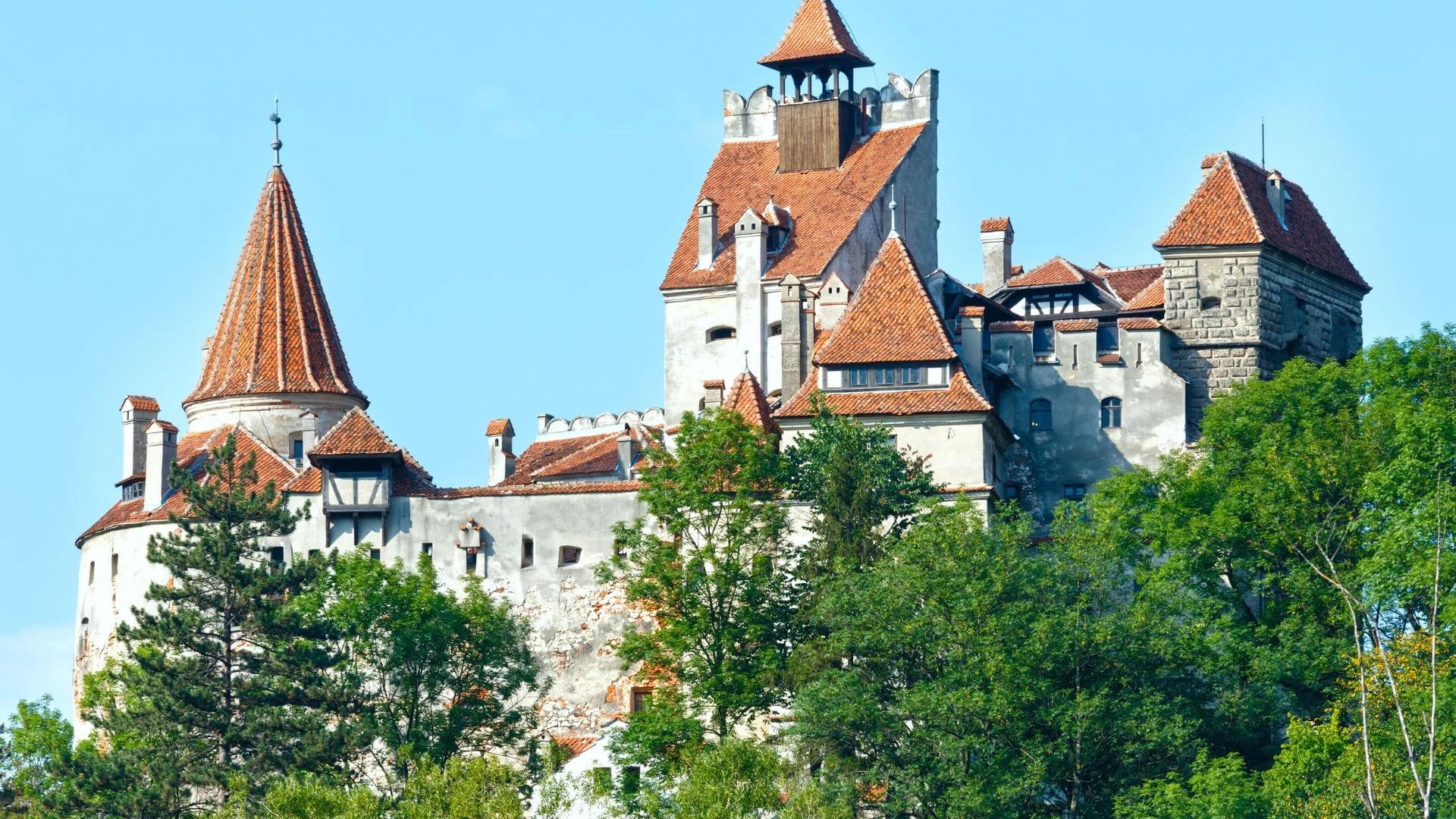
Bran Castle is located 30 kilometers from Brașov and is one of the most iconic and most visited tourist attractions in Romania.
Set in a remarkable mountain landscape, the medieval castle draws hundreds of thousands of tourists from all over the world every year, thanks to its architectural beauty and, last but not least, its fame tied to the Dracula myth.
In this article:
Geographically, Bran Castle (German: Die Törzburg, Toerzburg or Terzburg; Hungarian: Törcsvár) is located in the Rucăr-Bran Corridor, on the road linking Brașov to Câmpulung – Muscel (DN73), in southeastern Transylvania, in the ethnographic region of Burzenland. See Wikipedia
View of Bran Castle
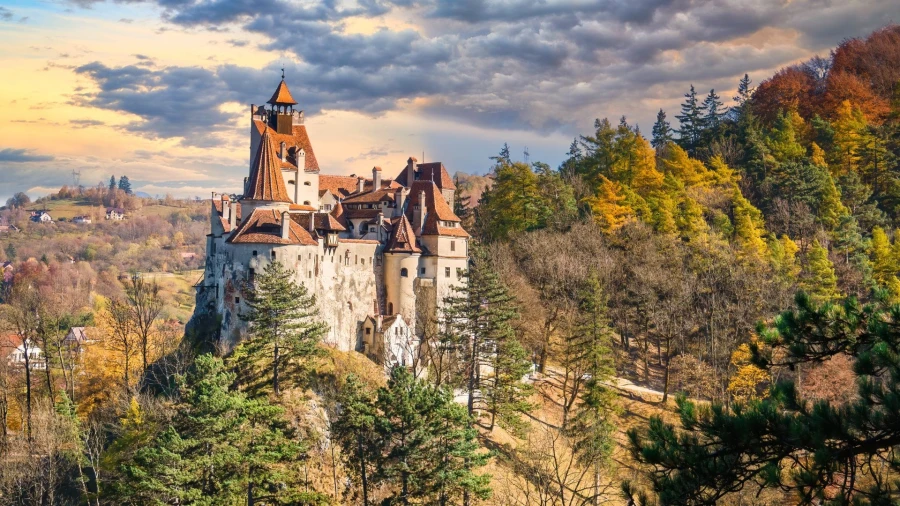
Built on a rocky hill, the castle offers spectacular views of the Bucegi and Piatra Craiului Mountains.
Although it is known mainly for its association with the legendary Transylvanian count Dracula from Bram Stoker's novel, Bran Castle has a far more complex history, having witnessed major historical events in the region and served as a royal residence.
Today, Bran Castle operates as a museum. Across its four floors, it hosts exhibitions of furniture, costumes, weapons, and armor. In addition, the Bran Estate includes the Royal Park (3,000 square meters), which has two lakes, the Tea House (the Castle Restaurant), the Administrator's House, and the Princess Ileana of Romania House.
Getting to Bran Castle
The castle is relatively easy to reach for visitors from various parts of the country:
By Road
Bran Castle is well connected by national and European roads and can be reached from several directions:
From Brașov: Access is via DN73 (National Road 73), a well-maintained 30 km road, and the trip takes about 40–50 minutes.
From Bucharest: The Romanian capital is about 180 kilometers from Bran, reachable via DN1 to Brașov, then continuing on DN73. The trip takes around 3 hours, depending on traffic.
From Sibiu: The route follows DN1 and DN73 and takes about two and a half hours.
Public Transportation
Bus: There are regular bus lines between Brașov and Bran, and the trip takes about an hour. Buses depart from the Autogara 2 bus station in Brașov and run at regular intervals.
Train: Although Bran Castle has no train station of its own, tourists can reach Brașov by train and continue their journey from there by bus or taxi.
Bran Castle and its surroundings
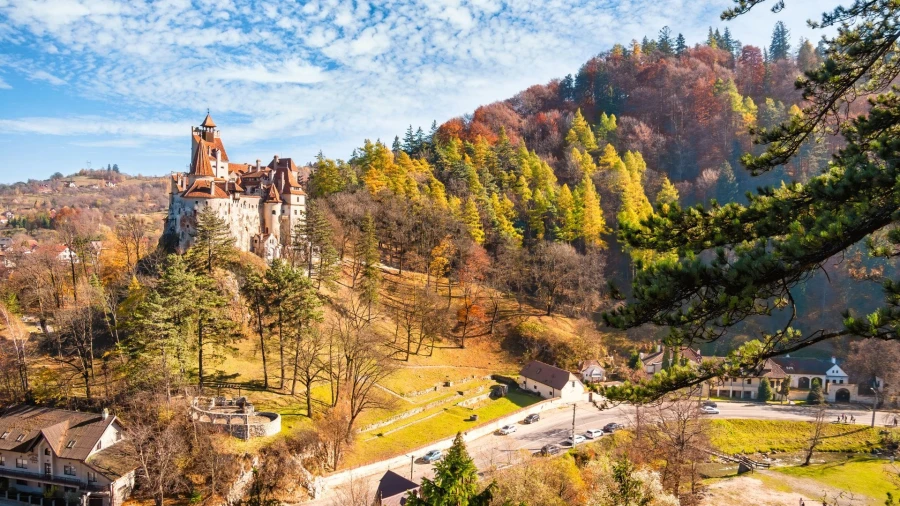
Parking
The official parking lot is about a 5-minute walk from the castle's main entrance. Parking fees are paid on site.
Other private parking lots are available nearby, with rates varying by season and location.
Opening Hours and Prices
Bran Castle is open all year round, but visiting hours vary by season and day of the week.
Summer season (April 1 – September 30):
Monday: 12:00 – 18:00
Tuesday – Sunday: 09:00 – 18:00
Winter season (October 1 – March 31):
Monday: 12:00 – 16:00
Tuesday – Sunday: 09:00 – 16:00
Last entry is 30 minutes before closing time. Hours may change on public holidays or during special events.
Ticket prices for visiting Bran Castle vary by visitor category:
Adults: 70 RON
Students: 40 RON (students must show a valid student ID, and retirees an ID document proving their status)
Seniors (over 65): 50 RON
School students: 20 RON (school students must show their student card)
Organized groups: Rates can be reduced to 15 RON/person for groups of at least 16 people
Tour guide: Groups can opt for a professional tour guide; prices for this service vary depending on the length of the tour and the language in which it is offered.
Night tours: During certain periods, Count Dracula's Castle organizes special night tours; prices for these events are different and announced in advance.
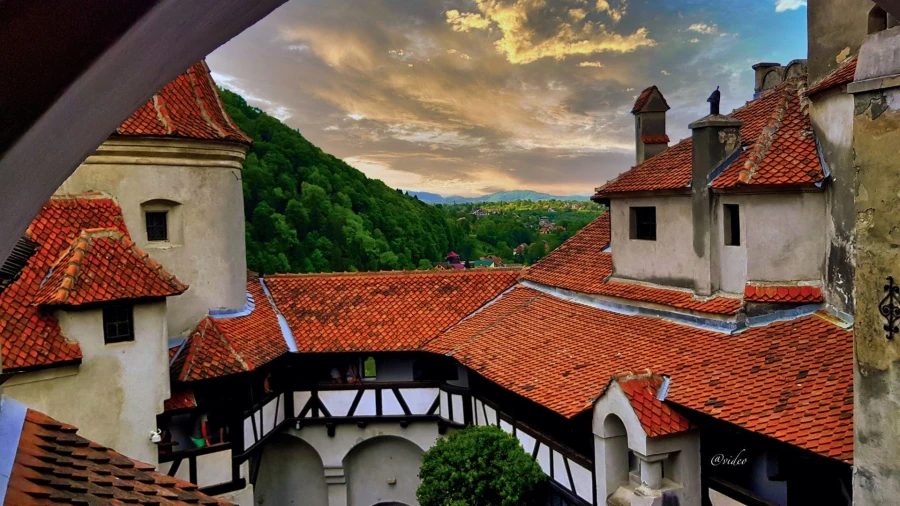
In the inner courtyard
Visitors are encouraged to buy tickets online to avoid the crowds, especially during the peak tourist season. For more details, visit the official website
Accommodation in Bran and the Surrounding Area
The Bran area offers a variety of accommodation options, from luxury hotels to traditional guesthouses and mountain cabins, to suit every taste and budget.
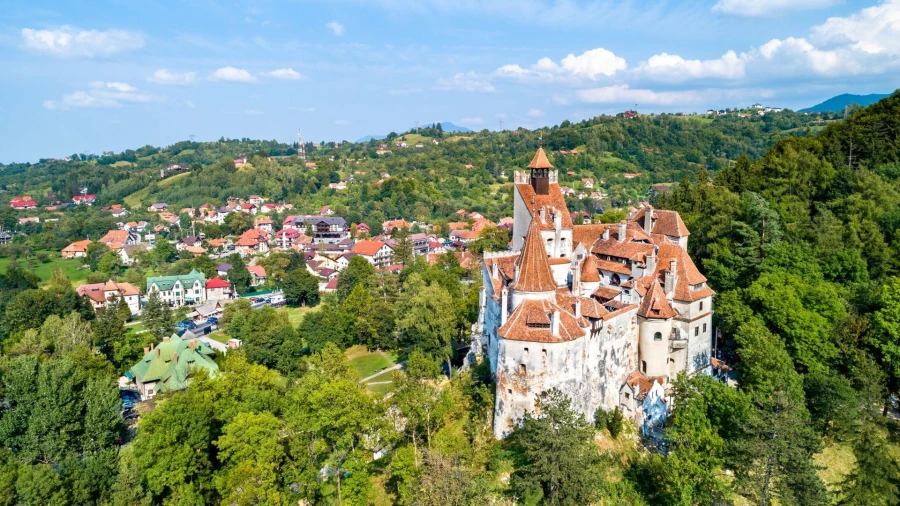
Summer at the castle
For tourists looking for comfort and quality service, Bran has several premium hotels and guesthouses: Hotel Wolf, Conacul Brătescu, Pensiunea Casa Nostalgia.
For an authentic rustic-style experience, guesthouses, cabins, and villas are ideal, offering traditional meals and local experiences. See Vila Resort Back to Nature.
Vila Transylvanian Inn is located on a hill about 2 kilometers from Bran Castle and has a terrace with panoramic views over the village of Bran, as well as the Castle and Râșnov Fortress.
For adventurous tourists and nature lovers, there are camping or glamping sites with luxury tents equipped with beds and private bathrooms, 16 km from Bran Castle, in Șirnea: Ursa Mica Glamping Resort.
In the surrounding area, in villages such as Moieciu de Sus or Fundata, tourists will find guesthouses and cabins in a remarkable natural setting:
The Moieciu de Sus guesthouse is a few km from Bran
Fundata: Ideal for relaxation and mountain hikes.
We recommend booking in advance, especially during peak season (summer and holidays), when demand is high and prices go up. Many establishments offer online booking options or special packages.
Building the Castle: A Brief History
The origins of the structure are placed between 1226 and 1388, when it served as a defensive outpost.
In 1377, the Saxons of Brașov received approval from King Louis I of Hungary to build a defensive fortress. The main purpose of the fortification was to protect the mountain pass linking Transylvania with Wallachia.
Side view of the castle
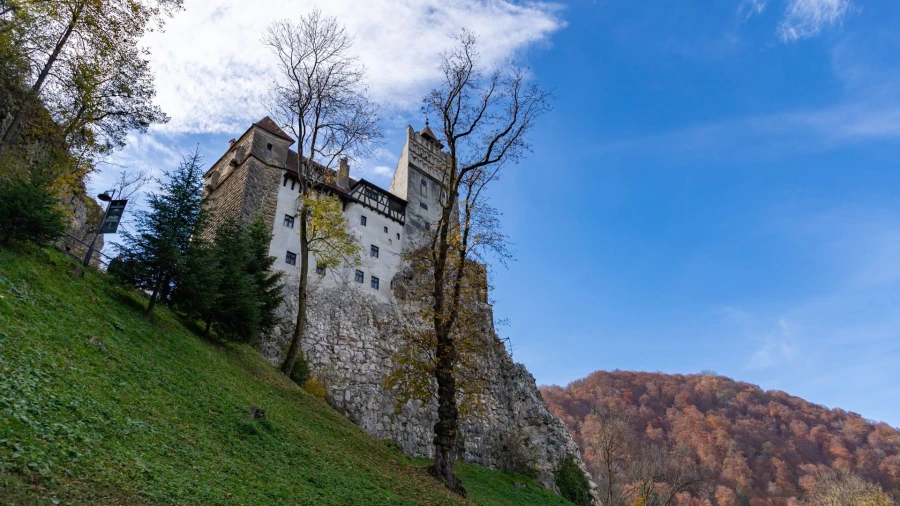
Bran Castle was built on a high rock, which gave it a considerable defensive advantage, overlooking the Rucăr-Bran Pass and the important trade routes in the area.
Over the years, Bran Castle served as a customs post and played a significant economic role, since all goods passing through the pass were subject to customs duties.
Besides its defensive and commercial role, the castle was also caught up in political and military conflicts between various powers of the time, including the rulers of Wallachia and the nobles of Transylvania.
At the end of the 14th century (1395), the castle was granted as a fief by Sigismund of Luxembourg, King of Hungary, to his ally, the ruler of Wallachia, Mircea the Elder.
The arrangement, under which Mircea received the castle in exchange for his loyalty, was meant to give him a safe refuge in the event of a Turkish attack.
During the medieval period, Bran Castle was repeatedly at the center of conflicts between the Kingdom of Hungary and Wallachia, playing an important role in the region's military strategy.
In the centuries that followed, Bran Castle remained an important stronghold in the region, undergoing numerous transformations and repairs. After Transylvania was incorporated into the Habsburg Empire, the castle gradually lost its military role and came to be used more as a residence.
Bran Castle and Romanian Royalty
A turning point in the history of Bran Castle came in 1920, when it was donated to Queen Marie of Romania in recognition of her contribution to the union of Greater Romania after World War I.
Queen Marie turned the castle into a royal summer residence. She grew fond of the place and transformed it into a refined space filled with works of art and period furniture.
After the queen's death, in 1938, the castle was inherited by her daughter, Princess Ileana, who lived there during World War II and opened a hospital for victims of the conflict.
Princess Ileana lived here until the communist regime came to power in 1948. The castle was nationalized, becoming the property of the Romanian state, and was turned into a museum in 1956.
After restoration work in 1987–1993, the castle returned to the tourist circuit.
Bran
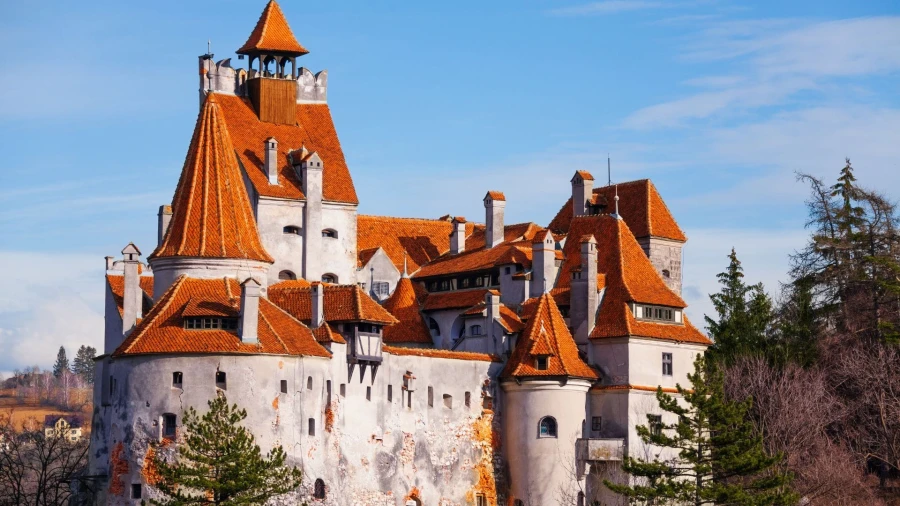
On May 18, 2006, the castle was legally returned to the heirs of the Royal Family.
In 2009, Archduke Dominic of Habsburg, Archduchess Maria Magdalena Holzhausen, and Archduchess Elisabeta Sandhoferau took full ownership from the Ministry of Culture.
Today, the castle belongs to Princess Ileana's descendants, who have continued to run it as a public museum, preserving both its historical and its cultural value.
The Architecture of Bran Castle
Bran Castle is an example of medieval architecture. Originally built for defense, its architecture reflects both the military function of a fortress and its evolution into a royal residence.
The structure was designed as a complex of two walls meant to protect the pass leading to the border of Wallachia.
The first wall, made of rough stone and mortar, still has visible fragments today. The second, parallel to the first, protected the customs office buildings, which, however, have not survived.
The centerpiece of the complex is the fortress itself. The rock blends into the castle's structure, rising up to the fourth level on the north side.
The towers on the four sides (north, south, east, and west) were built of rock and river boulders, as were the walls connecting them.
The oldest of them is the north watchtower, the donjon, with a square base and a sloping tiled roof designed to prevent fires caused by projectiles. On this tower you can see six firing openings, arranged in pairs, which serve both as windows and for defense. Its plaster bears a Latin inscription mentioning the renovation of 1723.
A distinctive feature is the lookout gallery at the top of the donjon, decorated with a crenellated Renaissance-style pediment dating from the 17th century.
In the southwest of the castle stands a round tower, built in 1593 after lightning destroyed the old powder tower. The castle's main gate is on the east side, protected by a rectangular tower erected between 1622 and 1625 from large limestone blocks.
In the 20th century, under the Hohenzollern administration, an annex was added on the west side of the castle, both inside and outside the curtain wall.
The castle courtyard had a well that supplied the necessary water, and the paths are paved with stone slabs, completing the medieval look of this impressive building. See details here https://historia.ro/
The castle's narrow windows and battlements are also typical features of medieval fortresses, designed to let soldiers shoot arrows or hurl projectiles without exposing themselves to danger from outside.
The thick stone walls added extra protection against attacks.
Cantacuzino Castle in Bușteni, 40 km away, also bears the mark of prominent figures in Romanian history.
Inside the Castle
The interior of Bran Castle stands out for its medieval atmosphere, with rooms decorated with authentic furniture, armor, and works of art.
Bran inner courtyard
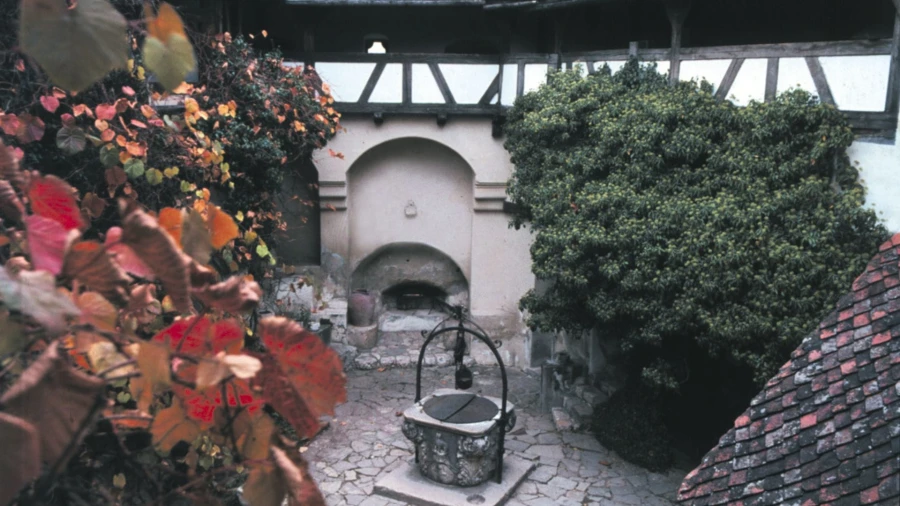
Architectural details such as the narrow staircases and vaulted ceilings underline its historical and royal role.
At the entrance, visitors step into a large hall that leads to other rooms and to stairs climbing to the upper floors.
1st Floor – The Arms Room
One of the first spaces of interest is the Arms Room. Various medieval weapons and armor are on display here, including swords, halberds, sabers, and shields. The room reflects Bran's former military role.
2nd Floor – Queen Marie's Bedroom
One of the most important rooms is the bedroom of Queen Marie, who had a special fondness for Bran Castle. The room is decorated with elegant furniture in the queen's signature style.
The hand-carved beds, tapestries, and works of art reflect her refined taste. Various personal items that belonged to the queen are also on display.
The Music Room
On the same floor is the Music Room, which was used for private concerts and cultural events organized by the family. It is decorated with an old piano and other musical instruments, evoking the bohemian atmosphere of aristocratic visits.
Queen Marie's Drawing Room
This room was the queen's place of relaxation and stands out for its comfortable furniture, carefully crafted tapestries, and artistic decorations. The drawing room has large windows overlooking the mountain landscape, a perfect place of contemplation for the queen.
3rd Floor – Prince Nicholas's Room
The room is dedicated to Queen Marie's son, Prince Nicholas, and features simpler furniture that still retains a noble elegance. The room has a more austere atmosphere but reflects the prince's refined style.
The Council Hall
This imposing hall is where important meetings and councils were held. It is furnished with solid wood furniture, with carved chairs and tables, reflecting the castle's political and strategic importance. The walls are covered with paintings depicting historical scenes and portraits of the royal family.
4th Floor – The Knights' Hall
One of the most impressive rooms is the Knights' Hall, which offers a glimpse into military history and medieval chivalry. Various suits of armor and banners are on display here, and the decor includes the coats of arms of noble families and art pieces evocative of medieval times.
The Secret Staircase
During renovation work on the Music Room, to the queen's great delight, a secret staircase carved into the rock was discovered, linking the castle attic to the first floor. After the refurbishment, the queen used the staircase to go directly from her apartment on the first floor to the Music Room. See details
The Time Tunnel
In the summer of 1937, the castle well was drained and an elevator was installed in the shaft, going down to the base of the hill. A 40-meter tunnel leads out to the foot of the castle, into the Royal Park.
The Towers
The towers are essential to the castle's structure, serving both for defense and for observation. Each of the four towers (north, south, east, and west) has firing openings and offers a panoramic view of the surroundings.
The donjon, the most imposing of them, is the watchtower on the north side and has six vertically arranged firing openings, used both for defense and to light the rooms.
The Inner Courtyard
The inner courtyard is an open, stone-paved space. It serves as a place to relax, and from it stairs lead up to the terraces and outer towers.
The Hohenzollern Annex
In the 20th century, under the Hohenzollern administration, the castle was extended with an annex on the west side. The building sits both inside and outside the curtain wall, completing the complex and expanding the living quarters.
The Tea House and the Royal Park
The Bran Estate also includes the Tea House, a space set aside for relaxation and social events, built in the elegant rustic style favored by the royal family.
The Royal Park has two lakes and cobbled paths, offering a peaceful atmosphere and an impressive view of the castle.
Princess Ileana's House
Another highlight is Princess Ileana's House, a smaller building on the castle grounds where the princess lived when she retreated to Bran. This space recreates the simple yet noble life of the royal family members.
Although Bran Castle keeps the look of a medieval fortress on the outside, the interior reveals a far more refined and comfortable space, the result of adaptations made during the period when it served as a royal residence.
The castle's furniture reflects both traditional Romanian influences and the queen's taste for the Art Nouveau and Art Deco styles. Many of the pieces on display are original and come from the royal collection, including carved wooden furniture, upholstery, ceramic vessels, and valuable paintings.
The castle's inner courtyard is laid out in terraces, and visitors can climb stone steps to explore the different areas of the fortress. From the courtyard, you can see the deep well, dug directly into the rock, which supplied the fortress with water during sieges.
The castle's exterior is just as impressive as its architectural structure. The castle garden was laid out mainly in Queen Marie's time. The gardens feature cobbled paths, small water basins, and green areas, offering visitors a quiet place to relax with spectacular views of the surrounding valleys and mountains.
The castle shrouded in mystery
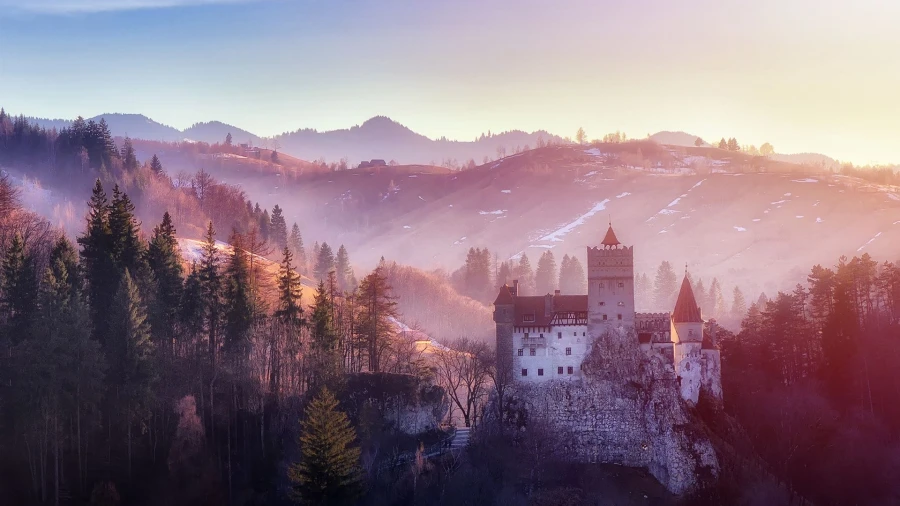
Other impressive details include the castle's wooden balconies. The carved stone and wood ornaments found throughout the building also show the skill of local medieval craftsmen.
Legends and Myths
Bran Castle is often associated with myths and legends that have boosted its fame worldwide.
Although the castle has a rich and well-documented history, the mysterious stories and its ties to mythical and historical figures have turned Bran into a symbol of mystery, drawing tourists from every corner of the world.
The two major themes that dominate the myths about Bran Castle are its connection to the legendary vampire Dracula and the various local legends that have surrounded the place over the centuries.
Dracula and Bran Castle
One of the most persistent legends associated with Bran Castle is its link to the famous character Dracula, from the novel of the same name by Bram Stoker, published in 1897.
Although Bram Stoker never visited Romania and never explicitly mentioned Bran Castle in his novel, the castle became synonymous with Dracula, the noble Transylvanian vampire, because of the similarities between the book's description of the count's residence and the imposing image of Bran Castle.
Stoker drew inspiration for Dracula from the historical figure of Vlad the Impaler (Vlad Drăculea), the ruler of Wallachia known for his brutal methods of punishing his enemies, especially impalement.
Bran was not Vlad the Impaler's residence, but the ruler was apparently held here for two months in the fall of 1462 as a prisoner of the King of Hungary, Matthias Corvinus. This is in fact the only concrete link between Vlad the Impaler and Bran Castle.
But the count's story spread quickly, and with the popularity of the novel “Dracula” and later of the films and series it inspired, the link between Bran and Vlad the Impaler became almost inseparable.
“Vampire hunting” tourism has grown up around this myth, and Dracula's Castle has become a focal point for visitors who want to explore the famous vampire's “home.”
Halloween-themed events, special night tours, and other activities tied to the Dracula story draw thousands of tourists every year, strengthening the link between this castle and the mythological figure of Dracula.
You can also read about Dracula myths in our articles on Tihuța Pass, Poenari Fortress, and Sighișoara Citadel
Local Legends About Bran Castle
Beyond the international myth of Dracula, Bran Castle is surrounded by a number of local legends that blend Transylvanian folklore with the region's turbulent history.
One of the best-known local stories is the legend of the Bran ghost, a tale passed down from generation to generation. It is said that a noblewoman, supposedly held prisoner in the castle in the 15th century, met a tragic end within the fortress walls.
Since then, many locals and visitors have claimed to have felt the presence of a ghost haunting the castle's corridors, hearing whispers or unexplained sounds during the night.
Another myth is the story of the hidden treasure. It is said that during past sieges and invasions, locals and nobles from the area hid a valuable treasure in the castle's secret tunnels and rooms to protect it from attackers.
Despite numerous investigations and archaeological digs, the treasure has never been found, but the legend lives on, fueling the imagination of visitors and adventurers.
Queen Marie's Castle
A true story, but with a legendary tone, is tied to Queen Marie of Romania, who fell in love with the place after receiving the castle in 1920. The queen spent a lot of time at Bran, especially in summer, turning the castle into a place of refuge and inspiration. It is said that her gentle spirit still watches over the castle.
Attractions Around Bran Castle
Besides the castle, Bran offers a variety of attractions for those who want to explore the surroundings. The Bran-Moieciu-Râșnov area is ideal for a vacation of several days.
Râșnov Fortress
About 12 km from Bran Castle, Râșnov Fortress is another major point of interest. See the article for details.
Râșnov Fortress seen from above
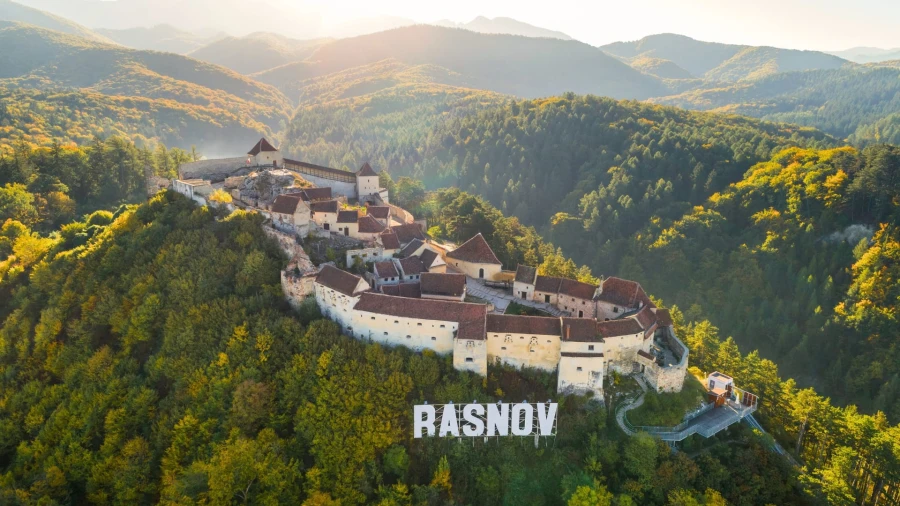
Valea Cetății Cave
Located 15 km from Bran, near Râșnov Fortress, Valea Cetății Cave impresses with its karst formations.
Piatra Craiului National Park
Just a few kilometers from Bran, nature lovers can explore Piatra Craiului National Park. The park offers a variety of hiking trails for all difficulty levels.
Cheile Grădiștei
About 10 km from Bran, the Cheile Grădiștei resort complex is ideal for outdoor activities, offering leisure facilities and winter sports. The area is known for its mountain scenery and is popular for hiking, mountain biking, and skiing.
Bran Village Museum
Right next to Bran Castle, this open-air museum offers a glimpse into the traditional life of the region's peasants. Visitors can explore traditional houses, workshops, and authentic rural structures while learning about local crafts and customs.
Moieciu and Its Traditional Villages
The Moieciu area, a few kilometers from Bran, is a popular destination for those who want to explore authentic Transylvanian villages.
Prejmer Fortified Church
About 30 km from Bran, Prejmer Fortified Church is a UNESCO site and one of the most impressive fortified churches in Transylvania.
Bran Castle's Role in Tourism
Bran Castle holds a central place in Romanian tourism as one of the best-known and most visited destinations in Romania, among both domestic and international tourists.
Famous for its complex history and its connection to the Dracula myth, the castle draws hundreds of thousands of visitors from all corners of the world every year.
Its importance for tourism is reinforced by the beauty of the surrounding mountain landscape, as well as by the cultural events and activities regularly held there.
The Dracula legend is undoubtedly the strongest magnet drawing tourists to Bran, but the castle's beauty, its museum, and its themed events also contribute significantly to its popularity.
Beyond the Dracula myth, tourists are drawn to the castle's cultural and historical heritage.
It also hosts major events throughout the year, including craft fairs, themed exhibitions, and historical reenactments.
The tourism generated by Bran Castle has a significant impact on the local economy. Hotels, guesthouses, restaurants, and souvenir shops near the attraction thrive thanks to the constant influx of tourists.
In addition, many tourist activities and organized trips in the Bran area include a visit to the castle as their centerpiece.
The local community benefits from the large number of visitors, with many families running businesses directly tied to tourism, whether in accommodation and food or in organizing events and guided tours. Many traditional local products, such as cheeses, honey, and handicrafts, are also sold to tourists.
According to official reports, in 2019 Bran Castle set a record of more than 1 million visitors, becoming one of the most visited tourist attractions in Romania. About 60% of these tourists come from outside Romania, the main countries of origin being the United States, the United Kingdom, Germany, Italy, and Spain.
After the COVID-19 pandemic, which hit global tourism, visitor numbers fell, but in 2022 the number of tourists recovered to about 750,000.
On average, 85% of Bran Castle's visitors plan their vacations in the Brașov area specifically to visit the castle, making it the main reason for trips to the region. Data shows that most tourists stay at least one night in the Bran area.
Revenue from admission tickets, themed events, and guided tours contributes significantly to the local budget, and events such as Halloween Night, held every year at Bran, attract an impressive number of visitors and generate substantial income.
Events and Tourist Activities
Bran Castle hosts themed events such as Halloween Night. Every year, around October 31, the castle holds an event dedicated to the Dracula myth, featuring guided night tours, masquerade balls, horror movie screenings, and theater shows inspired by the Dracula legend.
The celebration has become a major fixture on the castle's tourist calendar, drawing thousands of tourists from both Romania and abroad.
Other popular events include Christmas markets and craft festivals, as well as historical reenactments and medieval weapons exhibitions.
Beyond leisure tourism, Bran Castle plays an important role in educational and cultural tourism. Many students, historians, and researchers visit the castle to study its architecture, its museum collections, and its complex history.
The castle works with various academic institutions to organize conferences, exhibitions, and educational events on topics related to the Middle Ages, the Romanian monarchy, and local folklore.
The guided tour program is highly appreciated; tours are available in several languages, making the castle easily accessible to visitors from all over the world.
Bran Castle in International Media
Bran Castle has become a symbol of vampire culture and a point of reference in numerous works of art and cultural events.
Beyond the vampire myth, the castle is often featured in documentaries, TV shows, and history books exploring medieval Romania and its legends.
Over time, Bran Castle has appeared in several international productions, documentaries, and news stories about mysteries, legends, and Romania's cultural heritage. Famous TV shows such as Ghost Hunters International and Most Haunted have investigated the castle, adding to its image as a haunted place.
Bran Castle is often mentioned in documentaries and productions exploring vampire mythology and European legends, mainly because of its popular association with the Dracula legend. Here are a few examples:
“In Search of Dracula” (1974) – Based on the book by Raymond McNally and Radu Florescu, this documentary explores the link between Vlad the Impaler and the Dracula myth, mentioning Bran Castle as one of the possible places associated with the myth.
“Vampire Legends” (part of several documentary TV series) – Series such as “Vampire Secrets” (History Channel) or “Vampires: Folklore, Fantasy, and Fact” include Bran Castle in their accounts of vampire mythology and the Dracula legend.
“Castles: Secrets, Mysteries and Legends” – This documentary about castles explores the myths and legends that surround them, and Bran Castle features frequently because of its association with the Dracula story.
Documentaries about the “Dracula” films – Productions analyzing the cultural impact of Dracula films, including the Bela Lugosi films or the more recent ones with Gary Oldman, refer to Bran Castle because of its association with vampires.
Cultural Events at Bran in 2024
In 2024, Bran Castle hosted numerous prestigious events. Here are some of the most notable ones held through October:
Bran Castle Jazz Festival (Jazz at Bran Castle) – The 11th edition of the festival took place on August 23–25, 2024, attracting internationally renowned artists and a large audience. The festival has become an annual tradition at Bran, offering a unique blend of jazz music and the castle's Gothic atmosphere.
Chat Noir, Chat Blanc au Château Bran – In June 2024, the castle hosted an art event inspired by Gothic and feline themes, with art exhibits as well as theater and music performances.
The Third Concert on the Lake – In July 2024, Bran Castle hosted an unusual concert in which the band Haydn Deane & His Big Band performed on a lake near the castle.
Cheese and Pastrami Festival – Răvășitul Oilor – This traditional event celebrating shepherding and local culture was held at Bran in the fall of 2024, bringing together locals and tourists to celebrate traditional Romanian products and the area's age-old customs. Bran Castle was a focal point of the event, with tasting stands and cooking demonstrations.
Halloween Night at Bran Castle – The castle remains the top place in Romania to celebrate Halloween. Themed events planned for October 2024 include guided night tours, shows with scary actors, and Halloween parties.
In addition, the Halloween Special Tour is one of the most anticipated events on the castle's annual calendar.
Beyond cultural and tourist events, Bran Castle has become a source of inspiration for contemporary artists in various fields (painting, photography, film, music).
8 Unusual Facts About Bran Castle
Bran Castle, best known for its association with the Dracula legend, holds curiosities and unique stories that add extra mystery and charm to this historic monument. Here are some of the most interesting:
1. Bran Castle was not Dracula's home
Although Bran Castle is often associated with Vlad the Impaler, the ruler of Wallachia known for his cruelty, the link between him and the castle is tenuous. In fact, there is no clear evidence that Vlad the Impaler ever lived at Bran Castle. Still, thanks to the descriptions in Bram Stoker's novel “Dracula,” which resemble the castle, Bran was quickly identified as “Dracula's Castle.” Stoker never visited Romania but was inspired by stories and descriptions of the period.
2. The castle was a royal residence
A lesser-known fact is that, starting in 1920, Bran Castle became the favorite residence of Queen Marie of Romania. The queen made numerous changes to the castle.
3. Bran Castle is considered haunted
Besides vampire legends, Bran Castle is also known for its ghost stories. Some visitors and castle staff have reported mysterious apparitions, unexplained sounds, and sudden chills in certain parts of the castle.
4. The castle has an impressive collection of art and furniture
Notable pieces include medieval art objects, sculptures, and tapestries. Many of these artifacts reflect the styles and cultural influences of the period when the castle was a royal residence.
5. Bran Castle is built on a rock
Another fascinating feature is the castle's location. It is built on a tall rock, which gave it a strategic advantage in medieval times.
6. Bran Castle was almost sold
After the castle was returned to the heirs of the royal family in 2009, there were rumors that the owners were considering selling it to an international buyer. In the end, however, the heirs decided to keep the castle and run it as a museum and tourist destination.
7. The castle once served as a customs post
In the 14th century, Bran Castle played an important role in the customs system. Located on a crucial trade route between Transylvania and Wallachia, the castle functioned as a customs point, collecting duties from merchants passing through the area. This economic role contributed to the prosperity of the castle and the surrounding area.
8. The castle and UNESCO heritage
Although Bran Castle is one of Romania's best-known monuments, it is not a UNESCO World Heritage Site. Nevertheless, the castle is protected as a national historic monument.
Weather in Bran
The weather in Bran now and for the next 7 days:
Conclusion
Bran Castle is much more than just a tourist attraction – it is a historical, cultural, and architectural symbol of Romania that fascinates visitors from all over the world. Linked to the Dracula myth, yet firmly rooted in the region's medieval and modern history, Bran Castle is living proof of the complexity and richness of Romania's heritage.
Its unique position, at the crossroads of history and myth, makes it a must on the itinerary of any visitor interested in the beauty and mysteries of Transylvania.
See also our article on another famous castle in Transylvania, Corvin Castle, as well as the one tied to Romanian royalty, Peleș Castle.