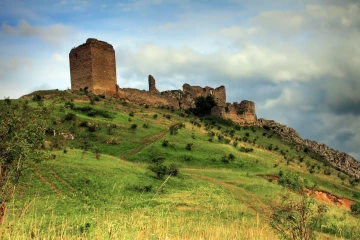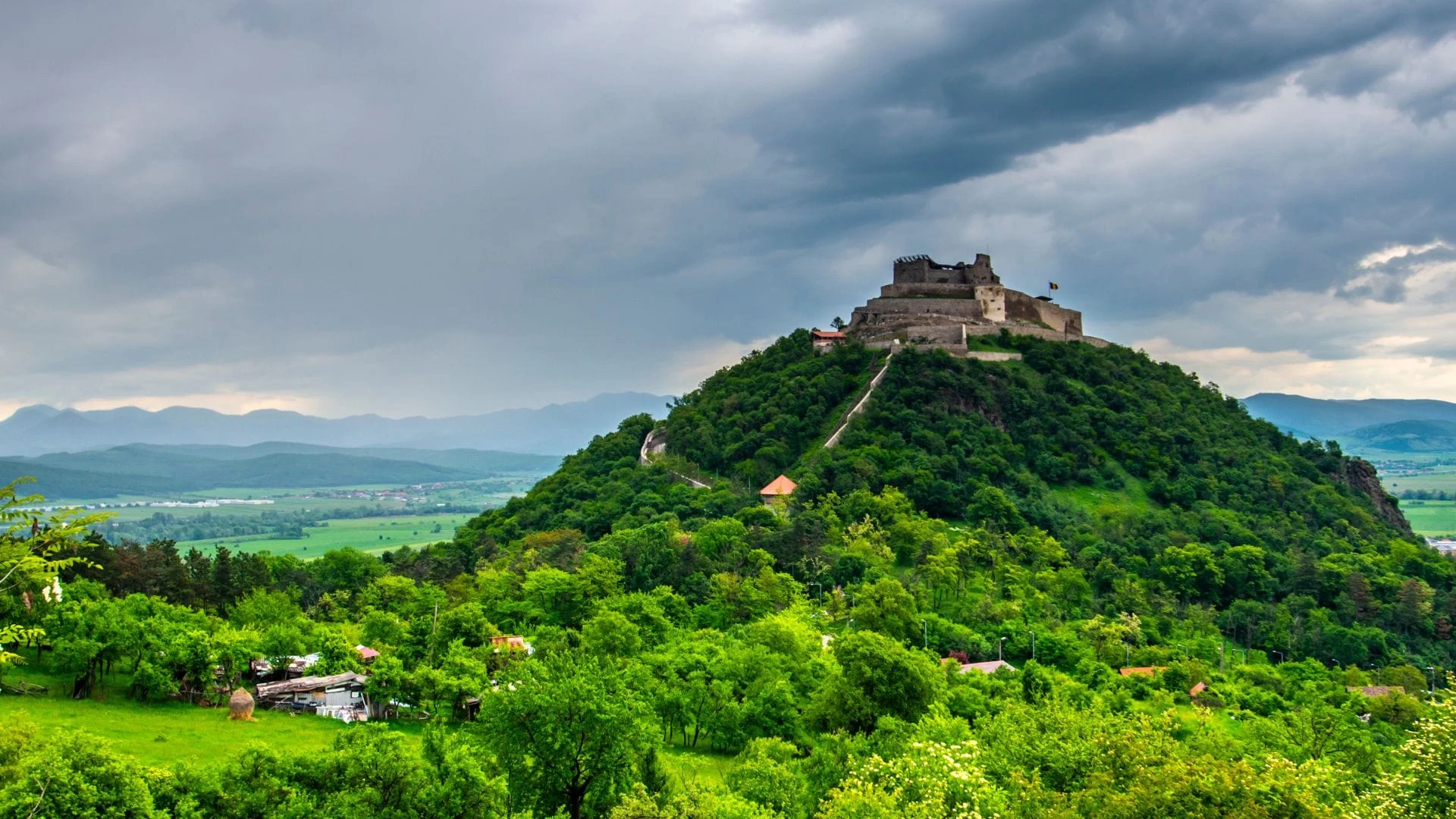
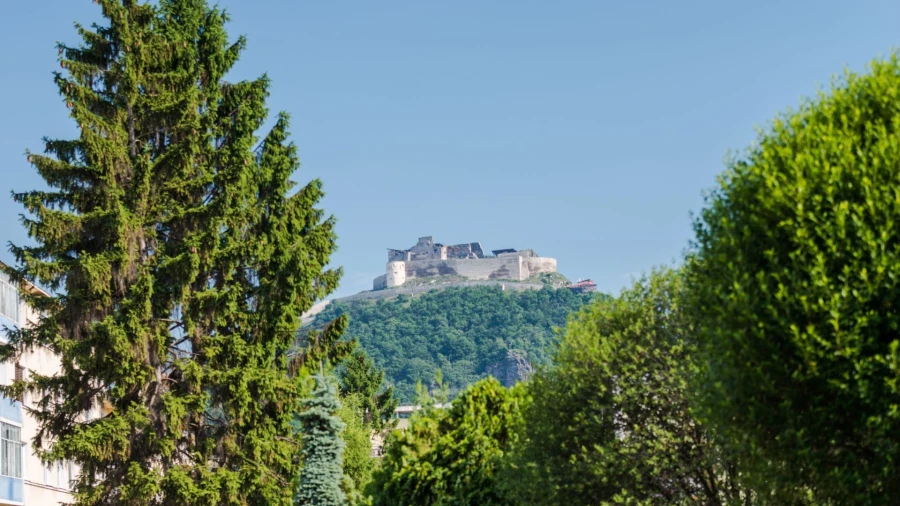
Towering over the cityscape of its namesake town, Deva Fortress is not just an imposing monument but also a living testament to the history of Transylvania.
View of the Fortress
In this article:
Built on a volcanic cone in the Mureș Valley, on the border between Transylvania and Banat, this strategic medieval stronghold has witnessed fierce battles, hosted voivodes and nobles, and inspired legends.
But what secrets does Deva Fortress hide behind its centuries-old walls? Let's set off on a journey through time to discover the history, the legends, and the spectacular views offered by this symbol of Hunedoara County.
Location
Deva Fortress is located in western Romania, in Hunedoara County, on a hill of volcanic origin in the Poiana Ruscă Mountains, at an altitude of about 378 meters.
It stands on the left bank of the Mureș River, near the Hațeg Depression and the Apuseni Mountains. The fortress is strategically positioned, surrounded by hills and lowlands that allowed control over the region's trade routes.
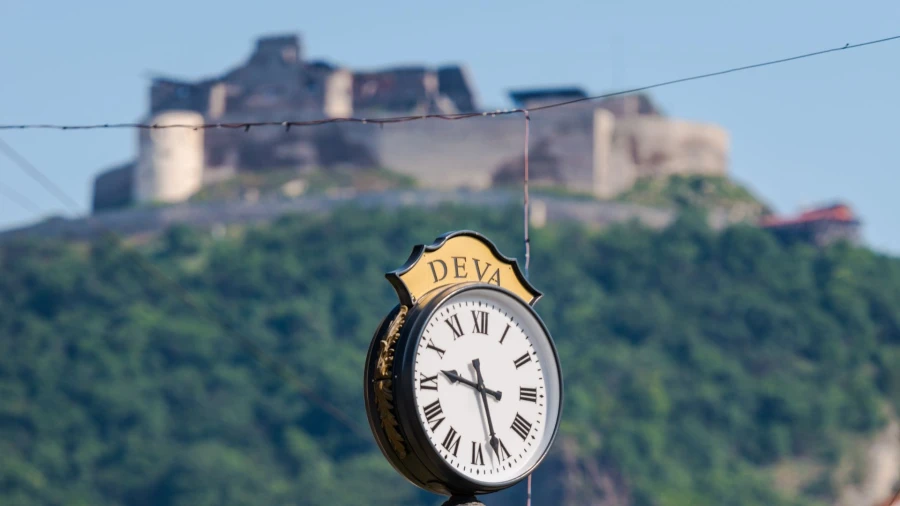
The Fortress in Deva
Getting to Deva Fortress
Deva Fortress is an experience accessible to everyone. Here are your options for getting there:
The Funicular
For a quick ascent, the funicular is the ideal choice. Unique in Romania for its inclined system and one of the longest of its kind in Europe, it takes you up Fortress Hill, offering a beautiful panorama of the city and its surroundings.
The Deva funicular is unique in Romania, as it is the country's only inclined elevator.
What's more, with a 278-meter route and an elevation difference of 158 meters, it leads Europe in these respects.
Traveling at 2 meters per second, the funicular carries up to 16 passengers in about 2.5 minutes.
Details here
Hiking Trails
Climbing Toward the Fortress
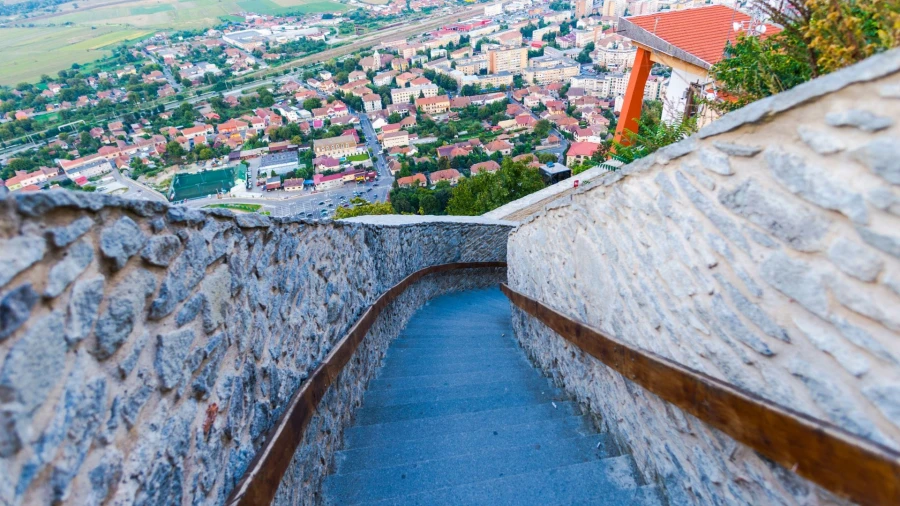
There are three well-marked hiking trails leading to Deva Fortress:
Trail 1: Starting near the Magna Curia Palace, this trail takes you up a series of steps, followed by a winding path through the forest. After about 15-20 minutes, you'll reach Gate 1, the main entrance to the fortress.
Trail 2: Starting from the same steps as Trail 1 but turning left, this trail takes you through a forest and a meadow, reaching Gate 1 in about 10 minutes.
Trail 3: The longest but also the most scenic route starts behind the Perla Restaurant. Following the path through the forest, you'll be rewarded with remarkable scenery and the quiet of nature. The estimated walking time to Gate 1 is about 20 minutes.
Access by Car
Although you can drive almost all the way to Gate 1, there are a few things to keep in mind. The road is narrow, with steep slopes and few places where two cars can pass each other.
There is also no designated parking lot near the gate. If you choose this option, follow the road between Central Park and the Sports High School, keeping to the right until you reach the forest.
Whichever way you choose to get there, a visit to Deva Fortress is a unique experience that will enrich your knowledge of Transylvania's history and beauty.
Source: here
The History of Deva Fortress
The first documentary mentions of the fortress date back to 1269, but archaeological remains suggest a much earlier presence, possibly as far back as the Dacian-Roman period.
Strategically positioned on the hill (now Fortress Hill), the site was initially a modest fortification meant to control the Mureș Valley and defend the area.
Over the centuries, Deva Fortress was expanded and fortified by various owners. In the 15th century, it came into the possession of the Hunyadi family, who turned it into a prestigious noble residence.
Deva Fortress
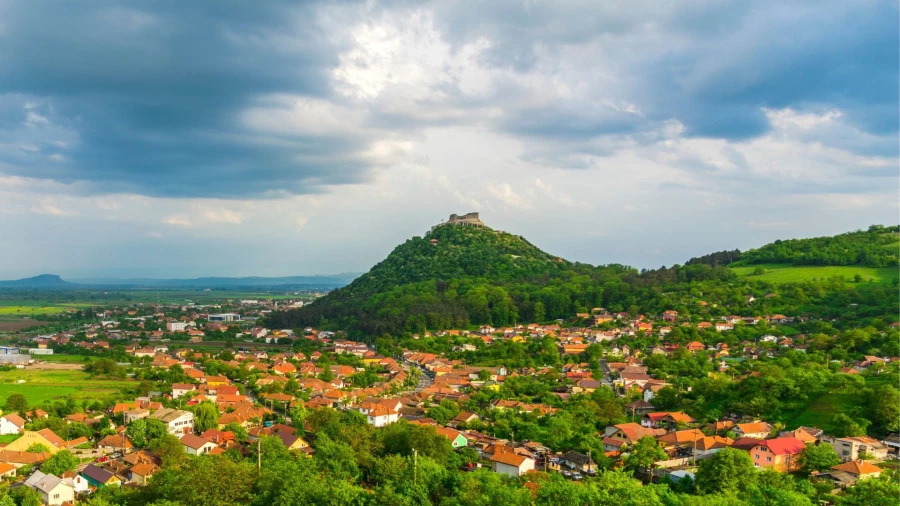
In the following centuries, the fortress went through various stages of construction and modernization, adapting to developments in military technology and to political changes in the region.
Key Moments in the Fortress's History
13th century: First documentary mention (1269). The fortress serves as a strategic defensive point.
15th century: In 1444, John Hunyadi receives the fortress, along with 56 villages and gold mines. The fortress passes into the possession of the Hunyadi family, entering a period of development and strategic importance.
16th century: The fortress becomes an important administrative and military center of the Principality of Transylvania.
1601: Siege and capture of the fortress by the troops of Michael the Brave.
In the 17th century, Prince Gabriel Bethlen builds a prison bastion and the Renaissance-style Magna Curia Palace, which today houses the Museum of Dacian and Roman Civilization (now located next to Fortress Park).
18th century: The fortress is modernized and turned into a Habsburg stronghold.
The last of the two visits by Emperor Joseph II was followed by the uprising of Horea, Cloșca, and Crișan, when the fortress served as a refuge for Hungarian nobles and became the scene of fighting between them and the rebels.
Impressed by the beauty of Transylvania during their 1817 visit, Emperor Francis I and his wife ordered the reconstruction of Deva Fortress, allocating substantial funds to the project. The work lasted more than 12 years and was completed in 1830.
1849: The gunpowder magazine explodes, destroying a large part of the fortress.
20th-21st centuries: The fortress is restored and turned into a major tourist attraction.
Notable Figures Connected to the Fortress
Over the centuries, Deva Fortress was closely linked to prominent figures in history. John Hunyadi, Voivode of Transylvania, recognized the strategic importance of the fortress and invested in its development and fortification.
In the fall of 1600, Michael the Brave was the target of an attack launched from Deva Fortress while he was on his way to Prague, to the court of Emperor Rudolf. Gabriel Bethlen, Prince of Transylvania, supported the cultural and economic development of the area.
Last but not least, Deva Fortress also served as a place of detention for figures such as Francis David, founder of the Unitarian Church, who was imprisoned here for his religious beliefs.
Wikipedia offers a comprehensive account of the fortress's history.
Click here to see the scan of the fortress on the Deva City Hall website.
Legends of Deva Fortress
A version of the well-known legend of Master Manole features Kelemen the stonemason. Together with 12 other masons, he struggled to build Deva Fortress, but everything they built during the day collapsed overnight. Desperate and convinced that the fortress demanded a sacrifice, the masons decided that the first wife to bring them food the next day would be walled into the foundations and her ashes mixed into the mortar. As fate would have it, Ana, Kelemen's wife, was the one who brought the provisions. Heartbroken, Kelemen sacrificed her, and the fortress was finally completed.
Another legend tells of the tragic way in which Deva Fortress, considered invincible, was ruined from within. It is said that the keeper of the munitions depot had a wife of breathtaking beauty but a fickle nature. Overwhelmed with jealousy when he learned of her affairs, the keeper blew up the munitions depot in a fit of rage. The explosion devastated the fortress, leaving it in ruins, and it took more than a century before it was restored.
These legends of human sacrifice add an air of mystery to the history of Deva Fortress. See details.
Deva Fortress Today: Restoration and Conservation
Over time, Deva Fortress suffered extensive damage, especially from the explosion of August 1849, which destroyed a large part of its structure.
Nevertheless, considerable efforts have been made in recent decades to restore and preserve this important historic monument.
Inside the Fortress
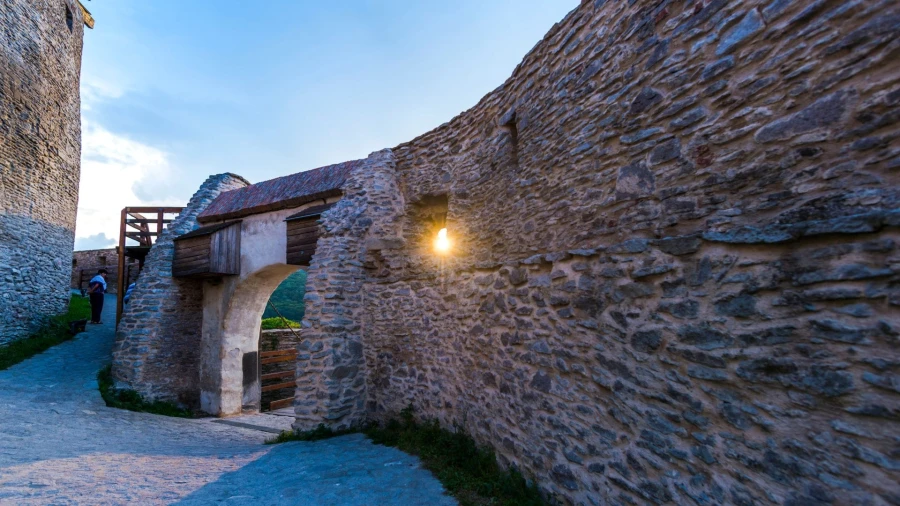
One of the most extensive restoration projects began in 2010 and was completed in 2016, with a significant investment of European and government funds.
The restoration projects focused on consolidating the walls, rebuilding the towers and gates, and showcasing the original architectural features.
Within the Fortifications
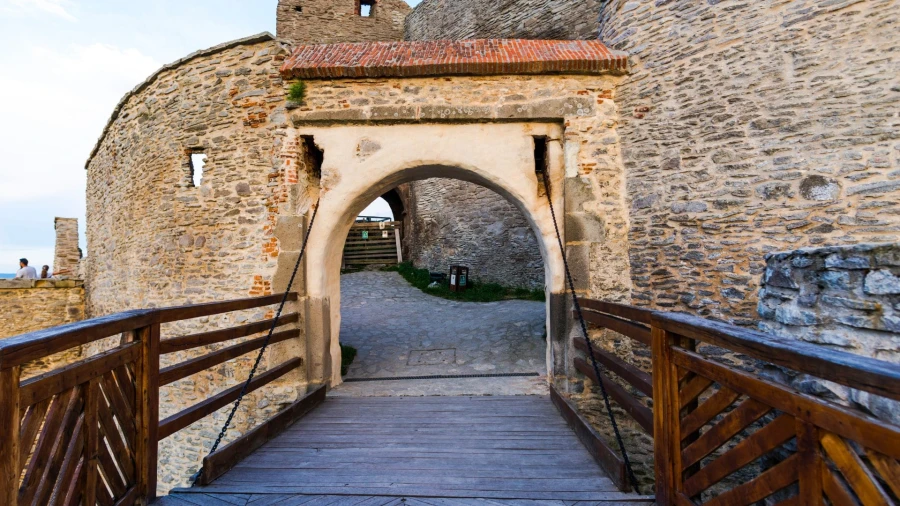
Modern conservation techniques were used alongside traditional materials to preserve the fortress's authenticity.
What to Do at Deva Fortress? Visitor Facilities
View from Deva Fortress
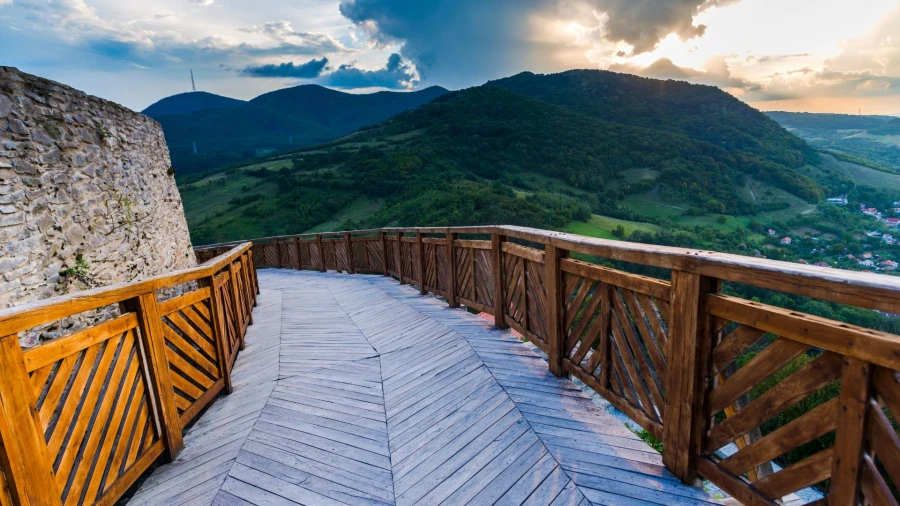
Deva Fortress offers a range of facilities to ensure a pleasant and informative visit:
Tourist Information Center: Here, visitors can get information about the fortress's history, hiking trails, cultural events, and other attractions in the area.
Viewpoints: The fortress has several viewpoints from which you can admire panoramic views over Deva and the Apuseni Mountains.
Cultural Events: Throughout the year, Deva Fortress hosts various cultural events, such as medieval festivals, concerts, exhibitions, and theater performances.
Opening Hours and Prices
Visiting the historic site is free of charge and is generally possible 09:00-21:00.
Deva City Hall usually announces that the funicular operates daily, 10:00-19:00.
However, from October 1, 2024, to April 30, 2025, the inclined elevator to Deva Fortress will run on its winter schedule. The last ride up will be at 16:15 and the last ride down at 16:45. Source: here
If you choose the funicular, it's a good idea to check the updated schedule on the official City Hall website.
Tickets can easily be purchased at the departure station using the e-ticketing system. Round-trip prices are 20 lei for adults and 10 lei for children (up to age 14) and retirees, while people with disabilities ride free of charge.
4 Useful Tips for Visitors to the Fortress
Wear comfortable shoes, as you'll have to climb up and down stairs and steep slopes.
Bring water and snacks, especially if you visit the fortress in summer.
Don't forget your camera to capture the spectacular views.
Follow the visitor rules and help protect the historic monument.
What to Do and See Near Deva Fortress
The Transylvanian region offers a variety of tourist attractions and activities for every taste:
Museum of Dacian and Roman Civilization – located in downtown Deva, the museum displays artifacts from the Dacian and Roman periods, as well as ethnographic and archaeological collections.
Simeria Arboretum – a protected area with tree and shrub species, used for recreation and walks.
Corvin Castle – located in Hunedoara, about 20 km from Deva, it is one of the most important medieval monuments in Romania.
Prislop Monastery – located about 40 km from Deva, it is a pilgrimage site of religious significance and home to the grave of Father Arsenie Boca.
Sarmizegetusa Ulpia Traiana – located about 40 km from Deva, it was the capital of the Roman province of Dacia. The ruins include the forum, the amphitheater, temples, and administrative buildings.
Hațeg Country UNESCO International Geopark – located about 50 km away, it features Cretaceous dinosaur fossils and educational trails.
Mureș Gorge – a protected natural area nearby, offering opportunities for hiking and observing the local biodiversity.
Accommodation Options in Deva
Deva and its surroundings offer a variety of accommodation options, from luxury hotels and comfortable guesthouses to rustic mountain cabins. You'll also find plenty of restaurants and terraces where you can enjoy traditional Romanian and international dishes.
Tourists visiting Deva Fortress have several options for accommodation in Deva.
Hanu Lu Moș Opincă
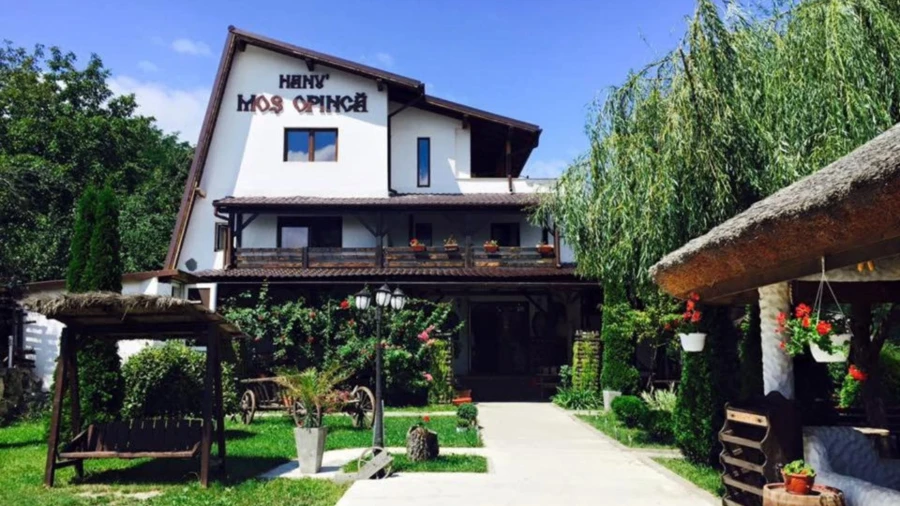
Hanu lu’ Moș Opincă is a traditional-style accommodation that also has a restaurant serving local dishes. The rooms are decorated in rustic style and equipped with modern amenities.
Vila Missy, located in Deva, with parking and common areas for relaxation, is suitable for both tourists and business travelers.
Pensiunea Caro offers accommodation and restaurant services and is located in an easily accessible part of the city.
Hotel Wien
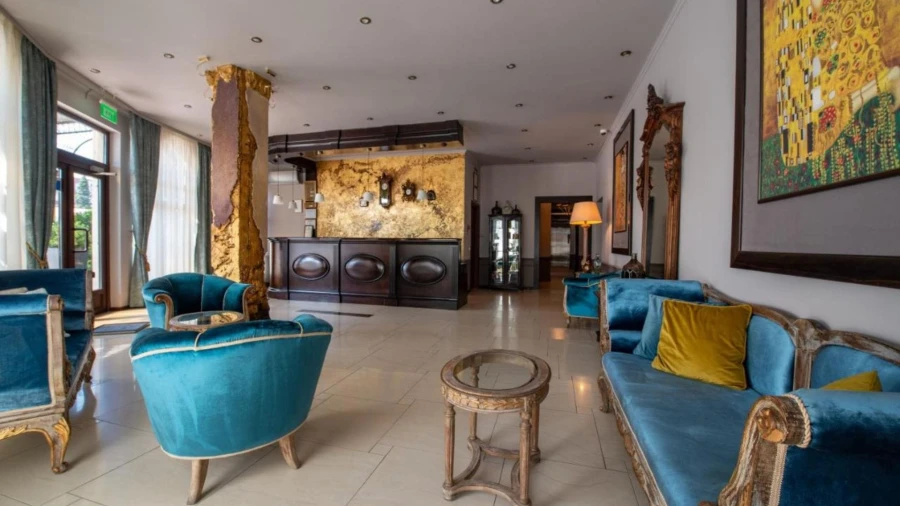
Hotel Wien, an upscale property, offers modern rooms, a restaurant, and event facilities, and is located close to the city's main attractions.
Pensiunea Heaven
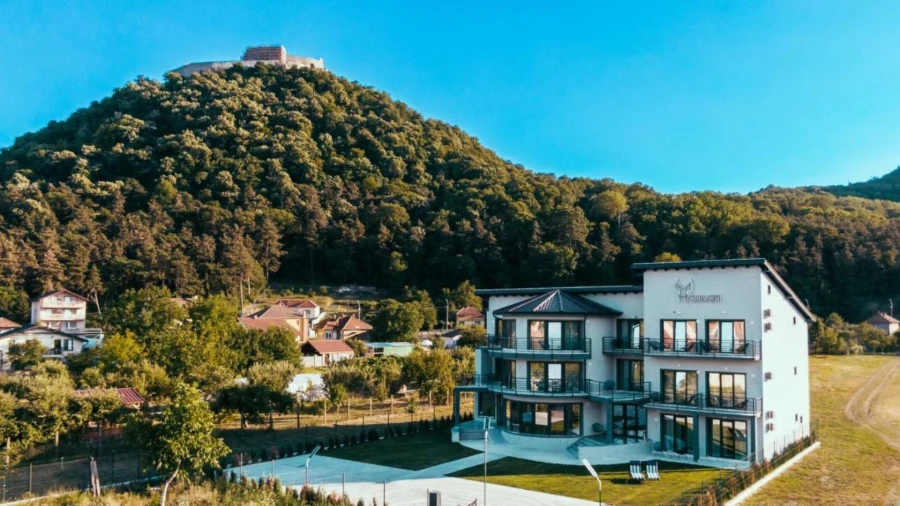
Pensiunea Heaven is rated 5 stars and has parking and common areas for relaxation.
Exploring the area around Deva Fortress will enrich your travel experience and give you a broader perspective on the history, culture, and natural beauty of Transylvania.
Weather in Deva
In Deva, average summer temperatures range between 25-30°C, while in winter they hover around 0°C.
Spring and fall are mild, with pleasant temperatures and moderate precipitation. Precipitation is distributed fairly evenly throughout the year, and winds are generally light.
Weather conditions allow sightseeing all year round, although the best times for hiking and exploring are spring and fall.
Current weather in Deva and the forecast for the next 7 days:
Frequently Asked Questions
How do I get to Deva Fortress from the city center?
You can get there either on foot, along a maintained path that starts from Unirii Square, or by the inclined elevator (funicular) that climbs straight up the slope. The lower station of the funicular is located next to the parking lot by the House of Culture.
What are the opening hours and admission prices?
Visiting the historic site is free of charge and is generally possible 09:00-21:00.
Deva City Hall usually announces that the funicular operates daily, 10:00-19:00.
However, from October 1, 2024, to April 30, 2025, the inclined elevator to Deva Fortress will run on its winter schedule. The last ride up will be at 16:15 and the last ride down at 16:45. Source: here
If you choose the funicular, it's a good idea to check the updated schedule on the official City Hall website.
What facilities and services are available inside the fortress?
Inside the fortress there are information panels about the history and layout of the fortifications, a small terrace, and spaces for temporary exhibitions. There are no food outlets within the grounds, but restaurants and souvenir shops are available near the funicular station at the foot of the hill.
Conclusion
Deva Fortress remains a powerful symbol of Transylvania's history and culture. With its walls steeped in history, its fascinating legends, and its spectacular views, the fortress offers a unique and memorable experience.
We invite you to set off on a journey through time and discover the secrets of Deva Fortress. Don't forget to explore the surroundings too, where you'll find other impressive fortresses, such as Hunedoara Fortress (Corvin Castle), a Gothic architectural gem, or the Roman remains of Ulpia Traiana Sarmizegetusa, testaments to an ancient civilization.
Densuș Church, with its unique architecture, and Prislop Monastery, an important pilgrimage site, are also well worth a visit.
Deva Fortress is part of a network of medieval and modern fortifications in Transylvania, along with Sighișoara Citadel, Alba Iulia Citadel, and Trascău Fortress. These structures played strategic roles in various historical periods, serving as centers of defense, administration, or trade.
Deva Fortress and its surroundings are waiting for you to discover their beauty and deepen your knowledge of Romania's history and culture. Don't miss the chance to have an unforgettable experience in Transylvania!