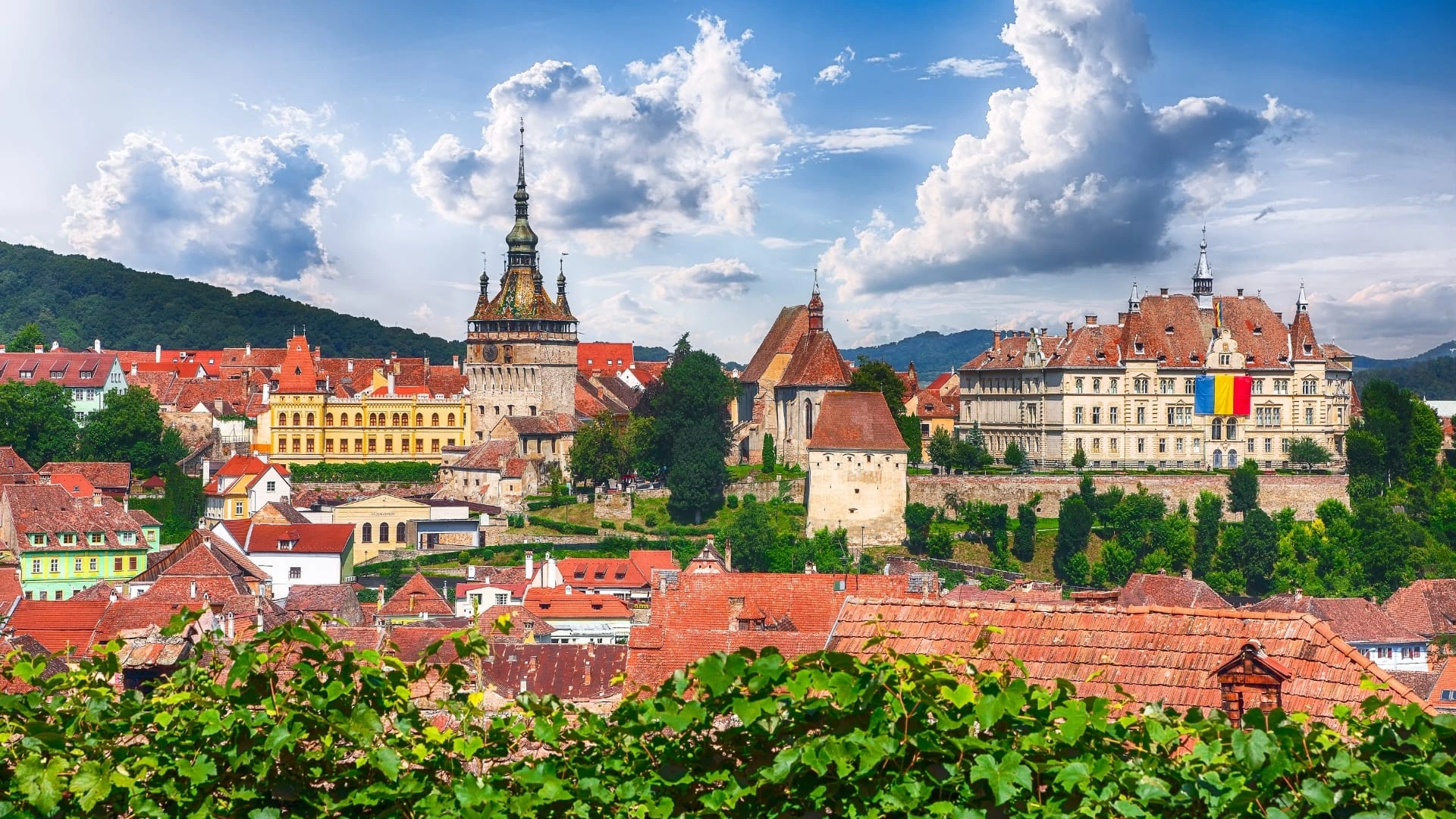
Sighișoara Citadel is one of the best-preserved medieval citadels in Europe and an architectural and cultural gem of Romania.
Sighișoara Citadel
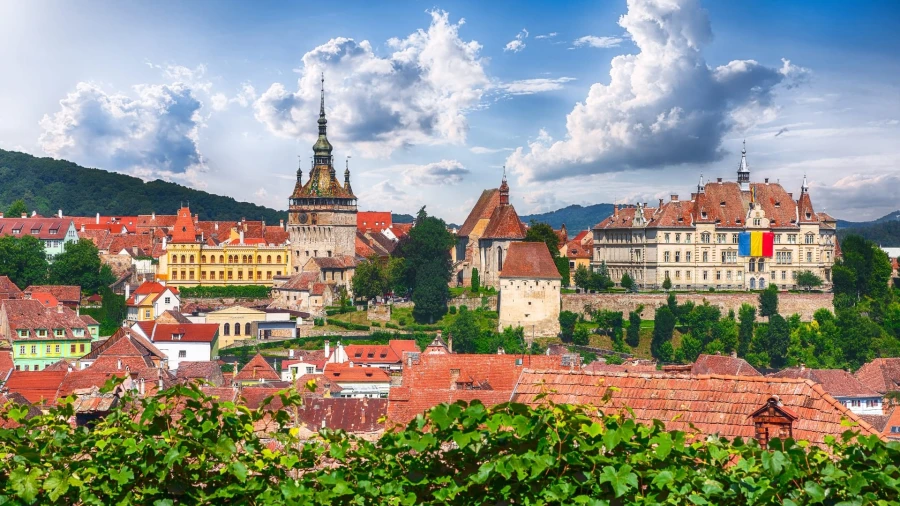
Set in the heart of Transylvania, in Mureș County, it impresses with its historical authenticity, offering a rare glimpse into a bygone era that still fascinates today.
In This Article:
The fortress is a rare example of a still-inhabited citadel, the largest inhabited medieval citadel in Europe, drawing thousands of tourists from around the world every year.
In 1999, Sighișoara Citadel was added to the UNESCO World Heritage List in recognition of its historical and cultural importance.
The citadel's history is closely tied to the settlement of the Saxons in Transylvania by the Hungarian crown in the 12th century, which marked the beginning of a network of fortified towns in the region.
Sighișoara was an important trading center in the Middle Ages and played a significant role in defending the region.
The citadel is also famous for its connection to the historical figure of Vlad the Impaler, the ruler of Wallachia known as the inspiration for the legendary character Dracula (see also other sights linked to the legends of Count Dracula: Poenari Fortress, Tihuța Pass).
Location and Access
Sighișoara Citadel – Top Tourist Attractions
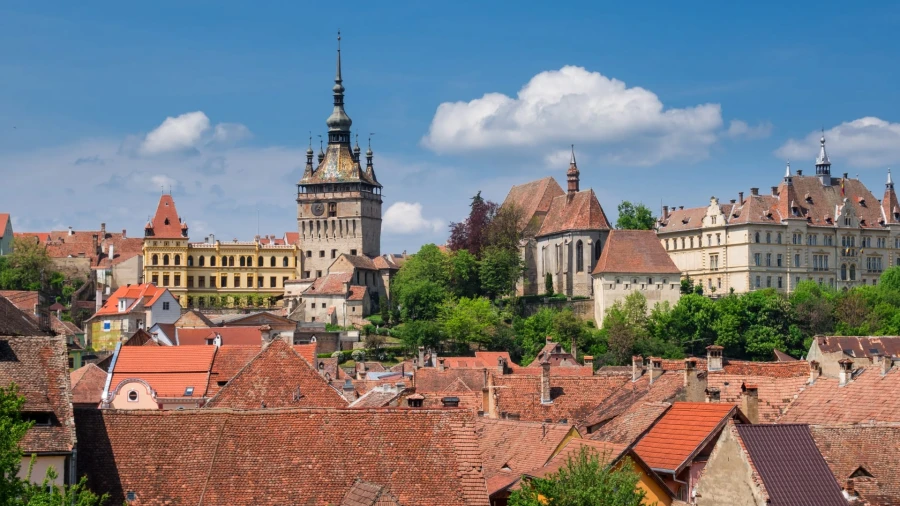
Sighișoara Citadel is located in central Romania, in Mureș County, about 54 kilometers southeast of the city of Târgu Mureș.
It sits on the banks of the Târnava Mare River, surrounded by picturesque scenery of hills and forests.
The town lies at the junction of national roads DN13 (Brașov – Târgu Mureș) and DN14 (Sighișoara – Mediaș), making it easy to reach by car from different parts of the country. Parking is available near the citadel, but it is a good idea to check the access restrictions.
Once you arrive in Sighișoara, most of the attractions in the citadel can be reached on foot. The narrow cobbled streets are ideal for exploring the town's history.
Driving distances to Sighișoara from several Romanian cities:
from Târgu Mureș: 59 min (53.8 km) via DN13/E60
from Brașov: 1 hr 52 min (117.0 km) via DN13/E60
from Mediaș: 41 min (39.2 km) via DN14
from Cluj-Napoca: 2 hr 19 min (154.3 km) via DN13/E60 and the Transylvania Motorway/A3
from Sibiu: 1 hr 33 min (91.2 km) via DN14
from Alba Iulia: 2 hr 2 min (120.4 km) via DN14 and DN14B
History
Although the history of these lands goes back to the Bronze Age and Roman times, Sighișoara was first documented in 1280, under the name Castrum Sex.
The medieval Sighișoara Citadel was founded by Saxon settlers, invited to Transylvania by the kings of Hungary to defend the kingdom's borders and develop the region's economy.
The Saxon colonists arrived in the 12th century and began building a fortified town on the banks of the Târnava Mare River, on the site of an old Dacian and Roman fortification.
Starting out as a small settlement of colonists, Sighișoara grew quickly into an important center of trade and crafts. In 1298, it was mentioned under the German name Schespurch, which later evolved into “Schäßburg.”
The citadel was strategically built on a hill, and its thick walls and 14 defensive towers were meant to protect the inhabitants and their trade goods.
Each tower was built and maintained by a craft guild, a reflection of the citadel's economic prosperity.
Over time, Sighișoara became an important trading hub thanks to its location on one of the main trade routes between Eastern and Western Europe.
Militarily, the citadel played a key role in defending Transylvania against Tatar and Ottoman invasions. Although it was attacked several times, its system of fortifications kept the inhabitants safe and the town running. It also played an essential role in the political organization of medieval Transylvania, serving as a residence for many voivodes and local leaders.
Beyond its military importance, the fortress was also a major cultural center. Its craftsmen, merchants, and guilds contributed to the economic and cultural flourishing of the region.
Architecture and Layout of Sighișoara Citadel
Architecture of Sighișoara Citadel
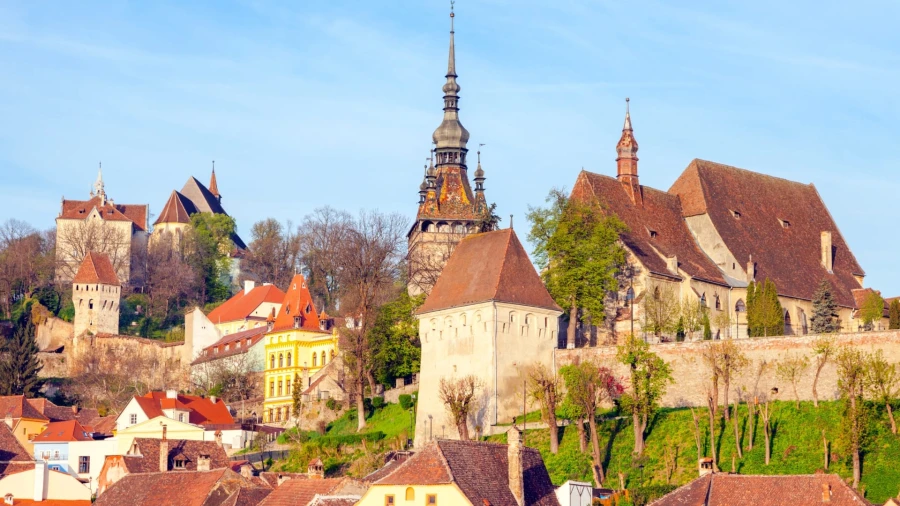
Sighișoara Citadel and its attractions, a unique example of a fortified medieval town in Eastern Europe, stand out for their architectural complexity and authenticity. They are the result of building work that took place later, between the 16th and 18th centuries.
The Citadel Walls and Defense Towers
Built to protect the inhabitants from foreign invasions, especially Ottoman ones, the citadel is surrounded by solid defensive walls.
Walls and defense tower of Sighișoara Citadel
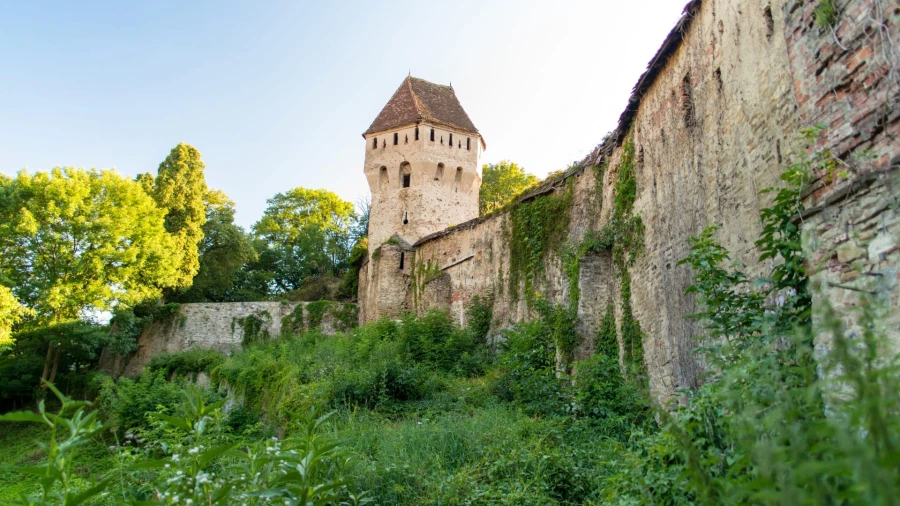
At first these walls were only 4 meters high, but in the 15th century, to better withstand threats, they were raised to 14 meters. A wall about 930 meters long formed a strong defensive perimeter, backed by towers and 5 strategic bastions.
The citadel had 14 defense towers (see Wikipedia), of which 9 are still intact and can be visited: the Clock Tower, Ropemakers' Tower, Butchers' Tower, Furriers' Tower, Tailors' Tower, Shoemakers' Tower, Tanners' Tower, Tinsmiths' Tower, and Blacksmiths' Tower.
Each tower was managed by a craft guild, which was responsible for maintaining it. Beyond its role within the guild system, each one also served as a defense tower, part of Sighișoara Citadel's defensive system.
The fire of 1676 destroyed some of the towers, which were later rebuilt.
The Clock Tower is without doubt the most impressive and symbolic tower of the citadel. Built in the 14th century, it stands 64 meters tall and originally served as the citadel's main gate.
The Ropemakers' Tower is one of the best-preserved towers and represented the ropemakers' guild. It had an important defensive role, but it was also a place where goods essential to the inhabitants were made, such as ropes and twine.
The Blacksmiths' Tower, or Dyers' Tower (built in 1631), is part of the defense system and was run by the blacksmiths' guild. Its strategic position and thick walls made it an impregnable bastion in case of attack. The tower was partly damaged by the 17th-century fire, but it was rebuilt and kept in good condition.
The Tailors' Tower and the Furriers' Tower are other notable examples of guild-run towers, with both a defensive and an economic role. See more details about the towers here.
The Layout of the Citadel in the Heart of Transylvania
Sighișoara Citadel has kept its network of narrow cobblestone streets that climb up and down the citadel's hills, creating a unique medieval atmosphere.
Defense tower, Sighișoara Citadel
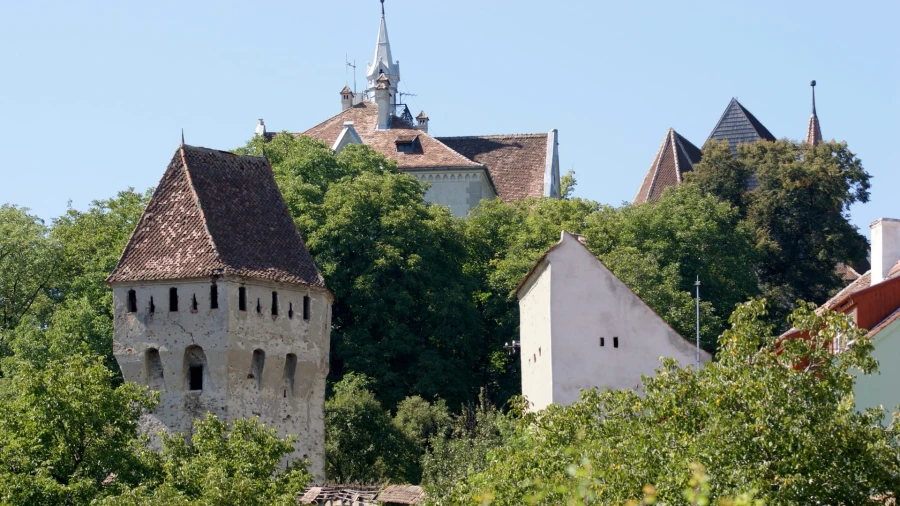
The streets are lined with colorful houses built mostly in the Renaissance and Baroque styles, the majority dating from the 15th to 17th centuries. The Gothic style of medieval architecture is best represented by the Church on the Hill and the Monastery Church.
The craftsmen's houses, with their steep roofs and finely decorated gables, reflect the status and prosperity of the people who lived here at the time.
Citadel Square
Citadel Square, Sighișoara
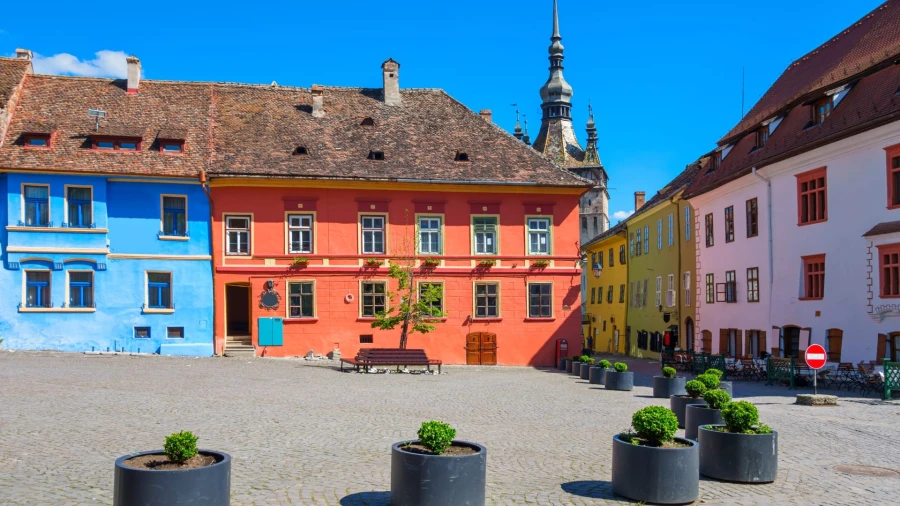
Citadel Square in Sighișoara is the heart of the old medieval citadel and a place of special historical importance.
In the Middle Ages, it was the main hub of commercial and administrative life, surrounded by guild houses and the town's landmark buildings. Fairs, festivities, and even public trials were held here.
The square's medieval atmosphere lives on in its original architecture and the narrow lanes leading off it.
Citadel Square remains a major tourist attraction today and the venue for various cultural events, including the Medieval Festival.
The Clock Tower
Clock Tower, Sighișoara Citadel
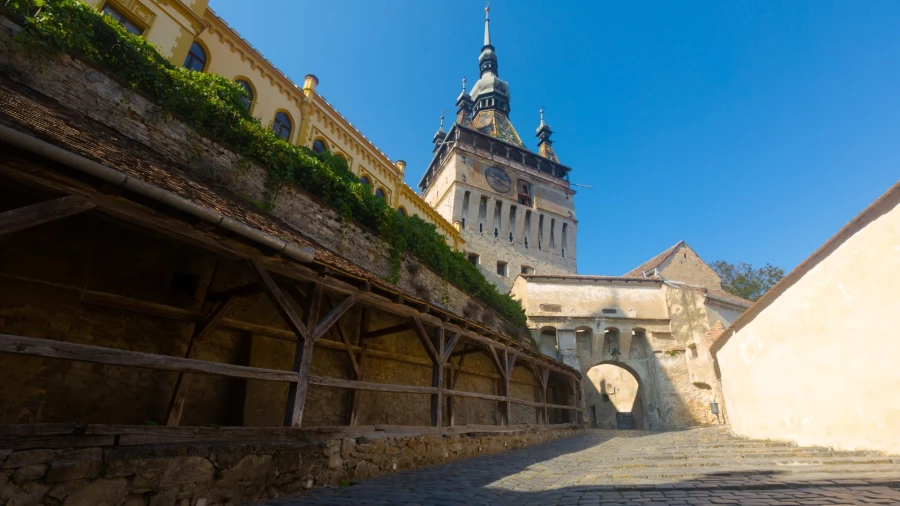
The Clock Tower is the emblem of Sighișoara and the most impressive structure in the citadel, serving both as the town's main gate and as a key element of the medieval fortifications.
First built in the 14th century, the tower was extended and strengthened over the following centuries, reaching a height of 64 meters.
The tower houses a medieval clock, installed in the 17th century, which is unique for its mechanical wooden figures. These figurines symbolize various mythological and historical concepts, such as the god Mars (the symbol of war), Justice (holding a pair of scales), Peace, and Righteousness.
Two figures representing day and night also rotate, changing every day and lending the mechanism a special charm. The clock still works and is one of the tower's biggest attractions.
In medieval times, the Clock Tower was the seat of the Town Council (the old Town Hall), where the citadel's most important administrative and political decisions were made. The town councilors' chambers were on the upper floors, making the tower the center of political power in Sighișoara.
The tower also served as a lookout, with a strategic view of the roads leading to the citadel.
Today, the Clock Tower houses a Local History Museum that takes visitors on a journey into the past of Sighișoara and Transylvania. Exhibits include:
Collections of medieval weapons and tools,
Traditional pottery and other handcrafted objects,
Historical documents and old maps,
A reconstruction of a medieval pharmacy, with the utensils and prescriptions used at the time.
Visitors can explore the tower's floors while learning about everyday life in medieval Sighișoara.
Climbing to the top floor of the tower rewards you with an impressive panorama of the citadel and its surroundings, a major draw for tourists. Unfortunately, this area is currently closed for renovation.
The Monastery Church of Sighișoara
Monastery Church in Sighișoara Citadel
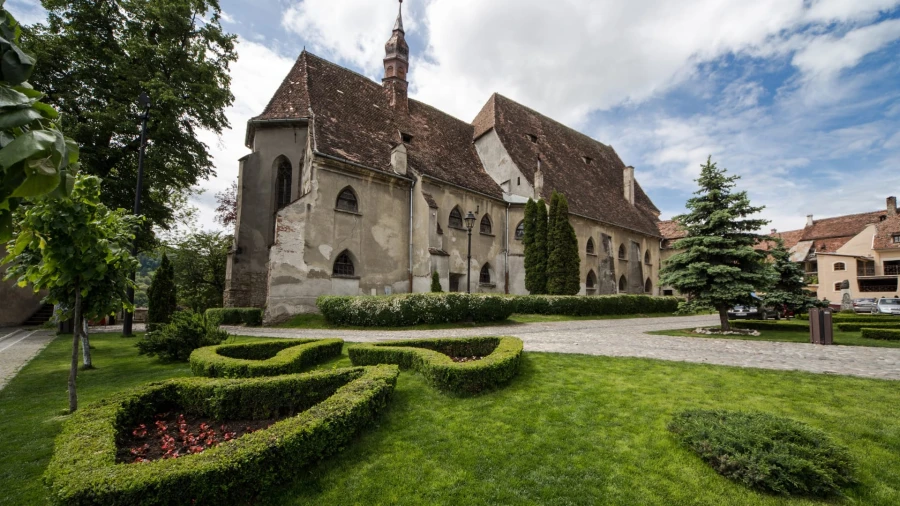
The Dominican Monastery Church, located near the Clock Tower, is one of the most important and best-preserved Gothic buildings in Sighișoara.
First built in the 13th century, the church was part of a Dominican monastery that played a significant role in the spiritual and social life of the medieval citadel.
Although the monastery was demolished in the 19th century, the church survived, keeping its tall windows, spectacular vaulting, and a carved wooden altar dating from 1680. The interior holds old furniture and liturgical objects, including 15th- to 17th-century Oriental carpets donated by local merchants.
The Church on the Hill
Church on the Hill, Sighișoara
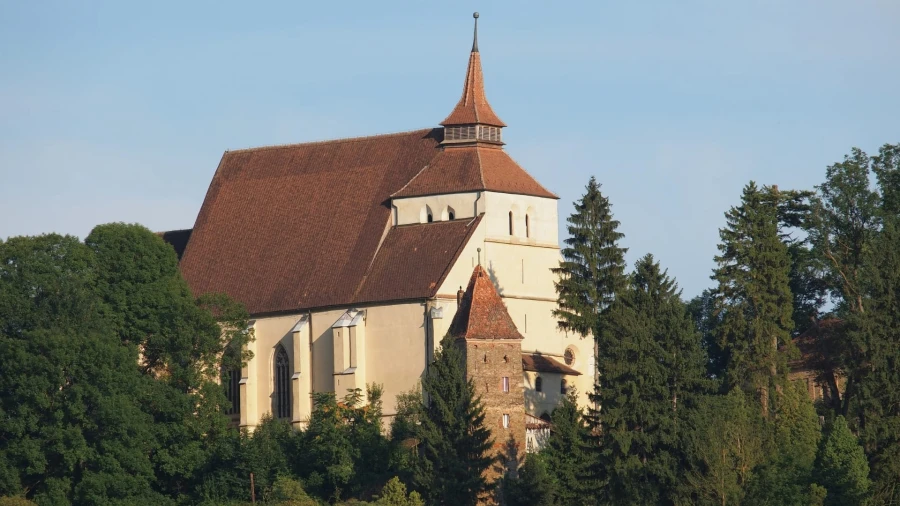
The Church on the Hill is one of the most impressive and oldest religious buildings in Sighișoara, with a rich history going back to the 14th century.
Standing on the highest point of Citadel Hill, at an altitude of about 420 meters, the Gothic church is a symbol of local faith and tradition.
The way up is made easier by the Covered Staircase, a structure unique in Transylvania, built to give churchgoers and students access to the church and the nearby school.
Religious buildings were numerous in the area and ranked as high as military ones.
Construction of the Church on the Hill began around 1345, on the site of an older church, and was completed in the 15th century.
An Evangelical Lutheran church dedicated to Saint Nicholas, it is one of the most important examples of Gothic architecture in Transylvania.
The church impresses with its architectural details:
The Gothic altar, with sculpted elements and religious paintings;
The partially preserved medieval frescoes depicting biblical scenes;
The Baroque organ, added in the 18th century, which is still played at sacred music concerts.
Beneath the church lies a crypt where Saxon leaders and local priests are buried.
It has undergone various renovations over the centuries but has kept most of its original Gothic features, and it is an important place of pilgrimage for the Evangelical community in Transylvania.
The church was at the center of the Saxon community's life in Sighișoara, playing a key role in educating young people and keeping Lutheran religious traditions alive.
The church also hosts cultural events, including organ concerts, talks, and exhibitions that attract visitors from all over the world.
The Covered Staircase
Covered Staircase, Sighișoara Citadel
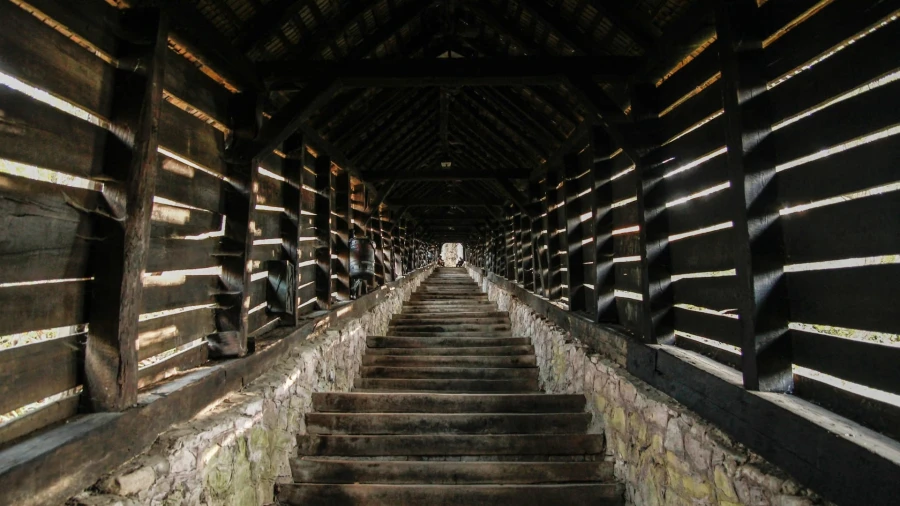
Built in 1642 (17th century) to make the Church on the Hill easier to reach, the Covered Staircase is also known as the Scholars' Stairs.
It originally had 300 steps, but after the alterations of 1849 only 175 wooden steps remain, giving residents of the lower part of the citadel access to the high school and the Church on the Hill.
Today, the staircase has a stone foundation, wooden walls, and a roof that shelters it from the weather.
The staircase is a covered wooden structure with side openings that let passersby admire the citadel and its surroundings as they climb or descend. Its role was not only practical but also symbolic, as it was seen as a link between the spiritual world (represented by the church) and the material world (the town of the citadel).
Today, the Covered Staircase is one of the most popular tourist attractions in Sighișoara, and visitors are often fascinated by its history and well-preserved medieval look.
It was originally built to shelter the students attending the School on the Hill, right next to the church. Since the school was the only educational institution in the citadel, many children had to climb the hill every day, whatever the weather, and the staircase gave them shelter along the way.
The Vlad Dracul House
The Vlad Dracul House is an important symbol of Sighișoara, as it is the place where, according to legend, Vlad the Impaler, son of Vlad Dracul, was born.
Located in the center of the citadel, this medieval building was the residence of Vlad the Impaler's father, the voivode of Wallachia, who lived here between 1431 and 1435.
The house preserves the architectural style typical of the medieval period, with Gothic elements and wooden details.
Today, the building serves as a restaurant and museum, giving tourists the chance to explore an important part of the history of the family of Vlad the Impaler, the central figure behind the Dracula myth.
St. Joseph's Roman Catholic Cathedral
St. Joseph's Roman Catholic Cathedral, Sighișoara
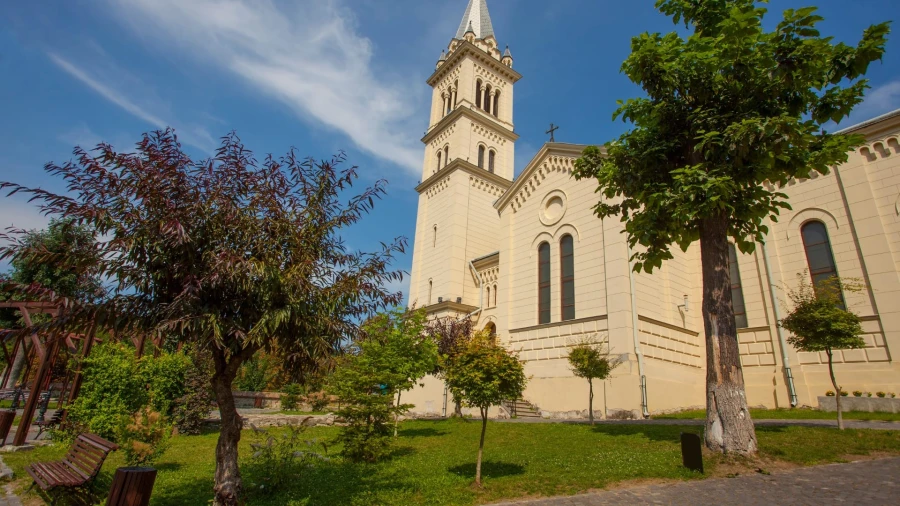
The Roman Catholic Cathedral of Sighișoara, dedicated to Saint Joseph, was built in 1894 on the site of the former Franciscan Monastery and the Locksmiths' Tower.
It stands in the northeastern part of the citadel, close to the enclosure wall. Built in the eclectic style by local architect Letz, the church underwent interior repairs after a fire in 1983.
The current organ, installed in 1908, was bought from a nearby Saxon church and was built by the famous organ builder Karl Einschenk.
The cathedral remains an important landmark in Sighișoara's religious and architectural landscape.
In the citadel, you can also visit the Guild House Exhibition and the House of Arms and Maps Exhibition, and spot the major towers: the Blacksmiths' Tower, Butchers' Tower, Shoemakers' Tower, Tailors' Tower, Furriers' Tower, and the Venetian House.
Opening Hours for Sighișoara Citadel and Its Attractions
Lane in Sighișoara Citadel
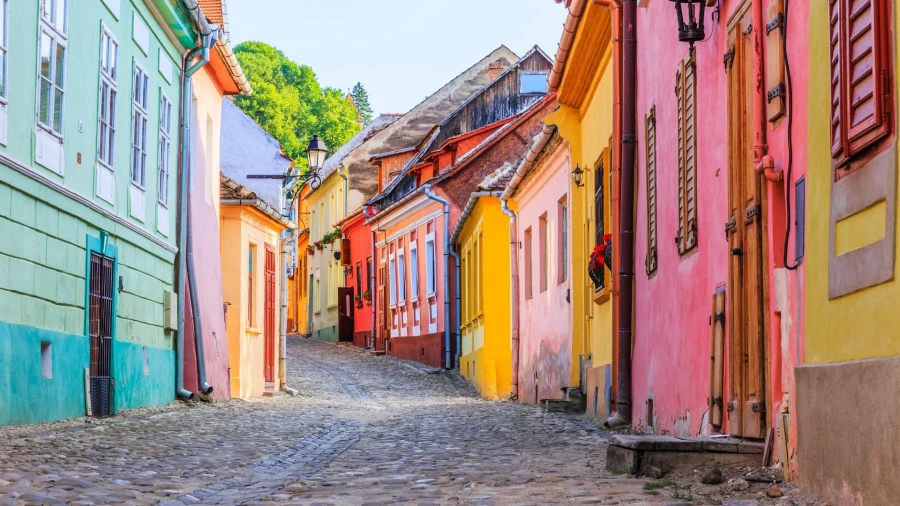
Entry to the citadel is free, with no admission fee, and there are no set visiting hours. However, it is important to park your car only in the designated parking areas.
The Clock Tower Museum in Sighișoara has seasonal opening hours:
Summer hours (May 15 – September 15):
Monday: Closed
Tuesday – Friday: 09:00 – 17:30
Saturday – Sunday: 10:00 – 17:30
Winter hours (September 16 – May 14):
Monday: Closed
Tuesday – Friday: 09:00 – 15:30
Saturday – Sunday: 10:00 – 15:30
Ticket prices:
Adults: 12 lei
Children: 4 lei
Most of the attractions inside are closed on Mondays and open from 09:00 to 17:00 on the other days. Admission to the attractions ranges from 10 to 20 RON. See more details here.
Notable Figures Linked to the Medieval Sighișoara Citadel
With its long history and well-preserved medieval atmosphere, Sighișoara Citadel was the cradle of important figures who left their mark on the culture and history of Romania and Europe.
Over time, this fortified town became especially well known for its connection to legendary figures such as Vlad the Impaler, as well as to other remarkable personalities. Sighișoara has also inspired various legends and stories that add to its unique charm.
Vlad the Impaler and the Dracula Myth
Associated with Sighișoara is Vlad the Impaler, also known as Vlad III, the historical figure who inspired the Dracula myth.
According to several historians, Vlad the Impaler was born in Sighișoara Citadel in 1431, in a house now known as the Vlad Dracul House, which draws tourists from all over the world. The connection with the famous voivode has added to the citadel's reputation.
Vlad the Impaler, son of Vlad Dracul, was ruler of Wallachia and is renowned for his relentless fight against the Ottoman invasions, as well as for his extremely harsh methods of punishment, including impaling his enemies.
His association with the image of Count Dracula was cemented by Bram Stoker's 1897 novel “Dracula,” although the novel was more of a Gothic fantasy than a historical account.
The myth of Count Dracula has become part of the citadel's cultural and tourist identity.
Hermann Oberth – Pioneer of Spaceflight
Another important name linked to Sighișoara is Hermann Oberth, one of the pioneers of spaceflight, who spent his childhood and school years in Sighișoara.
Born in Sibiu in 1894, he moved with his family to Sighișoara in 1896 and studied at the Bischof Teutsch Gymnasium, where he began researching rocket technology.
His work “Die Rakete zu den Planetenräumen” (The Rocket into Interplanetary Space), published in 1923, is considered one of the founding works of spaceflight.
Sighișoara is also the birthplace of Georg Daniel Teutsch (1817–1893), historian and bishop of the Evangelical Church of the Augsburg Confession in Transylvania, author of “History of the Transylvanian Saxons”, published between 1852 and 1858.
The diversity of figures who passed through Sighișoara shows how important the citadel was as a cultural and intellectual center.
Festivals and Events
One of the most iconic events in Sighișoara Citadel is the Medieval Festival, held every year in the heart of the citadel, which turns the town into a storybook setting where the medieval atmosphere comes back to life.
Held since 1992, the festival brings together thousands of tourists from around the world, eager to relive the charm of the Middle Ages.
For several days, the citadel's streets come alive with knights, damsels, craftspeople, artists, and theater troupes, offering visitors an authentic experience with tournaments, medieval dances, street theater, early music concerts, and costumed parades.
The event plays a crucial role in promoting the citadel's cultural and historical tourism and draws an impressive number of visitors every year.
Local artisans get the chance to show their handmade goods: pottery, straw weaving, leatherwork, wrought iron, textiles, and jewelry.
Sighișoara Film Festival, where independent and art-house films are shown in special screenings held at various historic venues.
Sighișoara Blues Festival, an event for blues lovers that attracts international and local artists, turning the town into a meeting point for fans of the genre.
Various art exhibitions and classical music concerts, held throughout the year at venues such as the Church on the Hill, the Clock Tower, and other sights in the citadel.
Attractions in the Area
Besides the historical and cultural riches of Sighișoara Citadel, the surrounding area offers a number of fascinating tourist attractions, especially the fortified churches of Transylvania and the nearby medieval towns.
Transylvania is famous for its network of fortified churches, built mainly between the 13th and 16th centuries by Saxon communities to defend themselves against Ottoman and Tatar invasions.
Biertan Fortified Church
About 30 kilometers from Sighișoara, Biertan is home to one of the best-preserved fortified churches in Transylvania.
Built in the 15th century in the late Gothic style, the church is surrounded by three successive defensive walls with towers and bastions. Its impressive Gothic interior and the famous sacristy door with its intricate locking system draw thousands of visitors every year.
Viscri Fortified Church
About 45 km from Sighișoara, Viscri is one of the most picturesque villages in Transylvania, and its fortified church is on the UNESCO list.
Founded in the 12th century by the Teutonic Knights and later fortified by the Saxons, the church in Viscri impresses with its solid walls and authentic simplicity. It is also known for its connection to Prince Charles, who has invested in preserving the village.
Saschiz Fortified Church
Just 20 km from Sighișoara, Saschiz has another impressive fortified church.
Built in the 14th century in the Gothic style, the church has a massive tower that resembles Sighișoara's Clock Tower. It reflects the importance of the Saxon community of Saschiz in the Middle Ages.
Câlnic Fortified Church
Although a bit farther from Sighișoara (about 100 km), Câlnic deserves a special mention for its imposing construction.
The castle and fortified church in Câlnic are a unique combination of noble and religious architecture: a medieval fortress with defense towers and a church.
Brașov
Located about 120 kilometers south of Sighișoara, Brașov is one of the largest and most important medieval towns in Transylvania.
The city is famous for Council Square, the Black Church – the largest Gothic church in southeastern Europe – and its fortified walls. Brașov was an important commercial and cultural center in the Middle Ages, and German influences can be seen in the city's architecture and traditions.
Transfăgărășan
Transfăgărășan route
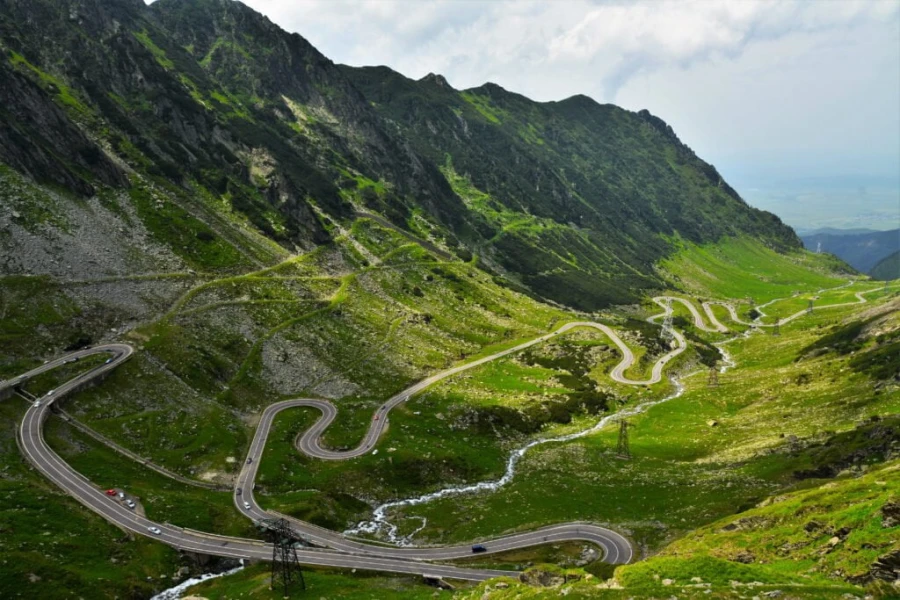
One of the most spectacular roads in the world, the Transfăgărășan crosses the Făgăraș Mountains and offers stunning views and access to many natural attractions, such as Bâlea Lake and Bâlea Waterfall.
Its proximity to Sighișoara (80 km) makes the Transfăgărășan a must-see destination for mountain lovers.
Praid
Praid Salt Mine
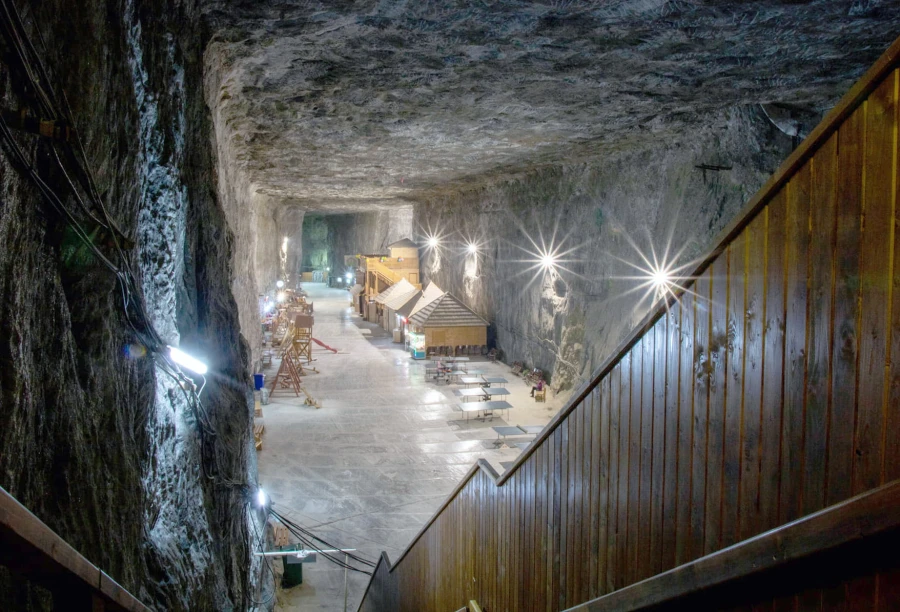
The resort town of Praid, about 70 km away, is famous for its salt mine, one of the largest in Europe. The salt mine offers a unique chance to explore underground galleries, as well as treatments for respiratory conditions.
Rupea
Rupea Fortress – access stairs
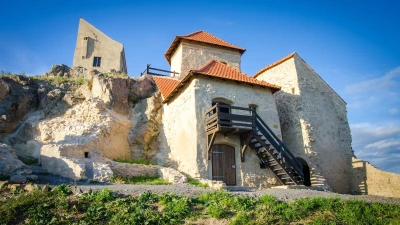
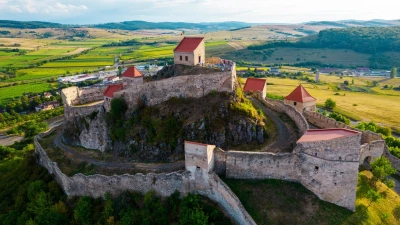
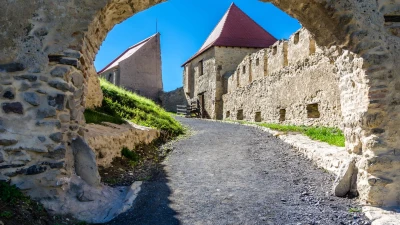
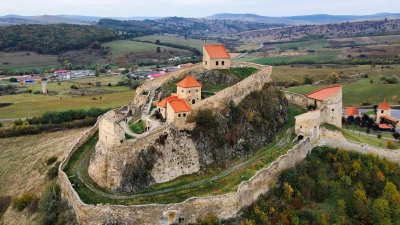
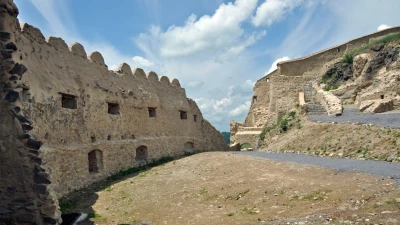
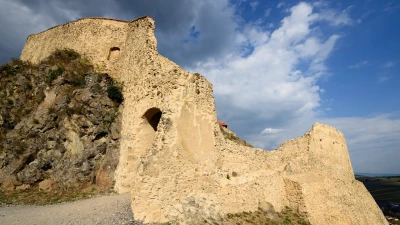
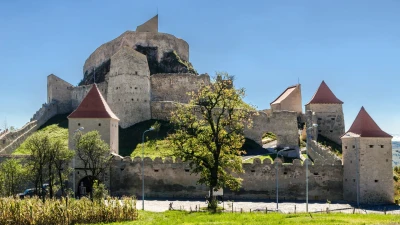
Rupea Fortress, located on the road between Sighișoara and Brașov, 50 km from Sighișoara Citadel, is one of the oldest fortifications in Transylvania, dating back to Dacian times.
Recently restored, the fortress sits in a strategic location and offers tourists a panoramic view of the surroundings.
The area around Sighișoara is rich not only in history but also in natural beauty. Green hills, vast forests, and wild landscapes offer visitors opportunities for recreation and hiking.
Restoration Projects
Over the years, various restoration projects have been launched to preserve the citadel's heritage. In recent years, one of the most notable restoration projects focused on the Clock Tower, the symbol of the citadel.
The restoration included strengthening the structure, cleaning the facade, and repairing the clock mechanism. The top floor (the balcony) is closed for renovation.
The Church on the Hill has also undergone consolidation work and restoration of its defining Gothic details, while the Covered Staircase, which links the citadel to the church, has been rebuilt to make access easier and protect it from damage.
Funding for these projects comes from a mix of local, national, and international sources, including donations and grants from organizations that support UNESCO heritage.
Sighișoara Citadel Today
Terraces on Citadel Square, Sighișoara
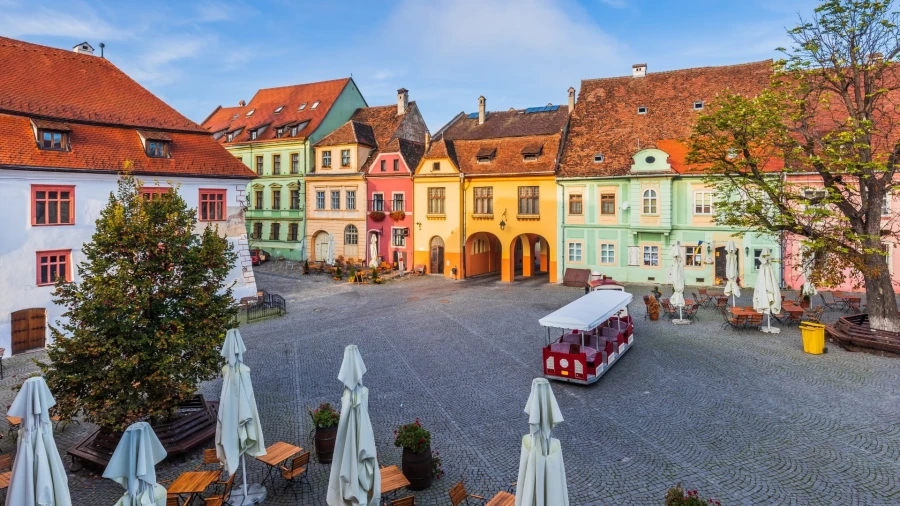
Today, Sighișoara Citadel is a major tourist destination, drawing thousands of visitors from all corners of the world every year. Its medieval atmosphere, authenticity, and historical importance make the citadel a destination unlike any other in the world.
Tourism is an essential part of the local economy, bringing substantial income to the community through accommodation, restaurants, and guided tours.
The Sighișoara Medieval Festival, cultural events, and historical attractions such as the Clock Tower, the Church on the Hill, and the History Museum all contribute significantly to promoting the town.
Tourism also brings a number of challenges. Growing visitor numbers can damage the citadel's infrastructure, and the historic homes need constant upkeep.
Accommodation
Inside the citadel and in the surrounding area, tourists can find plenty of places to stay, from traditional guesthouses to modern hotels.
Some of the guesthouses are set in historic buildings, offering an authentic medieval lodging experience. Casa Wagner, Fronius Boutique Residence, and Casa Savri are examples of such places.
The citadel offers a variety of restaurants that combine traditional Transylvanian cuisine with modern influences. Local specialties include Saxon dishes such as homemade sausages, Transylvanian sour soup (ciorbă), and German-influenced desserts.
The restaurants Casa Vlad Dracul and Medieval Café are among the most popular places in the citadel.
Weather
Current weather in Sighișoara and the forecast for the next 7 days:
Frequently Asked Questions
Where is Sighișoara Citadel located?
Sighișoara Citadel is located in central Romania, in Mureș County, about 54 kilometers southeast of the city of Târgu Mureș.
What are the opening hours of Sighișoara Citadel?
Entry to the citadel is free, with no admission fee, and there are no set visiting hours. However, it is important to park your car only in the designated parking areas. Note, though, that the main attractions are closed on Mondays, and most of them close at 5 p.m.
What can you visit in Sighișoara Citadel?
The best-known sights in Sighișoara Citadel include the Clock Tower, the Church on the Hill, the Monastery Church, the Vlad Dracul House, and the Scholars' Stairs.
Conclusion
Sighișoara Citadel is one of the best-preserved inhabited medieval citadels in Europe, offering a unique journey back in time. With its long history, deep cultural roots, and impressive architecture, the citadel remains a symbol of Transylvania and of the Saxon heritage.
Whether you are exploring its narrow streets, visiting its sights, or discovering the stories of its legendary figures, Sighișoara fascinates visitors at every step.
Sighișoara Citadel remains a must-see destination for anyone passionate about history, culture, and authentic traditions!
Be sure to also read our articles about Alba Iulia Fortress, Rupea Fortress, Poenari Fortress, Colțești Fortress, and Râșnov Fortress.