Turda Salt Mine, an underground wonder in the heart of Transylvania, is a unique destination in Romania that draws tourists from all over the world. Located in the city of Turda, Cluj County, this former salt mine has been turned into an underground amusement park, offering an unforgettable experience to all its visitors.
Turda Salt Mine
In this article:
Location
Turda Salt Mine is located in Cluj County, in the city of Turda, in the Durgău – Valea Sărată area (coordinates 46.57656°N 23.79458°E). Since 2010, visitors have entered the salt mine through the modernized entrance at the Salina-Durgău tourist center (Aleea Durgău no. 7). It is part of Romania's National Cultural Heritage and has been listed since 2015 among the recognized historical monuments of Cluj County.
Distances to Turda Salt Mine
From Cluj-Napoca: 43 min (34.4 km) via DN1/E60/E81
From Alba Iulia: 59 min (71.4 km) via A10
From Oradea: 3 hr 3 min (195.9 km) via DN1/E60
From Timișoara: 3 hr 20 min (287.5 km) via A1
From Arad: 3 hr 22 min (320.8 km) via A1
From Bucharest: 5 hr 59 min (422.6 km) via DN7/E81 and E81
From Târgu Mureș: 1 hr 15 min (83.1 km) via the Transylvania Motorway/A3
From Bistrița: 2 hr 22 min (138.9 km) via DN1C/E576
From Baia Mare: 2 hr 56 min (178.4 km) via DN1C/E58
Formation of the Salt Deposits
The salt deposits of the Transylvania region, which have been mined in Ocna Dejului, Cojocna, Turda, Ocna Mureș, Ocna Sibiului, and Praid (see also the article Praid Salt Mine), formed about 13.5 million years ago. They took shape in a shallow sea under a very hot tropical climate. The salt layer extends beneath the whole of Transylvania and reaches a thickness of about 400 meters.
Later on, the thick layers of sediment deposited on top of the salt exerted massive pressure on it, and the salt migrated toward weaker zones of the Earth's crust along the edges of Transylvania. There, the salt rose, forming “mushroom”-shaped structures more than 1,000 meters high, in many cases reaching all the way to the Earth's surface. (See details on Wikipedia.) In the case of Turda Salt Mine, according to the drilling carried out, this salt “mushroom” is about 1,200 meters high.
History and Origins
Turda Salt Mine has a history spanning several centuries. Salt was mined here as early as Roman times (clear evidence from the 2nd century AD).
The Roman fort of Potaissa (Turda) was responsible for protecting the salt workings here. The Romans mined only at the surface, digging square pits to a depth of about 15 meters. Salt could be extracted easily this way, after which the Romans would leave the area and start new workings. It seems that the abandoned pits later turned into lakes.
However, after the Aurelian withdrawal (the Roman retreat under Emperor Aurelian) in 274 and until the 11th century, there is no conclusive evidence that salt mining continued.
The first document mentioning the salt of Turda was issued in 1075 (Middle Ages) by the Hungarian chancellery. In the 13th century, the Turda salt mine is explicitly mentioned, culminating in its donation to the Diocese of Transylvania. From here, mine carts were loaded with chunks of salt, which were then taken for storage to the warehouses in Turda Nouă. This was done on a narrow-gauge railway, with carts pulled by horses. A story with a distant past that has kept its vitality and authenticity to this day. More details about salt transport and salt mining in Turda at that time on Wikipedia
During the period of Austro-Hungarian rule over Transylvania, the two powers became actively involved in extracting the salt deposits of Turda, recognizing their economic importance. In the 17th–19th centuries, Austrian rule opened 5 underground mines in Turda, named mostly after Austrian princely figures:
1. Terezia Mine (originally named after St. Teresa of Ávila, then after the Austrian Empress Maria Theresa; mining here began in 1690);
2. Anton Mine (named after St. Anthony of Padua);
3. Cojocneană Mine (Kolozser);
4. Rudolf Mine;
5. Ghizela Mine.
The salt mines operated continuously until 1932, when salt mining at Turda Salt Mine ended for good due to outdated technology and low yields. At that time, in 1932, Turda Salt Mine comprised the following mines: Iosif Mine, Rudolf Mine, Terezia Mine, Ghizela Mine, and Anton Mine.
During World War II, the mine was used as an air-raid shelter.
The salt mine reopened to tourists in the 1990s and has since become one of Romania's best-known tourist attractions. With financial support from the European Union, extensive works were carried out to fit out the salt mine for tourism and therapeutic purposes. It was inaugurated in January 2010, after 2 years of work.
Today, Turda Salt Mine is a genuine museum of salt mining in the city of Turda, with spa treatment rooms, an amphitheater, and sports halls, and it offers an unforgettable experience on the “Ferris wheel,” from which you can admire the salt stalactites.
An Amazing Underground Experience in the Heart of Transylvania
The salt mine lies about 120 meters underground, and a visit here takes you into a completely different world. The salt mine's main attractions include:
Staționar Ghizela or Ghizela Mine
In Ghizela Mine, two technical rooms had to be set up: one for the crivac (a rudimentary installation once used to hoist blocks of salt to the surface) and the other at the top of the extraction shaft, to make it easier to move the salt to the Franz Joseph transport gallery.
Later, in 1992, the two rooms were connected, creating the room called “Staționar Ghizela”. This space was adapted and used for spa and relaxation treatments.
Roll Call Hall
It got its name because this was where records were kept of those entering and leaving Rudolf Mine. The “Rich Men's Staircase”, the oldest fir-wood structure in the salt mine, is located in this room and served as the access route to the Terezia and Rudolf mines until work on the transport gallery was completed. It is said that the Austrian emperor Franz Joseph, then also prince of Transylvania, descended this staircase, and from then on it was used exclusively by the nobles of the time.
On the east side of the Roll Call Hall is “The Altar”, a niche in the wall that served as a place of prayer. Legend has it that a worker saw the face of the Virgin Mary holding the Christ Child here, which is why the Altar was built, a place of prayer every morning.
Terezia Mine
Below Rudolf Mine lies Terezia Mine, the oldest mining project in all of Turda Salt Mine.
Salt mining here created impressive underground chambers, 90 meters high and 75 meters in diameter. The depth from the shaft openings to the bottom of the mine is more than 110 meters.
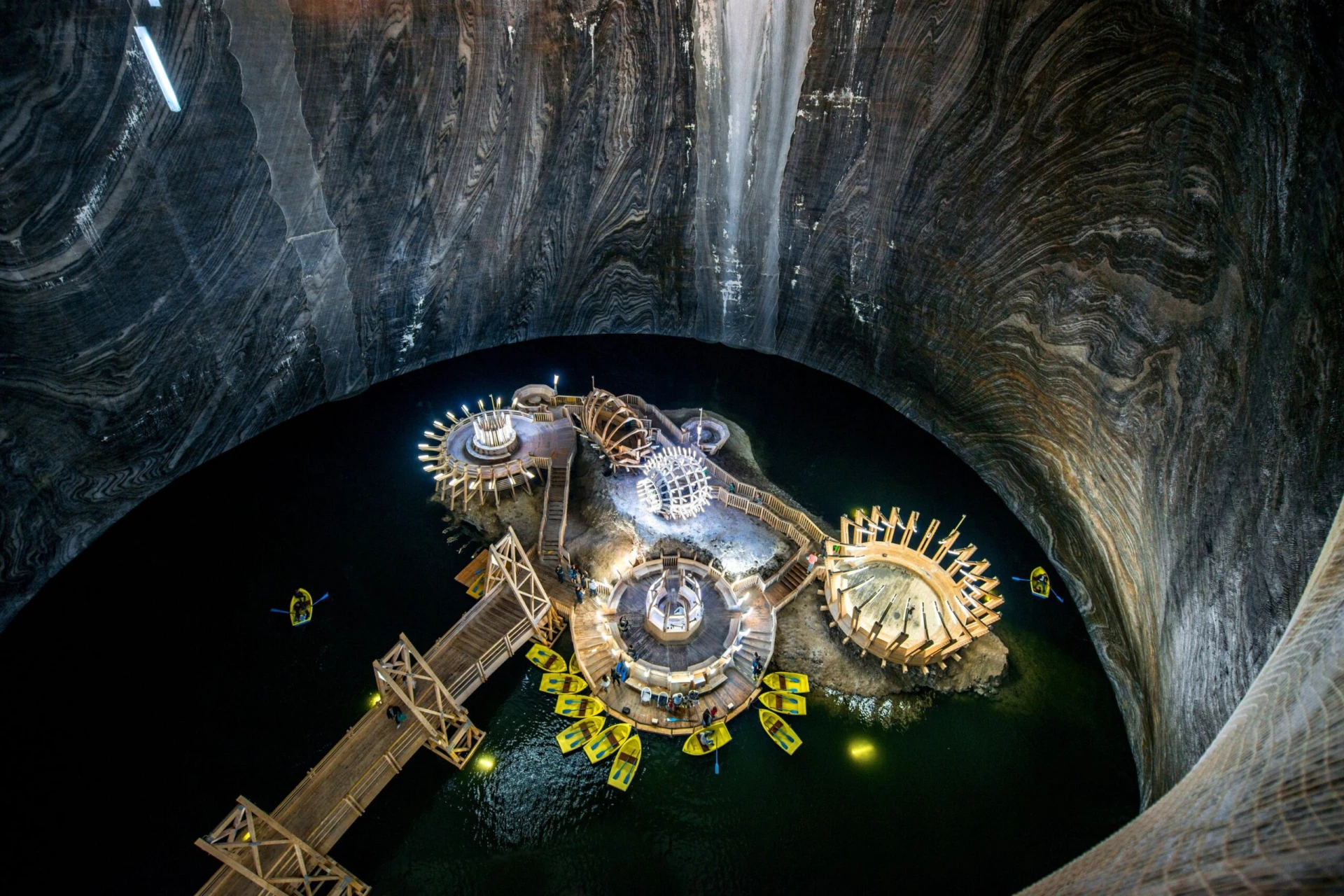
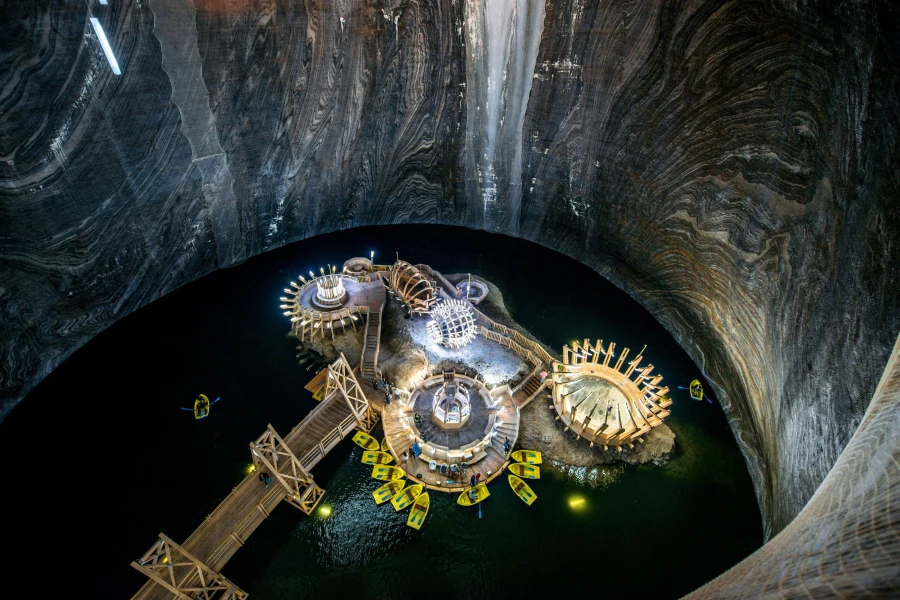
Terezia Mine is home to the underground lake, the spot in the salt mine with the fewest airborne microorganisms and therefore the cleanest air. It is up to 6 meters deep and covers most of the floor of the old mining chamber. In its middle, an island has formed from leftover salt, deposited here at the end of the 19th century, when salt mining in this chamber came to an end.
The lake is one of the salt mine's attractions because you can go boating in a unique atmosphere.
Rudolf Mine
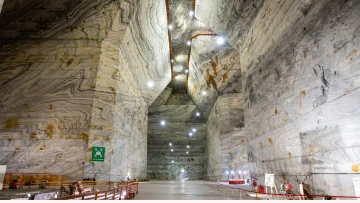
This hall is named after Rudolf, the son of Franz Joseph. It is the last place where salt was mined in Turda. The mine amazes with its grandeur and many attractions.
The trapezoid-shaped dome of the mine descends to a depth of 42 meters and is 50 meters wide and 80 meters long, a true masterpiece. A total of 172 steps lead you down 13 levels to the floor of the mine, and each landing is marked with the year in which that level was mined.
In the northwestern part of the mine, salt stalactites of high purity (over 99.9% NaCl) have formed, some even reaching 3 meters.
Visitors get a unique view of the entire mine from the panoramic elevator. It takes you down to the salt massif 120 meters underground, where you will discover a variety of unusual activities.
The picture is completed by the Ferris wheel (20 meters high), one of the few in the world located underground.
Extraction Shaft Hall
The Extraction Shaft Hall is where the salt mined in Rudolf Mine was hauled vertically up to the level of the Franz Joseph Gallery.
With a depth of 87 meters, the shaft is divided into three sections: two for hauling the salt mined in Rudolf Mine and one with the stairs the workers used to move around. An old wooden pulley used to dig the shaft can still be seen here today. Reminders of the salt mine's mining past are visible at every step. Two steel pulleys, still in working order today, made it easier to lift the mined salt out of the shaft.
Crivac Hall
The Crivac Hall is an octagonal chamber that houses the installation of the same name.
The crivac at Turda Salt Mine dates from 1881 (the year is written on it, and it replaced an older one built in 1864) and is unique in Europe, being the only machine of its kind in Europe's salt mines preserved in its original working location.
Powered by horses, the crivac was used to haul the salt mined in Rudolf Mine vertically, connecting the level of this mine with the transport gallery through the extraction shaft.
The metal parts of the crivac at Turda Salt Mine were made at the same plant in Romania, in Reșița, where the iron used to build the Eiffel Tower was produced.
It is known that for each arm of the crivac, 1 or 2 horses were kept ready as relief. In this environment, the only source of light was torches, and because of the poor lighting and the circular motion, the horses went blind within just 2 weeks of leaving the salt mine.
Iosif Mine – Echo Hall
Iosif Mine is a cone-shaped mine named in honor of Emperor Joseph II. The name “Echo Hall” comes from the strong reverberation of sound, caused by the shape of the chamber and the absence of major connections to other mine workings. Sounds are reflected up to 20 times.
Iosif Mine descends to a depth of 115 meters below the surface and has a base diameter of 67 meters.
The mine can only be viewed from balconies carved into the salt at the level of the transport gallery. It is currently being fitted out to be included in the tourist circuit.
Franz Joseph Gallery
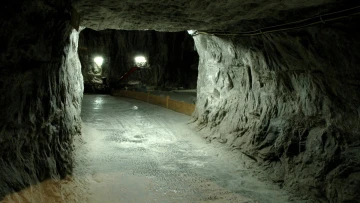
Built in the second half of the 19th century, the Franz Joseph Gallery was designed to make transporting the salt to the surface easier and cheaper. By the end of the century, it was almost 920 meters long. At first, salt was carried here in sacks on horseback, and later in horse-drawn mine carts.
After mining ended, between 1948 and 1992, part of the Franz Joseph Gallery was used as a cheese warehouse. Many period images have survived, especially of the entrance to the salt mine.
Relaxation and Recreation
Alongside its role as a therapeutic salt mine and treatment center for various conditions, Turda Salt Mine is home to a true amusement and relaxation park for the whole family. You can enjoy relaxation and recreation facilities, including:
an underground amphitheater for various shows, with heated seats
sports fields and bowling
billiards (3 tables)
a mini golf course with several holes,
areas for table tennis (6 tables)
a children's playground with slides and mini basketball hoops.
the Ferris wheel, which offers unusual views of the salt mine from a height of 20 m
the History Museum, where you can learn about the history of the salt mine and salt mining through period exhibits and information panels
boat rides on the underground lake in Terezia Mine
See details at http://salinaturda.eu
Prices and Opening Hours
Turda Salt Mine opening hours 2024: Monday to Sunday, 9 a.m. to 5 p.m., with last entry at 4 p.m.;
Admission prices / day / person:
Adults: 50 RON (Monday–Friday); 60 RON (Saturday–Sunday and public holidays);
Children (ages 3–18) / school and university students: 30 RON
Seniors: 30 RON
Multi-day pass – at least 7 days (price / day / person):
Adults: 40 RON
Children (ages 3–18) / school and university students: 25 RON
Seniors: 25 RON
Service fees:
visit outside opening hours, minimum 50 adults: 2,500 RON/hour;
guide fee for the visit: 100 RON;
Ghizela Mine visit fee: 20 RON;
professional photo and video fee for weddings, graduation albums, etc.: 2,000 RON/day or 300 RON/hour;
audio recording fee: 450 RON/day
commercial photo/video fee for music videos and films: minimum 2,500 euros
bowling lane or mini golf course rental for 20 min: 20 RON/person
table tennis table rental / 30 min: 20 RON
one Ferris wheel ride / 8 min: 15 RON/person
1-hour rental of the sports field in Rudolf Mine: 200 RON
1-hour amphitheater rental: 1,500 RON
pool table rental: 1 RON/min
boat rental on the lake in Terezia Mine, max. 3 people: 30 RON per boat
car/motorcycle parking fee: 5 RON/hour
outdoor billboard advertising space rental: monthly rates in euros, depending on the client.
See details at http://salinaturda.eu
Practical Information
Turda Salt Mine is one of the easily accessible tourist attractions, just a 30-minute drive from Cluj-Napoca, and a short distance from the Turda Gorges (about 14 km)
Tickets can be bought online;
Parking access is by ticket;
Opening hours are extended, Monday to Sunday, 9 a.m. to 5 p.m., so visitors have more time to explore this underground wonder;
Before visiting the salt mine, it is recommended that you read the Underground Circulation and Conduct Rules (more details at https://www.salinaturda.eu/)
Access for people with disabilities is through the old entrance to the salt mine, in the Turda Nouă district, and part of the salt mine is not accessible to them due to a lack of infrastructure;
The temperature in the salt mine is constant, at 11–12°C (at Praid Salt Mine, the average annual temperature is 16°C), so appropriate clothing is recommended;
The salt mine offers speleotherapy, or halotherapy, with multiple health indications, preferably under a doctor's guidance to maximize the benefits and minimize the risks of prolonged exposure to salt inhalation;
Salt inhalation therapy is not recommended for everyone, and the list of contraindications for such a treatment should be checked before visiting the salt mine;
Pets are not allowed in the salt mine, and eating inside is also prohibited.
Tourist Attractions Near Turda Salt Mine and in the Surrounding Area
1. Turda Gorges
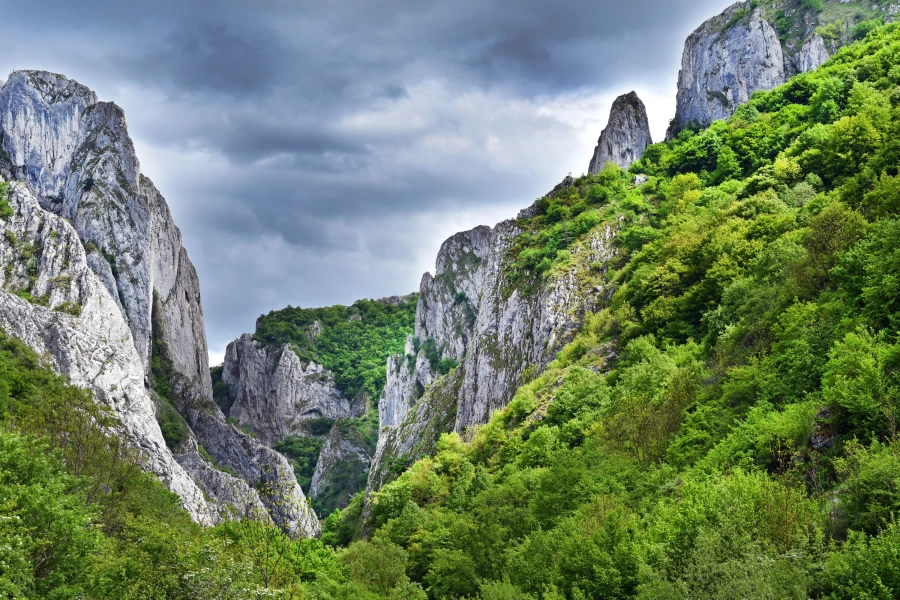
Turda Gorges landscape
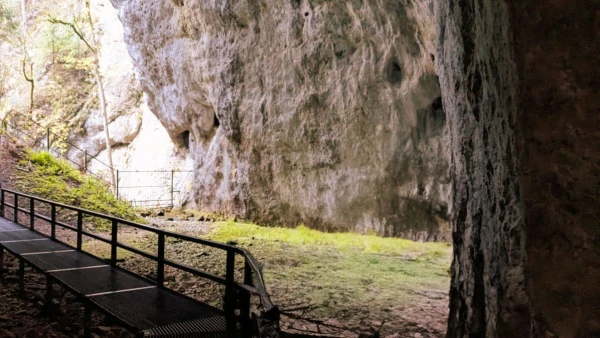
Ordâncușa Gorges
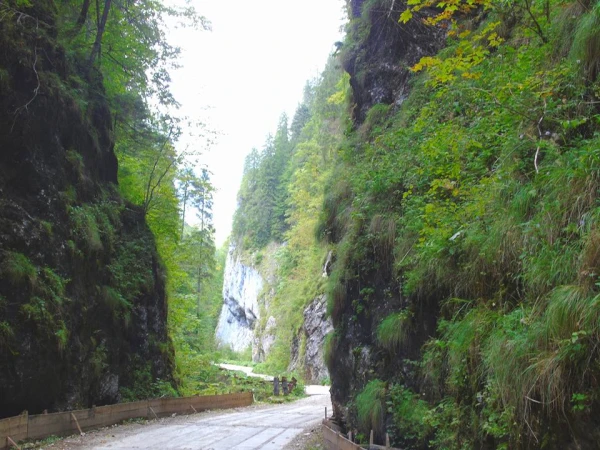
Arieș Valley photo collage
Just a few kilometers away, the Turda Gorges offer spectacular scenery with rock formations and picturesque forests. (Details in our in-depth article on the Turda Gorges.) The hiking and climbing trails here are fascinating and can continue to the attractions of the Arieș Valley, for example the Ordâncușa Gorges and Poarta lui Ionele Cave.
2. Potaissa Roman Fort
Located in present-day Turda, it is one of the most valuable and important archaeological discoveries in Transylvania. Founded by the Romans around 168 AD, it played a vital strategic role in protecting and administering the salt mines in the area.
3. History Museum
It offers a fascinating journey into the rich and diverse history of this Transylvanian city. Located in the old center of Turda, the museum houses varied collections that highlight how the area has evolved over time.
4. Reformed-Calvinist Church
It is an important historical and architectural monument in Transylvania. Built in the 14th century, the church in Turda was originally a Romanesque basilica and later underwent numerous transformations and additions in the Gothic and Renaissance styles. It is a living testimony to the evolution of architecture and culture in this region, attracting visitors with a passion for history and art.
5. Șovagăilor Church
It is a special historical monument, representative of religious architecture in Transylvania. Built in the 14th century, the church is a remarkable example of the Late Gothic style.
The building retains many typically Gothic architectural elements, as well as carved stone details that reflect the skill of the master builders of the time. With its impressive facade and massive tower, the church has a solemn presence in Turda's urban landscape.
6. Tureni Gorges
Tureni Gorges
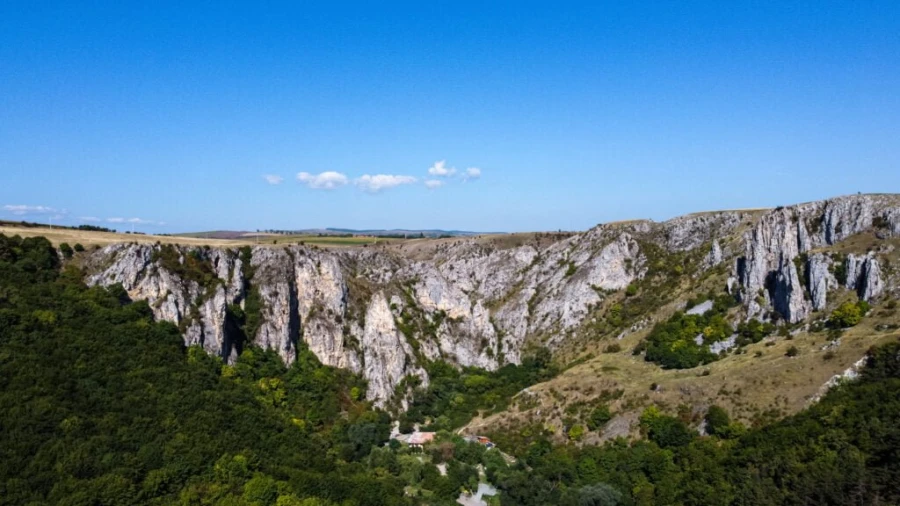
Unfolding spectacularly between deep valleys and imposing cliffs, the Tureni Gorges are a remarkable natural attraction near the city of Turda. These gorges are known for their wild beauty and diverse scenery.
Here, the landscape is shaped by towering rock formations that form narrow, picturesque canyons. The Arieș River carves its way through these massive rocks.
7. Durgău Beach
It is an oasis of relaxation and fun thanks to its lakes with a high salt concentration, next to Turda Salt Mine, and offers visitors a variety of leisure facilities in a picturesque natural setting.
In Case You Didn't Know…
Turda Salt Mine is a wonder of Transylvania, a treasure from deep underground brought to the surface to reveal itself in all its splendor. It is a magical place, full of benefits, inviting you to relax, unwind, and get closer to nature and your loved ones. This oasis of health is among the few tourist attractions in Romania awarded two Michelin stars in the famous travel guide, out of a possible three, which makes it all the more remarkable.
Turda Weather
Conclusion
A visit to Turda Salt Mine is an unrivaled experience that combines history, architecture, and nature in an amazing way. Whether you are a passionate traveler or just want to relax and have fun in a truly special setting, Turda Salt Mine has a lot to offer. A journey to the heart of the earth in this underground wonder will give you memories that last a lifetime.
See also our article about Slănic Prahova Salt Mine.