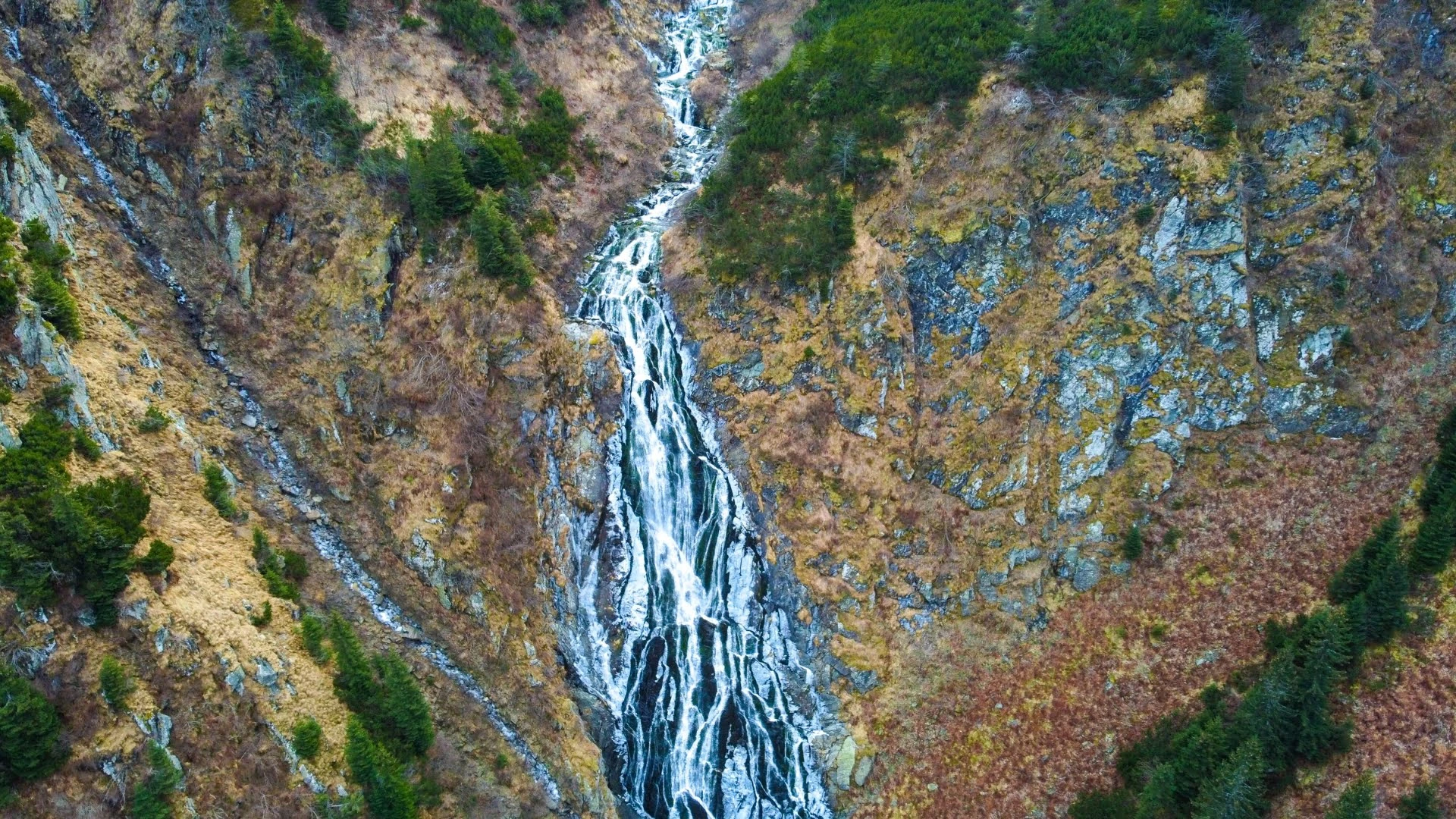
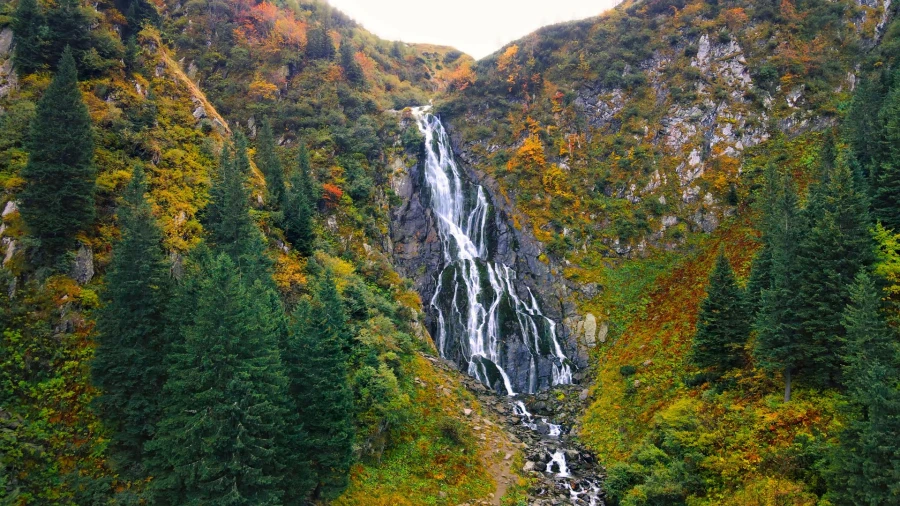
Bâlea Waterfall is the largest tiered waterfall in Romania, located in the Făgăraș Mountains.
With a drop of about 60 meters, the waterfall is fed by snowmelt and rainwater that gather in the Bâlea River.
Bâlea Waterfall
In this article:
The scenery around the waterfall is of rare beauty, with steep, vegetation-covered slopes that create a striking contrast with the rushing water tumbling over the rocks.
The waterfall, also known as Urlătoarea Bâlei, draws thousands of tourists from all over the world every year on their way along the Transfăgărășan.
Importance for Tourism
Bâlea Waterfall is not just a visual attraction, but also a place of great ecological and tourist importance.
Tourists at Bâlea Waterfall
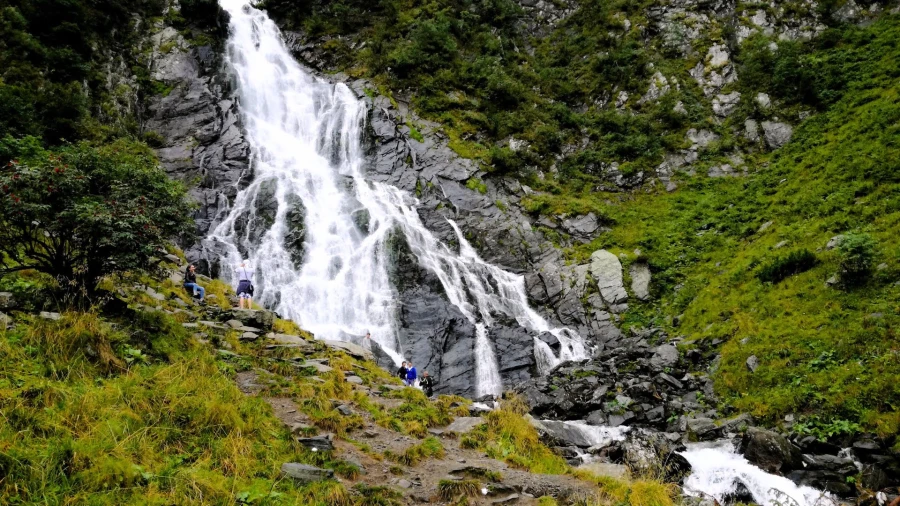
Located in a protected area, the waterfall helps maintain local biodiversity, providing an ideal habitat for many plant and animal species.
Tourism in the region and the fame of the Transfăgărășan help promote and protect the area, while also supporting the local economy through sustainable tourism.
Location and Access
Bâlea Waterfall is located in the Făgăraș Mountains, part of the Southern Carpathians, which are known for their spectacular scenery and ecological diversity.
Alpine Landscape in the Făgăraș Mountains
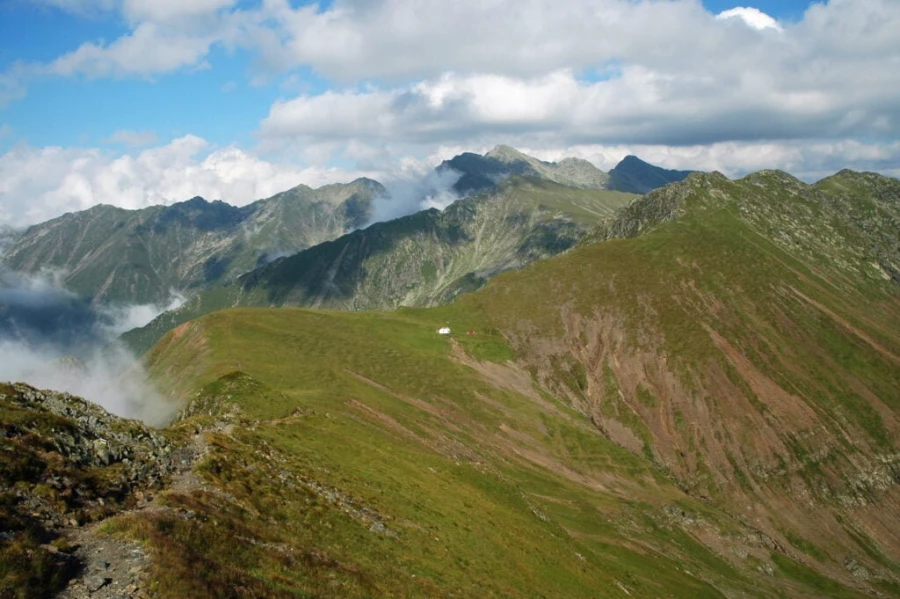
This mountain region stretches for about 70 kilometers and is characterized by high peaks, rocky ridges, and deep valleys, offering a natural setting of overwhelming beauty.
Bâlea Waterfall lies at an altitude of over 1,200 m (1,234 meters, to be exact), between Moldoveanu Peak and Negoiu Peak, in the lower part of the Bâlea glacial cirque.
One of the ways to reach Bâlea Waterfall is via the famous Transfăgărășan road. Also known as the “Road Among the Clouds,” the highway crosses the Făgăraș Mountains and connects southern Romania with Transylvania.
Transfăgărășan
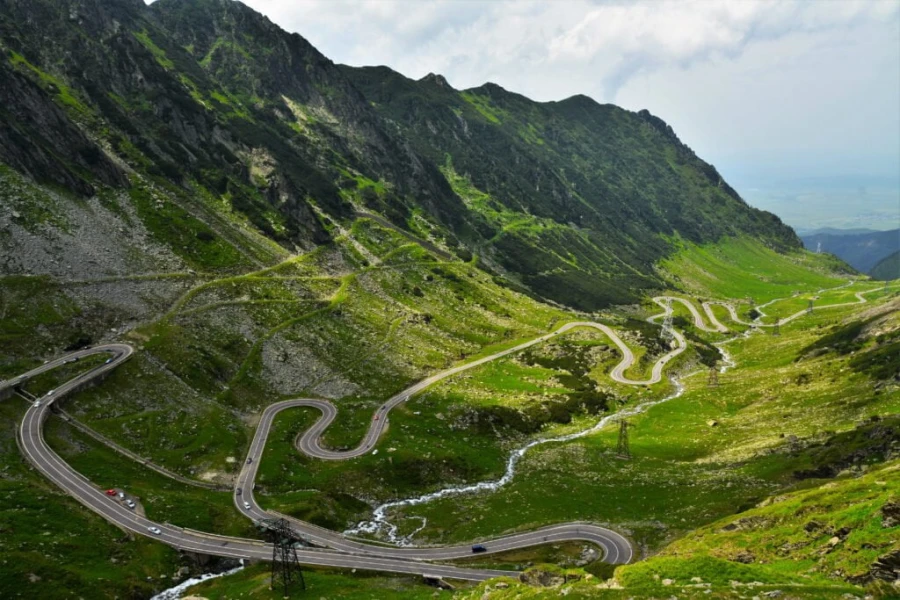
Built in the 1970s, the Transfăgărășan is considered one of the most beautiful roads in the world, offering unforgettable scenery. (See also our articles on other famous Romanian roads, Transalpina, Transapuseana)
Access to Bâlea Waterfall is made easy by the road, which passes by Bâlea Lake and the Bâlea Lac Chalet, key landmarks for visitors heading to the waterfall.
About the Waterfall
Once you reach the waterfall, the scenery looks like something out of a fairy tale. The height of the drop and the sound of the falling water impress every visitor.
Height and Flow of the Waterfall
Bâlea Waterfall, located at an altitude of 1,234 meters, is considered the largest tiered waterfall in Romania, with a drop of about 60 meters.
Fed by snowmelt and heavy rainfall in the Făgăraș Mountains, the waterfall has a variable flow, which is most spectacular in spring and early summer, when the snow melts in large quantities.
During these periods, the water flow is impressive, and the force of the waterfall creates a powerful roar and a remarkable natural spectacle.
The Scenery around the Waterfall
The waterfall is surrounded by picturesque scenery, with steep slopes covered in dense vegetation and conifer forests.
Bâlea Waterfall – Summer Landscape
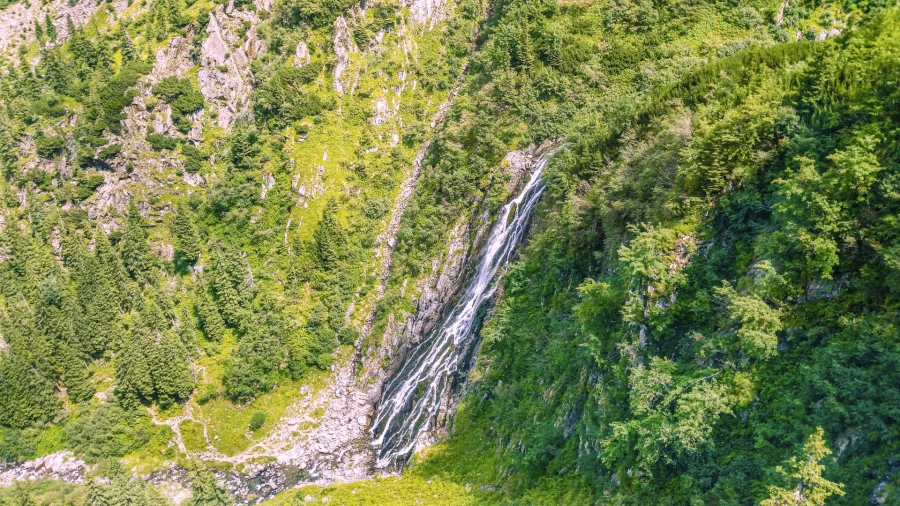
The surrounding rocks have been shaped by the force of the water, creating spectacular forms and structures.
Around the waterfall, the flora and fauna are diverse and well preserved, providing a natural habitat for many plant and animal species. The glacial valley it sits in and the views in every direction are impressive.
The Best Times of Year to Visit
Bâlea Waterfall is impressive in any season, but there are times of the year when it is at its most spectacular.
Spring and early summer are the ideal times to visit the waterfall, thanks to the increased water flow from melting snow. During these months, the force and volume of the waterfall really stand out.
In the fall, too, when the surrounding forests change color to shades of red, yellow, and orange, the scenery becomes especially picturesque.
Bâlea Waterfall
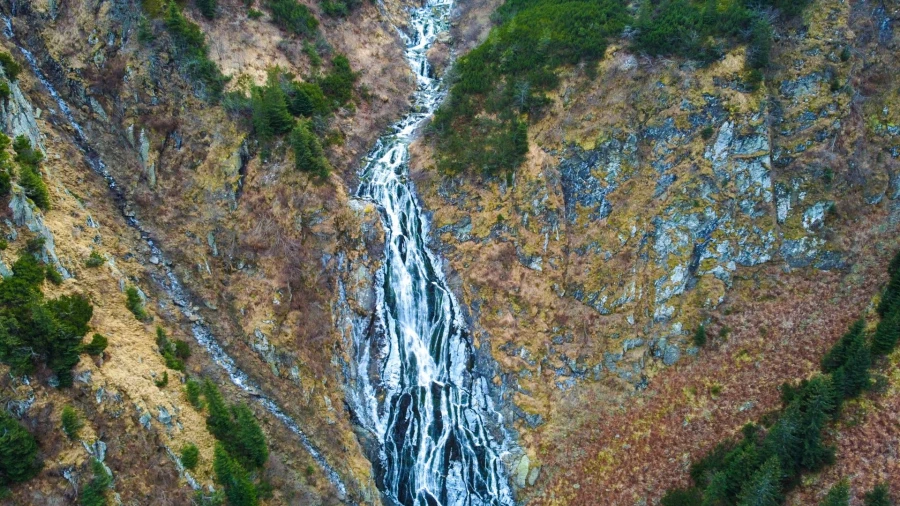
In winter, the waterfall partially freezes, creating a spectacular picture of ice and snow, ideal for photographers and lovers of winter landscapes.
History and Local Legends
Bâlea Waterfall is surrounded by many local legends and stories.
One of the best-known legends says that a young shepherd named Bâlea saved the village from a fierce bear. As a sign of gratitude, the villagers named the waterfall and the nearby lake after him.
It is also said that Bâlea fell in love with a nobleman's daughter, but their love was impossible because of the difference in social status. One day, as they tried to run away together, the young shepherd fell from the rocks, and his beloved's tears created the waterfall that bears his name.
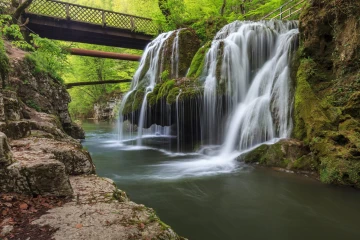
The legend is similar to that of Bigăr Waterfall.
Bigăr Waterfall
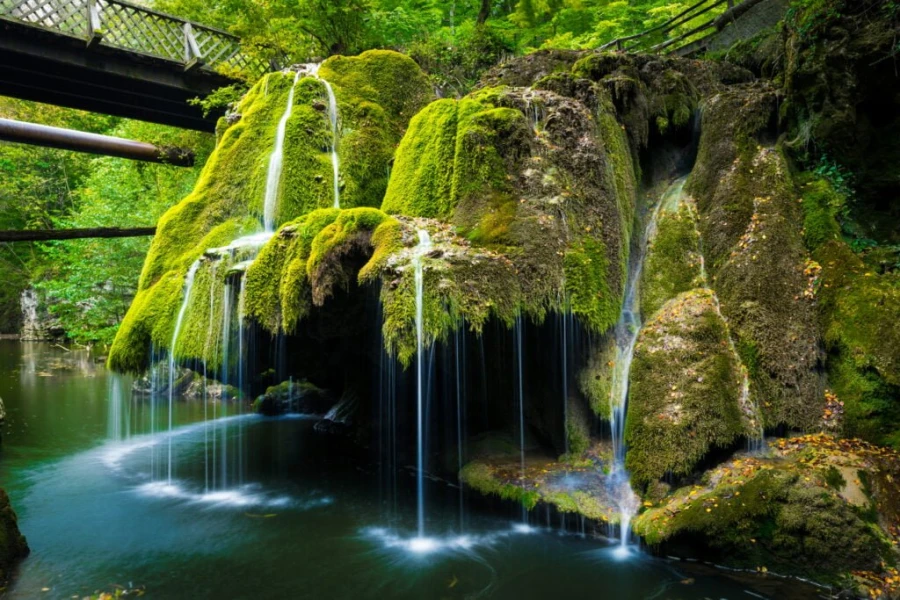
Beyond the legends, Bâlea Waterfall also has historical significance in local culture.
Over the centuries, the region was inhabited by communities of shepherds and farmers, who found here all the resources they needed.
The waterfall and the lake of the same name are reference points for hikers on the Transfăgărășan, serving as natural landmarks on maps and mountain trails in the Făgăraș Massif.
Trails and Access
Bâlea Waterfall is reached mainly via the Transfăgărășan, which the Top Gear show called one of the most spectacular roads in the world. Some would add Transalpina to this list (read our article comparing the two Romanian roads).
The road is only open in summer, usually from June to October (see details in the article), because heavy snow makes it impassable the rest of the year.
Bâlea Lake seen from above
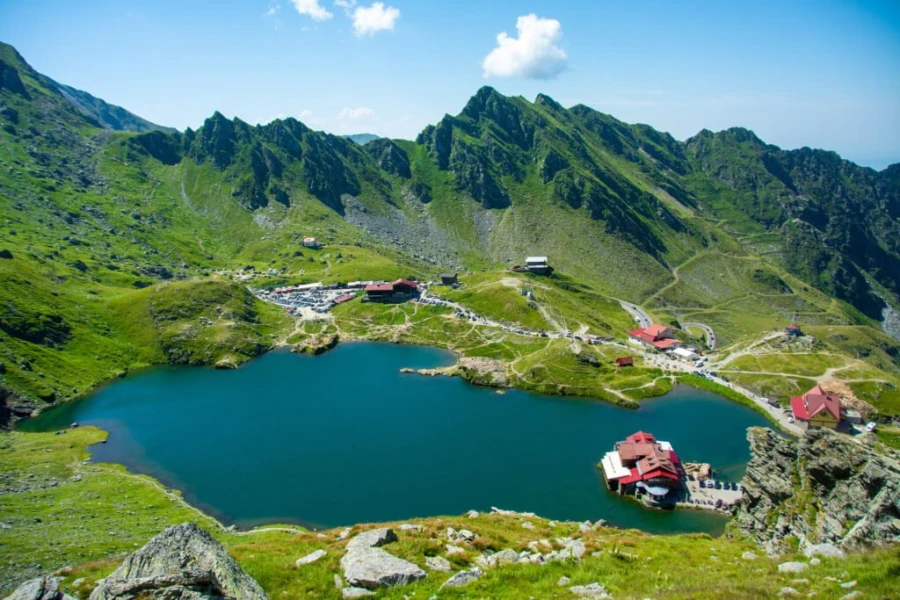
Visitors can park at the Bâlea Cascadă Chalet, from where a trail of about 50 minutes leads to the waterfall itself. It is the best-known and fastest way to get there.
In winter, the Transfăgărășan is closed to road traffic, and Bâlea Waterfall can only be reached by cable car (which also runs the rest of the year for anyone who wants to ride it).
A complete nighttime traffic ban also applies here, because of the dangers of the winding road.
Trail Options for Hikers and Visitors
For hiking enthusiasts, there are several trails that lead to the waterfall and around it, besides the one described above:
Trail from Bâlea Lac to Bâlea Waterfall: An easy hike that starts at the Bâlea Lac Chalet and descends toward the waterfall, offering spectacular views of the valley.
Trail from Piscul Negru: A longer and more difficult trail, recommended for experienced hikers. The trail follows the ridges of the Făgăraș Mountains.
Trail through the Doamnei Valley: Another popular trail, passing through dense forests and alpine meadows before finally reaching Bâlea Waterfall.
From Bâlea Cascadă, marked trails lead to the lake, Caprei Saddle, Paltinului Saddle, Buteanu Peak, and the Doamnei Valley.
Parking and Starting Points
There are several parking options for visitors:
Bâlea Lac parking: Located at the northern end of the Transfăgărășan, it is the starting point for many mountain trails, including the one to Bâlea Waterfall.
Bâlea Cascadă parking: Located lower down on the Transfăgărășan, it offers quick and easy access to the waterfall itself. From here, a well-marked trail with a red dot leads straight to the waterfall.
Piscul Negru parking: Another starting point for long and difficult trails, giving access to the high ridges of the Făgăraș Mountains.
Other Attractions and Activities in the Area
Transfăgărășan Gondola
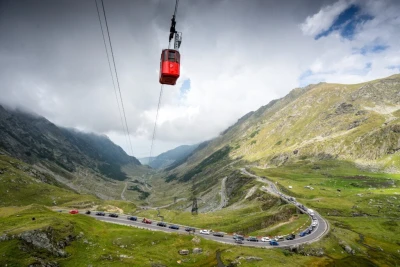
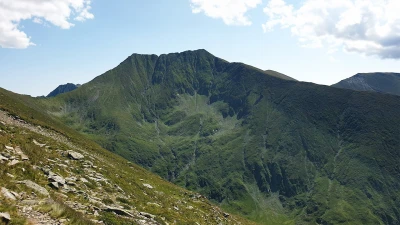
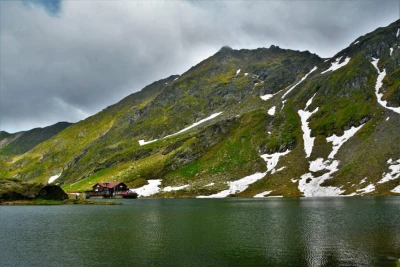
Near Bâlea Waterfall, you can also visit other tourist attractions:
Bâlea Lake
A glacial lake at an altitude of 2,034 meters, Bâlea Lake is famous for its beauty and the surrounding mountain scenery. In summer, the lake draws many visitors for hiking and relaxation, and in winter it becomes a popular spot for winter sports.
Transfăgărășan
The road that provides access to all the attractions mentioned in this section, the Transfăgărășan or DN7C, is one of the most spectacular roads in Romania and in the world.
Ice Hotel
Located next to the lake, the famous Ice Hotel is a true winter wonder, built every year from blocks of ice cut from the lake.
Each season comes with a new theme that inspires the design of the rooms and the ice sculptures. Visitors from all over the world come here to spend a night at below-freezing temperatures.
Negoiu Peak
Negoiu Peak, at 2,535 meters, is the second-highest peak in Romania. Located in the Făgăraș Massif, it is a popular destination for mountain hikers and climbers.
Moldoveanu Peak
Moldoveanu Peak, at 2,544 meters, is the highest point in Romania. Located in the heart of the Făgăraș Mountains, it draws thousands of hikers and climbers every year who are eager to conquer the “roof” of Romania.
The trails to the summit are difficult and demanding, but the views are spectacular and unforgettable for everyone who makes it here.
Valley of the Fairies – The Clay Castle
The Valley of the Fairies (Valea Zânelor), located in Porumbacu de Sus, is home to one of the most interesting places in Romania: the Clay Castle. This unique building, made from eco-friendly materials such as clay, stone, and wood, looks like something out of a fairy tale.
Capra Waterfall
Capra Waterfall is also located on the Transfăgărășan, at an altitude of almost 2,000 m. It can be reached from near Bâlea Lake and is a popular attraction for tourists.
Activities in the Bâlea Area
The area around Bâlea Waterfall offers a variety of activities to suit every taste:
Hiking: With many mountain trails of varying difficulty, hiking is one of the main attractions. The well-marked trails let you explore the alpine scenery and local biodiversity.
Photography: Thanks to its spectacular scenery, the area is ideal for photography enthusiasts. The sights offer perfect subjects for unforgettable photos.
Picnics: The picturesque scenery and clean mountain air make the Bâlea area an ideal place for picnics. Visitors can find many spots to sit down and enjoy nature.
Winter sports: In winter, the area becomes a popular place for skiing and snowboarding. The lake freezes over into a fairy-tale landscape, and the chalet offers facilities for winter sports enthusiasts.
Fauna and Flora
The area around the waterfall is a biodiversity paradise, home to a variety of plant and animal species.
The most common plants include dwarf mountain pine (Pinus mugo), Carpathian rhododendron (Rhododendron myrtifolium), and edelweiss (Leontopodium alpinum), which are adapted to harsh alpine conditions.
The alpine meadows are covered with a multitude of wildflowers, including stemless gentian (Gentiana acaulis) and mountain snowbell (Soldanella montana).
The local fauna is just as diverse. Mammals found in the area include the chamois (Rupicapra rupicapra), brown bear (Ursus arctos), wolf (Canis lupus), and lynx (Lynx lynx).
Birds typical of the area include the golden eagle (Aquila chrysaetos), common raven (Corvus corax), and wallcreeper (Tichodroma muraria).
The lake and its waterfall are also home to various species of amphibians and insects.
Preserving Local Biodiversity
Preserving biodiversity in the Bâlea Cascadă area is essential for maintaining the ecological balance and protecting rare and endemic species.
Bâlea Creek Bed
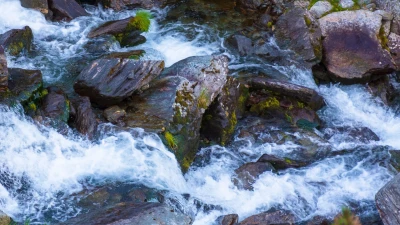
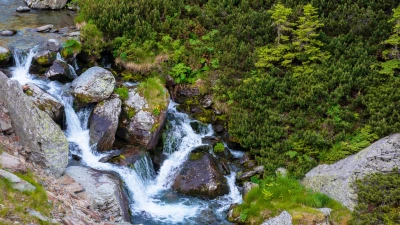
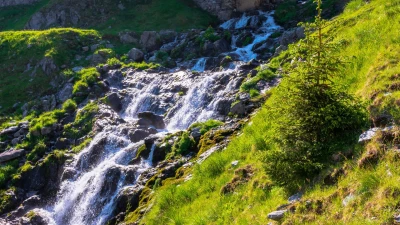
Strict protection and conservation measures are in place here, including species monitoring, restoration of natural habitats, and control of human activities to minimize the impact on the environment.
Visitors are encouraged to follow the park rules, not to leave litter, and to avoid disturbing the local wildlife.
Tips for Visitors
Visiting Bâlea Waterfall requires proper gear for a safe and enjoyable experience:
Hiking boots: They are essential to avoid slipping on wet and rocky trails.
Layered clothing: Mountain weather can be unpredictable, so it's best to wear layers that you can add or remove as needed.
Rain poncho: Useful to protect yourself in case of unexpected rain.
Backpack with supplies: Pack water, energy snacks, and a small first aid kit.
Maps and compass/GPS: Make sure you have a map of the area and a way to navigate (see also the article Travel Tips)
Safety is essential when visiting Bâlea Waterfall. Besides the recommendations above, don't forget:
Follow marked trails: Stay on official trails to avoid getting lost and to protect the local flora and fauna.
Respect nature: Don't leave litter behind and don't disturb wild animals.
Inform family/close friends: Let someone know about your plans and your estimated return time.
Accommodation
Visitors to Bâlea Waterfall have various accommodation options to suit different tastes and budgets.
One of the most popular options is the Bâlea Lac Chalet, located just a few kilometers from the waterfall and easy to reach. The Ice Hotel, built every winter next to Bâlea Lake, also offers a unique accommodation experience.
Other options include guesthouses and chalets in nearby villages and towns, such as Cârțișoara and Avrig.
For those who prefer camping, there are designated areas around Bâlea Lake where you can pitch a tent.
Weather
Weather in the Făgăraș Mountains now and for the next 7 days:
Frequently Asked Questions
At what altitude is Bâlea Waterfall?
Bâlea Waterfall is located at an altitude of 1,234 meters.
Can you visit Bâlea Waterfall in winter?
In winter, the Transfăgărășan is closed to road traffic, and Bâlea Waterfall can only be reached by cable car, which also runs the rest of the year.
Conclusion
Bâlea Waterfall is a true highlight of the Făgăraș Mountains, offering impressive views, rich biodiversity, and plenty of opportunities for outdoor activities.
Whether you're a hiking enthusiast, a nature lover, or a traveler in search of unforgettable scenery, Bâlea Waterfall has something special for everyone.
So plan your next adventure and discover the beauty and grandeur of Bâlea Waterfall!
We also invite you to read our articles about Șipote Waterfall, Ciucaș Waterfall.