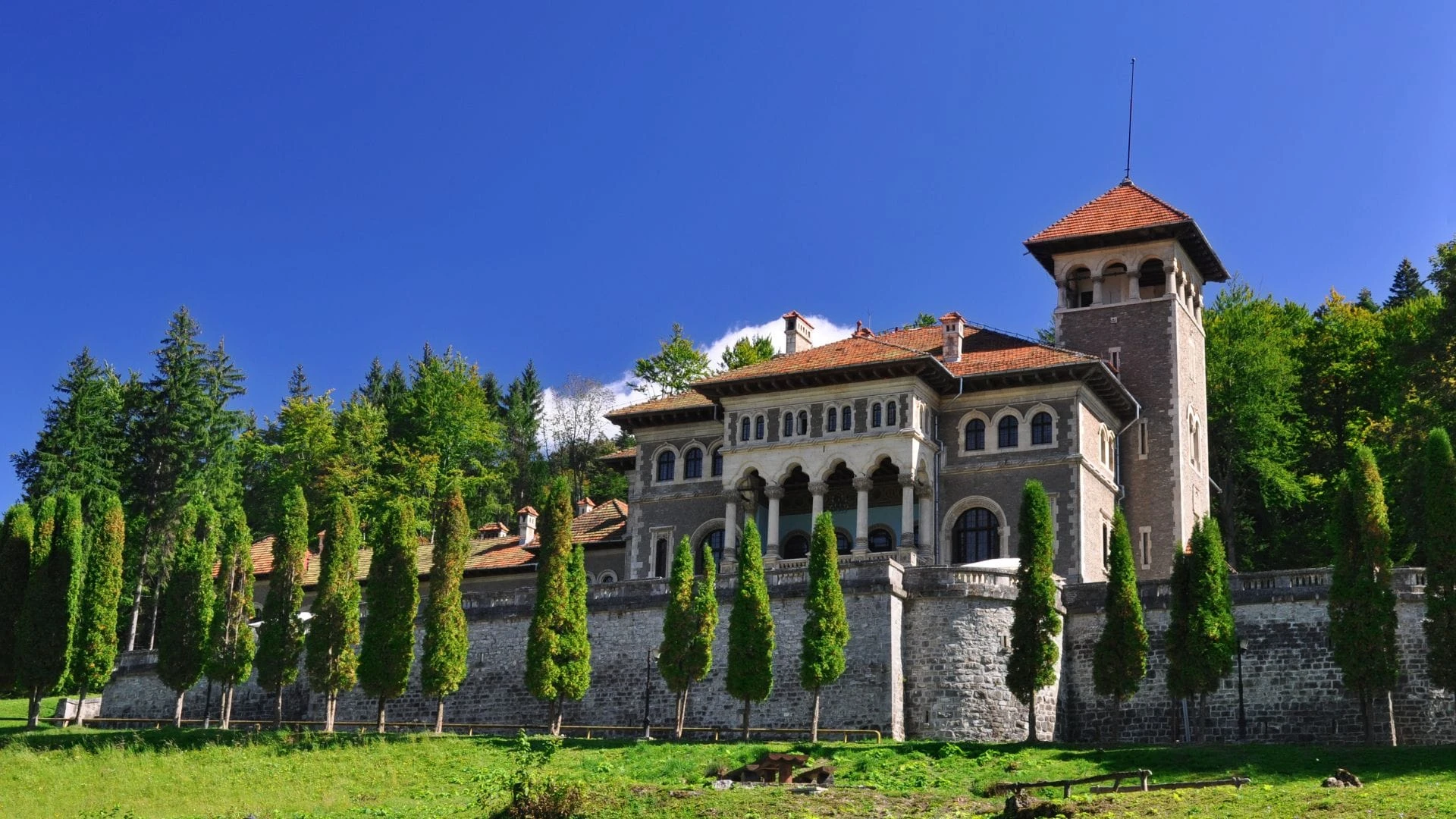
Cantacuzino Castle, located in the town of Bușteni in the Prahova Valley, is an architectural and historical monument of Romania that draws tourists from all over the world.
In this article:
Spectacularly set at the foot of the Bucegi Mountains, the building impresses with both its architecture and its history.
The town of Bușteni
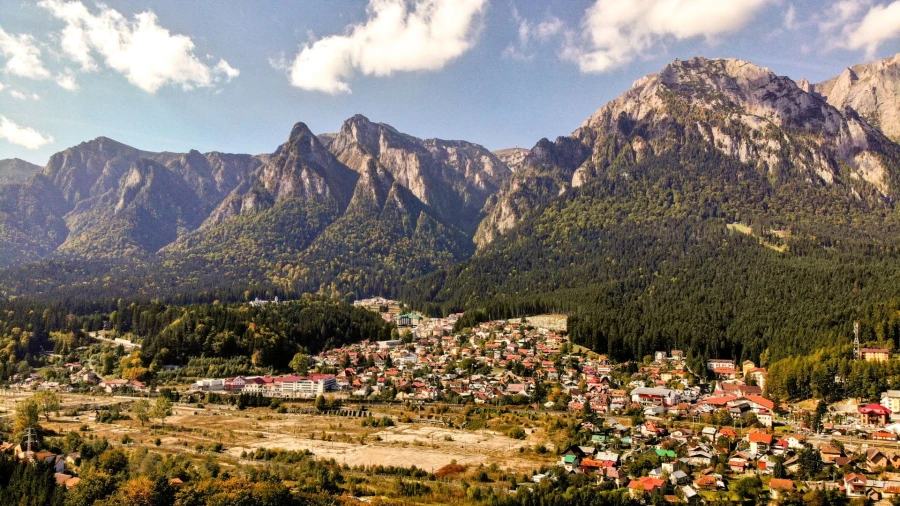
Built in the early 20th century at the wish of Prince Gheorghe Grigore Cantacuzino (1832-1913, also known as “the Nabob” because of his immense wealth), the castle reflects not only the refined taste of the elite of the time but also the artistic and cultural influences of the period.
Still a heritage monument today, the castle remains a silent witness to bygone times, carrying with it the story of a powerful family that was influential in Romania's history.
Today, Cantacuzino Castle is not only a major tourist attraction but also a meeting place for lovers of art and culture, hosting art exhibitions, concerts, and large-scale cultural events.
How to get to Cantacuzino Castle
Cantacuzino Castle is located at the foot of Mount Zamora, in the town of Bușteni, Prahova County, just a few kilometers from other well-known destinations in the Prahova Valley, such as Sinaia and Azuga.
View of Bușteni from above
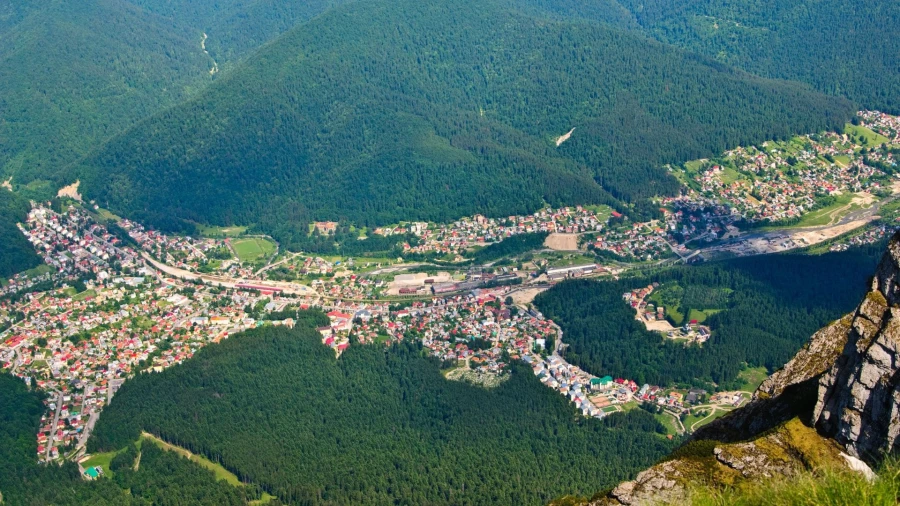
The castle is easy to reach both by car and by public transportation:
By car: From Bucharest, the drive on the DN1 to Bușteni takes about two hours (130 km), depending on traffic. Once you reach Bușteni, you'll find Cantacuzino Castle in the northern part of town, in the Zamora neighborhood, at number 1 on the street of the same name. Road signs are clear and direct visitors to the castle's main entrance.
By train: There are frequent trains from Bucharest North Station (București Nord) to Bușteni. The journey takes about two hours. From Bușteni station, the castle is about a 20-minute walk or a few minutes by taxi.
By bus: From Brașov or Ploiești, buses run along the DN1 and stop in Bușteni. From there, visitors can continue to Cantacuzino Castle on foot or by taxi.
Distances to the castle:
from the Doftana Valley: 59 min (39.2 km) via DN1/E60 and DJ101S
from Peleș Castle: 20 min (11.1 km) via DN1/E60
History of Cantacuzino Castle
Construction of Cantacuzino Castle was completed in 1911. Building the castle took about 10 years, and furnishing it another year and a half.
The castle covers an area of 3,148 m², while the courtyard and garden stretch over 3.5 hectares. The estate also includes nearly a thousand hectares of forest.
Aerial view of Bușteni
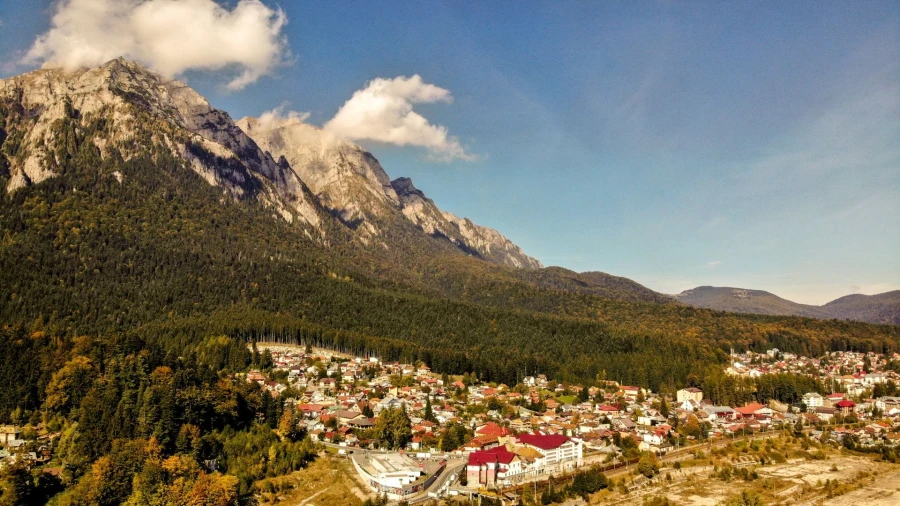
Cantacuzino wanted to create a summer residence that would reflect his prestige and social standing.
The Cantacuzino family had Byzantine roots and an impressive heritage, being one of the oldest and most illustrious boyar families in the Romanian Principalities.
The castle was designed by architect Grigore Cerchez in the Neo-Romanian style, an architectural style that combined traditional Romanian elements with Byzantine and Brâncovenesc influences.
Part of Cantacuzino Castle
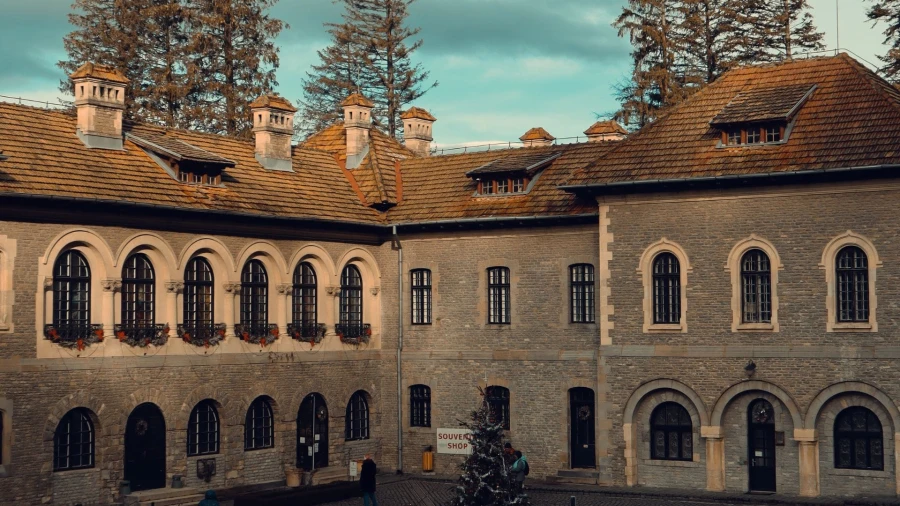
The choice of style was no accident; it reflected a desire to emphasize the historical continuity of the Cantacuzino family and its ties to the ancient traditions of its lineage.
The castle was also called Zamora Castle. According to one story, the name Zamora came from a female hunting dog used by members of the Cantacuzino family. They are said to have called out “Za’ Mura!” to her when it was time to retrieve the game.
The Cantacuzino era
During Gheorghe Grigore Cantacuzino's lifetime, the castle served as a summer residence and a meeting place for the political and cultural elite of the day.
Prince Cantacuzino, twice Prime Minister of Romania (1899-1900, 1904-1907) and also twice mayor of Bucharest, was an influential figure in the country's political life, and his castle reflected this status.
Besides being a residence, the castle was also a place for socializing and political discussion.
After the prince died of pneumonia in 1913, the castle remained in the Cantacuzino family. The political and economic events of the early 20th century, including World War I, deeply affected Romania and its boyar families.
The communist period
After the communist regime came to power in Romania, the castle was nationalized in 1948 and turned into a sanatorium of the Ministry of the Interior, undergoing interior alterations that affected its original structure.
Throughout the communist period, many of the original decorative elements were damaged or removed.
However, the valuable murals were protected thanks to a discreet initiative by some locals and guardians of the castle's cultural heritage. In secret, the decorated walls were covered with layers of material meant to shield the paintings from damp and other damage that could have occurred while the sanatorium was in operation.
This method of preservation allowed the paintings to be rediscovered decades later and restored to their original form.
The castle after 1989
After 1989, with the collapse of the communist regime, Cantacuzino Castle was returned to the heirs of the Cantacuzino family and later underwent an extensive restoration.
Since 2010, the castle has been open to the public again as a tourist attraction and art center, regaining its status as a monument of national importance.
Today, Cantacuzino Castle is owned by foreign investors.
The architecture of Cantacuzino Castle
Cantacuzino Castle is a refined example of Neo-Romanian architecture, a style that flourished in the early 20th century and combines elements of Byzantine, Gothic, Renaissance, and Brâncovenesc traditions.
Built between 1901 and 1911, the castle reflects Prince Gheorghe Grigore Cantacuzino's wish to create a residence that would attest to both the prestige and the patriotism of his family.
The castle's exterior
The castle's facade impresses with its symmetry and ornamentation, typical of the Neo-Romanian style.
Exterior elements such as the loggias, columns, and arcades recall the old Brâncovenesc palaces, evoking local tradition and creating a sense of historical continuity.
The castle is built mainly of dressed stone and brick, with exceptionally well-crafted ironwork and stucco.
The tiled roof, with its steep rafters and decorative wrought-iron details, adds to the building's imposing appearance.
Another notable feature is the main terrace, with balustrades and decorative fountains, which offers dreamlike views of the Bucegi Mountains.
The courtyard and gardens
Cantacuzino Castle is surrounded by a vast park with romantic paths, fountains, and stone sculptures.
The park broadly follows the landscaping ideas of the era, inspired by the gardens of French palaces, with strict symmetry and elaborate floral arrangements. Special attention was paid to the fountains, the most impressive of which stands in front of the main terrace.
Also in the courtyard is the Cantacuzino family chapel, a smaller but artistically very valuable building that reflects the family's deep ties to the Romanian Orthodox Church.
The outdoor attractions of Cantacuzino Castle are:
The Main Entrance
The entrance to the castle is marked by a massive iron gate bearing the monogram of Prince Gheorghe Grigore Cantacuzino.
The Grotto
At the base of the hill in front of the castle lies a man-made grotto, a natural landscape feature harmoniously integrated into the park's design.
The Fountain Pools
The castle park is graced by several ornamental fountain pools, which add a romantic and poetic touch to the landscape.
The Inner Courtyard
The path through the inner courtyard leads to a wooden church founded by the Cantacuzino family, which adds a touch of sanctity and tradition to this place steeped in history.
The Hunting Tower
On the eastern side of the castle stands a hunting tower, built to provide an ideal vantage point for watching game in the nearby forests. The tower adds a rustic, functional note to the whole ensemble.
The Foundation Plaque
Cantacuzino Castle was inaugurated in 1911, and the occasion is marked by a foundation plaque that bears witness to the building's historical importance.
The castle's interior
The castle's interior is just as impressive as its exterior. Every room and decorative detail takes visitors on a journey into the aristocratic style of the early 20th century.
The materials used are of the highest quality, mainly marble, solid wood, and stone, in harmony with the stained glass, murals, and intricate mosaics.
From the wooden parquet floors laid in intricate geometric patterns to the high, decorated ceilings, every detail was designed to reflect refined taste.
The great reception hall is the centerpiece of the interior, impressive for its generous size and the spectacular stained glass adorning its windows.
The stained-glass windows are true works of art, depicting the Cantacuzino family coat of arms as well as scenes from Romanian and Byzantine mythology. The hall was used for balls and receptions and was where the Cantacuzino family received distinguished guests from the political and cultural world of the time.
Besides the many ornamental details decorating the building's interior, the central pavilion houses an impressive gallery of murals painted on Cordoba leather, unique in Romania. It includes twelve life-size portraits of the most important members of the Wallachian branch of the Cantacuzino family.
Also in the central pavilion, in the Ballroom, is a heraldry collection, likewise unique in the country, featuring 27 coats of arms of boyar families related to the Cantacuzino lineage. See Wikipedia
To sum up, the indoor attractions are:
The Vestibule
The first notable feature of the castle's interior is the vestibule, which catches the eye with its Roman mosaic floor. Here you will also find a carved and painted stone bench adorned with a Celtic cross.
The Marble Staircase
Another central feature is the main staircase, made of marble and complemented by a wrought-iron balustrade in the Art Nouveau style. The balustrade is decorated with scrolling tendrils, a characteristic feature of Art Nouveau.
The Main Salon
The floor of the Main Salon is a work of art in itself, finished with Italian ceramic tiles dating from the early 20th century.
The Hall of Honor
The Hall of Honor impresses with its murals painted on Cordoba leather.
The Wooden Interior Staircase
Made of solid, masterfully carved oak and supported by elaborate brackets, the staircase is one of the castle's major attractions.
The Loggia
The loggia of the castle is built in the Brâncovenesc style, with stone columns topped by richly decorated capitals and trefoil arches, a feature typical of traditional Romanian architecture. It offers a spectacular view of the castle's natural surroundings.
Architectural influences
The castle's architecture reflects a harmonious blend of styles and influences.
The Neo-Romanian style dominates, with architectural elements inspired by the old princely courts of Wallachia and Moldavia.
Visitors at Cantacuzino Castle
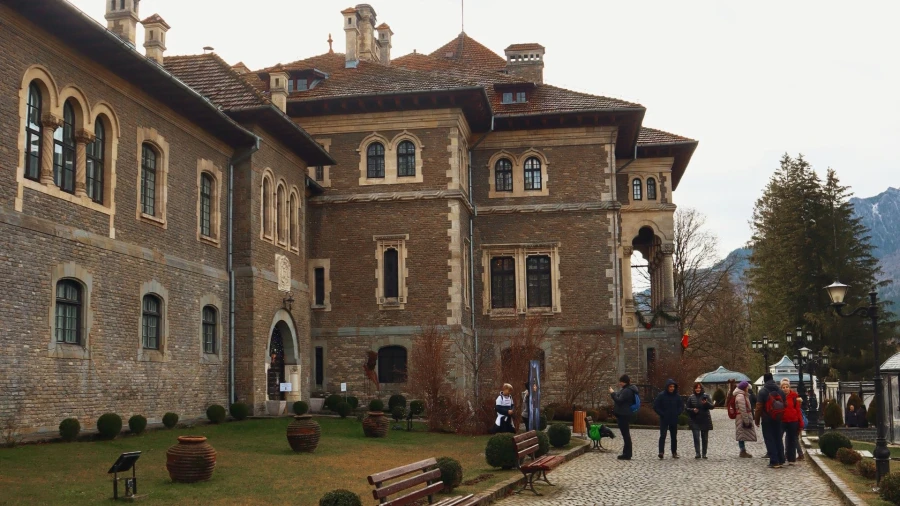
The wide arcades, carved columns, and floral motifs are borrowed from the Brâncovenesc style, while certain ornamental details reflect Byzantine influences, recalling the origins of the Cantacuzino family, which descended from the former Byzantine Empire.
Alongside these local influences, you can also see echoes of Western European architecture, such as the Gothic style, evident in some of the window details, as well as Renaissance elements, visible in the interior decor.
Cultural and Artistic Value
Cantacuzino Castle in Bușteni is not just an architectural masterpiece but also an important cultural center, having expanded its role to that of a promoter of Romanian and international art and culture.
Over time, the castle has become a veritable open-air museum.
After its restoration and opening as a tourist attraction, Cantacuzino Castle began hosting art exhibitions.
Its salons and halls are periodically transformed into exhibition spaces for contemporary artists, showcasing modern artworks, sculptures, and paintings.
The castle has hosted major exhibitions by international artists (Salvador Dalí, Pablo Picasso, and Andy Warhol), as well as by distinguished Romanian artists.
Through its openness to modern art, the castle has become a meeting point for collectors, art critics, and lovers of beauty, putting Bușteni on the list of Romania's essential cultural destinations.
Numerous major cultural events take place here, such as concerts, theater performances, and poetry evenings, including classical music and jazz concerts.
Art festivals, symposiums, and book launches are other events that round out the castle's cultural calendar.
In the park around the castle, you can admire outdoor sculptures made of stone, metal, or wood, which create an interesting contrast between the wild nature of the Bucegi Mountains and human artistic intervention.
Cantacuzino Castle as a Tourist Attraction: Opening Hours and Prices
Cantacuzino Castle is one of the most important tourist attractions in the Prahova Valley.
It is open to the public year-round, and visiting hours vary by season. In general, the castle is open Monday to Sunday, 10:00 a.m. – 8:00 p.m.
Last entry is about 30 minutes before the castle closes. Private tours of the castle are also available.
During special events or temporary exhibitions, the schedule may vary, and visitors are advised to check the official website.
You can park outside the park (free of charge) or inside (for a fee).
Prices for visiting Cantacuzino Castle vary depending on the type of tour and the visitor category. A standard adult ticket costs 55 lei, while tickets for school and university students and retirees cost 40 lei.
More details here
Cantacuzino Castle offers visitors a range of modern amenities: a terrace and restaurant (where events can be held) and a souvenir shop.
In addition to the classic castle tour and exploring the gardens, Cantacuzino Castle offers other attractions such as temporary exhibitions, as well as the option of choosing mountain trails in the area toward Bucegi Natural Park or spending a few relaxing days in the mountain resort of Bușteni.
Tourist attractions near Cantacuzino Castle
Visitors to Cantacuzino Castle in Bușteni have access to a number of tourist attractions in the surrounding area:
Peleș Castle
Just a few kilometers from the castle in Bușteni, in Sinaia, stands Peleș Castle, an architectural masterpiece and the former residence of Romania's kings.
Peleș is known for its lavish interior decoration and its valuable collections of art, armor, and historical objects, and it is one of the most visited tourist attractions in Romania.
Bran Castle
Bran Castle, located between the Bucegi Mountains and Piatra Craiului, is one of Romania's most famous attractions.
Often associated with the legend of Dracula, the castle impresses with its medieval architecture and mysterious atmosphere. Today it is a popular museum that attracts thousands of tourists from all over the world.
The Caraiman Cross
Another major landmark is the Heroes' Cross (Crucea Eroilor Neamului), also known as the Caraiman Cross, located at an altitude of 2,291 meters.
Heroes' Cross – Caraiman
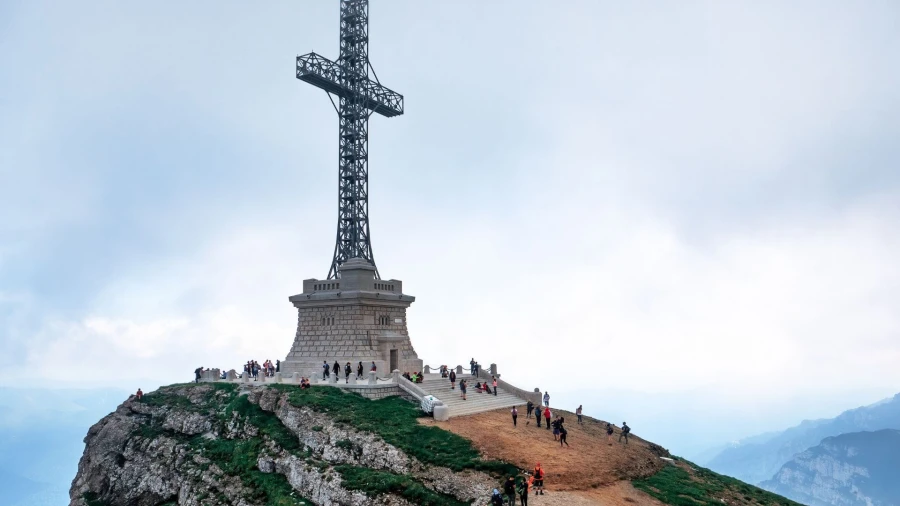
The monument was erected in honor of the heroes who fell in World War I and offers an impressive view over the Prahova Valley.
Doftana Valley
A short drive away, the Doftana Valley draws tourists with its picturesque scenery and is also well suited to activities such as fishing, cycling, and hiking.
Winter resorts in the Prahova Valley
For winter sports lovers, the Prahova Valley offers access to modern slopes in well-known resorts such as Azuga, Sinaia, and Predeal. The slopes are equipped for skiing, snowboarding, and other seasonal activities, and the infrastructure provides good conditions for beginners and advanced skiers alike.
Caraiman Monastery
Caraiman Monastery
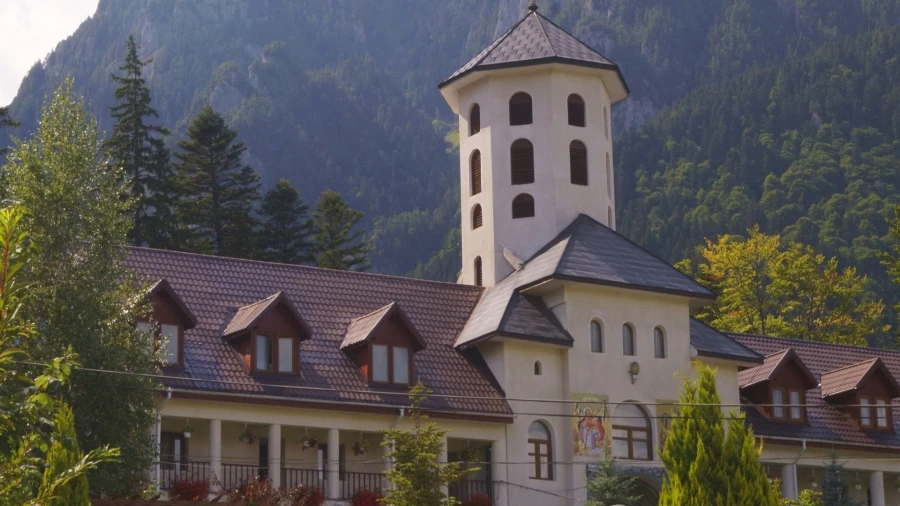
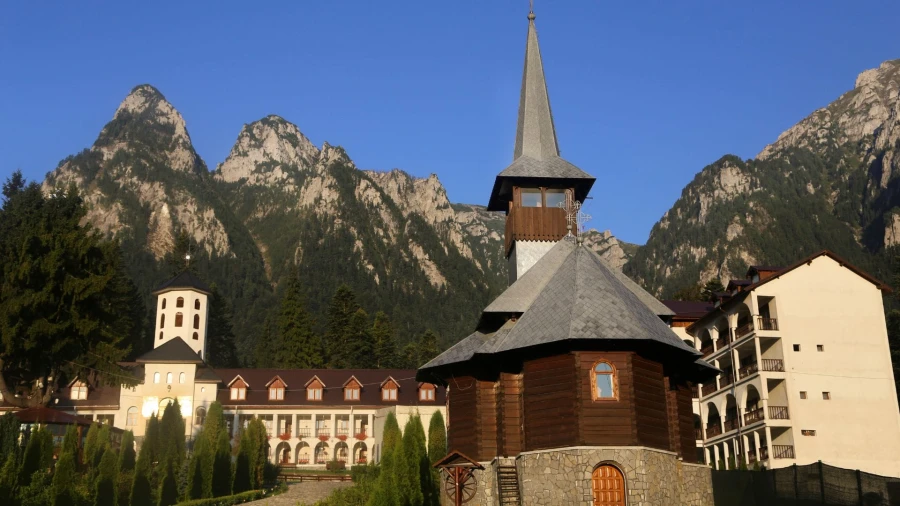
Set at the foot of the Bucegi Mountains, Caraiman Monastery is a peaceful place of prayer and contemplation. The monastery impresses with the beauty of its setting.
Caraiman Monastery, Bușteni
Urlătoarea Waterfall
Near Bușteni, Urlătoarea Waterfall is a natural attraction reached by an easy trail, ideal for a short hike.
Legends and Curiosities about Cantacuzino Castle
Cantacuzino Castle is also surrounded by legends, which have made it a destination for tourists who love history and mystery.
The rivalry with Peleș Castle
One notable story about Cantacuzino Castle is its unofficial rivalry with nearby Peleș Castle in Sinaia. G. G. Cantacuzino invested considerable sums and brought in renowned architects to create a building that would rival Peleș, using expensive materials and impressive architectural elements.
It is said that this competition influenced the castle's architecture and motivated the Cantacuzino family to add exclusive features, such as the gallery of mural portraits and the boyar coats of arms that are unique in Romania.
The haunted grotto
The grotto on the Cantacuzino estate is shrouded in a dark and mysterious legend tied to the castle's turbulent history during the communist period, when it was turned into a sanatorium for tuberculosis patients.
It is said that not only ambulances came to the estate but also many Securitate vehicles, and that the place may have served as a detention and interrogation site for opponents of the regime.
According to legend, the souls of those who may have suffered here return to haunt the castle grounds and, above all, the Grotto.
Witnesses say that on stormy evenings, strange lights seem to dance in front of the Grotto, while eerie sounds – like distant wails or the echoes of a child – can be heard in the silence of the night.
Sometimes, amid the raindrops, ghostly shadows appear for a fleeting moment, or so the local legends say.
The castle in the series Wednesday
Cantacuzino Castle in Bușteni recently gained international attention with the Netflix production Wednesday, in which it was transformed into the imposing Nevermore Academy.
The choice of the castle for filming was no accident; its Gothic architecture, with intricate details and an enigmatic atmosphere, provided the perfect backdrop for the series' dark and mystical universe.
The interior and exterior settings were a perfect match for the Gothic style the directors were looking for. The architectural elements, and the way they were filmed, complete the mysterious atmosphere, creating the impression of a place with a long history, at once fascinating and frightening.
Some of the murals on Cordoba leather and the Cantacuzino family coat of arms, visible on screen, contributed to the authenticity of the setting, adding medieval and noble accents to the spaces.
The series Wednesday showcases the castle through wide shots that capture both its imposing size and its old-world charm.
The visually striking areas used include:
The Ballroom and the Wooden Interior Staircase, which, through their size and sculptural detail, lend a monumental air to the academy scenes and heighten the mystery surrounding the characters.
The Loggia, with its Brâncovenesc style and elegant arcades, is the setting for scenes full of tension and ambiguity, reinforcing the idea that the whole academy has a hidden past.
The Central Pavilion has become an iconic symbol of the series, combining traditional Romanian architecture with Gothic details that emphasize the noir style.
The series put Cantacuzino Castle on the world tourist map, bringing it international fame and boosting visitor numbers.
Besides Cantacuzino Castle in Bușteni, there are other locations in Romania where the series Wednesday was filmed: the Bucharest Botanical Garden served as the backdrop for the exterior of Nevermore Academy, while Bran Castle, though not a central set, inspired the series' dark aesthetic.
Interior scenes were filmed at the Olga Greceanu Manor and the Niculescu-Dorobanțu House, while the Monteoru Palace was also used for various sequences. Știrbey Lake in Buftea provided the natural scenery around the academy.
The Cantacuzino Palaces – Testaments to the Family's Wealth and Power
G. G. Cantacuzino invested considerable sums in building sumptuous residences that would reflect the prestige and influence of his family.
Of these, three palaces remain the most representative of his taste and ambitions: the Cantacuzino Palace in Bucharest, Cantacuzino Castle in Bușteni, and the Florești Palace, known as the “Little Trianon.”
The Cantacuzino Palace in Bucharest
Located on Calea Victoriei, the Cantacuzino Palace in Bucharest is one of the capital's most emblematic buildings, conceived as a luxury residence for G. G. Cantacuzino.
Today, the palace houses the George Enescu National Museum, in honor of the great Romanian composer who lived here for a time after becoming the owner of the building.
The Cantacuzino Palace in Florești – the “Little Trianon”
The Cantacuzino Palace in Florești, nicknamed the “Little Trianon,” was inspired by the famous French palace at Versailles.
Built in the Neoclassical style, this palace was meant to be a symbol of opulence and refinement, but it was never fully completed. After the death of G. Grigore Cantacuzino, work was halted and the palace fell into decline.
Today, the “Little Trianon” lies in ruins, but its remains are still a testament to the grand vision the Nabob had for his architectural legacy.
Accommodations
Although Cantacuzino Castle in Bușteni does not offer accommodations, only a restaurant, visitors can choose from a wide range of lodging options in the surrounding area, each offering easy access to the attractions of the castle and the Prahova Valley.
Bușteni
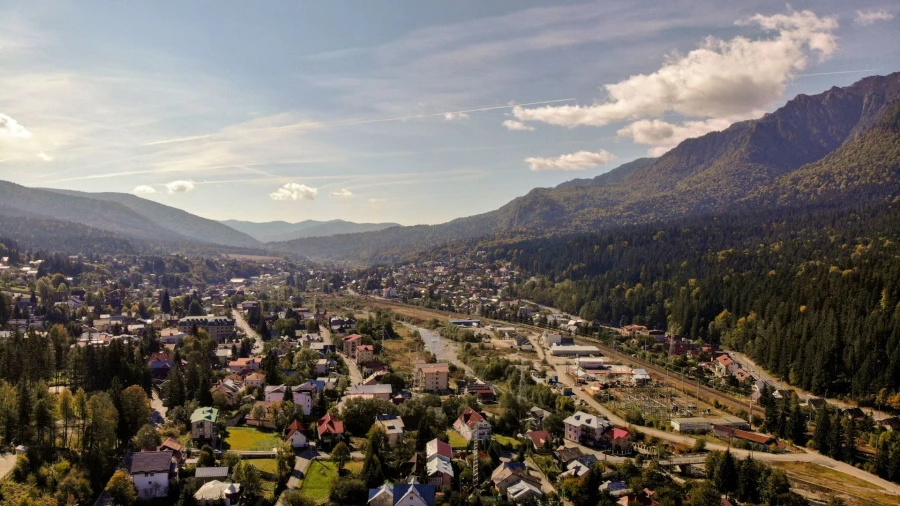
In Bușteni, there are numerous hotels and guesthouses, from budget to luxury, just a few minutes' walk from the castle.
Local guesthouses, villas, and apartments often offer panoramic views of the Bucegi Mountains and personalized service, making them ideal for those looking for an authentic, quiet, and affordable experience. See Pensiunea Clasic, Casa Malvina, Moon Resort, Yael Luxury Apartments 2, Casa Liana, Pensiunea Kayus.
Nearby resorts such as Sinaia and Azuga have well-rated hotels and mountain complexes offering both comfortable rooms and relaxation facilities such as spas, swimming pools, and restaurants serving local and international cuisine. See Hotel Sinaia, Hotel International, Vila Camelia, HOTEL CARPAT INN Azuga, Hotel Pin in Azuga.
Cable car in Bușteni
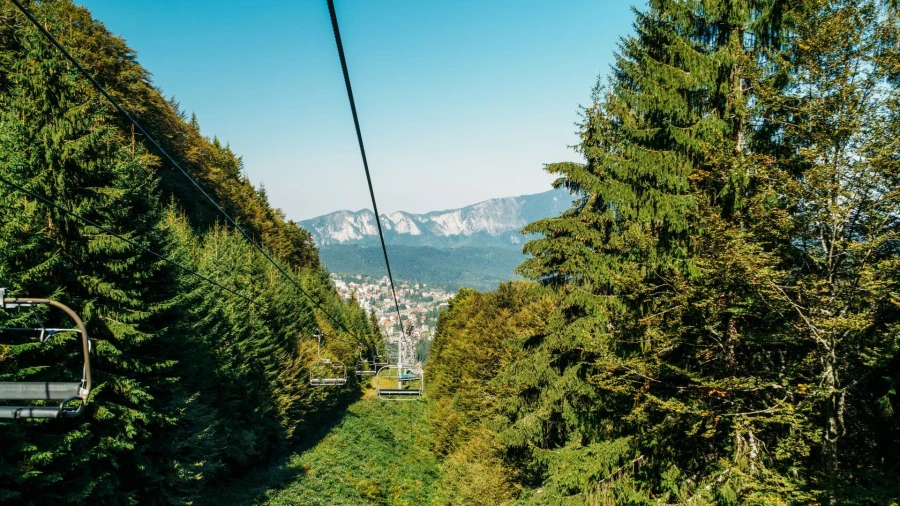
For those seeking an experience closer to nature, the mountain cabins and villas at the foot of the Bucegi Mountains are an excellent choice.
Weather in Bușteni
The weather in Bușteni now and over the next 7 days:
Conclusion
Cantacuzino Castle is much more than just an aristocratic residence; it is a symbol of Romanian history, culture, and art.
From its impressive architecture and valuable decor to the legends and fascinating stories surrounding it, the castle continues to inspire and attract visitors from all over the world.
Through current restorations and future projects, Cantacuzino Castle preserves its historical importance, remaining an architectural gem and an invaluable tourist landmark for Romania.
See also Peleș Castle in Sinaia, a symbol of Romania's royal history.