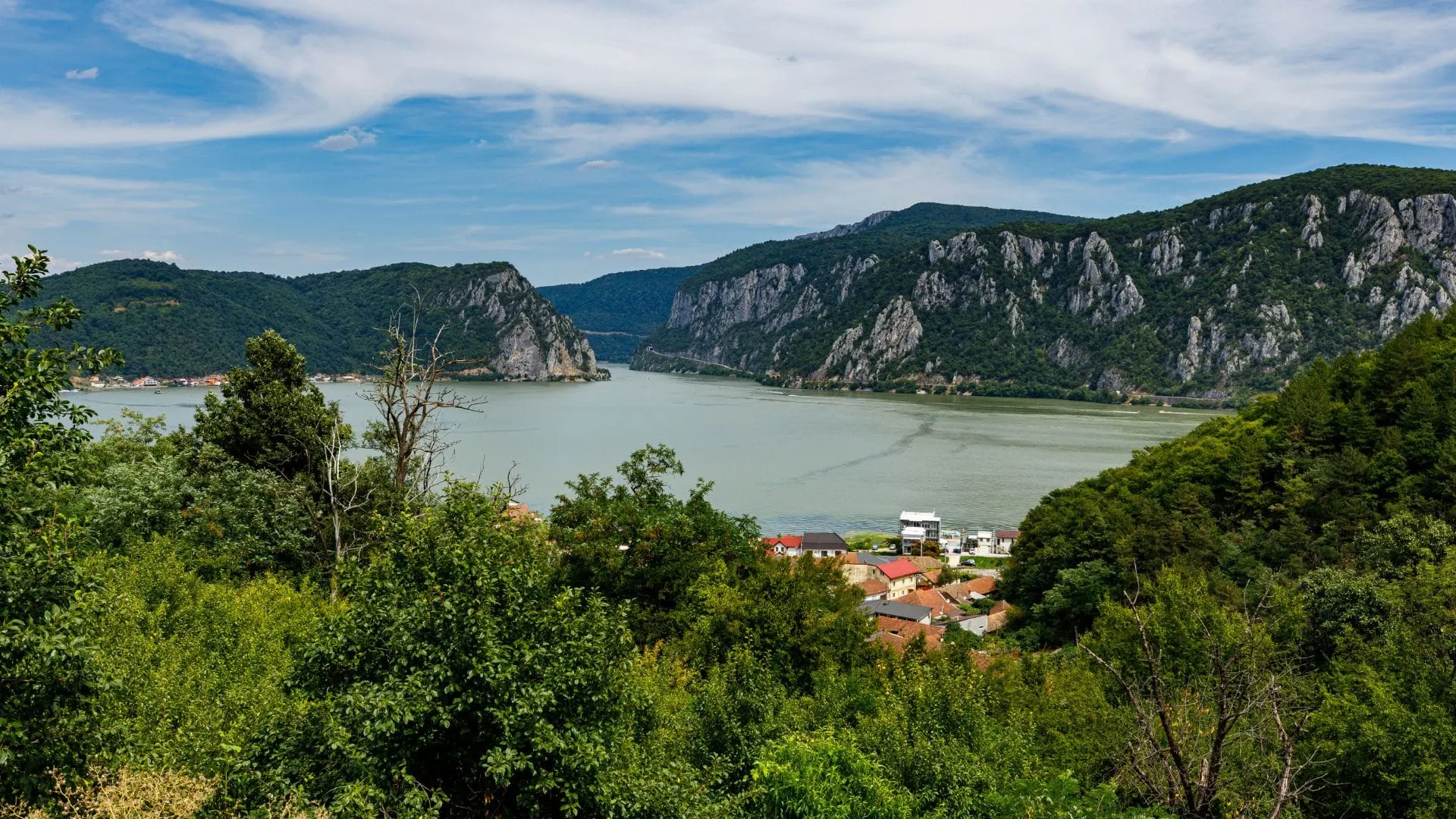
The Danube Cauldrons (Cazanele Dunării) are one of the most spectacular natural regions in Romania, offering a unique landscape shaped by the Danube River.
Located on the border between Romania and Serbia, the Danube Cauldrons are known for the dramatic, turbulent narrowing of the water between the massive rocks of the Carpathians. They impress with their steep limestone walls, the depth of the river, and its winding course.
Great Cauldrons
Geography of the Danube Cauldrons
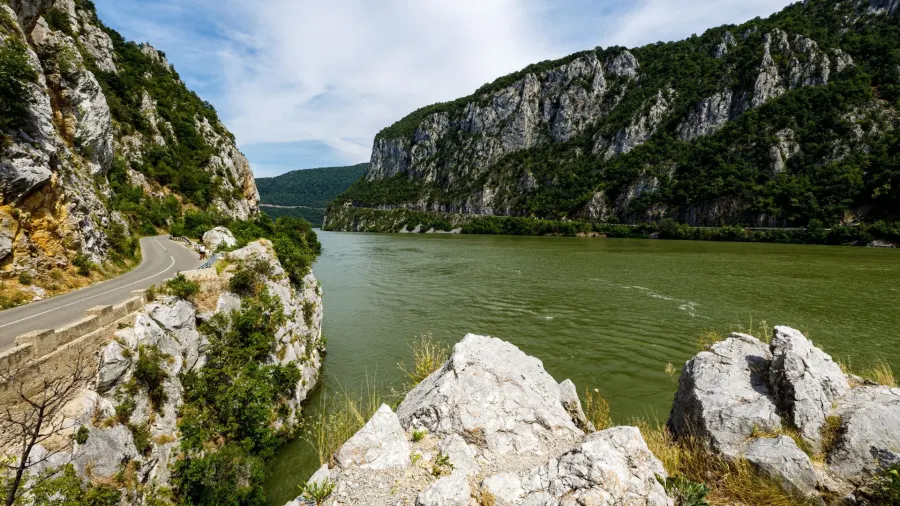
The Danube Cauldrons are located in southwestern Romania, on the border with Serbia, in Mehedinți County, in an area where the Danube River cuts through the Carpathian Mountains.
They stretch for about 9 km and are part of the Iron Gates Natural Park, one of the largest and most important protected areas in Romania.
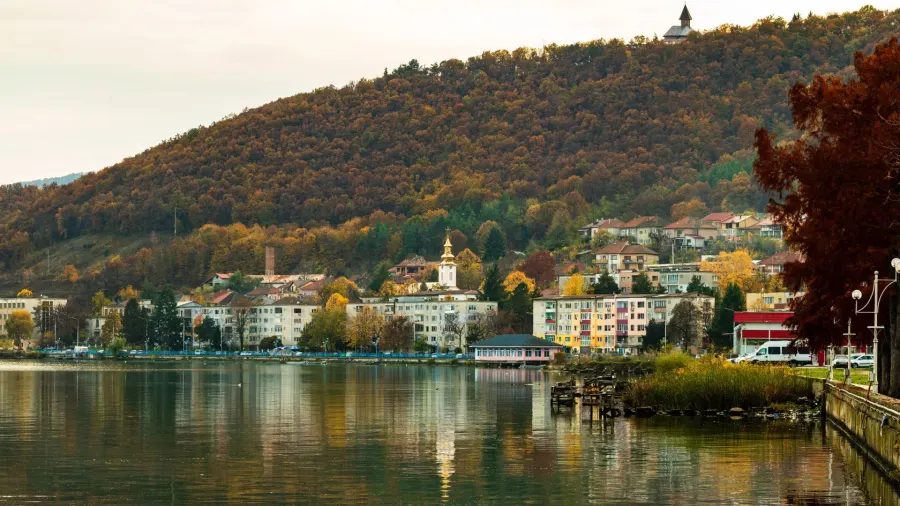
The Danube Cauldrons lie entirely within Mehedinți County, and the nearest Romanian town is Orșova, a popular starting point for exploring the region.
Orșova
Danube Gorge vs. Danube Cauldrons
The Danube Cauldrons and the Danube Gorge (Clisura Dunării) are part of the same spectacular natural landscape created by the Danube River, but they refer to different sections of it:
Danube Gorge
The Danube Gorge is the name given to the gorge the Danube forms along the border between Romania and Serbia, over a distance of about 140 kilometers. It stretches from Baziaș (where the Danube enters Romania) to the dam at the Iron Gates. It is a mountainous region where the river “cuts” through the Carpathian Mountains, creating an impressive setting.
Danube Cauldrons
The Danube Cauldrons are a section of the Danube Gorge, considered one of its most impressive areas.
They stretch for about 9 kilometers, between Plavișevița, where the Great Cauldrons (Cazanele Mari) begin, and Ogradena, where the Small Cauldrons (Cazanele Mici) end.
The Danube Cauldrons include Dubova Bay, which serves as the link between the Great Cauldrons and the Small Cauldrons.
Division of the Area: Great Cauldrons and Small Cauldrons
The Danube Cauldrons area is divided into two distinct sections: the Great Cauldrons and the Small Cauldrons.
Great Cauldrons
They stretch for about 3.8 km, between Plavișevița and Dubova Bay. This section is characterized by tall, steep rock walls that rise sharply above the water.
The river is flanked by two massifs: Ciucarul Mare (318 m) on the Romanian side and Veliki Štrbac, or Stirbatul Mare (768 m), in Serbia. Here the river narrows to about 200 meters, and the water is more than 70 meters deep.
The Great Cauldrons offer an impressive picture of the power of the river, which has carved its way through the rocky massifs, creating a spectacular landscape.
Great Cauldrons
Small Cauldrons
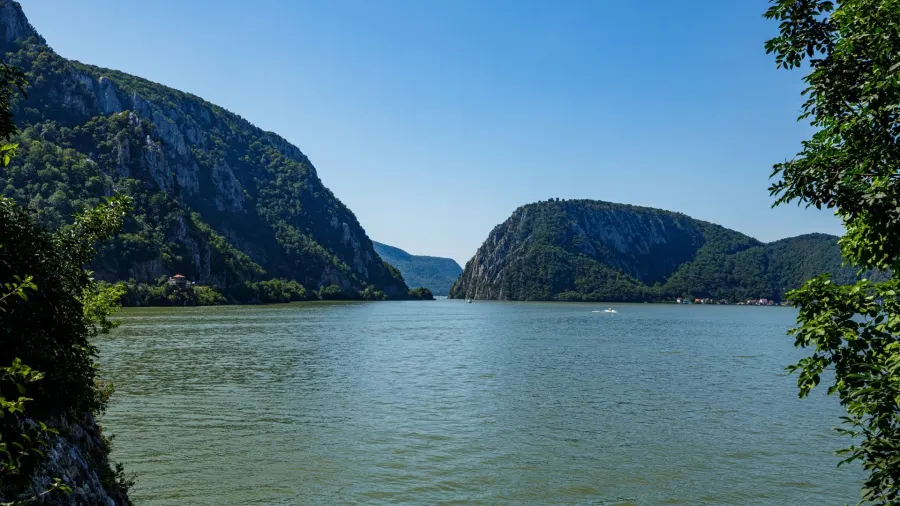
They stretch for about 3.6 km and lie between Dubova Bay and Ogradena. Unlike the Great Cauldrons, the rock walls here are lower, but just as spectacular.
The Small Cauldrons impress with the narrowing of the Danube, which here is only 150 meters wide.
The Ciucarul Mic massif on the Romanian side and Mali Štrbac, or Stirbatul Mic (626 m), on the Serbian side guard the Small Cauldrons.
Terrain
The area is characterized by massive limestone cliffs, sculpted over millennia by the waters of the Danube, which carved a deep gorge into the heart of the Carpathian Mountains. In places, the cliffs are almost vertical. The whole landscape is completed by the vegetation typical of the region, with rare and endemic species growing on the rocky slopes.
The Danube Cauldrons region is often compared to a canyon.
Danube Cauldrons
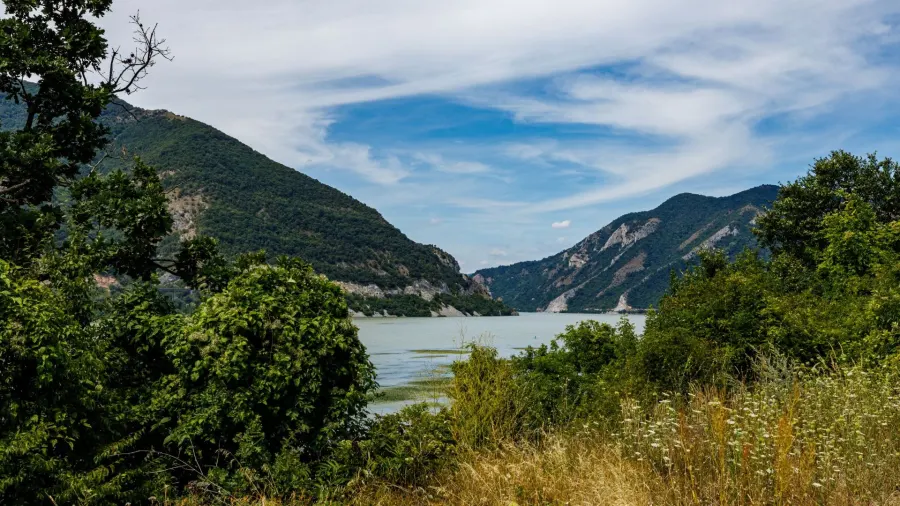
The Danube
The Danube, Europe's second-longest river after the Volga, plays a crucial role in forming and defining the Cauldrons.
This section of the river is considered one of the most difficult and dangerous for navigation, due to the strong currents and the narrowing of the channel. Along the 9 km of the Cauldrons, the Danube is more than 70 meters deep in places, making it one of the deepest stretches of the river.
The Danube
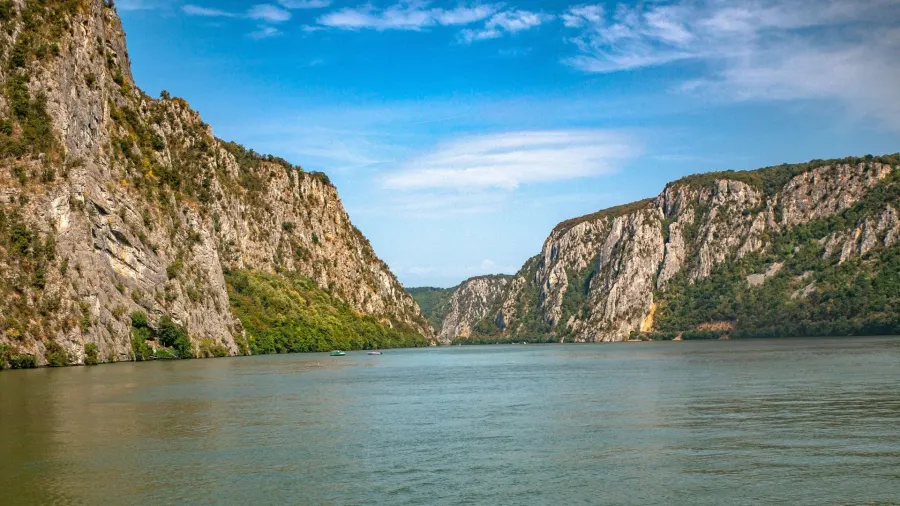
The river, which flows for 1,075 km through Romania, is used not only for navigation but also for tourism, attracting many visitors who want to experience a cruise.
How to Get to the Danube Cauldrons
From Bucharest, take DN6/E70 toward Drobeta-Turnu Severin and Orșova, then DN57 toward Dubova, where the main attractions are located.
For those traveling from Timișoara, the same DN6/E70 is a good option.
If you prefer a more interesting journey, you can also travel on the Danube on an organized cruise.
History of the Danube Cauldrons
The name “Danube Cauldrons” (Cazanele Dunării) comes from the distinctive shape of the area, where the river narrows and seems to “boil” as it passes between the steep walls.
The narrowing of the Danube, combined with the strong currents and the whirlpools that form, creates a visual effect reminiscent of water boiling in a cauldron.
Especially on windy days, the Danube creates waves and whirlpools that gave rise to this evocative name.
The Danube Cauldrons have had enormous strategic importance throughout history thanks to their key position on the natural border between various territories.
In Roman times, the area was vital to the defense of the Roman Empire, serving as a crossing and control point on the Danube. The Romans built roads and fortifications along the banks of the river, some of which can still be seen today, such as the famous Tabula Traiana, a monument that attests to the Roman presence in the area.
In the Middle Ages, the area remained an important strategic point for controlling trade and military movements. Thanks to the rugged landscape and the narrowing of the river, the Danube Cauldrons served as a place of refuge and a defensive zone for various populations, and were repeatedly used as an observation point and fortification.
A significant change to the Danube Cauldrons came in the 1960s–1970s, with the construction of the Iron Gates I dam and hydroelectric power plant, one of the largest hydroelectric engineering projects in Europe.
The project was carried out jointly by Romania and the former Yugoslavia and completely transformed the landscape of the area, increasing the depth of the Danube and creating a huge reservoir.
The construction of the dam improved navigability on the Danube and created an important source of electricity, but it also had a significant impact on the environment and on nearby communities (Ada Kaleh Island, the old town of Orșova, the village of Eșelnița, and part of Dubova), some of which were completely submerged.
Tourist Attractions
The following tourist attractions make the Danube Cauldrons one of the most visited destinations in Romania:
Decebalus Rex Rock Sculpture (Chipul lui Decebal)
The Decebalus Rex rock sculpture, located on the Romanian bank of the Danube near Mraconia Bay, is the largest stone sculpture in Europe, standing 55 meters tall.
Decebalus Rex rock sculpture
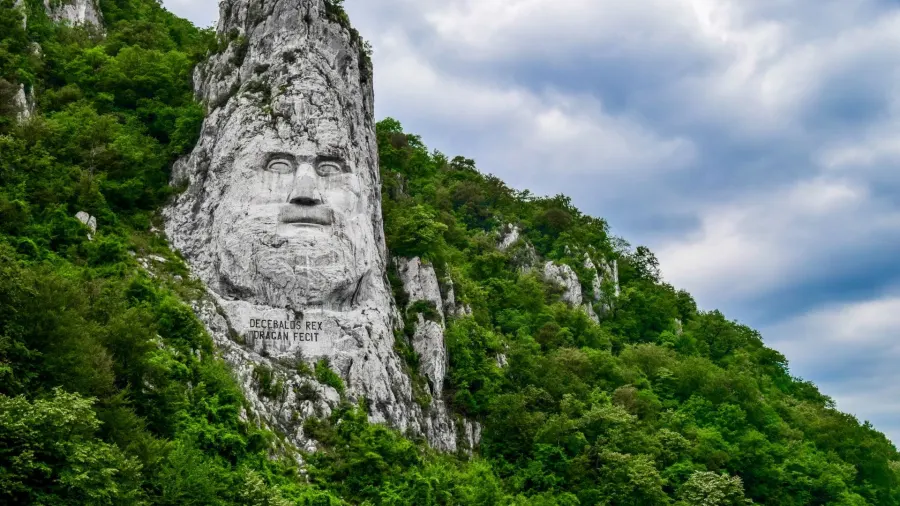
It was carved between 1994 and 2004 at the initiative of Romanian historian and businessman Iosif Constantin Drăgan. The sculpture depicts Decebalus, the last king of the Dacians, and symbolizes the courage, resilience, and pride of the Dacian people.
The carving process was extremely difficult and was carried out by a team of climber-sculptors who worked in dangerous conditions, suspended on the rock face.
Tabula Traiana
The Tabula Traiana is an ancient Roman monument, inscribed in stone in honor of Emperor Trajan, who led the military campaigns against the Dacians.
Located on the Serbian bank of the Danube, at the edge of the Small Cauldrons, this stone plaque marks the completion of the Roman road through the mountains, built to make it easier for Roman troops to move during the Dacian Wars.
The Tabula Traiana inscription, dating from AD 100, commemorates the completion of the road built by the Romans along the Danube and is impressive evidence of Roman engineering.
To keep it from being covered by the waters of the reservoir, the plaque was cut out as a single block of about 350 tons when the Iron Gates dam was built, and moved higher up the cliff. The monument thus remains a silent witness to ancient history.
Ponicova Cave
Ponicova Cave is the largest cave in the Danube Cauldrons area.
Ponicova Cave
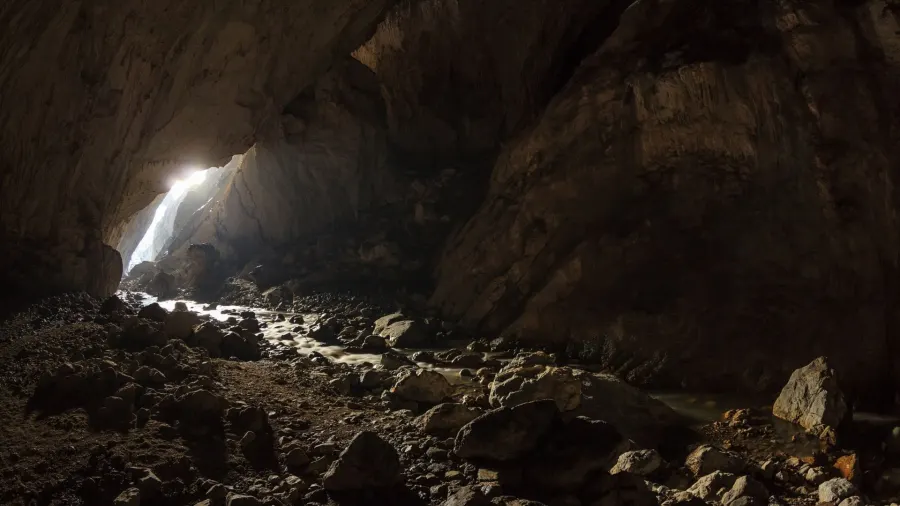
With a length of over 1,660 meters, the cave of the Great Cauldrons extends over several galleries and forms a fascinating underground labyrinth.
Ponicova Cave exterior
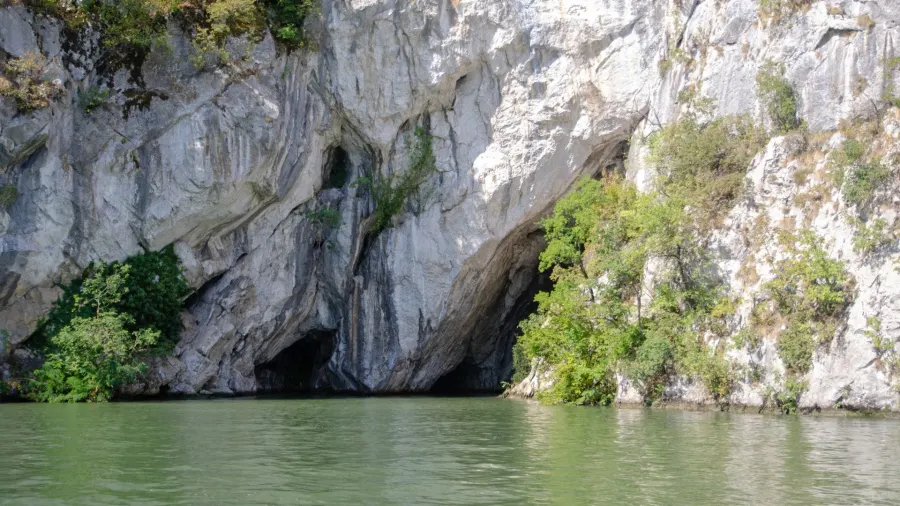
Ponicova Cave can be reached both by water and by land, via a hiking trail that starts from the DN57 road. The cave is not developed for visitors: it has spectacular formations and a Bat Gallery over 100 meters long, and it can flood when the water is high, so it is best visited with a guide.
Veterani Cave
Veterani Cave, located in the Great Cauldrons area, is an archaeological site with several levels of habitation, including traces from the Roman era.
Its name comes from the Austrian general Friedrich Veterani, who used the cave as a strategic defensive position during the Austro-Turkish wars.
Archaeological remains discovered inside the cave attest to its use as a refuge, a place of worship, and a weapons depot. Veterani Cave can be visited, but it can only be reached from the Danube, by boat.
Mraconia Monastery
Mraconia Monastery, also known as the “Monastery under the Water,” is located on the left bank of the Danube, in the heart of the Danube Cauldrons.
Mraconia Monastery
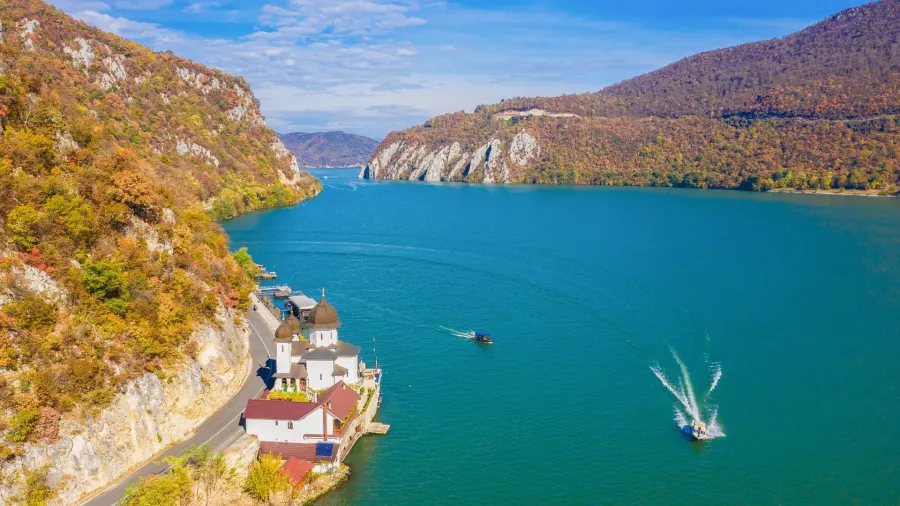
It was rebuilt in the 1990s near the site of the old monastery, whose origins are dated by sources to the 15th–16th centuries. The old monastery was demolished in 1967–1968 to make way for the Iron Gates dam and was then covered by the waters of the Danube.
With a spectacular view over the river and the surrounding cliffs, Mraconia Monastery is a place of contemplation and spirituality, offering visitors a space of peace and meditation in the midst of a wild and impressive landscape.
Other Tourist Attractions in the Surrounding Area
Beyond the attractions of the Danube Cauldrons, the Danube Gorge and its surroundings offer many other tourist attractions. Here are a few you can visit:
Iron Gates Dam and Hydroelectric Power Plant
Severin Medieval Fortress
Iron Gates Region Museum
Ruins of Trajan's Bridge
Iron Gates Natural Park
Orșova
Băile Herculane Resort
Cerna Valley
Babacaia Rock
Ostrov Island
These attractions add a great variety of experiences and activities for those visiting the Danube Gorge, offering a perfect mix of nature, history, and culture. Nearby is the famous Via Transilvanica trail.
Characteristic Flora and Fauna
Within the Iron Gates Natural Park, the Great and Small Cauldrons are also protected as a nature reserve, renowned for its biodiversity and its rare plant and animal species.
Among the plant species that grow here is the Cauldrons tulip (Tulipa hungarica), a rare flower that, in Romania, grows only on the slopes of the Ciucarul Mare massif.
Other rare plants typical of this area include the bellflower Campanula crassipes and the Montpellier maple, along with many other species. This rich flora is complemented by a varied fauna, with bird species such as egrets, cormorants, eagles, hawks, and the gray heron, as well as land animals such as the wolf, the lynx, the wildcat, and otters, which live around the Cauldrons.
The deep, fast-flowing waters of the Danube are home to an impressive diversity of aquatic life, with freshwater fish species including carp, wels catfish, pike, and barbel, species prized by both recreational anglers and commercial fisheries.
The Danube is also known for its sturgeon, protected fish prized for their black caviar and considered among the oldest groups of fish in the world. Since the Iron Gates dams were built, however, migratory sturgeon can no longer swim upstream as far as the Cauldrons.
The rocky landscape of the Cauldrons is dominated by plants adapted to the harsh conditions of steep cliffs and limestone soils. Among the most common shrubs are wild lilac, smoke tree, and various species of ferns and mosses, which grow on the rocky slopes.
These plants are perfectly adapted to the extreme climatic conditions and can survive both the high summer temperatures and the strong winds and lack of water during the dry season.
More details on biodiversity can be found here
The Danube Cauldrons are an area of great ecological importance and part of the Iron Gates Natural Park. Their unique flora and fauna, including rare or endemic species, make protecting this ecosystem a priority.
Recreational and Adventure Activities
Tourism has developed in recent years at the Danube Cauldrons and in the Danube Gorge in general. Activities on offer include:
Guided Tours and Cruises Through the Danube Cauldrons
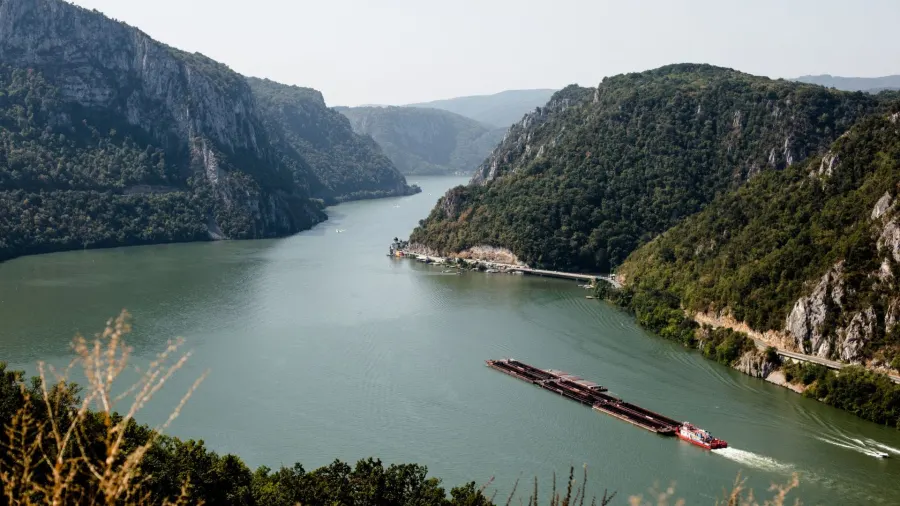
One of the most popular recreational activities at the Danube Cauldrons is a river cruise, which gives tourists the chance to admire the scenery from a unique perspective. Guided cruises let visitors explore the Cauldrons up close, admire the Decebalus Rex rock sculpture and the Tabula Traiana, and pass by the well-known caves.
Serbia and Romania separated by the Danube
Hiking and Mountain Trails
The Danube Cauldrons offer mountain trails of varying difficulty, running along the Danube and up the slopes of the surrounding mountains. One of the most popular trails leads to Ponicova Cave and other viewpoints over the river. Another notable trail climbs to Ciucaru Mare, from where hikers can enjoy a panoramic view of the Great Cauldrons and the whole area.
Experienced cyclists can even choose to explore by bike.
Water Sports: Fishing, Kayaking, and Rowing on the Danube
For those looking for more dynamic activities, water sports, kayaking, and rowing are excellent ways to explore the river. Fishing is also very popular, with the Danube offering plenty of fishing spots for enthusiasts. Fishing trips are organized throughout the warm season.
Kayaking on the Danube

Accommodation and Tourist Facilities
The Danube Cauldrons area offers a wide range of accommodation options. From rustic cabins and local guesthouses with a traditional character to modern hotels with all the necessary amenities, tourists have plenty of choices.
The guesthouses and cabins on the banks of the Danube offer unforgettable views of the river and the mountains, and some also rent out boats for exploring on the water. In addition, many accommodations offer packages of tourist activities, such as guided hikes or boat trips.
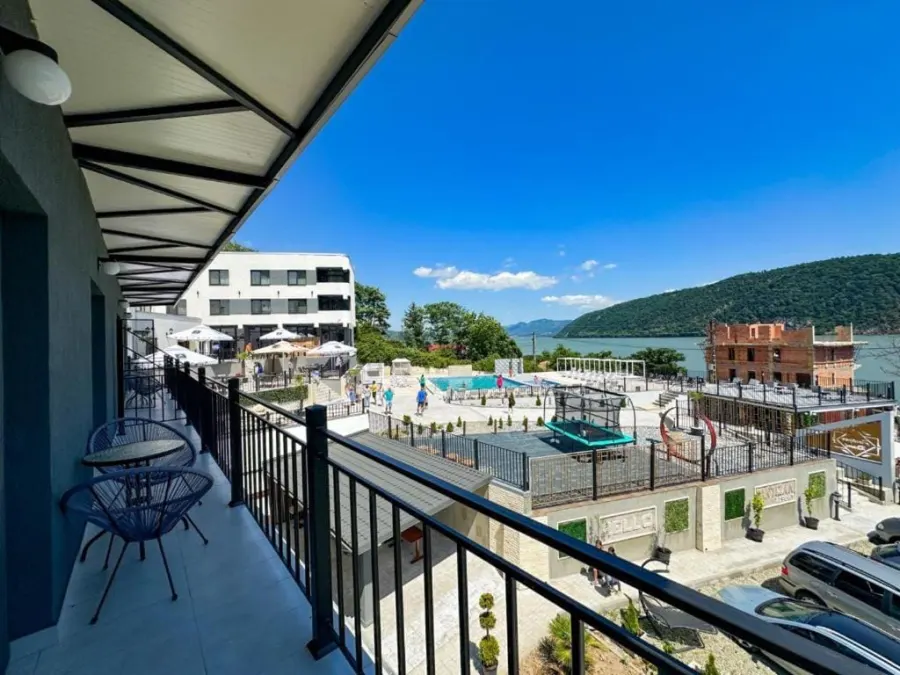
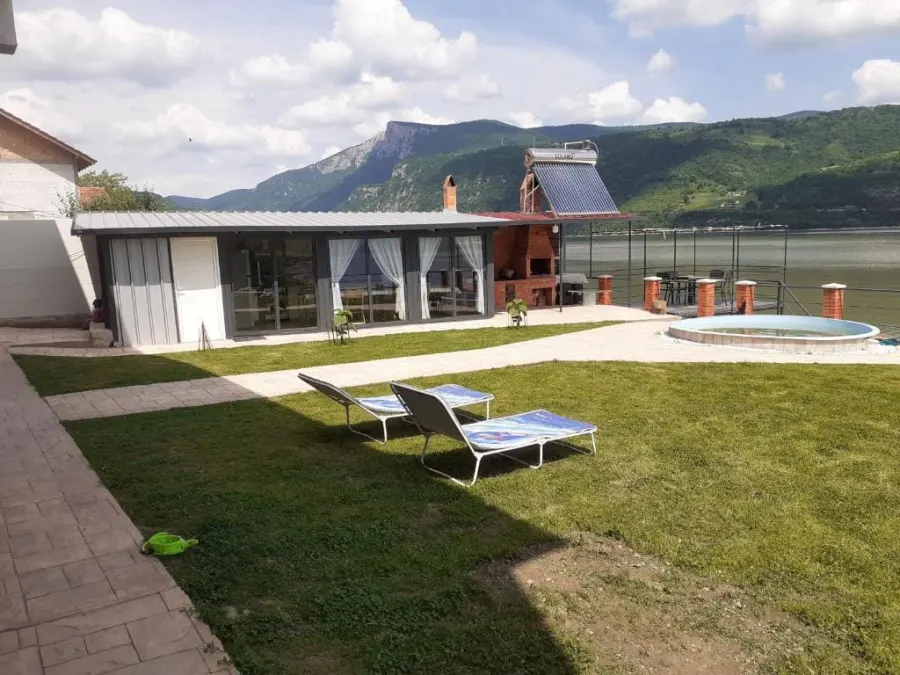
Partizan Resort in Eșelnița has a seasonal pool, a garden, a terrace, and a restaurant. See details here
Partizan Resort
Casa Darius is a two-room apartment in Orșova with a terrace, a garden, and a children's playground. Details here
Cazanele Dunării “La Cumatru” is located on the banks of the Danube in Dubova. Details here
Cazanele Dunării “La Cumatru”
The cuisine of the Danube Cauldrons area is shaped by traditional Romanian and Serbian influences, with a strong emphasis on dishes made from fresh Danube fish.
Among the most popular dishes are fish soup (ciorbă de pește), carp saramură, and catfish plachie, all prepared using recipes passed down from generation to generation.
Travel Tips
If you choose to travel to the Danube Cauldrons, we recommend:
Best Time to Visit
The Danube Cauldrons can be visited year-round, but the best times to explore the region are spring (April–May, when the yellow tulip blooms on the cliffs) and fall (September–October).
During these months, temperatures are pleasant and the landscape becomes especially picturesque. Summer (June–August) draws the largest number of tourists, but the heat can be intense, especially during the day. Winter, though less popular for visits, offers a special atmosphere, with snow-covered landscapes that are ideal for photographers and nature lovers.
Useful Information: Guides, Admission Fees for Attractions, and Excursions
At the Danube Cauldrons, some points of interest charge admission, such as Veterani Cave, which costs a few lei. Prices may change, so it is a good idea to check them before your visit.
Boat trips through the Cauldrons, lasting about two hours, cost around 20 euros per person, and some also offer an audio guide with details about the history and geography of the area. Local guides are available for customized tours.
Conclusion
The Danube Cauldrons are one of Romania's most impressive natural and historical areas. With unique landscapes, fascinating attractions such as the Decebalus Rex rock sculpture and the Tabula Traiana, and the chance to explore caves and take cruises on the Danube, this region offers an unforgettable experience.
Ecologically, the area is a habitat for rare plant and animal species, and from a cultural and historical perspective, the Danube Cauldrons offer a deep look into Romania's rich past.
On your trip through the country, be sure to visit the Danube Cauldrons! Don't miss the nearby Cerna Valley, with its many tourist attractions.
The place where the Danube flows into the Black Sea is also exceptionally beautiful, as are the resorts on the Romanian coast.