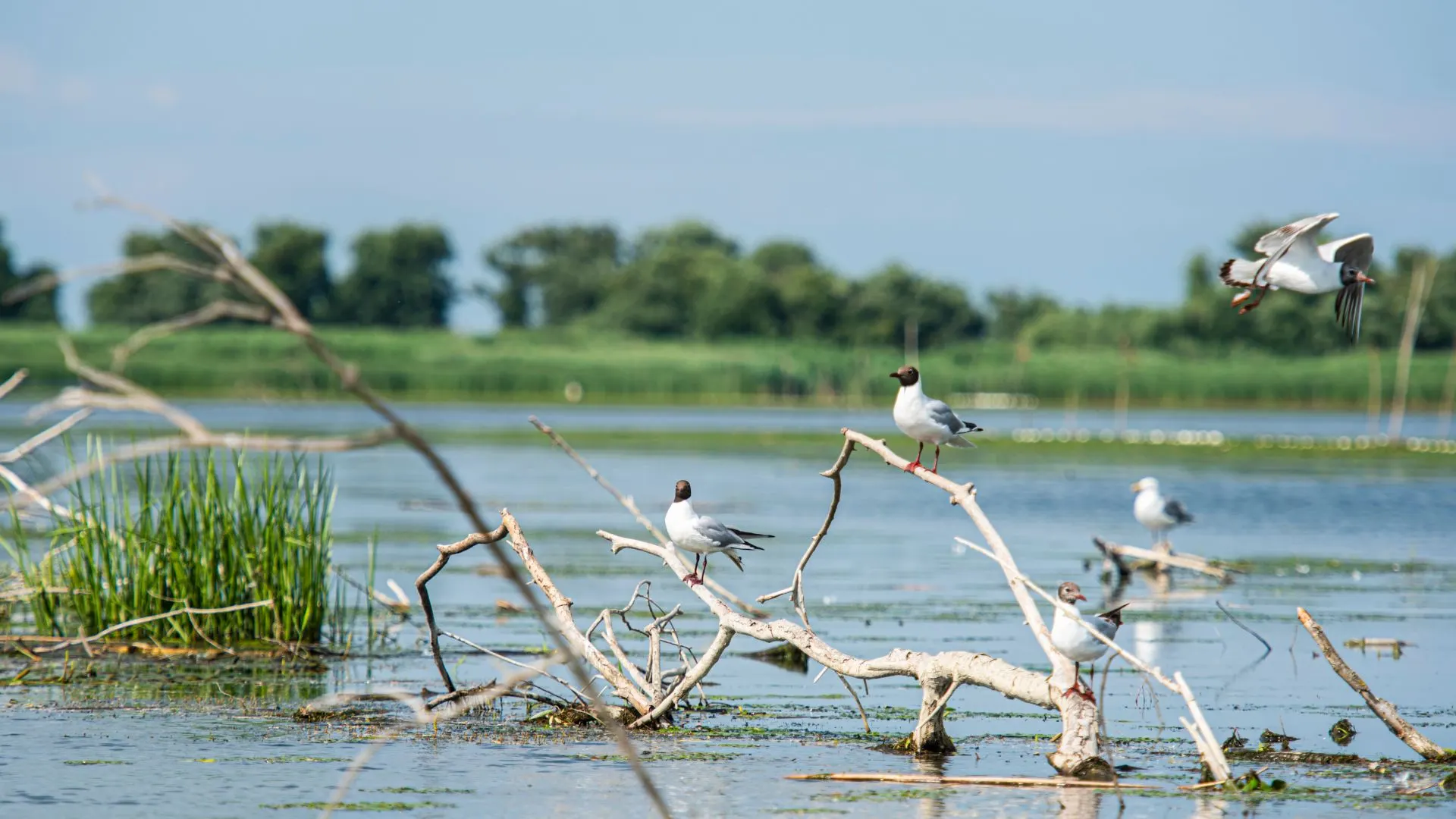
There are few places in the world where geography turns into poetry, and the Danube Delta is, without a doubt, the most spectacular of them all.
It is not just another spot on Romania's tourist map, but a living organism, an archipelago of greenery and water that reinvents itself with every sunrise.
Danube Delta – on the canals
Why the Danube Delta?
The Danube Delta and its lagoon complex are recognized worldwide as a Ramsar site, one of the most important wetlands on the planet, and are part of UNESCO World Heritage.
The Danube Delta is known as “the Amazon of Europe”: it is the best-preserved delta on the continent, home to more than 5,000 species of flora and fauna.
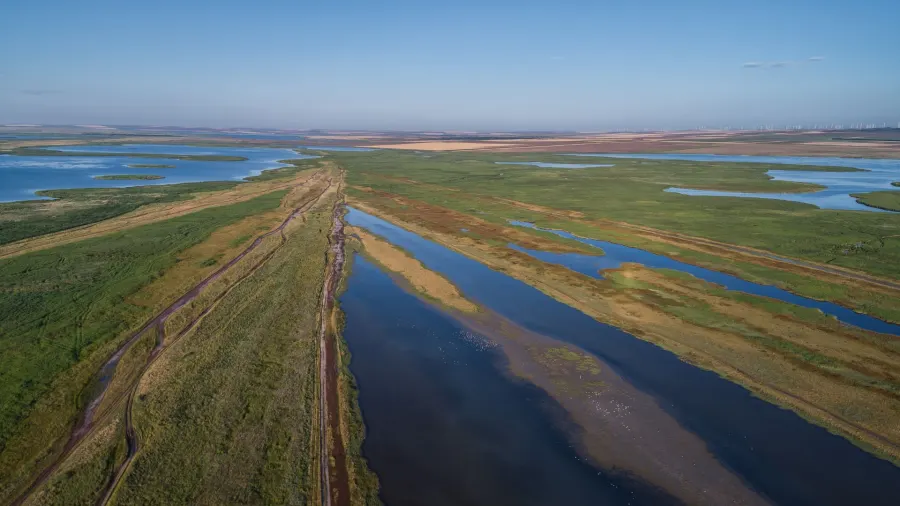
Aerial view of the Danube Delta
In this guide, we'll explore the Delta so that your first visit – or your tenth – becomes an unforgettable experience. Get ready to discover not just a destination, but a state of mind.
Biodiversity: Birds and Habitats
Preserving the habitats of the many bird species and the flora is vital, because here we find vegetation typical of wetlands, dominated by vast reed beds, but also by rare plants such as bladderwort or aldrovanda (the carnivorous plant), alongside bulrush and sedge.
Bird habitat
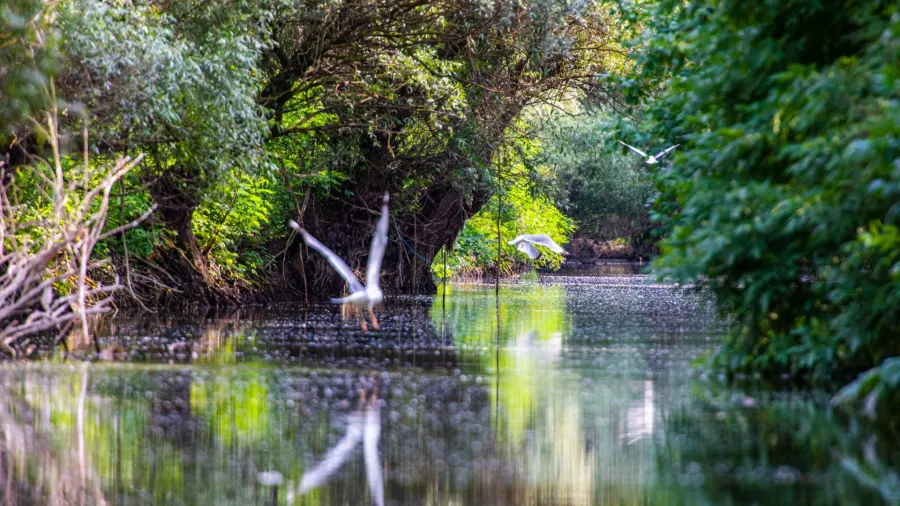
These diverse habitats, from forest areas (centuries-old woods on the ridges) to the sand dunes, are home to the emblematic bird species of the Delta.
Besides pelicans, you can spot the red-crested pochard, the grebe, the red-breasted goose (a global rarity), or the lesser white-fronted goose. In the marshes of the Delta, you can hear the unmistakable call of the bittern, hidden among the stems of cattails and reeds.
The Delta is not just water. It is a complex puzzle that combines:
Wetlands: Vast expanses of reeds, lakes such as Buhaiova, and marshes.
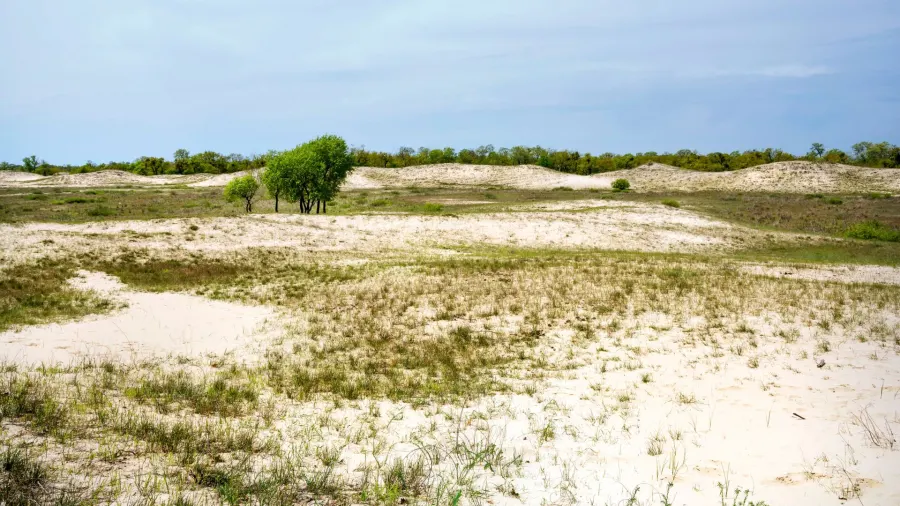
Sand dunes and forest: On the Letea and Caraorman ridges, the landscape changes radically. Here, centuries-old oaks are “embraced” by lianas such as Periploca graeca, which reaches the northern limit of its range here, creating the atmosphere of a subtropical jungle flanked by fine, desert-like sand dunes.
Letea Forest
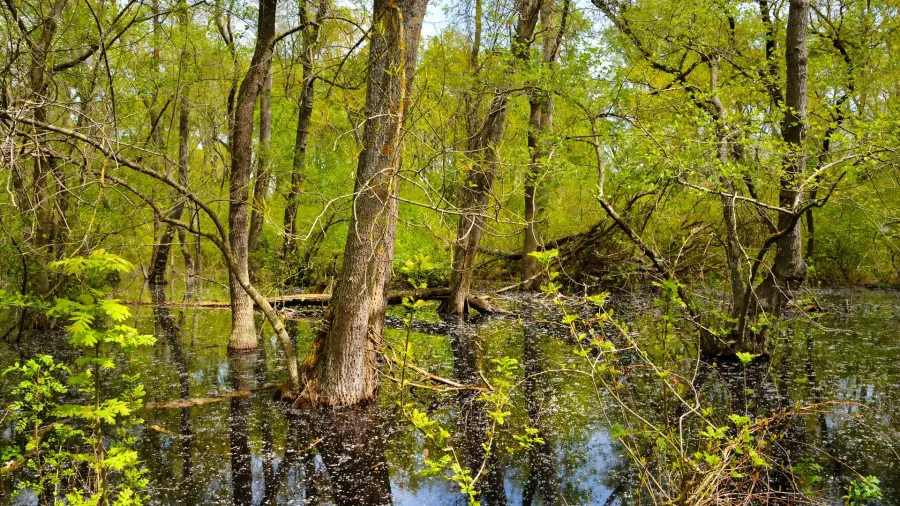
With more than 5,000 species identified, the Delta is a landmark on the world's biodiversity map. It's not just about the great white pelican; it's about the survival of critically endangered species.
Pelican
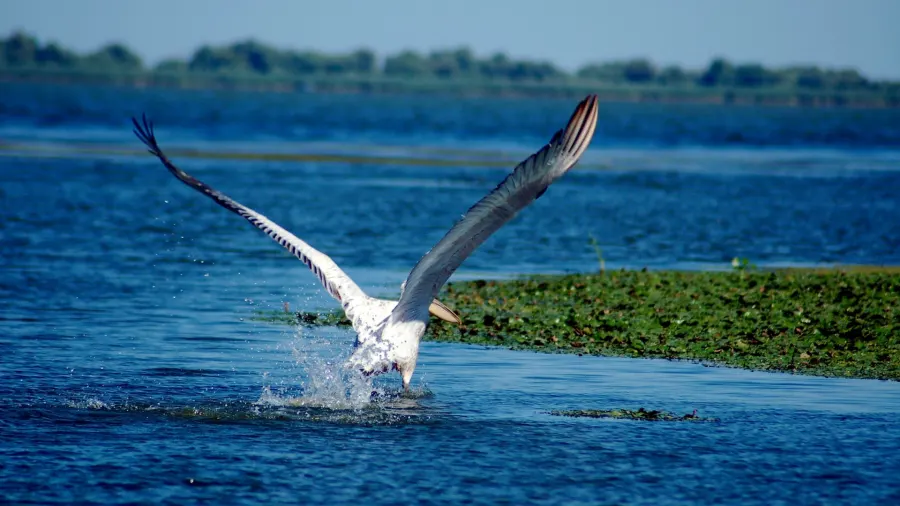
Did you know?
In winter, the Delta and the lakes of Dobruja host a significant share of the world's red-breasted goose population.
In its waters, underwater carnivorous plants such as bladderwort or the rare aldrovanda hunt their prey, while in the dense reed beds you can hear the deep, bass call of the bittern.
Logistics: Navigating to the Heart of the Delta
The success of a vacation in the Danube Delta depends largely on how you plan your transportation.
Boat in the Delta
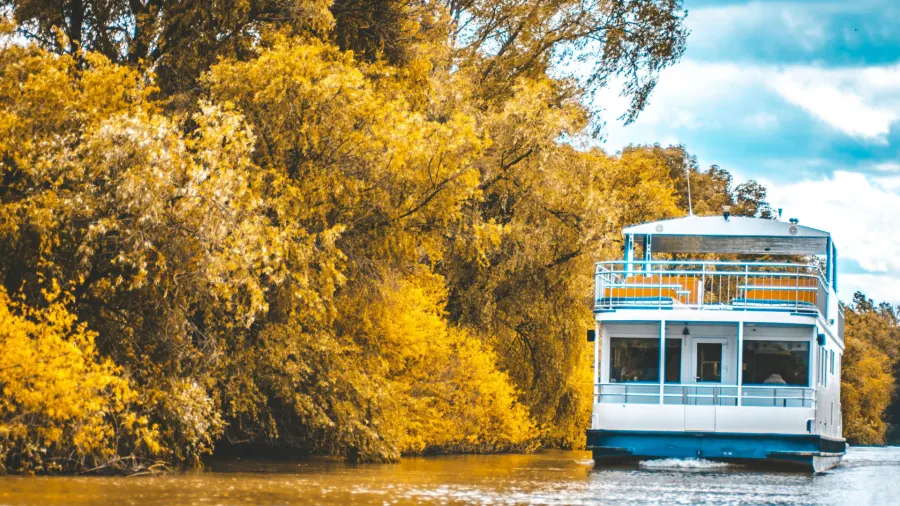
Once you leave dry land, the rules of the game change: the asphalt disappears and the “roads” turn liquid. Here's everything you need to know for a smooth transition from car to boat.
If you don't necessarily want to set off from Tulcea, there are alternatives you can reach by car. Mahmudia and Murighiol are two strategic points where the asphalt meets the water. From here, you're already in the heart of the Delta, much closer to the main canals.
Another option is Jurilovca, a fishing village of rare beauty and the gateway to the Razelm-Sinoe lagoon complex. From Jurilovca you can quickly reach Gura Portiței, exploring a side of the Danube Delta where Lipovan tradition is still alive.
Tulcea: The Gateway and “Kilometer Zero”
Your journey can begin in Tulcea. It's best to arrive in Tulcea at least an hour before your chosen boat departs, so you have time to take care of the formalities (access fees, parking).
Your Car: Where Can You Leave It Safely?
Fortunately, the Delta is largely a car-free “sanctuary”: Sulina, for example, cannot be reached by road, only by water.
Near the waterfront promenade and the Tulcea bus station, there are several guarded private parking lots set up especially for tourists. Avoid leaving your car in unattended places for long periods.
Water Transportation: Speed vs. the “Slow Travel” Experience
Choosing your boat is the moment you decide what kind of traveler you are. There are two transportation philosophies:
Classic Passenger Ships (Navrom): large, state-run vessels with a fixed schedule, the cheapest option; safe in any kind of weather; long travel times (e.g., Tulcea – Sulina takes around 3.5–4 hours).
Fast Boats (Water-Taxi Shuttles): modern private boats that cover Tulcea – Sulina in about an hour and a half; flexible schedules (departures almost every hour in season); higher prices; limited space for bulky luggage.
To enter the Reserve, you need an access permit issued by the Danube Delta Biosphere Reserve Authority (ARBDD). You can get it quickly online (the safest method), by SMS, or from the ARBDD vending machines in Tulcea, Murighiol, Corbu, and Vadu. Keep it on your phone; checks are frequent and the fines are not negligible.
Whichever option you choose, book your seat on the fast boat at least 48 hours in advance, especially on summer weekends.
The 3 Branches: Where Do You “Retreat”?
The landscape alternates between the river branches and the ridges, whether marine or sandy (such as those at Letea and Caraorman).
In the southern areas, toward Lake Razelm, we discover the lagoon complex of Leahova and Periteașca, as well as wild lakes such as Zătoane.
Where the Sfântu Gheorghe branch flows into the sea, Sacalin Island protects the shoreline, creating a unique refuge for biodiversity.
The Delta is not a uniform place; each branch has its own character.
Chilia Branch
It is the northernmost branch (on the border with Ukraine) and has the largest flow, about 60% of the Danube's water.
It's a paradise for anglers fishing for catfish and “Danube” carp. Here you'll find Chilia Veche and access to Letea Forest.
It is far from Tulcea and has fewer luxury accommodation options.
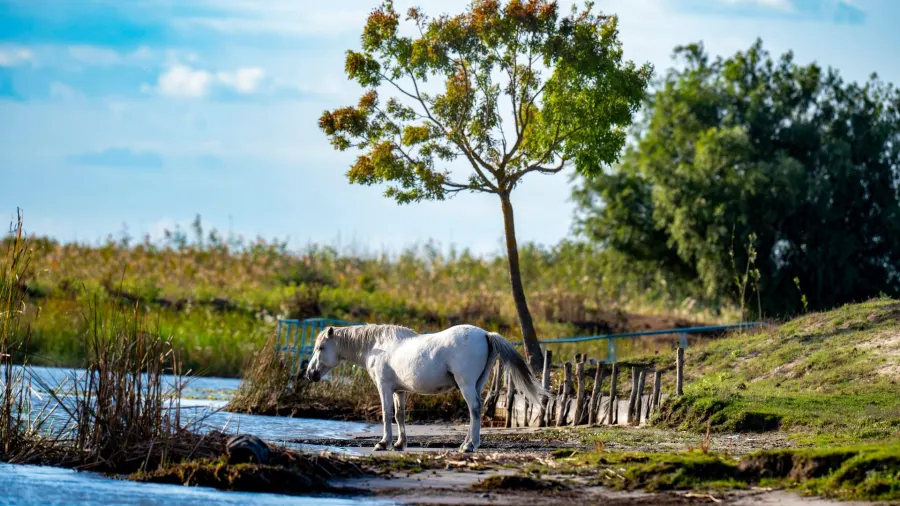
Letea – wild horses
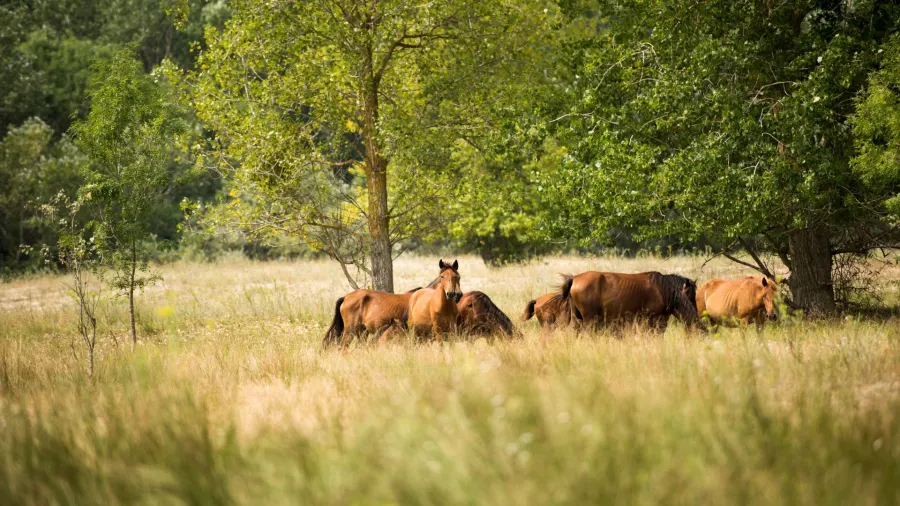
Sulina Branch
It is the Delta's “highway”, serving as the navigable channel for large ships. At its end awaits Sulina, the only town in the Delta.
It's the only place where you can enjoy a “city break” in the Delta. You'll find everything – restaurants, cafés, the pirates' cemetery (a must-see), and a fine-sand beach where the Danube flows into the sea. It's ideal for families or if it's your first visit.
Sfântu Gheorghe Branch
The oldest and most winding branch. It ends at a fishing village that has kept its charm despite tourism.
Travelers choose it for its pristine beaches (where you can see cows on the seashore) and for the spectacular mouth where the Danube meets the sea. This is where you'll eat the best storiceag, and it's also home to the legendary Anonimul film festival.
The trip by water is long and winding (but the scenery is worth every minute).
In the center of the Delta, at the intersection of the most important canals, lies Crișan.
If, on the other hand, you choose the Chilia branch, you'll pass through the Pardina area, a place where farmland blends with the wild landscape.
The Razelm area is part of the Razelm-Sinoe lagoon complex, the largest in Romania, whose once brackish water gradually became fresh after the hydraulic engineering works of the second half of the last century.
Tourist Hubs and Accommodation (Jurilovca, Mahmudia, Crișan)
The main accommodation options are clustered in key locations:
Mahmudia and Jurilovca: Quick access to the Razelm complex and the southern area.
Crișan: The logistical heart of the Delta, located on the Sulina branch.
Pardina: The gateway to the wild area of the Chilia branch.
Where you stay depends on how much “urban comfort” you want to keep in the middle of the wilderness.
Luxury resorts (Uzlina, Murighiol, Crișan):
Ideal for those who want a pool, air conditioning, and varied menus. These are “islands of comfort” that offer their own boat fleets for excursions.Traditional guesthouses (Mila 23, Sfântu Gheorghe):
This is where you'll find the authentic spirit. Houses painted white and blue, with reed-thatched roofs. Check the reviews for the food – at these guesthouses, dinner is often the main event of the day.Floating hotels:
A unique but niche experience. You're practically on the water 24/7.
For travelers seeking refinement, the Delta has evolved dramatically. There are now accommodation options that rival the great Asian or Mediterranean destinations.
Razelm Luxury Resort
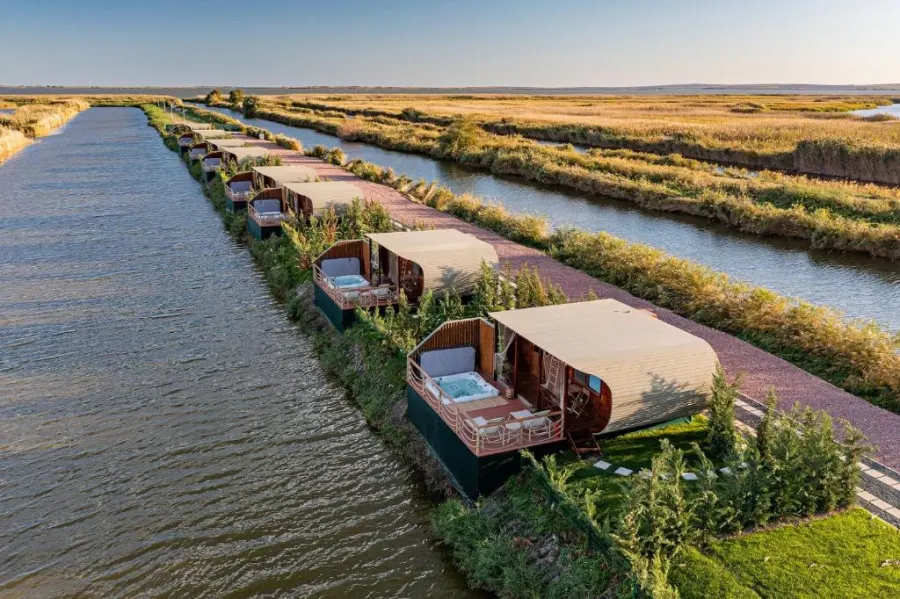
Razelm Luxury Resort: An oasis of calm on the shore of Lake Razelm, in Jurilovca, blending modern design with the spectacular landscape of the ridges.
Lebăda Luxury Resort & Spa (Crișan): The definition of luxury in the Delta, with modern spa facilities and panoramic views over the Danube.
Lebăda Luxury Resort & Spa
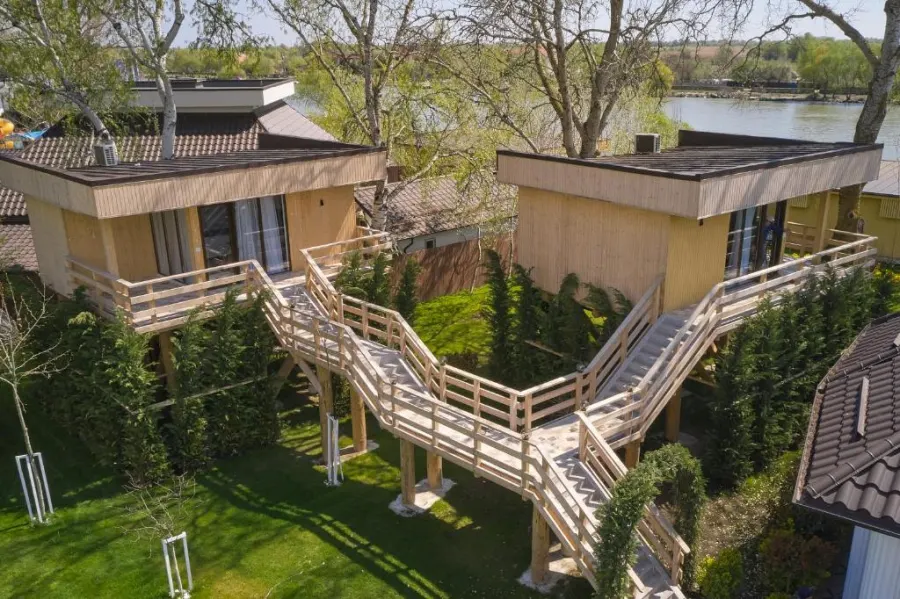
The Delta with Kids
Many people are afraid to bring their kids to the Delta because of the insects or the water. The reality? It's the biggest and most beautiful open-air “classroom” in Romania.
Where to stay with little ones? Sulina or Sfântu Gheorghe. Why? Because they have fine-sand beaches with a very gentle slope into the sea. If your little one gets bored on the boat, the beach is an option.
Kid-Friendly Activities:
Fishing lessons: Most guesthouses have pontoons where kids can catch their first “minnows”.
Safari in Letea: The wild horses are a magnet for kids.
Tandem kayaking: A great way to teach them about quiet and observation.
Wild horse
Plan your boat trips for early morning (07:00 – 10:00). At midday, the sun on the water is too strong.
What You Can't Miss in the Danube Delta
Here's what turns a simple vacation into a lifelong memory:
1. Birdwatching:
The Delta is the largest natural “airport” for migratory birds (pelican colonies at Roșca-Buhaiova, white egrets). Get yourself a good pair of binoculars and a local guide who knows how to “read” the reeds; the birds have habits that only the locals know.
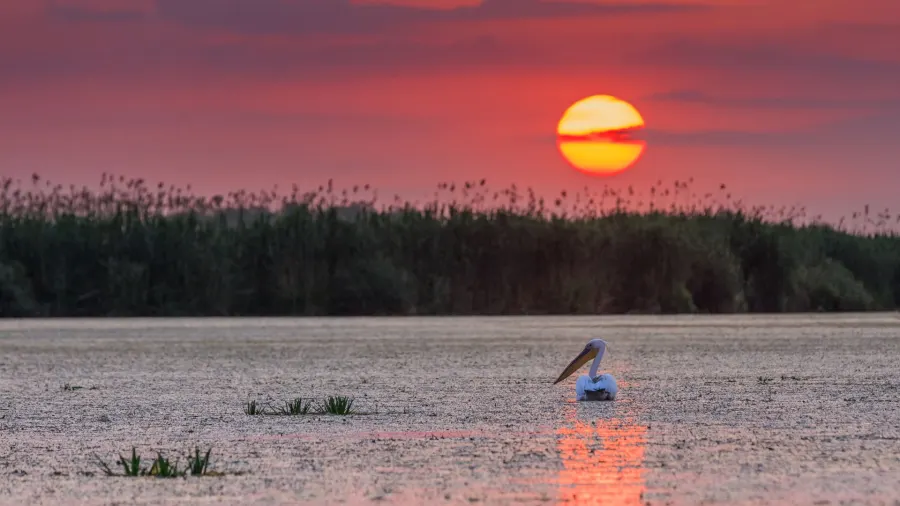
Whether it's the great white pelican or the Dalmatian pelican, this bird symbolizes the entire biodiversity of the Delta.
2. Letea and Caraorman: The Forests Among the Dunes
They are considered the northernmost subtropical-looking forests in Europe. Imagine centuries-old oaks growing straight out of the sand, “embraced” by Mediterranean lianas. Letea is famous for its wild horses, while Caraorman surprises you with its fine sand dunes.
3. Kayak and Canotcă
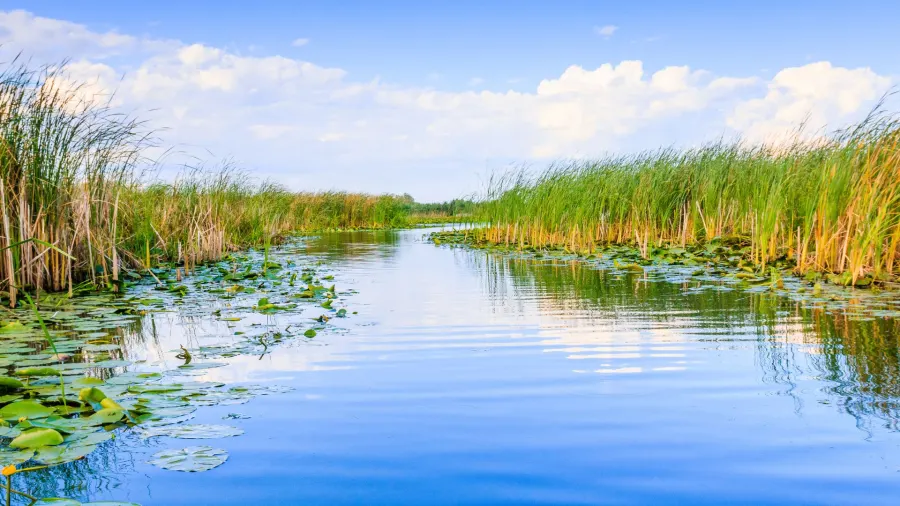
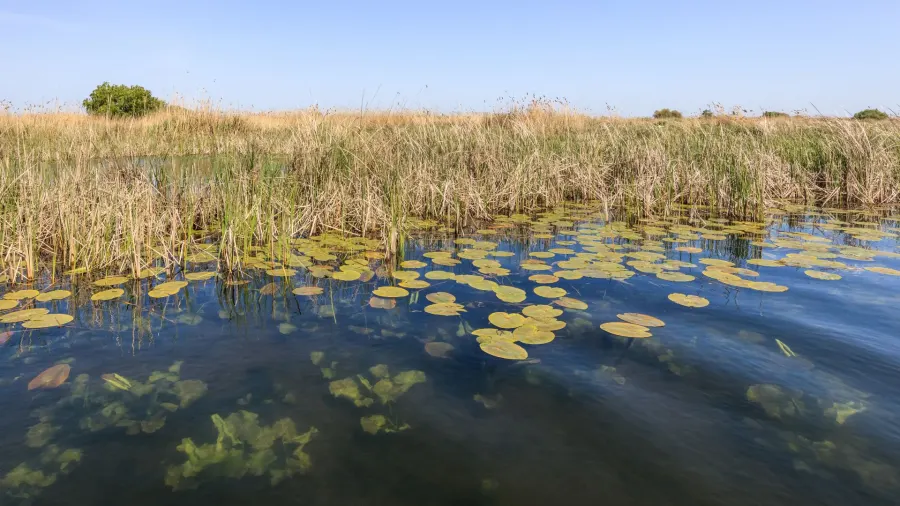
A motorboat gives you speed, but a kayak gives you intimacy. Only with a light craft can you slip into the narrow channels arched over by “tunnels” of willows, where the water is full of water lilies and the only sound is that of the paddle.
If you want something authentically Romanian, look for a canotcă (the hybrid boat created by the legendary Ivan Patzaichin) – it's the ultimate test of balance and communion with nature.
4. The Golden Hour
Sunrise is best seen right from the boat, in the middle of the lake, as the mist rises above the water lilies. Sunset is magical at Sfântu Gheorghe, where the sun seems to melt straight into the sea.
Forest and sand dunes – Letea
Biosphere Reserve status is more than just a title. That is why certain areas such as Zătoane, Periteașca-Leahova, or Roșca-Buhaiova are strictly protected zones. Tourists are not allowed into their core.
Gastronomy
In the Danube Delta, food is not just nourishment but a form of cultural identity. Forget international menus; here, fish is king and freshness is the only rule that matters.
Storiceag is the “king” of the Delta's fish soups. It was traditionally made with sturgeon (beluga, Russian sturgeon, or stellate sturgeon), but fishing for wild sturgeon has been banned in Romania since 2006. It is a white sour soup, thickened with sour cream and egg, with a delicate texture.
Fish borș is cooked in a cauldron over a wood fire, with at least 3–4 kinds of fish. The Danube water added to the cauldron (filtered and boiled) gives it that distinctive mineral taste you can't replicate at home.
Don't leave without tasting carp saramură (cooked on a hot plate, with plenty of tomato and hot pepper), plachie (oven-baked fish with sautéed onions), or the famous little fish patties.
For dessert? Dobrujan pie with salty cheese or pumpkin.
If you want the real experience, look for local homes licensed as “gastronomic points”. You'll eat in your host's courtyard, exactly what was caught that morning, cooked from recipes passed down orally for generations.
When to Visit the Danube Delta?
The Danube Delta changes its “clothes” with the seasons:
Spring (April – May) is migration season. The birds return, build their nests, and show off their most spectacular plumage. Mosquitoes are still few, and temperatures are perfect for exploring.
Summer (June – August) is the only time you can see white and yellow water lilies in full bloom. It's the ideal season for the beach at Sulina or Sfântu Gheorghe. It's usually crowded, and the mosquitoes come out.
In the fall (September – November), the water clears, the vegetation turns rust-colored, and the fish “bite” best. This is when pelicans gather in huge flocks before they leave.
For photography and nature, choose the second half of May. For fishing and peace and quiet, choose October.
The star of the area – the pelican
Responsible Tourism: Good to Know
The Danube Delta is an ecosystem as fragile as it is spectacular.
The stress caused by tourists eager to take close-up photos can make birds abandon their nests.
Water lilies
Bring insect repellent (high concentration), SPF 50 sunscreen (the sun reflected off the water burns faster), and definitely your binoculars, plus a light jacket.
The ARBDD permit is your “passport” to the Delta. You can also get it online.
Conclusion
The Danube Delta goes far beyond being a mere vacation destination: it is a living museum of biodiversity, home to unique ecosystems.
Whether you're looking for peace and quiet, authentic culinary experiences, or the spectacle of nature, the Delta offers an experience that's hard to match.
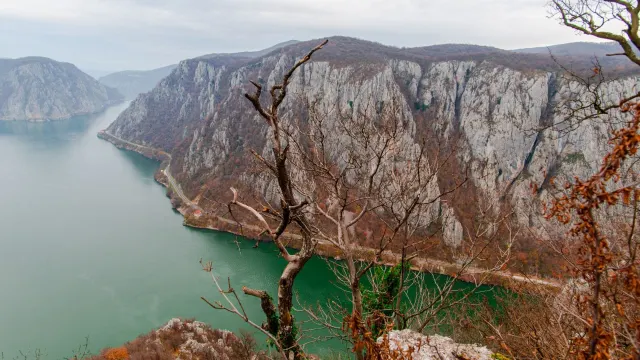
Also visit other attractions in this part of Romania, such as the Dobruja Gorges, the beaches of Vadu and Corbu, and the resorts of Mamaia Nord – Năvodari and Mamaia.