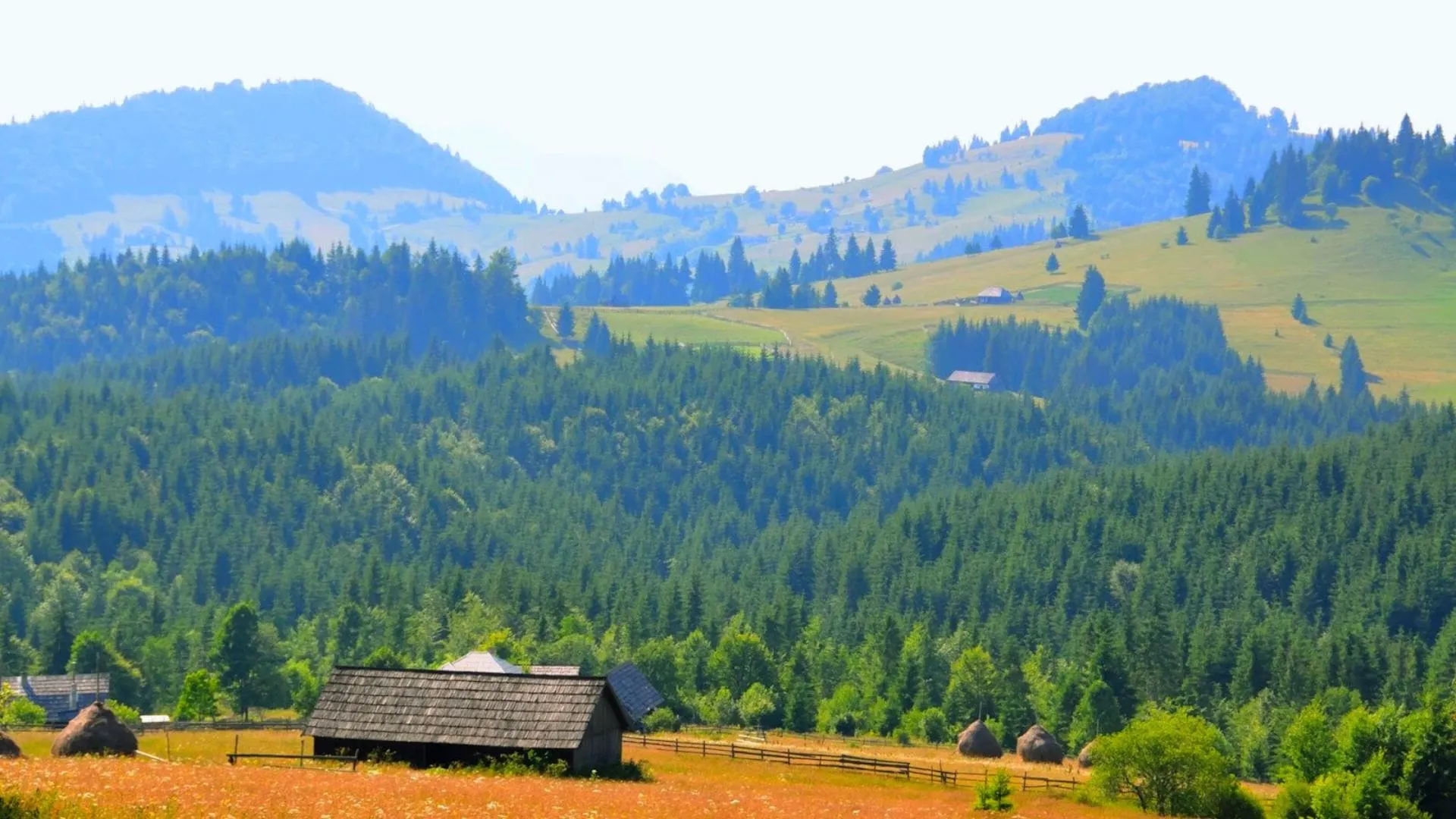
The Tihuța Pass (also known as the Borgo Pass or Bârgău Pass) is a crossing point in Bistrița-Năsăud County that links the regions of Transylvania and Moldavia.
It lies in the Bârgău Mountains, at an altitude of 1,201 meters, and is crossed by National Road 17, which connects the towns of Bistrița and Vatra Dornei.
Tihuța Pass. Source: greattimesphotography.blogspot.com
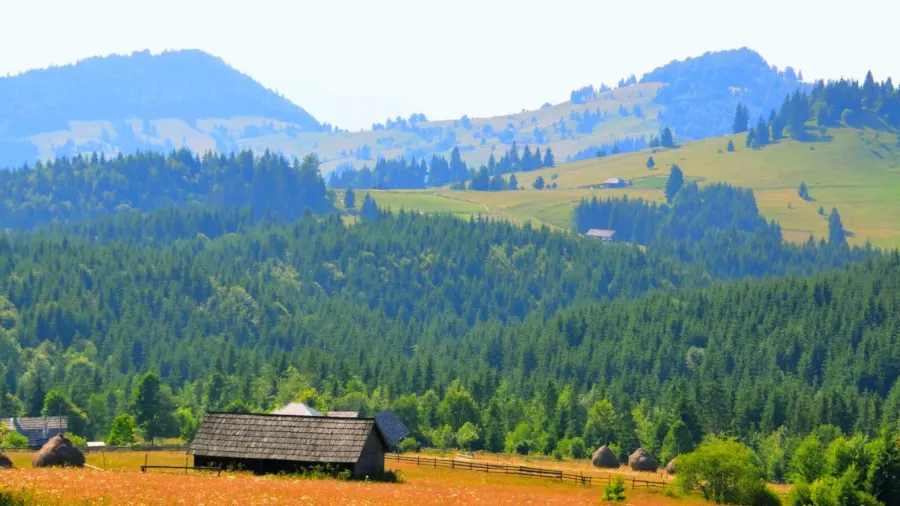
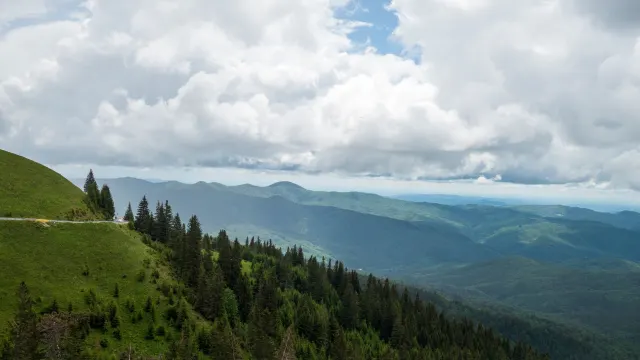
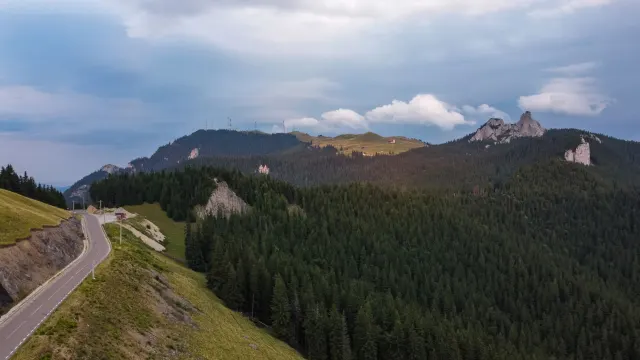
The pass is known for its spectacular scenery, its winding roads, and the challenges it poses to drivers, especially in winter, when snow can make the crossing difficult.
Geographically, the Tihuța Pass provides one of the main crossing routes between the historical regions mentioned above.
As an integral part of the Eastern Carpathians, the pass lies between the Bârgău and Călimani Mountains.
Historically speaking, beyond its strategic position, the Tihuța Pass has also gained special significance thanks to the legend of Dracula, associated with the mountain resort of Piatra Fântânele, located right in the pass, which draws many tourists from all over the world.
Getting to the Tihuța Pass
DN 17 remains one of the most important roads linking northern Romania with the center of the country, for both freight transport and tourism. It overlaps with European route E58.
Borgo Pass – Tihuța Pass
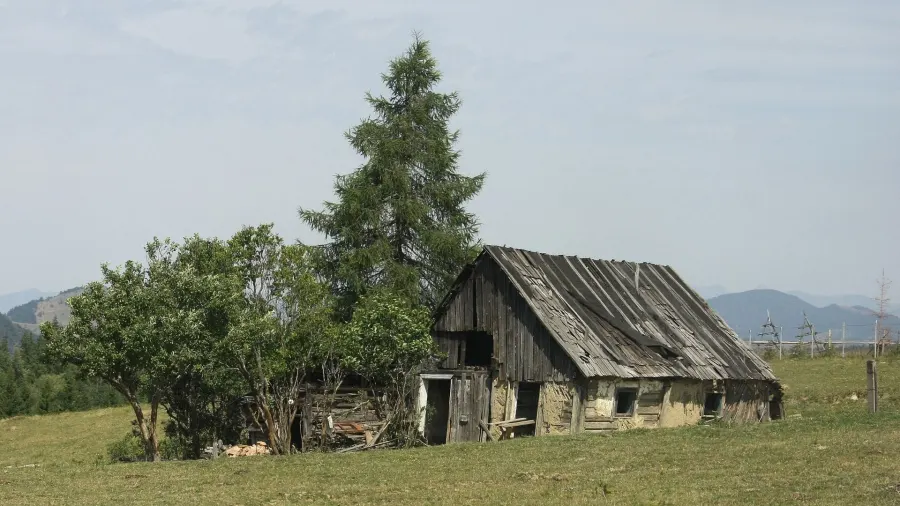
The nearest train stations are on secondary lines 502, at Teșna, and 516, at Dornișoara.
Over the years, the road has undergone numerous upgrades. One of the most important was the rehabilitation of the 25 km section between Tureac and the Suceava County line, which includes the pass. The work was contracted in 2004 and scheduled for completion in 2009.
Today, DN 17 is an essential road for transport and tourism in the region, offering easy access to various tourist areas in the north of the country (Horses' Waterfall, Vatra Dornei Resort).
The national road connects the towns of Dej, Beclean, Bistrița, Vatra Dornei, Câmpulung Moldovenesc, Frasin, Gura Humorului, and Suceava, providing an important road link between Transylvania and Bukovina.
A brief history
The Borgo Pass has a rich history as an old crossing point over the Carpathians.
An old trade route between Transylvania and Moldavia ran through here. It was used by merchants carrying goods from one side of the mountains to the other and was abandoned at the beginning of the 19th century.
Because of its high elevation, the Tihuța Pass also played an important defensive role.
During the many conflicts between neighboring kingdoms, the crossing through the Carpathians was often a point of attack or defense.
The road that crosses the Tihuța Pass today, DN17, was built between 1812 and 1817 at the initiative of the Aulic War Council in Vienna.
In 1969, the road was surfaced with concrete and later with asphalt, and modernization continued after 1990.
The Tihuța Pass has also been associated with the story of Count Dracula, because in Bram Stoker's novel, the character Jonathan Harker crosses this pass (called the Borgo Pass in the book) on his way to the vampire's castle.
Geography and landscape
The Tihuța Pass, also known as the Borgo Pass (Bârgău Pass), lies on the boundary between the Bârgău and Călimani Mountains, part of the Eastern Carpathians, in Bistrița-Năsăud County.
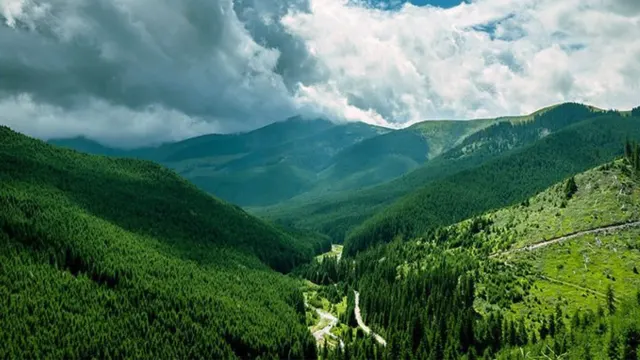
Located at an altitude of about 1,200 meters, the pass offers spectacular views of imposing mountain landscapes and steep valleys. It is one of the best-known mountain passes in Romania, linking Transylvania with Moldavia.
The pass lies on the ridge between Măgura Calului Peak (1,229 m) to the east and Piatra Fântânele Mountain (1,067 m) to the west.
Other important mountain passes lie near the Tihuța Pass: the Grădinița Pass to the north, the Mestecăniș Pass to the northeast, the Păltiniș Pass to the east, and the Creanga Pass to the southeast.
Coming from Bistrița, the Tihuța Pass road runs through the Tiha Valley (the valley of the Bârgău River, or Tiha), a narrow valley that adds a special charm to the mountain landscape. This picturesque area is known for its spectacular hairpin bends and towering slopes.
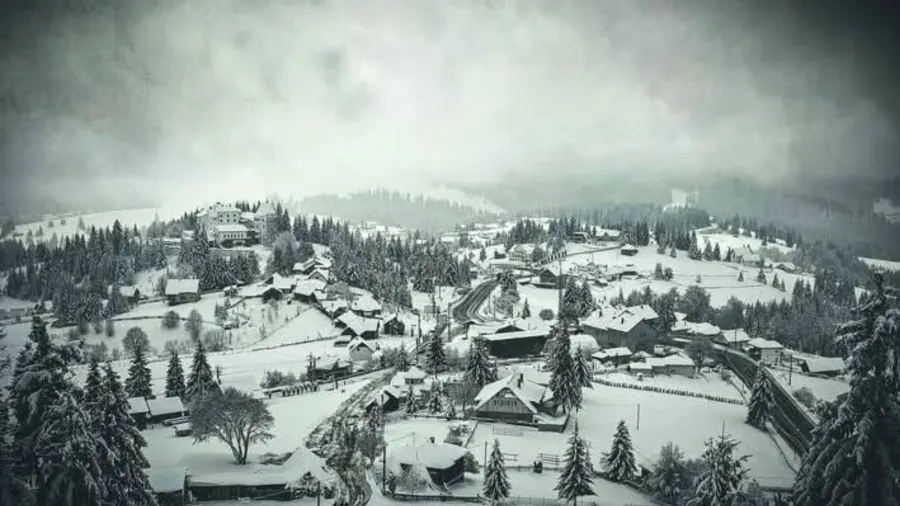
The Tihuța Pass has a mountain climate, with cold winters and abundant snow, which makes it a favorite area for winter sports. Summers are mild, with moderate temperatures.
Tihuța Pass, November 2024. Source: stiribn.ro
As for vegetation, coniferous forests predominate, especially spruce and fir, while the wildlife includes species such as bears, wolves, deer, and wild boars.
The Tihuța Pass and Via Transilvanica
The Tihuța Pass is also a special point of interest along the “Via Transilvanica” trail.
It is part of the Ținutul de Sus region (“the Upper Land,” one of the trail's 7 regions), which stretches for 277 km.
The first kilometers of the trail were inaugurated in 2018 in Bistrița-Năsăud County.
This long-distance trail stretches for more than 1,400 kilometers and crosses various historical and geographical regions of Romania.
The project was initiated by the NGO “Tășuleasa Social,” based in the Tihuța Pass area, a group dedicated to environmental conservation and the promotion of responsible and sustainable tourism. “The Road That Unites” aims to promote Romania's natural, cultural, and historical heritage.
Located at an altitude of more than 1,200 meters in the Bârgău Mountains, the Tihuța Pass is one of the most spectacular sections of this trail. Hikers are greeted by remarkable mountain scenery, coniferous forests, and imposing peaks. In summer, the trails offer excellent opportunities for exploration, while in winter, abundant snow turns this area into a real mountain challenge.
The Tihuța Pass offers a unique connection between the natural landscape and local legends, such as that of Count Dracula, whose influence can also be felt near Dracula Castle.
The link with Dracula and Dracula's Castle
The Tihuța Pass is closely linked to the legend of Count Dracula, the famous character created by Bram Stoker in his novel “Dracula.”
In the book, Stoker describes Jonathan Harker's journey through this area on his way to the vampire's castle, which has given the Tihuța Pass a mysterious aura.
Although the pass and Dracula's Castle have no real historical connection, the literary associations led to the creation of a themed tourist attraction – Dracula Castle in Piatra Fântânele. It was built in the 1980s to attract tourists fascinated by vampire mythology and the legend of Dracula.
The novel has boosted tourism in the area, drawing many visitors from all over the world eager to explore the places “haunted” by the vampire count.
Sighișoara Citadel and Poenari Fortress are also linked to the legend of Dracula.
Tourist attractions in the area
The Tihuța Pass is a mountain destination popular with tourists for the variety of activities it offers.
Nature lovers can choose from a variety of mountain trails and hikes through the wild landscape of the Bârgău and Călimani Mountains. One of the most popular routes leads to Heniul Mare Peak (1,611 m), which offers impressive panoramic views over the area.
The area around the Tihuța Pass is also home to a number of notable tourist attractions:
Via Transilvanica
Via Transilvanica is a hiking, horseback riding, and cycling trail that crosses Romania from Putna, in Bukovina, to Drobeta-Turnu Severin, passing through several counties, including Bistrița-Năsăud. The project was initiated by the NGO “Tășuleasa Social,” based in the area.
Lake Colibița
Lake Colibița is known as the “Sea in the Mountains” and is an artificial lake in the Călimani Mountains, at an altitude of 900 meters. It is a popular destination for relaxation, water sports, and fishing, also valued for its tourism development potential, accommodation options, and outdoor activities.
Piatra Fântânele Resort
It lies in the Tihuța Pass, at an altitude of over 1,100 meters, and is a mountain destination appreciated for its clean air and unique scenery. The resort attracts tourists both in summer, for hiking and relaxation, and in winter, for skiing and other winter sports (it has a chairlift). Dracula Castle is nearby.
Piatra Fântânele Monastery
Also known as the “Nativity of the Mother of God” Monastery, it is an Orthodox monastic settlement. Built in a remarkable natural setting, at altitude, the monastery is a place of pilgrimage and contemplation. Next to it stands a 31-meter metal cross, erected in 2010 and lit up at night.
Hotel Castel Dracula
Located near the Tihuța Pass, Dracula Castle is a famous tourist attraction inspired by the myth of Count Dracula, created by Bram Stoker. Opened in 1983 at the initiative of Alexandru Misiuga, then director of the county tourism office, the castle draws many tourists every year, fascinated by vampire legends and the unique scenery.
Ciosa village
A picturesque little village in the Bârgău Mountains, Ciosa is known for its mountain scenery and the tranquility of nature. It offers an authentic glimpse into rural life in the Carpathians.
Dornișoara village
Located near the Călimani Mountains, Dornișoara is an idyllic village where local traditions are kept alive. Known for its wild scenery and clean mountain air, the village is a gateway to mountain hikes.
Măgura Calului
A mountain peak in the Tihuța Pass area, Măgura Calului (1,229 m) offers spectacular views of the surrounding mountains.
The Romans' Road
An old stone-paved road, informally called the “Romans' Road” (“Drumul romanilor”), runs along the ridges near the Tihuța Pass.
It lies at an altitude of between 850 and 1,150 meters along a stretch of about 12 km and partly overlaps with the current road to Ciosa.
The origin of this road is uncertain – some believe it was part of an ancient Roman road, while others consider it medieval or a border-guard road. Another hypothesis, supported by historian Corneliu Gaiu, is that it was built in the Habsburg era to transport the stone used for the main road. The route follows the Bârgău Gorge – DN 17 – Fața Prislopului – Dosul Zâmbroaiei – Tășuleasa Ridge – Opcioara Ridge – Ilița Corchii – Iliuța Calului – Măgura Calului – DN17 and ends at the Tihuța Pass.
Although the stone surface has been damaged by erosion and by use as a forest road, the road is still passable and is part of the tourist circuit.
Accommodation and tourist facilities
The Tihuța Pass and its surroundings offer a range of accommodation options for tourists, from rustic guesthouses to modern hotels, ideal for those who want to enjoy nature or explore the area's attractions.
Among the most popular places to stay is Hotel Castel Dracula in Piatra Fântânele, which combines a Gothic atmosphere with modern comfort and especially attracts lovers of myths and legends. There are also other accommodation options in Piatra Fântânele
Besides this hotel, the Tihuța Pass area offers other places to stay, from mountain guesthouses to rustic cabins, all in a spectacular natural setting (Cabana Zimbroaia, Casa de Vacanță Roberto, Cabana Vlad 1, Popasul Transilvania).
There are also places to stay around Lake Colibița (30 km away) or in the Vatra Dornei resort (40 km away).
As for restaurants, you will find traditional Romanian menus with game dishes, local cheeses, and traditional desserts.
Weather conditions
The Tihuța Pass is known for its extremely varied and sometimes unpredictable weather.
In winter, the pass is covered in deep snow and temperatures drop below zero, which can make the crossing a challenge for drivers.
It is essential that those traveling through the pass in the winter months are properly equipped, with winter tires and snow chains.
In spring and fall, the weather is milder, but dense fog and precipitation are common, affecting visibility and road safety.
In summer, temperatures are pleasant. It is a good idea to check road conditions before setting out and to obey the speed limits.
The weather right now at the Tihuța Pass and for the next 7 days:
Frequently Asked Questions
1. What is the Tihuța Pass and where is it?
The Tihuța Pass (also known as the Borgo Pass or Bârgău Pass) is a mountain pass in the Eastern Carpathians, in Bistrița-Năsăud County, close to the border with Suceava County. It is part of the Bârgău Mountains and lies at an altitude of about 1,200 meters. The pass links Transylvania and Bukovina via national road DN17.
2. What tourist attractions are there near the Tihuța Pass?
The Tihuța Pass area is famous for its spectacular mountain scenery and for the legends that associate it with Count Dracula. Nearby is Dracula Castle, a themed hotel inspired by Bram Stoker's story. Tourists can also visit Piatra Fântânele Monastery, go hiking in the Bârgău Mountains, or enjoy winter sports on the ski slopes in the area.
3. When is the best time to visit the Tihuța Pass?
The Tihuța Pass can be visited all year round, but each season offers a different experience. Summer and fall are ideal for hiking and exploring, thanks to the pleasant weather and the spectacular colors of nature. In winter, the pass becomes a popular destination for skiing and other winter sports, and the snow adds a special charm to the mountain landscape.
Conclusion
The Tihuța Pass remains a tourist destination and a strategic hub of great importance in Romania, offering a spectacular crossing through the Carpathian Mountains.
Today, the modernization of the road and the tourism infrastructure developed around it have turned the pass into an attraction for tourists who love nature, history, and adventure.
Whether you are looking for spectacular mountain trails, an experience inspired by legends, or simply a place to relax, the Tihuța Pass offers a perfect combination of adventure, tranquility, and fresh air!