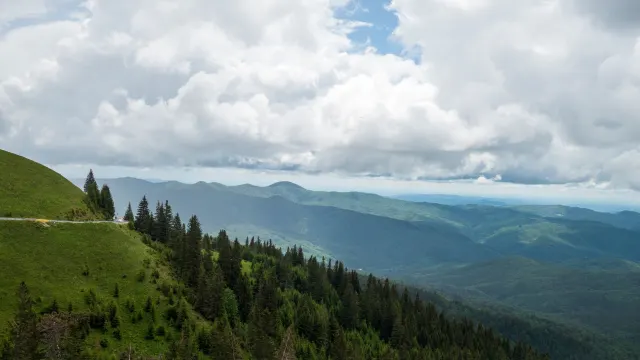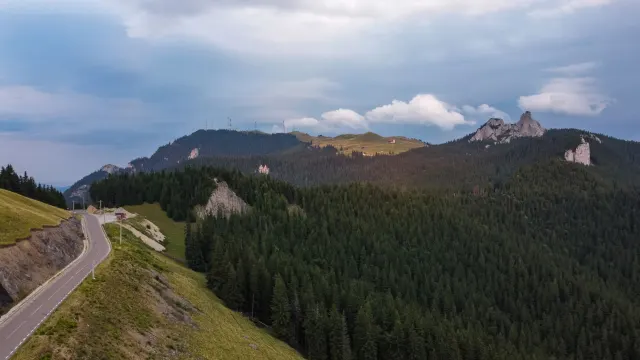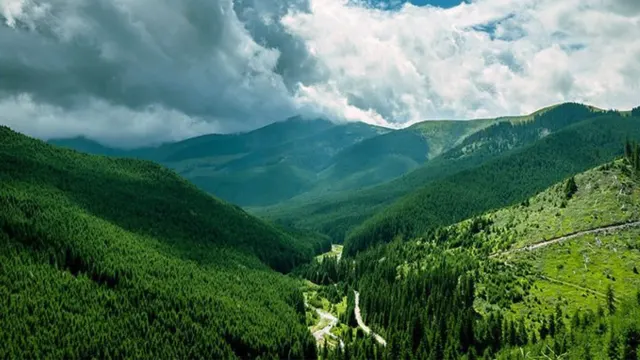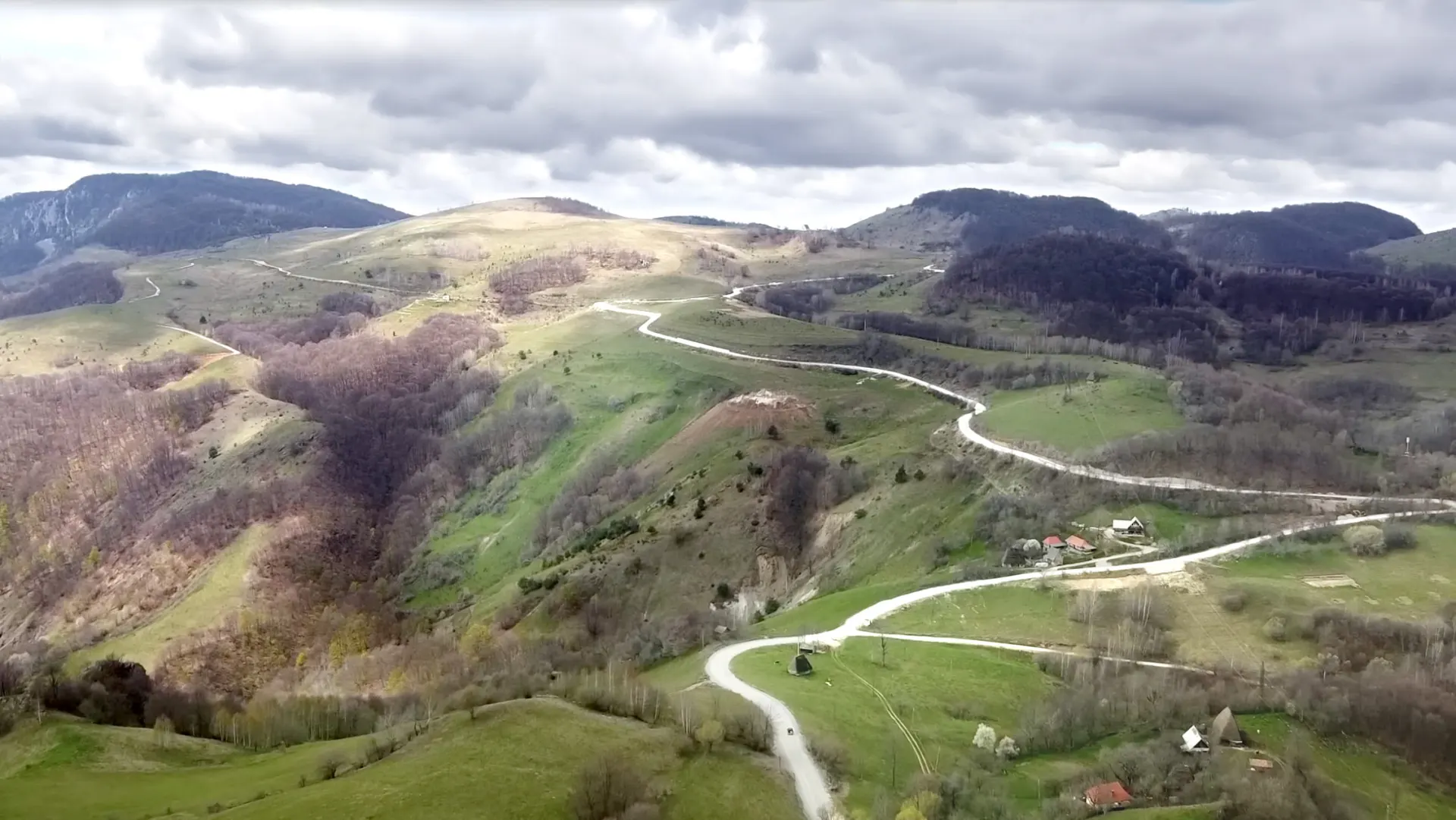
The Transapuseana, originally known as the Transalpina de Apuseni, is a county road that crosses the Apuseni Mountains in Alba County, Romania. The route offers spectacular views and is a major investment for the community and for tourism.
Transapuseana landscape
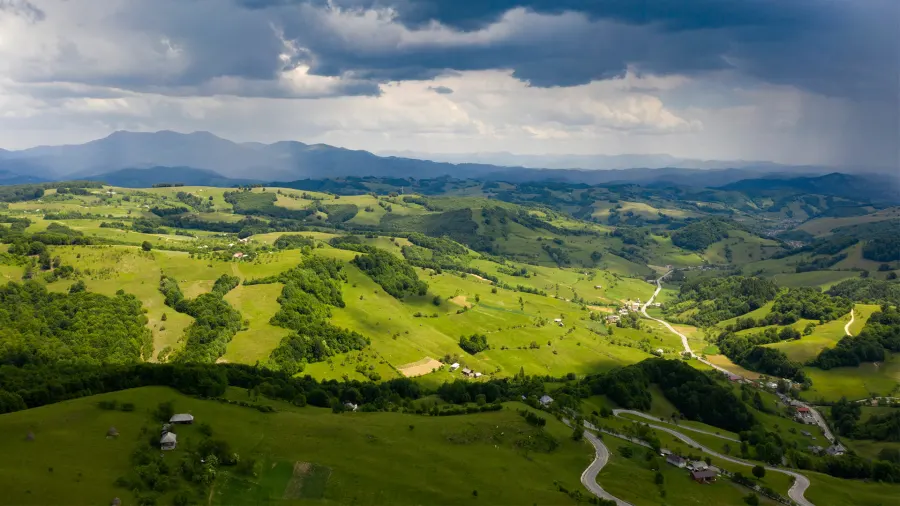
Also known as DJ 107I, the Transapuseana is one of the mountain roads recommended as a less crowded alternative to the Transfăgărășan.
In this article, we'll explore the history, route, and impact of the Transapuseana, highlighting its beauty and importance.
A brief history and features of the Transapuseana
The Road's Origins and Development
The Transapuseana has a rich and interesting history. Here are a few relevant aspects worth highlighting:
Origins: County road DJ 107I has long linked Aiud with the isolated villages of the Apuseni Mountains, all the way to the Bucium – Abrud area. Its modernization was launched by the Alba County Council, which signed the order to start construction in August 2019.
Development: The Transapuseana was modernized between 2019 and 2024 with European funds, through a partnership between the Alba County Council and the town halls of Aiud, Râmeț, Ponor, Mogoș, and Bucium. Today, it is an important route for transporting people and goods.
The Original Name: Transalpina de Apuseni
The original name, Transalpina de Apuseni, suggested a mountain road in the Apuseni similar to the famous Transalpina in the Parâng Mountains. The Alba County Council considered it too generic and changed it to Transapuseana, a name it registered with OSIM, the Romanian State Office for Inventions and Trademarks.
Transalpina de Apuseni
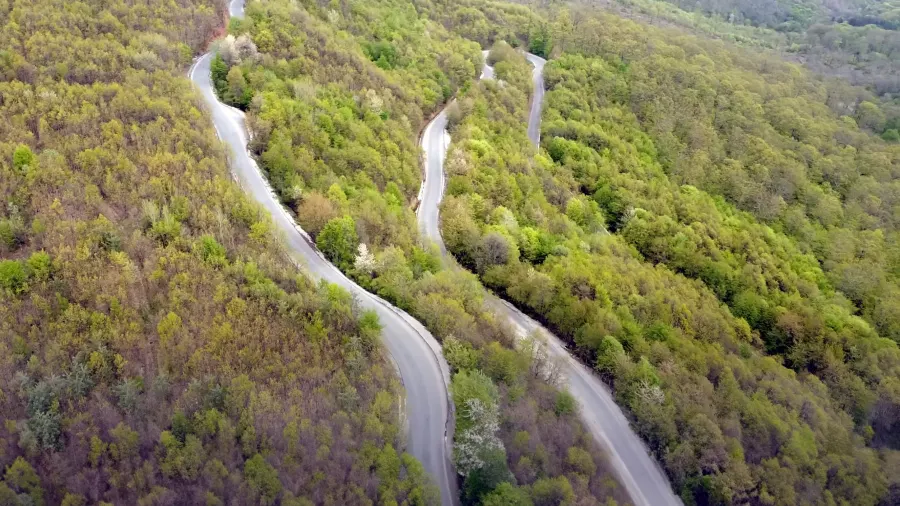
Today, the Transapuseana is a spectacular road that offers impressive views and a unique experience for visitors.
Location and route
The Transapuseana is located in central Romania, in the Apuseni Mountains.
The road has a total length of 78 kilometers and connects the city of Aiud (Alba County) with the Bucium – Abrud area (Alba County). It links the A10 highway to national road DN74 and crosses a picturesque mountain region with spectacular scenery and biodiversity.
The road starts in Aiud and climbs toward the Apuseni, passing through 4 communes of Alba County: Râmeț, Ponor, Mogoș, and Bucium.
The Transapuseana: a journey through the cultural heritage of the Apuseni Mountains
The route of the Transapuseana, originally called the Transalpina de Apuseni, crosses two distinct ethnographic areas identified by ethnographer Valer Butură: Mocănimea Arieșului (Râmeț, Ponor, Mogoș) and the Metaliferi area (Bucium).
Cow barn on the Transapuseana
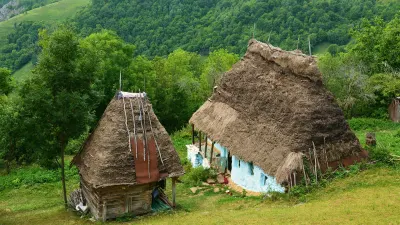
The first three communes in particular are facing severe depopulation, but they are renowned for their rich history, impressive landscapes, monuments, and traditions preserved over time.
The more isolated parts of the area still faithfully keep the old customs today. Local communities have traditionally relied on mining, especially around Bucium, but also on the timber industry and agriculture. See transalpinadeapuseni.ro
The church in the life of Apuseni Mountains communities
The route features many churches, because the church was an expression of the community's bond with the divine. Building one reflected people's respect and reverence for God, and it was a focal point of their spiritual and social relationships.
In an era when most people could not write, church painting played an essential role. Church painters turned the words of the Gospel into images, offering the faithful a visual theology.
Churches were often built on hills, dominating the villages both visually and symbolically. They served as landmarks and as shelters in times of danger, signaling attacks or disasters by ringing their bells. The village cemetery was usually located around the church.
Views and high curves on the county road
The Transapuseana is famous for its spectacular views. Along the way, you'll admire deep valleys, dense forests, and impressive mountain scenery.
Transapuseana
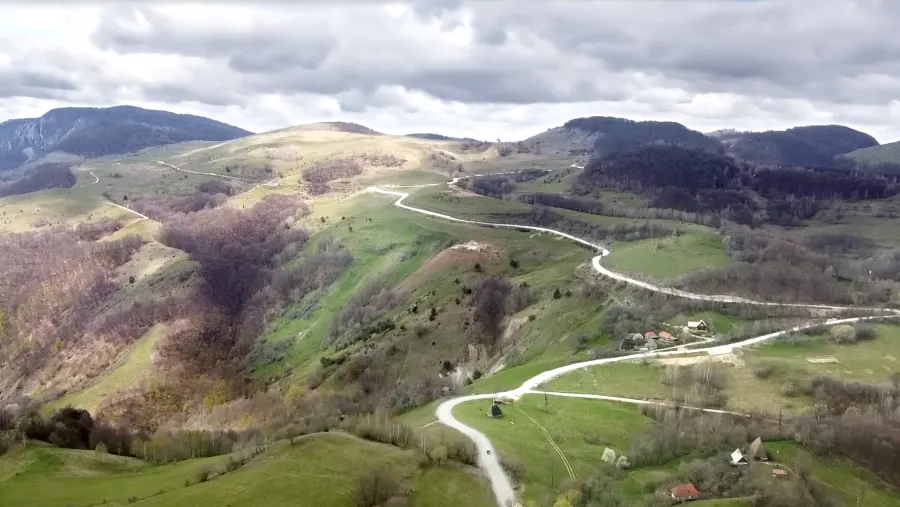
The high curves, narrow road, and hairpin bends will test your driving skills, but they'll reward you with unforgettable panoramic views.
The Transapuseana is much more than a road – it's an adventure through the natural beauty of the Apuseni Mountains.
Accommodation
If you want to explore the Transalpina de Apuseni in depth, there are a few accommodation options along the route. For more details, check Booking.com
Keep in mind that the tourist infrastructure is still developing, so if you plan several stops, come prepared with water and snacks.
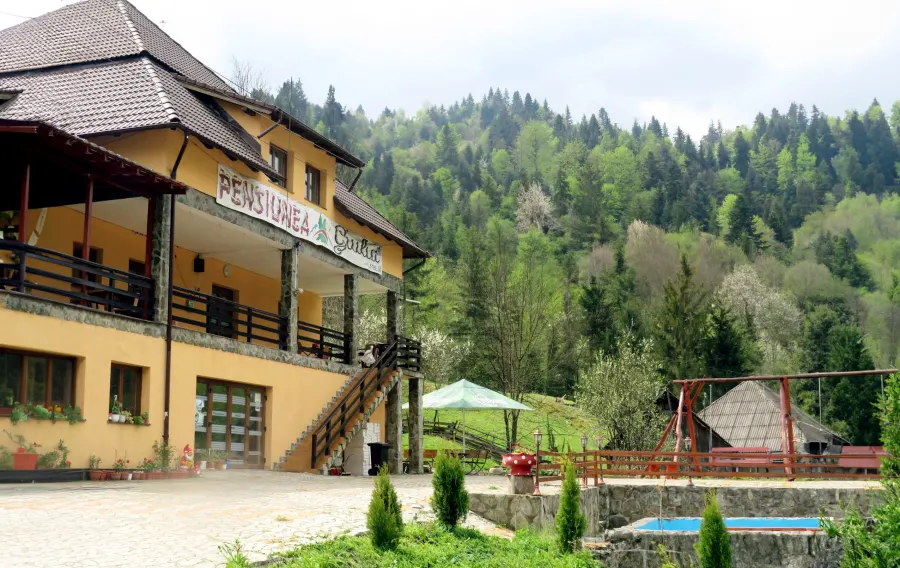
Pensiunea Giulia is located in the village of Gura Izbitei, just 2 km from Bucium.
The rooms have balconies with a lovely view of the surroundings. In the guesthouse garden, guests can enjoy a children's playground and barbecue facilities.
Various activities, such as hiking, can be enjoyed nearby. The Detunata Goală, Detunata Flocoasă, and Negrileasa nature reserves are 8 km away.
If you want to visit the Transapuseana, it's best to make your lodging reservation early, especially during the summer season.
Along the way, you can see several guesthouses and places to stay or eat right from the road: Pyramids Heaven, Pensiunea Carmen, Ralph Cabin, Vila Sub Piatră, Popas Transapuseana, or Apuseni Glamping Retreat in Izbița.
Pyramids Heaven: Set in a picturesque part of the Apuseni, this guesthouse right by the Transapuseana offers accommodation in a remarkable natural setting, close to numerous hiking trails. It's appreciated for its comfortable rooms and spectacular mountain panorama.
Pensiunea Carmen: Located in Bucium commune, Pensiunea Carmen is ideal for relaxing, with authentic rustic decor. Guests appreciate the unique view of the Detunata Peaks from the rooms and the hosts' hospitality. Traditional cuisine and outdoor activities such as hiking are among the property's highlights.
RALPH Cabin – Apuseni Mountains: RALPH Cabin offers modern accommodation with rustic touches, perfectly blended into the wild nature of the Apuseni Mountains. It's suited to both relaxing and exploring, located close to points of interest such as the Râmeț Gorges and Piatra Secuiului.
Pensiunea Casa Moților: Located in Bucium, Pensiunea Casa Moților is an excellent choice for anyone who wants to explore the landscapes around the Detunata Peaks. It's appreciated for its excellent food, the hosts' hospitality, and its proximity to hiking trails. The welcoming atmosphere and quiet location make Casa Moților a popular choice among tourists.
Other accommodation options near the Transapuseana, in Râmeț commune, are Magia Muntelui and Dream view of Apuseni
Each guesthouse is a gateway to discovering the nature and traditions of the Apuseni, offering comfort and activities tailored to what visitors want.
Natural and cultural attractions along the route
Râmeț Commune
The first commune along the Transapuseana is Râmeț, known for its old Orthodox monastery and for the picturesque Râmeț Gorges reserve.
Râmeț Gorges trail
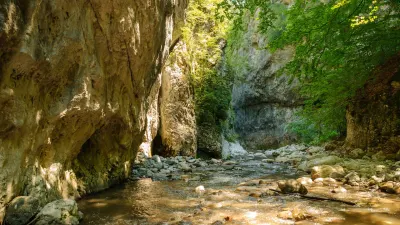
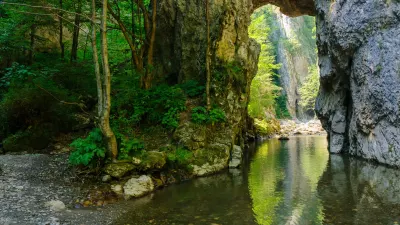
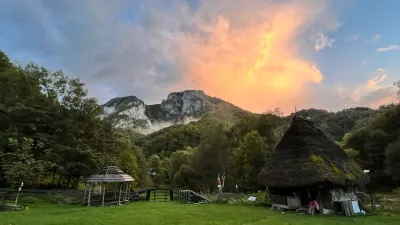
Râmeț Monastery, an old monastic settlement, draws many pilgrims thanks to its history and spiritual beauty. The Râmeț Gorges offer spectacular scenery and hiking trails, making them an ideal destination for nature lovers.
The road climbs along the ridges of the Trascău and Metaliferi Mountains and reaches a maximum elevation of 1,117 m.
The stretch of the Transapuseana through Râmeț commune is uniquely beautiful, with forested hills, deep valleys, and scattered houses and hamlets.
Ponor Commune
Ponor commune has a distinctive landscape of gentle hills and deep valleys. Two important nature reserves lie within the commune: the Geogel Gorges and Vânătările Ponorului.
The Geogel Gorges, located in the Trascău Mountains, offer impressive views along the Geogel River. Vânătările Ponorului, classified by speleologist Viorel Ludușan as a polje, are remarkable for their limestone wall streaked with bluish-purple bands, the result of rain and snowmelt running down the rock.
Mogoș Commune
Mogoș is known for its traditional thatched-roof houses, found along the Tomești-Cojocani-Valea Barnii route.
Although many of these houses are now abandoned, they keep the charm of local tradition and make for a picturesque landscape. Visitors can explore the area to discover part of the history of the region's dwellings. See details
Bucium Commune
The last commune along the Transapuseana is Bucium, part of the Metaliferi ethnographic area.
The commune is renowned for its mining tradition and its many stone crosses, six of which are considered historic monuments.
Here you'll also find the Ecaterina Varga Memorial House, a symbol of the freedom struggle of the serfs of the Apuseni Mountains. Bucium also recently opened the Buciumani Museum, an ethnographic museum displaying traditional objects, mineral specimens known as “mine flowers,” and mining equipment.
Bucium commune is home to three nature reserves: Detunata Flocoasă and Detunata Goală (the Detunata Peaks), which offer impressive panoramic views, and the Negrileasa Daffodil Meadow, a five-hectare reserve that delights visitors with its natural beauty. See more details at transalpinadeapuseni.ro
The Bucium-Abrud section has standard-width lanes and passes through villages where tourism is increasingly taking off, with rooms for rent and guesthouses under construction.
Transapuseana Modernization and Investment
Technical Data
The first section of the Transapuseana, county road 107I, which crosses Alba County, is complete and is 43 kilometers long. It was inaugurated on Friday, April 26, 2024, in the presence of representatives of the Alba County Council.
Transapuseana
On this first section of the road, the reinforcement work, bridges, culverts, rainwater drainage ditches, and road markings have been completed.
Section 2 of the road, about 35 km long, between Ponor and Bucium, includes 13 bridges.
Update, September 2, 2024: According to statements made to ziarulunirea.ro by the vice president of the Alba County Council, the Transapuseana has been completed. Next comes the acceptance of the work on Section 2, with a deadline at the end of September.
Update, December 5, 2024: According to statements by the authorities, Section 2 of the Transapuseana passed final acceptance on Thursday, December 5. The Transapuseana is officially complete!
The most expensive county road
The modernization of DJ 107I, the Transapuseana, is considered the largest investment in a county road in Romania, with a total value of over 73 million euros.
This sum covers the infrastructure work, reinforcements, paving, bridges, and other elements needed to turn the Transapuseana into a modern, safe road.
Financing from European Funds
Most of the funding comes from European funds, underscoring the project's importance at the regional and national levels. These funds made high-quality work possible and contributed to the area's economic development.
Impact on the Community and Tourism
The modernization of the Transapuseana will bring the following benefits:
Economic: The road will make it easier to transport people and goods, supporting the region's economic development.
Tourism: The spectacular views will attract tourists, generating income for local communities and businesses.
The modernization of the Transapuseana is not just an investment in infrastructure but also an opportunity for development and for promoting the natural beauty of the Apuseni Mountains.
Weather
Temperature changes are frequent on the Transalpina de Apuseni road, so it's a good idea to bring warm clothes, even in the summer months.
Here's the weather right now and for the next 7 days in Râmeț commune, the first commune on the Transapuseana:
Practical tips before setting out on the Transapuseana
1. Any car will do — but leave with a full tank
The Transapuseana is fully paved from Aiud to Abrud–Bucium, so you don't need four-wheel drive or high ground clearance. Any car with a working engine can handle the route without problems. Still, don't count on gas stations along the mountain stretch. Fill up before you set off — in Aiud if you're coming from the east, in Abrud if you're coming from the west.
2. The road is narrow in places — drive carefully
Unlike the Transalpina, which is a national road, the Transapuseana is a county road and is narrow along many stretches. In narrow spots with oncoming vehicles, one of the drivers has to yield. Don't rush, and keep your distance from the edge of the road — in some places there's no guardrail. The recommended speed on the mountain stretches is 40–50 km/h.
3. Don't rely on GPS — download an offline map
Along much of the route, cell signal is weak or nonexistent. Google Maps and Waze don't work without internet. Before you go, download the area for offline use in Maps.me or Google Maps (Settings → Offline maps → select the Alba–Apuseni area). Also save the Salvamont mountain rescue number: 0-SALVAMONT (0-725-826-668) — even if you have no signal when something happens, you may find a spot with signal farther up or down the route.
4. Bring warm clothes, even in summer
At the route's highest point, 1,117 m, the temperature is a few degrees lower than in Aiud or Abrud. In the morning and evening, even in July–August, the air is cool. A fleece or a light waterproof jacket should be in the car whatever the season. In the fall (September–October), when the Apuseni forests are just as spectacular as in summer, you may run into thick fog and low temperatures on the ridge.
5. Bring water and food from home
There are a few guesthouses and roadside stops along the route where you can eat or buy something to drink, but bring water and some snacks with you. If you're traveling with kids, all the more so — hunger at altitude hits suddenly and spoils the mood fast.
6. Parking spots aren't signposted — mind the space
There are scenic overlooks and places to pull over on the Transapuseana, but most aren't officially signposted. When you want to stop for photos, make sure your car is completely off the roadway and doesn't block oncoming traffic. Avoid stopping in curves or right after them — visibility is poor and the risk of an accident is real.
7. Leave early in the morning
The Transapuseana is becoming more and more popular. On weekends in July–August, traffic is heavy between 11:00 and 14:00. Setting off between 8:00 and 9:00 guarantees you an almost empty road, good light for photography, and the peace and quiet to enjoy the scenery. If you leave later, be patient — passing on the Transapuseana isn't a safe option.
8. Don't miss the sights along the route — pull over
The Transapuseana isn't just a road to drive from one end to the other. The sights along the route deserve your time: the Râmeț Gorges with Râmeț Monastery at the entrance from the Aiud side (a 2–3 hour round-trip hike), Vânătările Ponorului in Ponor commune, the traditional thatched-roof houses of Mogoș, and the Detunata Peaks near Bucium.
If you try to see them all in one day, allow at least 7–8 hours for the whole route with stops.
Frequently Asked Questions
Where is the Transapuseana?
The Transapuseana is the road that crosses the Apuseni Mountains from Aiud to Bucium, in Alba County.
How long is the Transapuseana?
The Transapuseana is 78 kilometers long.
Is the Transapuseana finished?
Yes, the Transapuseana is officially complete.
Is there parking on the Transapuseana?
There are parking spots and scenic overlooks on the Transapuseana, but they aren't signposted yet and only have room for a limited number of cars, given the terrain the road crosses.
What cars can you drive on the Transapuseana?
Any car with a working engine can drive the Transapuseana. The road is fully paved from Aiud to Abrud–Bucium. Still, it's narrow in places and calls for caution.
How long does it take to drive the Transapuseana?
Driving straight through without stops, the 78 km Transapuseana route takes about 2 hours. With short stops, plan on 4–5 hours, and if you want to visit all the sights, including the Râmeț Gorges, at least 7–8 hours.
Is there cell service on the Transapuseana?
Signal is weak or nonexistent on the higher stretches of the route. Download an offline map before you go.
Is there a gas station on the Transapuseana?
Don't count on gas stations along the mountain stretch. Leave Aiud or Abrud with a full tank.
Conclusion
The Transapuseana is much more than a county road. It's an adventure through the natural beauty of the Apuseni Mountains and a significant investment for the community and for tourism.
We encourage readers to buckle up and set off on a journey along the Transapuseana, a fairy-tale road. Discover impressive landscapes, breathe in the fresh mountain air, and enjoy every curve of this unique road.
The Transapuseana is more than a road – it's a story of nature and of the people who made this connection between regions possible. So don't miss the chance to explore it!
Visit other scenic areas of Romania too – Cerna Valley, Transrarău