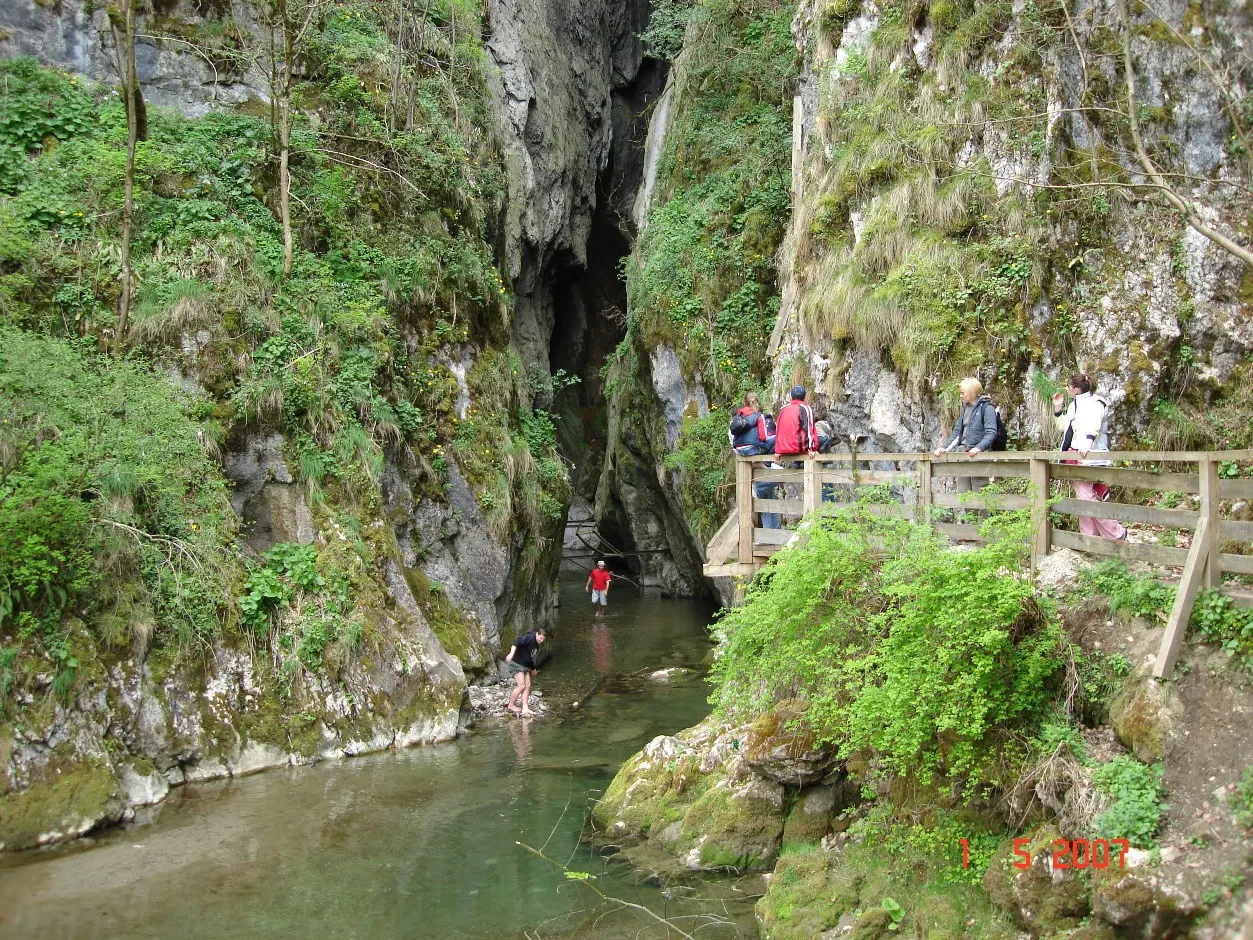
Huda lui Papară Cave lies in the village of Sub Piatră, Sălciua commune, Alba County, on the northwestern edge of the Trascău Mountains. It has 5,200 meters of mapped passages, is considered the longest cave in the Trascău Mountains and has one of the tallest underground chambers in Romania, the Hall of Wonders (Sala Minunilor), 102 meters high.
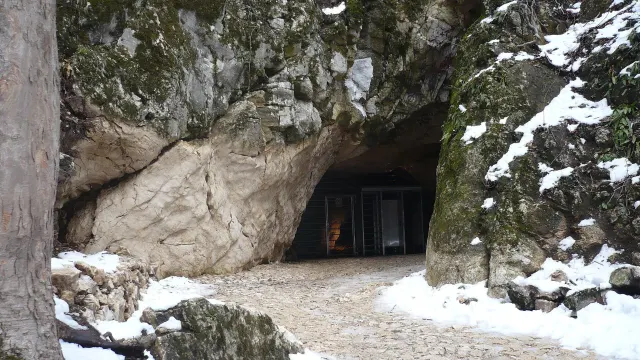
Free access has been prohibited since 2013, when the entrance was closed off with a metal gate. You can only go in on a guided tour, with caving gear. Without a guide you can see the limestone portal at the entrance and the monastery in front of it, a good stop on a loop through the Apuseni Mountains.
Location and access
The cave is on Valea Morilor, a right-bank tributary of the Arieș, below the Bedeleu massif. The nearest major road is the DN75 national road Turda – Câmpeni, in the Arieș Valley.
From Sălciua de Jos: in the center, next to the town hall, turn off the DN75 onto the DC130, where a tourist sign shows the way. Follow the local road for about 5 km to Sub Piatră. You leave the car in the village and walk the last stretch, 15–20 minutes.
From Turda: about 45 kilometers on the same road, to the center of the commune.
From Cluj-Napoca: take the A3 or the DN1 to Turda, then the road along the Arieș.
If you're coming along the Transapuseana, you can head down from Brădești to Vânătările Ponorului and then on to the Arieș, so you can see both on the same day.
Guided tours of Huda lui Papară Cave
Visits are only possible with a guide. In 2026, Extreme Forest Climbing, a company based in the village, offers three tours, with gear included (neoprene suit, harness, helmet and headlamp):
Tour | Duration | Distance covered | What you see | Price |
|---|---|---|---|---|
Classic | 4 hours | 700 m | the underground river, up to the Hall of Wonders | 300 lei |
Adventure+ | 5 hours | 2,000 m | the sump, the Hall of the Cross, the Hall of Silence | 400 lei |
Explorer | 7 hours | 2,300 m | the fossil section and the Virgin Hall, with rope gear | 500 lei |
Bookings are made on the visithudaluipapara.ro website, by day and time slot. Prices are those listed in October 2026.
Even the classic tour is a demanding outing: you climb small waterfalls, wade through cold water and come back wet. You need to be in good physical shape; also ask the organizer about the minimum age, which isn't listed. In winter, between December 1 and March 31, the caving permits rule out entry so the hibernating bats aren't disturbed.
What you can see without a guide
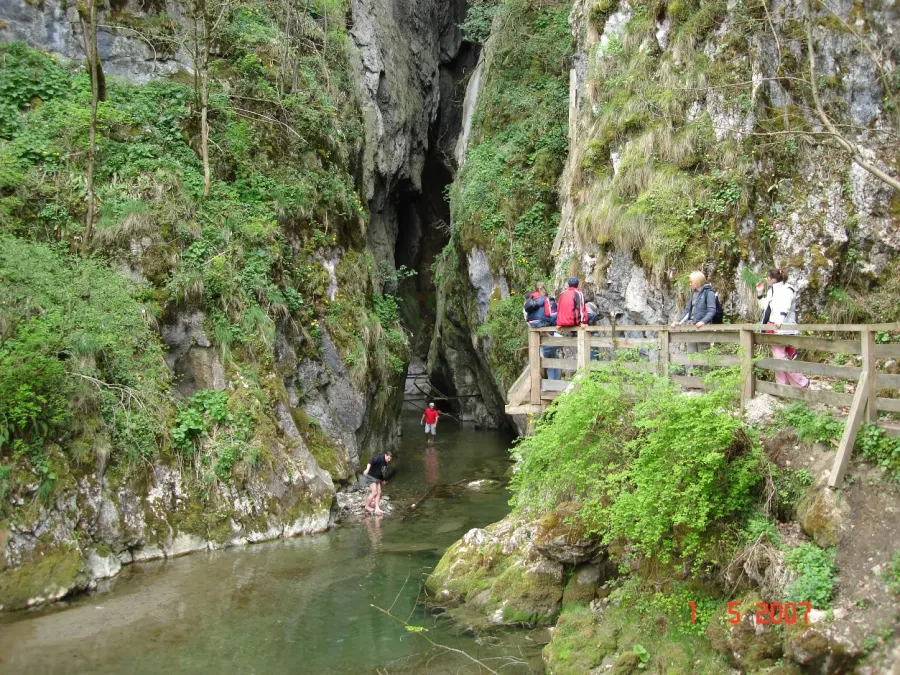
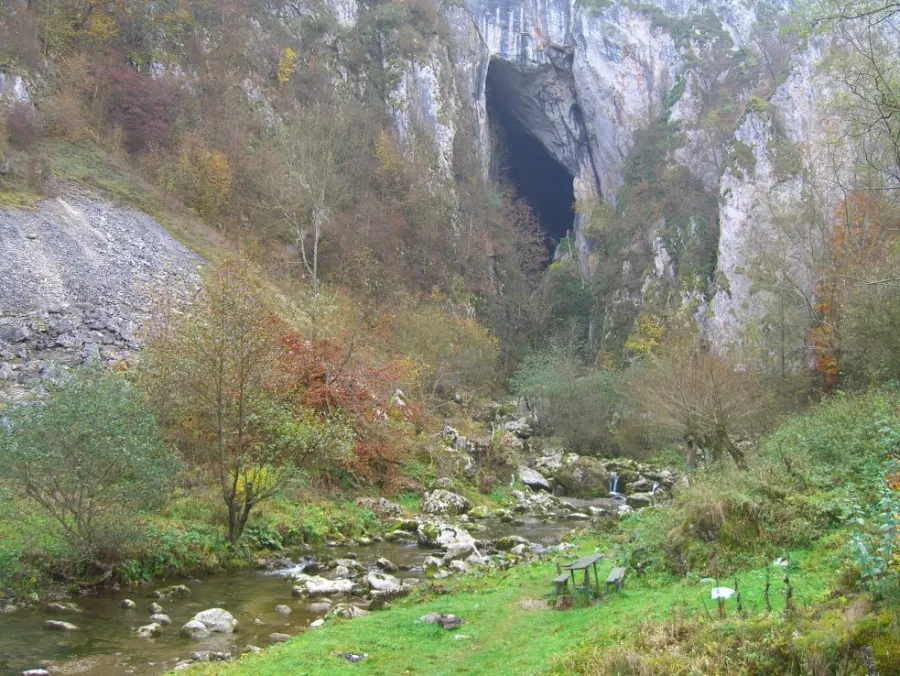
The entrance is a cleft in the limestone wall, about 40 meters high and 6 meters wide at the base. Out of it flows the stream that has crossed the entire massif underground.
On the hill in front of the cave stands a convent. Its wooden church, dedicated to Saint Paraskeva, was built in 1797 on the site of an older hermitage and was restored between 1998 and 2014.
Don't try to go in on your own: beyond the gate there are lakes, waterfalls to climb and passages with water up to your neck.
The active passage and the Hall of Wonders
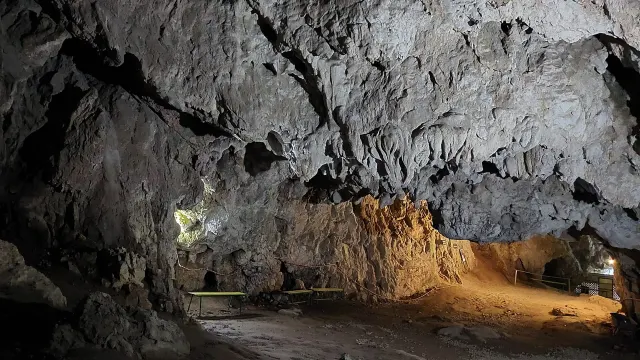
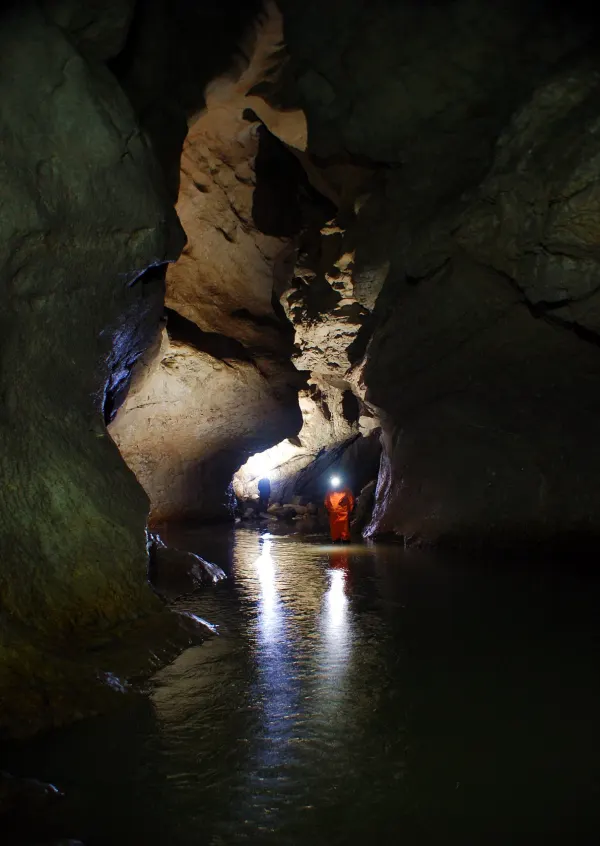
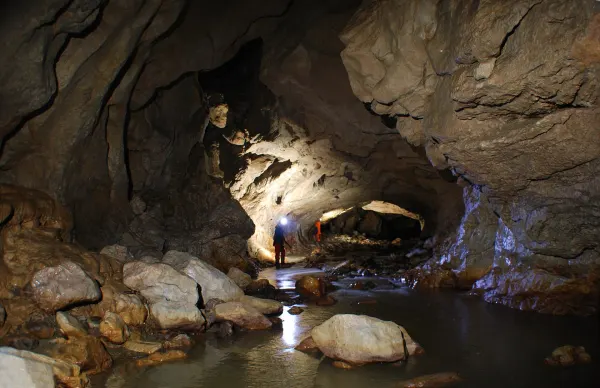
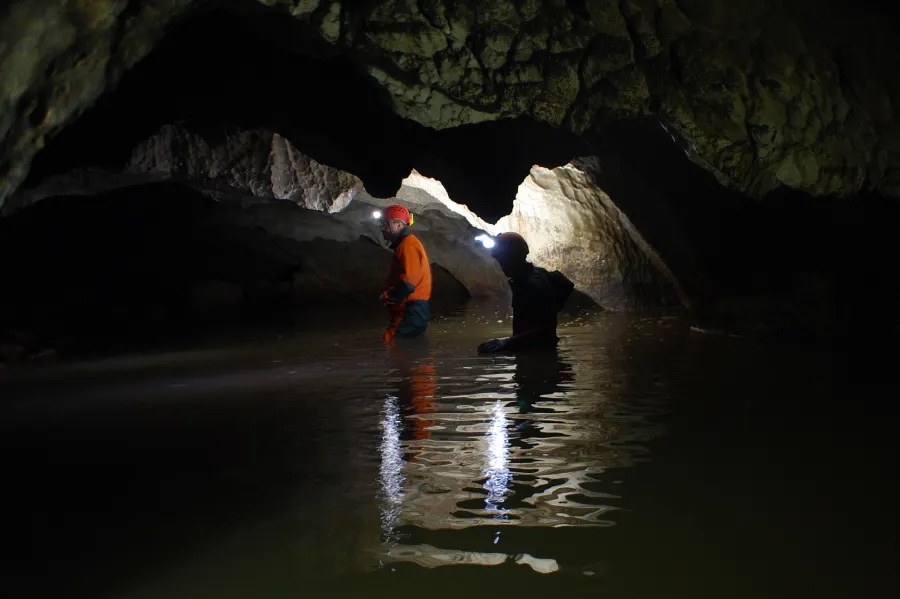
The main passage is active: the stream runs along its entire length, and its flow rises sharply when it rains. Right after the entrance comes a lake 50 meters long and up to 2 meters deep, then the Evantai Waterfall, which has to be climbed.
The active passage leads to the Hall of Wonders, the largest chamber in the cave: 56 × 92 meters and 102 meters high. Numerous helictites, formations that grow in irregular directions, have formed on the ceiling, along with stalactites up to 8 meters long. Farther on are the Virgin Hall (also called the Hall of Silence), the Hall of the Cross, with a chimney over 50 meters high, and the Great Barricade, a pile of collapsed boulders.
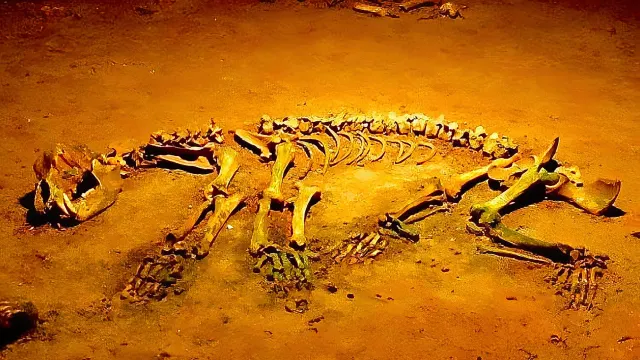
Above the active passage stretches a fossil labyrinth more than two kilometers long, called the Ludușan Labyrinth after the cavers who discovered it. Toward its end lie the Gemânată Waterfall and a sump that has not yet been fully explored.
The link with Vânătările Ponorului
Three streams, Ponorul, Valea Poienii and Valea Seacă, collect water from about 150 km² and disappear underground at Vânătările Ponorului. The water then travels 1,200 meters beneath the massif, drops 92 meters and emerges through the cave as the stream that flows toward the Arieș.
Floods and accidents
For the same reason, the cave becomes dangerous during torrential rain and snowmelt: the water level rises very quickly. Salvamont mountain rescue brought out groups caught by floods in 1980, 2010 and 2016. In 2016 there were 11 people, brought out after about 7 hours.
History and discovery
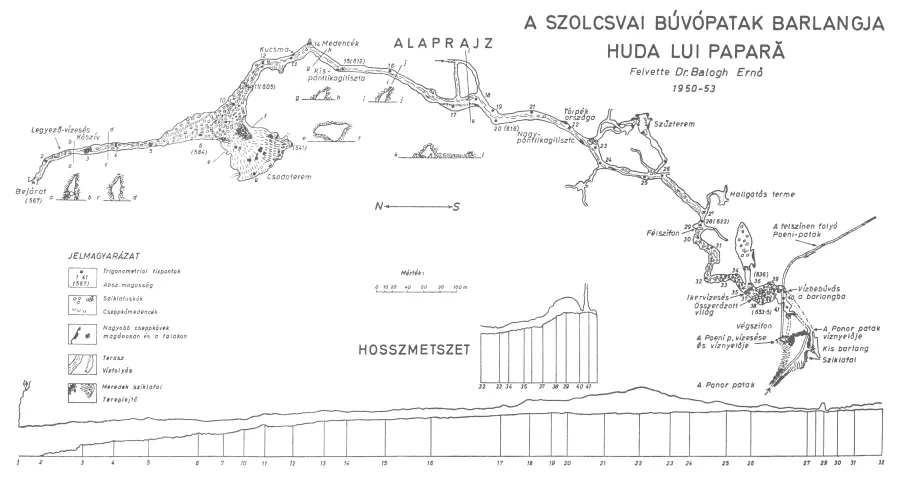
The first written mention dates from 1839, when Lenk von Treuenfeld referred to the cave without going inside. In 1954, cavers from Cluj led by Ernő Balogh explored the active passage for more than 1,200 meters and drew the first map.
Systematic exploration began in 1979 with the Polaris club from Blaj, led by the Ludușan brothers. The club fitted out the cave for tourists in 1986, but a flood destroyed the installations. A redevelopment project with European funds, begun in 2004, was never completed.
A bronze celt, probably an offering, was found near the entrance, a sign that the site was also used for worship. Inside, prehistoric traces were found, including rough stone tools.
Where the name comes from
“Hudă” is a regional word for a hole, grotto or shelter. For the second part of the name, the most often cited explanation links it to the Latin papa, a religious leader, hence “the priest's shelter.” The stories about the omelet (papară), told by guides in the 1980s, are just local jokes.
Legends: Zalmoxis and the solomonari
The cave features in many local stories. The best known says that Zalmoxis, the god of the Dacians, withdrew here. Another makes it the home of the solomonari, sorcerers who, in the folk beliefs of the Apuseni, controlled clouds and hail. Neither has any archaeological support, but they explain why the place is so present in the folklore of the Trascău area.
Bats and cave fauna
The Hall of Wonders shelters one of the largest bat colonies in Europe. The count in the winter of 2007–2008 found about 84,000 bats of 9 species, including the common bent-wing bat (Miniopterus schreibersii) and the greater horseshoe bat (Rhinolophus ferrumequinum). The guano deposit in the chamber is estimated at about 60 wagonloads.
Smaller species adapted to darkness also live here: snails, spiders, pseudoscorpions and ground beetles.
Practical information: gear and rules
You can only go in with a guide. Caving groups need a permit from the Speleological Heritage Commission and approval from the National Agency for Protected Natural Areas.
Basic gear: neoprene suit, helmet with headlamp, backup flashlight and harness. The Explorer tour also uses rope gear.
There is no entry in winter, during the bats' hibernation period, nor after rain or during snowmelt.
Bring dry spare clothes and water shoes.
Hiking trails
The blue-cross-marked trail Râmeț Chalet – Râmeț Gorges – Cheia village – the cave – Sălciua takes 6–8 hours and is recommended only for well-prepared hikers.
To Șipote Waterfall it's about 4 km on a marked path.
Paths also climb from the village to the plateau above and to Vânătările Ponorului, which hikers combine into day loops.
Nearby attractions
Vânătările Ponorului
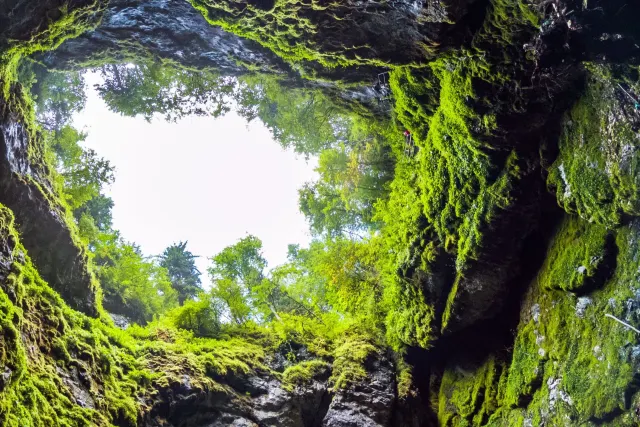
To the south, on the plateau above the cave, is the sinkhole where the waters that emerge here disappear. It has a 25-meter waterfall and a viewing balcony. See the guide to Vânătările Ponorului.
Râmeț Gorges and Vălișoara Gorges
On the eastern side of the Trascău Mountains, Râmeț Gorges and Vălișoara Gorges can be reached from the Transapuseana.
Trascău Fortress
The ruins of Trascău Fortress at Colțești tower over the village of Rimetea, about an hour's drive away.
Accommodation nearby
There are two guesthouses in the village, Pensiunea Huda lui Papară and Pensiunea Sub Piatră, a few minutes from the entrance. On the plateau, near Vânătările Ponorului, is the Raven's Nest – The Hidden Village vacation village.
You'll find more lodging options in the center of the commune, on the Arieș, and about an hour's drive away in Rimetea. Prices change from season to season, so check them when you book.
Weather in Sălciua
Frequently Asked Questions
Can you visit Huda lui Papară Cave?
Yes, but only on a guided tour, with caving gear. Free access has been prohibited since 2013, and the entrance portal can be seen without a guide.
How much does a cave tour cost?
In October 2026, the 4-hour classic tour cost 300 lei per person, and the longer ones 400 and 500 lei, with gear included.
Where is the cave?
In Sălciua commune, Alba County, about 5 km from the national road and 50 kilometers from Turda.
What is its link with Vânătările Ponorului?
The waters that disappear underground at Vânătările Ponorului emerge here, after a hidden course of about 1,200 meters.
When is entry not allowed?
Between December 1 and March 31, while the bats hibernate, and at any time after heavy rain or during snowmelt, when there is a risk of flooding.
Conclusion
The cave can only be visited with a guide, but the classic tour, up to the Hall of Wonders, is within reach of anyone who is fit and doesn't mind cold water. Even if you don't go in, it's worth stopping for the limestone portal and the monastery, especially combined with the sinkhole above, on the same karst system.
See also Scărișoara Ice Cave, in the Apuseni, set up for visits without special gear.