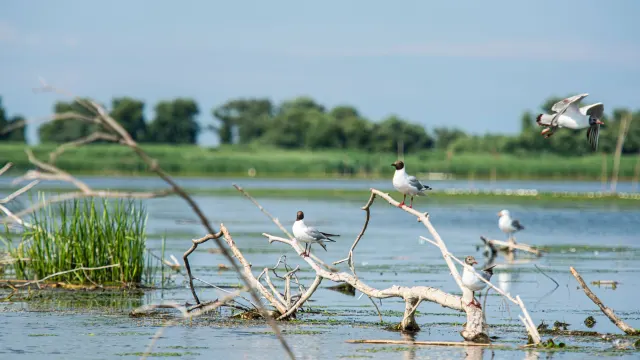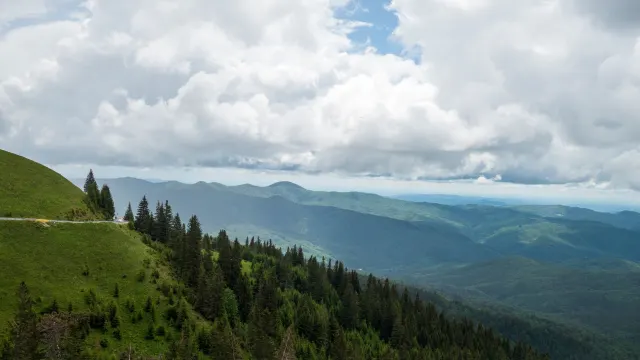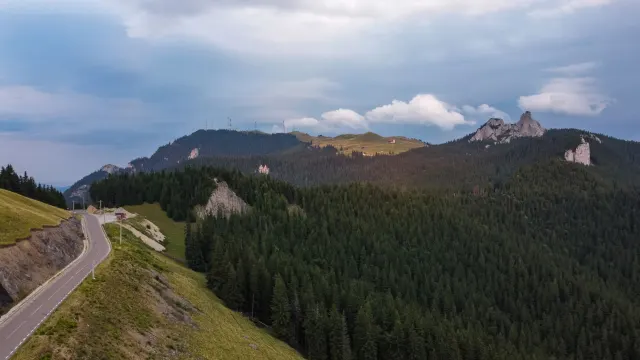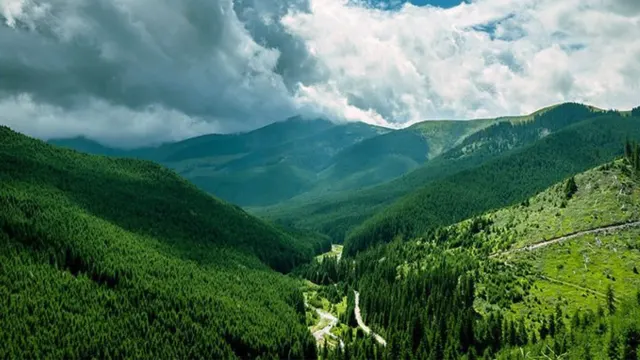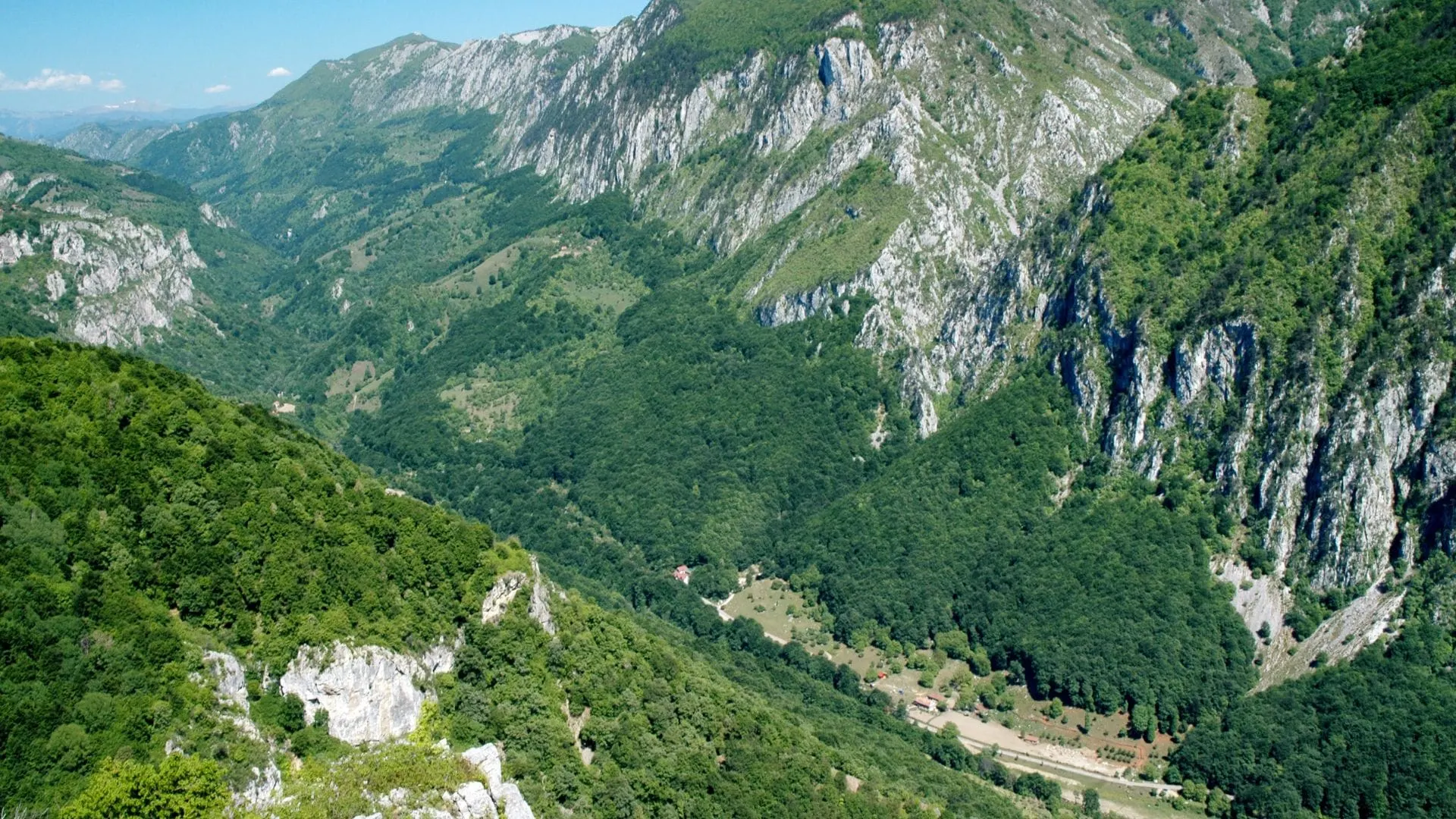
The Cerna Valley is one of the largest and most spectacular protected areas in Romania and the largest national park in the country, covering more than 61,000 hectares in the southwest.
Cerna Valley – view from above
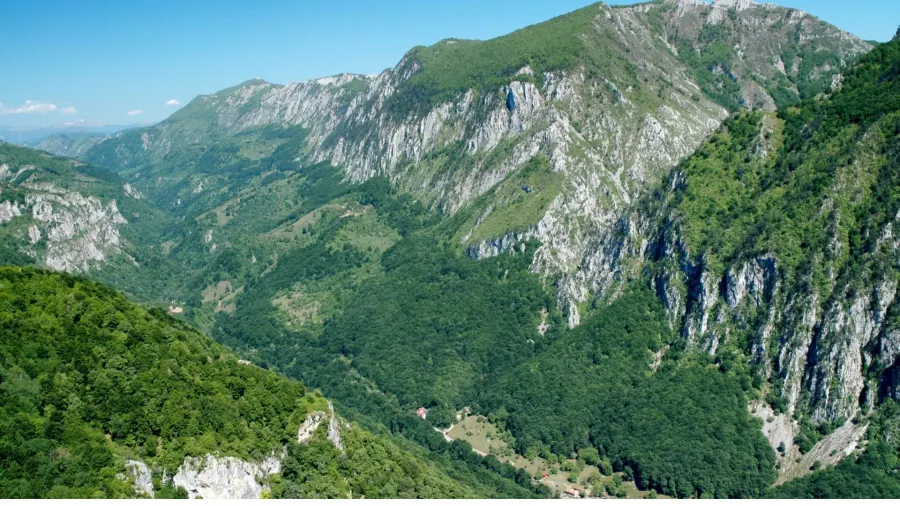
The place is a true natural paradise thanks to its biodiversity and picturesque landscapes that combine mountain ridges, deep gorges, old-growth forests, and thermal springs.
Location
Domogled-Valea Cernei National Park extends across several counties of Romania:
in Caraș-Severin County, the park covers areas of the communes of Cornereva, Mehadia, Teregova, Topleț, and Zăvoi, as well as the town of Băile Herculane.
in Gorj County, it extends over the commune of Padeș and the town of Tismana (about 80 km from the Transalpina).
in Mehedinți County, it includes the communes of Balta, Isverna, Obârșia-Cloșani, and Podeni. See more details on Wikipedia.ro
Cerna Valley
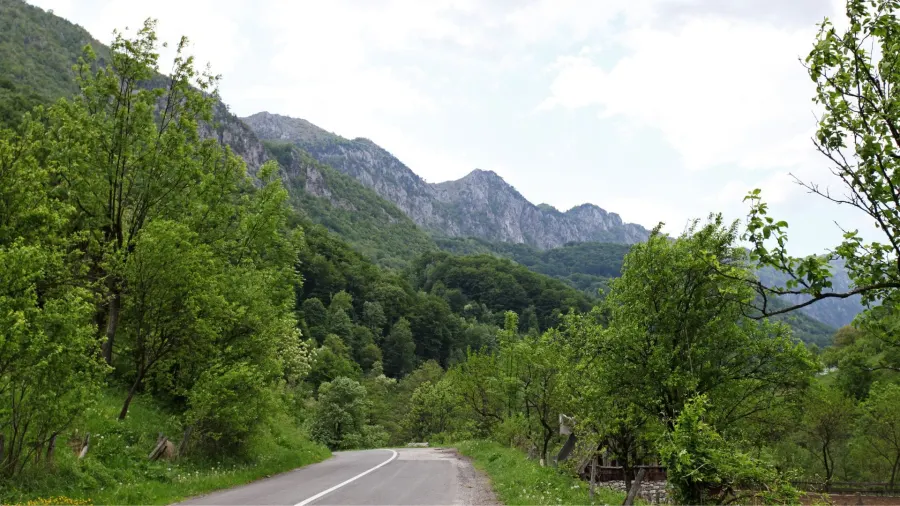
The protected area is crossed by national road DN 66A, which is meant to link Hunedoara and Caraș-Severin counties (for now, only the two ends of its 100 km are paved, and half of the distance is almost impassable).
Cerna River
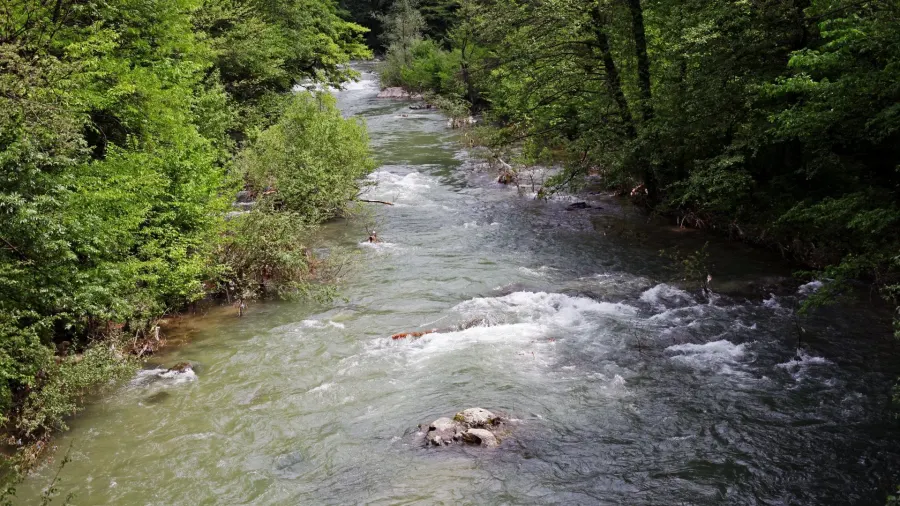
Its location along the Cerna River valley, between Băile Herculane and Câmpul lui Neag, offers easy access from both Oltenia and Banat, making it a top destination for nature lovers, tourists, and researchers.
Getting to the Cerna Valley
There are 3 main access routes:
from the south: On DN 67D, the road climbs up the Cerna Valley, passing through Băile Herculane. Easy access from Drobeta-Turnu Severin and Orșova.
from the east: DN 67D also comes from Gorj County, passes through Baia de Aramă, and crosses the Godeanu Pass, entering the Cerna Valley in its central section.
from the north: DN 66A heads north from the center of the Cerna Valley, passes through Cerna Sat, and reaches Valea lui Iovan Lake, continuing toward the Jiu-Cerna Pass and the Western Jiu Valley.
Road conditions: North of Cerna Sat, DN 66A is badly damaged and almost impassable.
Cerna Valley, near Cerna Sat
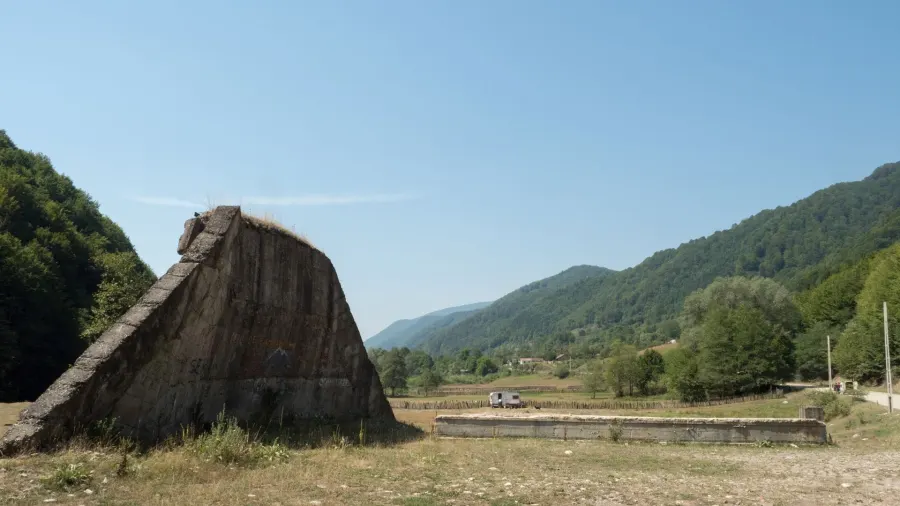
Geographically, the park covers the entire basin of the Cerna River, from its source all the way to its confluence with the Belareca River.
It includes areas of the Cerna, Godeanu, and Mehedinți Mountains, located in Caraș-Severin, Gorj, and Mehedinți counties.
Domogled National Park – view from the trail
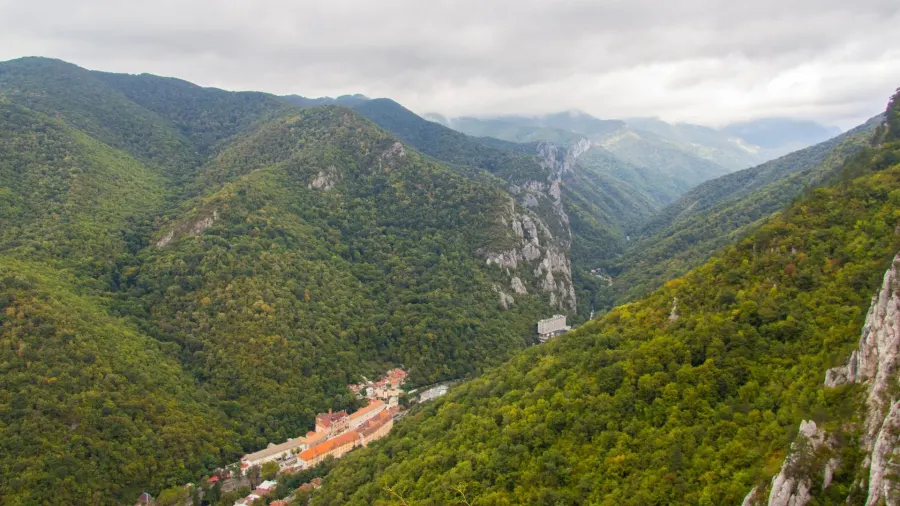
The park is renowned for its biological diversity, including rare plant and animal species, many of them endemic, which makes it an area of great interest for conservation.
The tourist appeal of Domogled-Valea Cernei National Park also comes from natural attractions such as the Corcoaia Gorges, Cloșani Cave, Băile Herculane, and numerous hiking trails.
Cerna Mountains
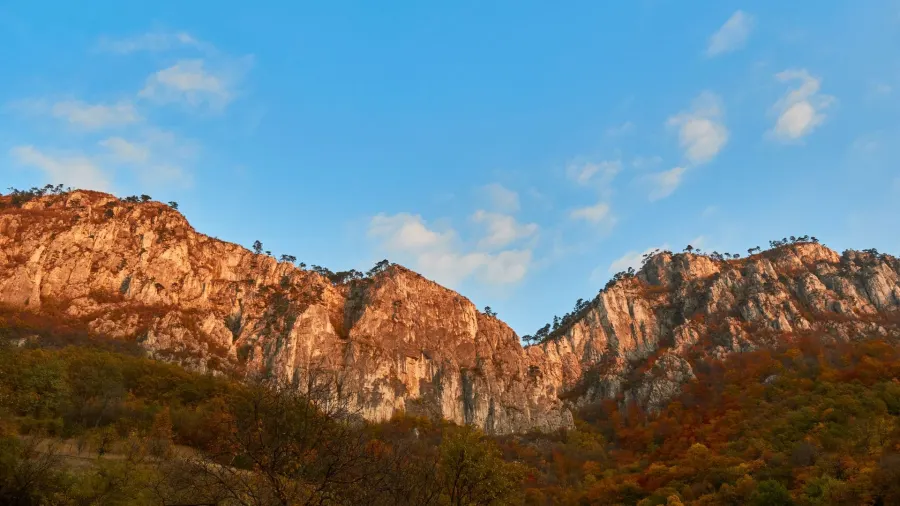
The park is an ideal destination for ecotourism, offering a combination of outdoor adventure and relaxation amid landscapes of rare beauty.
Culture and History
The region has been inhabited since antiquity, and Roman influences are still visible, especially at Băile Herculane, one of the oldest spa resorts in Europe.
Founded by the Romans at the beginning of the 2nd century AD (according to tradition, in 102, under Emperor Trajan), the resort was known for its thermal waters with healing properties.
Over time, Băile Herculane has evolved, but it has remained a symbol of regeneration and relaxation, with historic buildings and monuments recalling the Habsburg period, when the resort enjoyed its heyday.
The Baroque and neoclassical architecture of the area still bears the imprint of this past. Among its famous visitors was Empress Elisabeth (Sisi), who mentioned Băile Herculane in her diary.
Băile Herculane – Cerna Valley – Domogled National Park
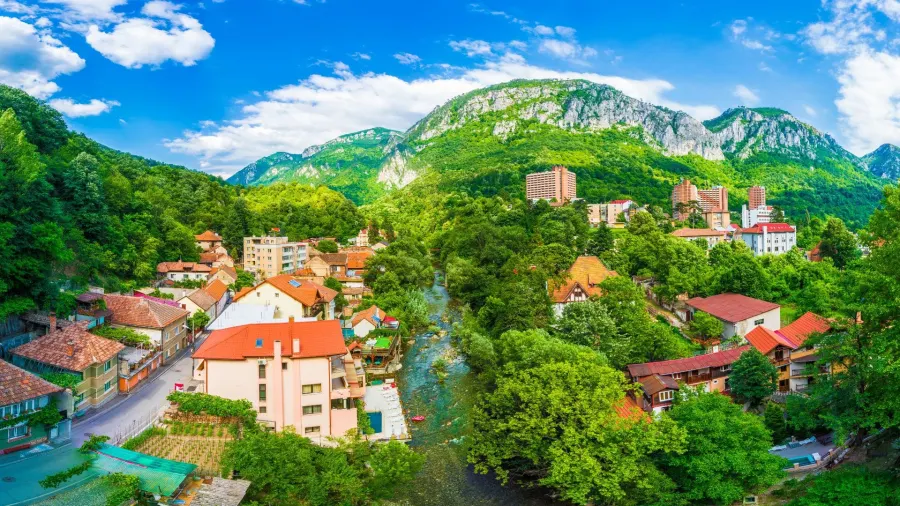
In the isolated villages of the area, centuries-old traditions are still kept alive. Locals practice traditional crafts and preserve their folk costumes and customs passed down from generation to generation.
Local folklore is also full of legends and stories about nature, mountains, and hidden treasures.
One of the popular legends tells of the god Hercules, whose name was also given to Băile Herculane. It is said that Hercules passed through these parts in search of a spring with miraculous waters that would help him regain his strength after the hard battles he had fought.
Another example is linked to the Moara Dracilor and Vânturătoarea waterfalls, which, according to legend, were created by supernatural forces. These waterfalls are said to be magical places, and those who visit them at certain times of the year may see miraculous rainbows or hear the whispers of nature spirits.
Description
The Visitor Center of Domogled-Valea Cernei National Park is located on the way out of Băile Herculane. This is where you pay the visitor fee, and you can see the exhibition on the park's fauna and flora, as well as cave models.
Domogled-Valea Cernei National Park stretches along the Cerna River valley and impresses with its varied landscape of imposing mountain ridges, narrow canyons, limestone massifs, reservoirs, karst depressions, and vast forests.
Cerna River in the Mehedinți Mountains
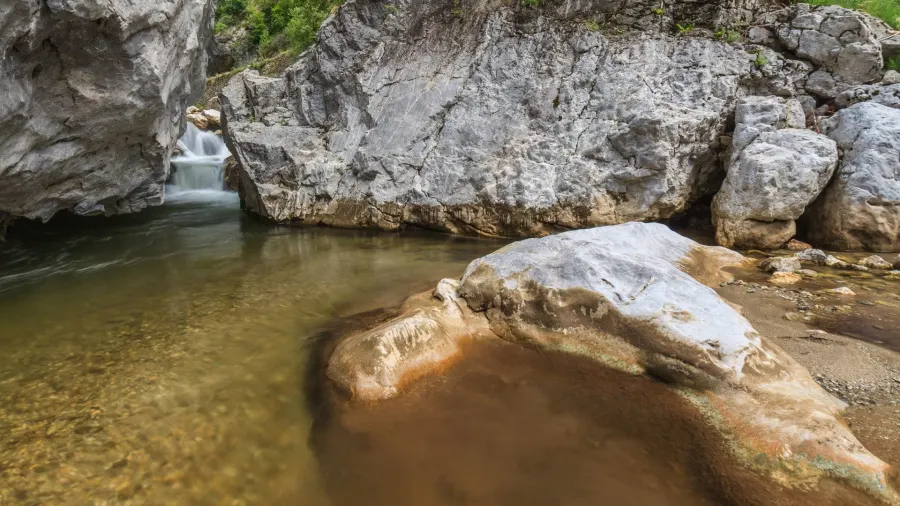
The area is home to numerous caves and potholes, and its biodiversity is remarkable, with a wide variety of plant and animal species. The park also shelters isolated villages that preserve old traditions and an authentic way of life.
The park covers 61,211 ha and includes several nature reserves in the Vâlcan, Cerna, Mehedinți, and Godeanu Mountains: Coronini-Bedina, Domogled Reserve, Iauna-Craiova, Iardașița, Corcoaia Gorges, Bârzoni Cave, Ciucevele Cernei, Vârful lui Stan, Piatra Cloșanilor, and Valea Țesnei.
In the north lie some of the most isolated mountains in the country, the Godeanu Mountains, part of the Southern Carpathians (highest summit: Gugu Peak, 2,291 m).
On the other side of the Cerna Valley lies part of the Vâlcan Mountains, which belong to the Retezat-Godeanu group of the Southern Carpathians. Between the mountains lies the Ciucevele Cernei natural area, a series of limestone ridges covered with vegetation.
Farther down the valley, the waters of the Cerna form the Cernișoara Gorges and the Izbucul Cernei karst spring; the river, swollen by the waters of its tributaries, then flows into Valea lui Iovan Lake, the largest reservoir on the Cerna.
To the left of the area, continuing from the Vâlcan Mountains, stretch the Mehedinți Mountains, with modest heights (Vârful lui Stan at 1,466 m) but spectacular landscapes and formations: the Corcoaia Gorges and Piatra Cloșani. Beyond the steep ridges of the mountains lie Crovul Mare, Poiana Beletina, Crovul Medved, and Poienile Porcului.
The area is hard to reach but wild, with trails starting from the Cerna Valley, such as those to Foeroaga Tâmnei (the entrance to the Tâmna Gorges), Poiana Ploștina, and the Țăsna Gorges. Along the way you can also admire caves and waterfalls, such as Cociului Waterfall. In the south of the Mehedinți Mountains, the landscape is dominated by the Domogled Massif, which rises to 1,105 m.
On the right side of the valley, south of the Godeanu Mountains, stretch the Cerna Mountains. One trail passes through the isolated villages of Ineleț, Scărișoara, Cracu Mare, Prisăcina, and Dobraia, offering spectacular views of the valley and the surrounding mountains.
Another trail climbs to Vânturătoarea Waterfall, before Prisaca Lake. The meadow behind the waterfall is part of the Coronini-Bedina Reserve, which protects a landscape of cliffs, caves, and waterfalls. From the lakeshore you can reach Fecioara Maria Waterfall (also called Tăul Verde or the Nameless Waterfall). Nearby, at 7 Izvoare Calde (thermal springs), two hiking trails lead to the Mehedinți Mountains (Cociului Waterfall and the Domogled Massif) and to Poiana Culmea Mare.
Bedina Waterfall
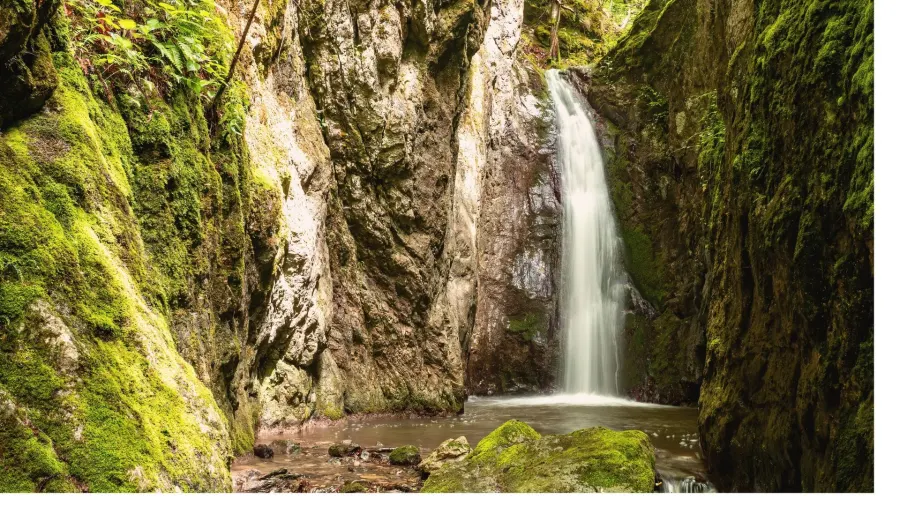
The southern boundary of the national park lies near the Băile Herculane spa resort, first documented in 153 AD, during Roman rule in Dacia.
Flora and Fauna
An essential feature of this natural area is the diversity of plant species, with more than 1,100 species identified, including some very rare ones under strict protection.
A notable example is the Banat black pine, an endemic species that grows only on rocks and gives the landscape a unique look. In 2017, the beech forest in the reserve was declared part of a UNESCO World Heritage Site.
The fauna is just as diverse, including rare species such as the scorpion, long-winged bats (and other species), the gray wolf, the nose-horned viper, the Eurasian otter, the lynx, and the brown bear. Bird species include the golden eagle, the peregrine falcon, and the stock dove. Particularly noteworthy is the abundance and variety of butterflies, with more than 1,500 species (the greatest diversity in Romania), which turn the meadows and alpine grasslands into a dreamlike landscape.
Remarkable plants include bear's breeches (Acanthus longifolius), lady's slipper orchids (Cypripedium calceolus), helleborine orchids (Cephalanthera), and white rock pinks (Dianthus spiculifolius). See more details
Major Tourist Attractions
The Cerna Valley offers an impressive number of tourist attractions, from places steeped in history and local traditions to spectacular landforms, thermal waters, gorges, karst hollows, and waterfalls, all set amid remarkable biodiversity.
Țăsna Gorges
A spectacular canyon carved by the Țăsna River, with sheer walls and pine-studded cliffs.
Domogledul Mare Peak (1,105 m)
The highest peak of the Domogled Massif, in the Mehedinți Mountains, at an altitude of 1,105 meters. Its sibling, Domogledul Mic, is slightly lower.
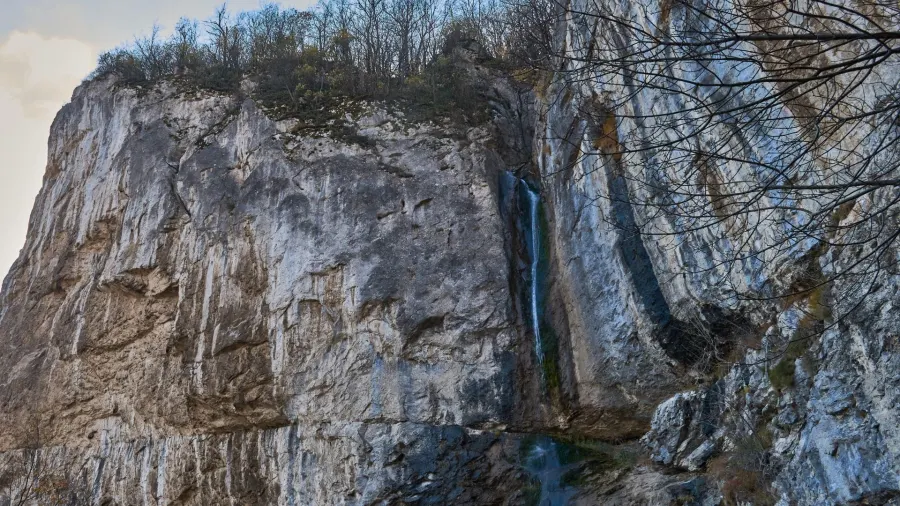
Vânturătoarea Waterfall
Located on a small right-bank tributary of the Cerna, north of Băile Herculane, the waterfall stands out for its powerful fall and the fine spray that can create rainbows in the sunlight. It is about 50 meters high, in two tiers, and its 40-meter drop is considered the highest single-tier waterfall in Romania.
Vânturătoarea Waterfall
Upper Meadows of the Cerna (Poienile de Sus)
Set among limestone cliffs, with dreamlike scenery, these meadows are a series of karst depressions of varying sizes: Poiana Beletina, Poiana Mare, Crovul Mare, Poienile Porcului, and Crovul Medved.
Băile Herculane
Known since antiquity for its thermal waters, the spa resort offers therapeutic treatments in a spectacular natural setting. It is one of the oldest resorts in Europe, with many health benefits, and we hope it will be revitalized in the coming years.
Cerna River, Herculane
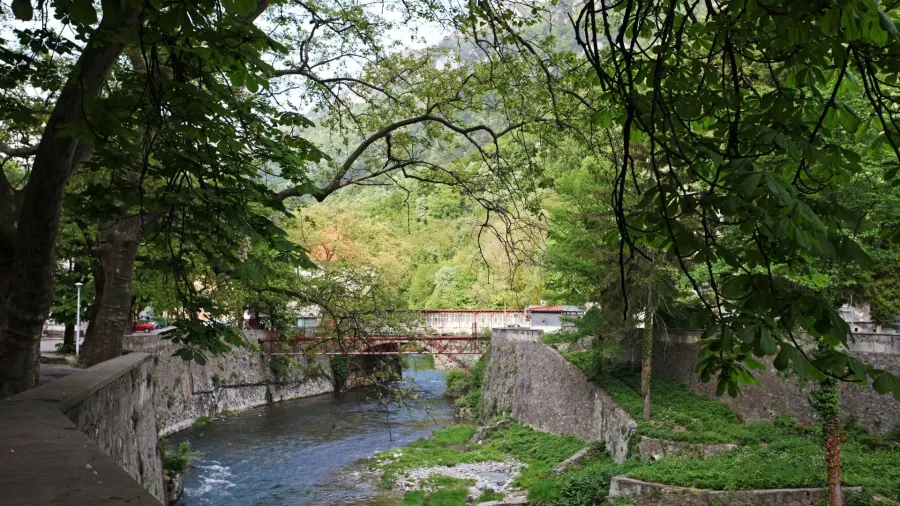
Corcoaia Gorges
A spectacular gorge carved by the Cerna River on the way out of Cerna Sat, with vertical walls about 100 meters high that in places come within just a few meters of each other. The access road is unpaved.
Valea lui Iovan Lake
A reservoir in a picturesque setting, formed by damming the Cerna River downstream of its confluence with the Iovanul River.
Pietrele Albe Peak
Another remarkable peak in the Mehedinți Mountains, Pietrele Albe Peak (1,336 m) is known for its rock formations and striking scenery. The trails to the summit are popular for the spectacular views from the top.
Thieves' Cave (Peștera Hoților or Grota Haiducilor)
Located right in the Băile Herculane resort, behind Hotel Roman, Thieves' Cave is an important archaeological site, inhabited since the Middle Paleolithic. The cave is not lit, so you will need a flashlight to visit it.
Prisaca Lake
A reservoir about 5 km long, formed on the Cerna by the Herculane Dam, some 7 km upstream of the resort.
Isolated Hamlets of the Cerna Valley
In the Cerna Valley, several isolated hamlets, such as Ineleț (whose only access is a wooden ladder propped against the rocks), Măgura, Cârnecea, Dobraia, and Prisăcina, stand out for their hard-to-reach location, their striking natural scenery, and their authentic rural atmosphere.
Other Attractions Nearby
Near Domogled-Valea Cernei National Park, visitors can explore a variety of interesting sights.
Via Transilvanica offers scenic trails, while Tismana Monastery impresses with its history and architecture.
The Rudăria watermill complex and Iron Gates Natural Park reveal the natural beauty of the region, while the Mehedinți Plateau and the Danube Cauldrons (Cazanele Dunării) offer spectacular views.
Ancient history is represented by Trajan's Bridge and the Statue of Decebalus, impressive monuments along the Danube.
Hiking Trails
There are more than 30 hiking trails in the Cerna Valley. Here are a few of them:
1. Trail: Confluence of the Cerna and Tâmna – Tâmna Gorges – Crovu Mare – Ridge – Isverna
Marking: Red cross
Description: The trail starts in the Cerna Valley, at the confluence with the Tâmna River (km 26, Piatra Pușcată), passes through the Tâmna Gorges, and continues toward Crovu Mare, climbing onto the ridge and reaching the village of Isverna.
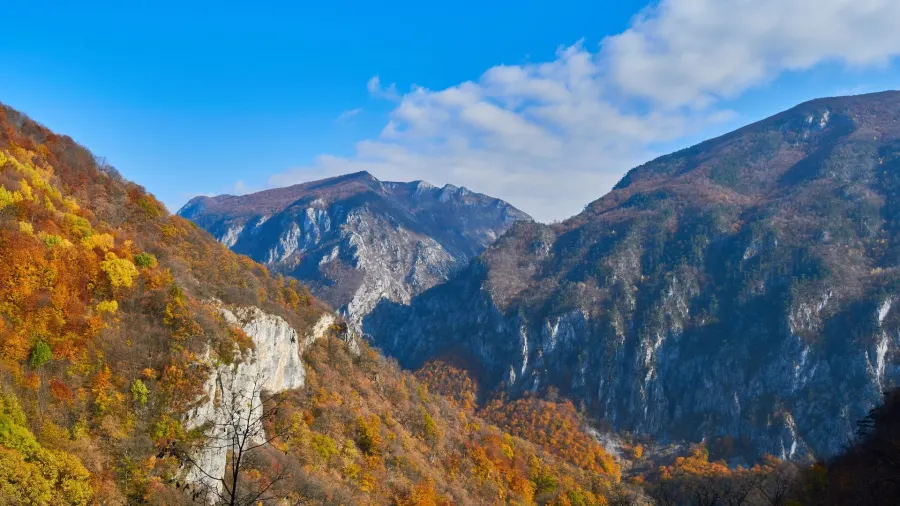
Cerna Valley in autumn
2. Trail: Băile Herculane – Confluence of the Cerna and Țăsna – Chapel – Dobraia – Prisăcina – Ineleț – Puntea Stoian
Marking: Blue dot
Description: Starting from Băile Herculane, the trail passes the confluence of the Cerna and Țăsna rivers, crosses the isolated hamlets of Dobraia, Prisăcina, and Ineleț, and ends at Puntea Stoian, on DN 67D, at kilometer 19.
3. Trail: Băile Herculane – Poiana Țăsnei – Pietrele Albe Peak – Poienile de Sus – Tâmna Gorges – Confluence of the Tâmna and Cerna
Marking: Yellow dot
Description: From Băile Herculane, the trail climbs to Poiana Țăsnei (km 14) and continues toward Pietrele Albe Peak. From there, the route passes through Poienile de Sus, the upper meadows (Ploștinioarele, Medvedului, Porcului, Crovu Mare, Izvernelor, and Beletin), with spectacular scenery. The descent leads through the Tâmna Gorges to the confluence of the Tâmna and Cerna rivers.
4. Trail: Băile Herculane – Crucea Albă – Peștera de Sub Șărban – Domogled Mic Peak – Domogled Mare Peak – Ferigari Gorges – Former Lime Factory
Marking: Yellow stripe
Description: Starting from Băile Herculane, the trail climbs to Crucea Albă (the White Cross), which offers a spectacular panorama of the resort. It continues to the Peștera de Sub Șărban cave and then climbs to Domogled Mic Peak and Domogled Mare Peak, the highest points of the trail. From there, it descends through the Ferigari Gorges and ends at the Former Lime Factory, a place of historical and industrial importance.
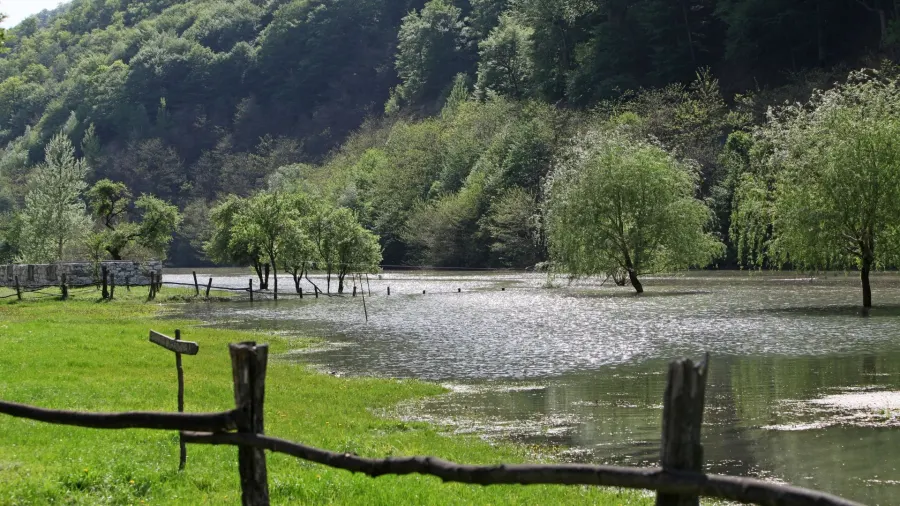
Cerna Valley landscape
Accommodation in the Cerna Valley
Domogled-Valea Cernei National Park offers a range of accommodation options for tourists, including mountain chalets, guesthouses, and campsites located near the natural attractions.
In Băile Herculane and the surrounding area, visitors can find comfortable guesthouses, rustic cabins, and well-equipped campsites.
Tourist facilities include information centers where visitors can get maps and trail recommendations, picnic areas, and the option of hiring specialized guides for hikes or caving trips.
Weather
Weather in Băile Herculane now and for the next 7 days:
Frequently Asked Questions
Where is the Cerna Valley?
The Cerna Valley is a protected natural area in southwestern Romania, in Caraș-Severin, Mehedinți, and Gorj counties.
What is the Cerna Valley known for?
The Cerna Valley offers an impressive number of tourist attractions, from places steeped in history and local traditions to spectacular landforms, thermal waters, gorges, karst hollows, and waterfalls, all set amid remarkable biodiversity (such as the black pine).
Where is the village of Ineleț?
The village of Ineleț is one of the isolated hamlets of the Cerna Valley, and the only way to reach it is by a wooden ladder propped against the rock.
Conclusion
Domogled-Valea Cernei National Park is an exceptional tourist destination, renowned for its spectacular landscapes, biodiversity, and rich historical heritage.
Set in the heart of wild nature, the park offers unique natural attractions, making it the ideal place for lovers of hiking, adventure, and relaxation.
The Cerna Valley remains an unforgettable destination for those who want to explore Romania's authentic beauty!
Don't miss the Muntele Mic resort in Banat either!
See also other famous scenic routes: Transfăgărășan, Transalpina, and Transapuseana